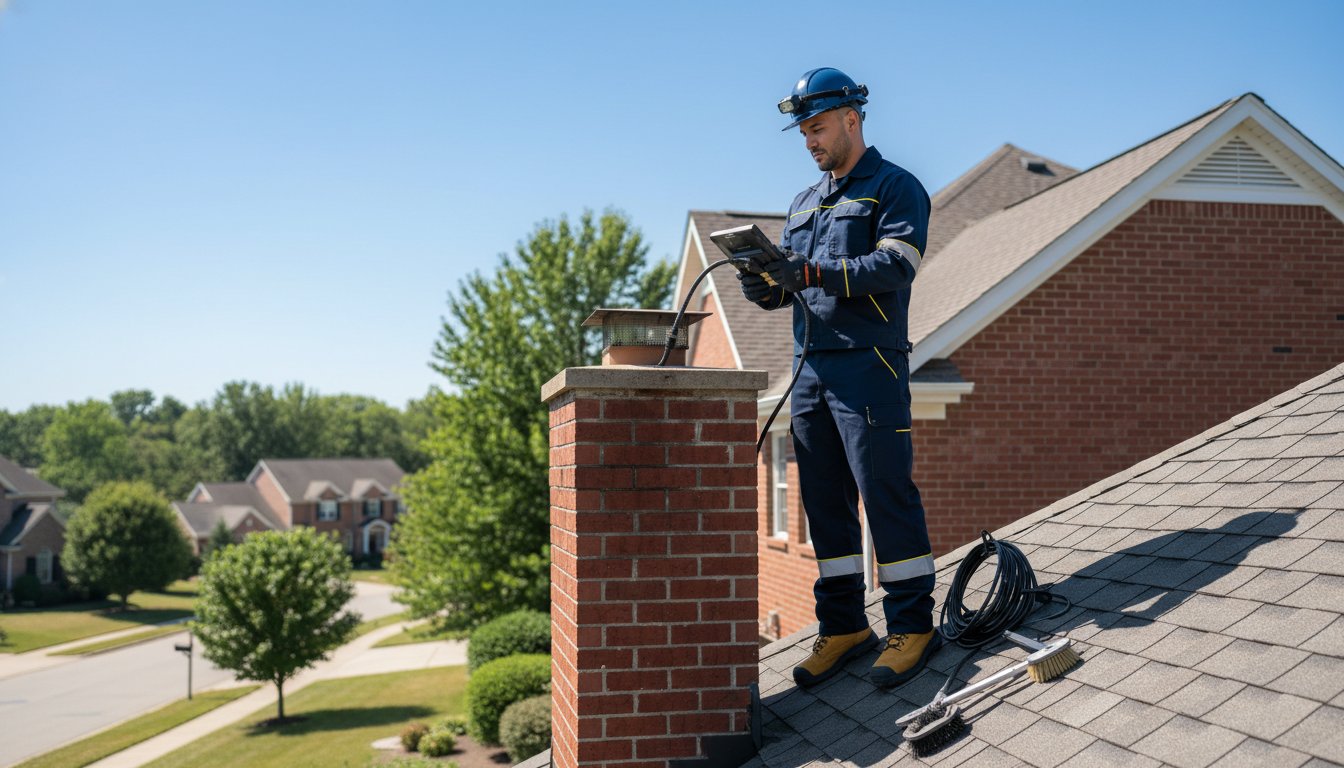
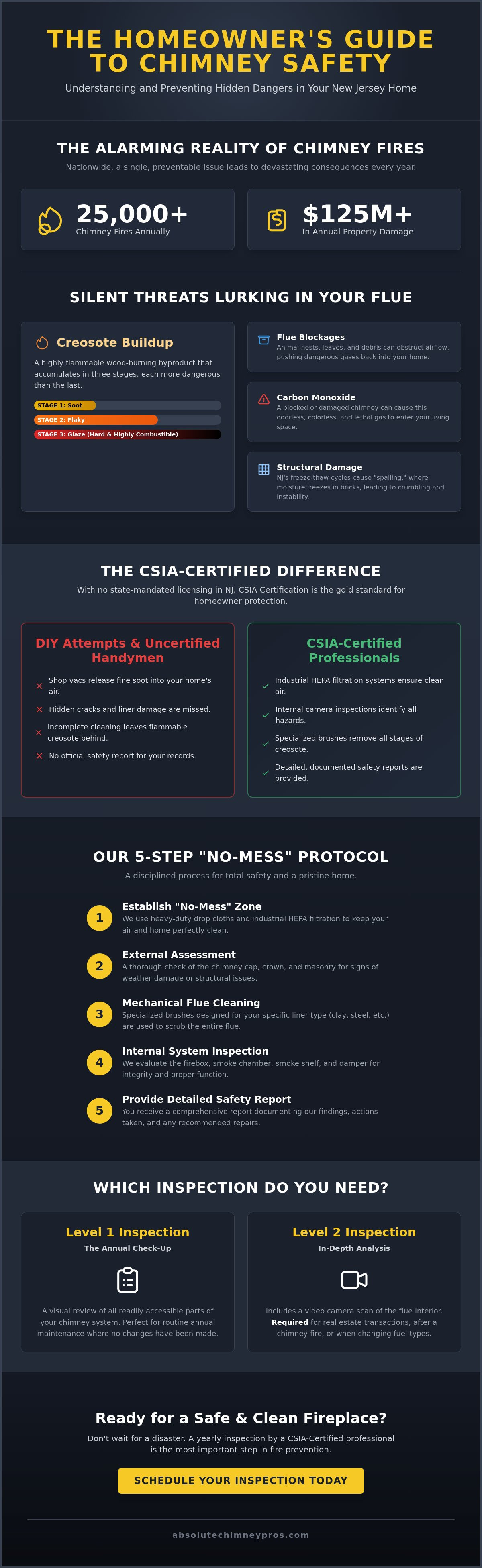
Over 25,000 chimney fires ignite across the country every year, causing more than $125 million in property damage. Most of these disasters stem from a single, preventable cause: creosote buildup. You want to enjoy a warm fire without the nagging fear of hidden hazards or the worry of a messy technician ruining your carpets. Finding a reliable chimney sweep NJ homeowners can trust is often difficult. The lack of state-mandated licensing requirements only adds to the confusion.
We understand your need for transparency and safety. Our team provides the professional oversight required to keep your home secure and your heating system efficient. You deserve a clear, certified safety report and a fireplace that is ready for the coldest nights. This article explains the critical importance of CSIA certification, how to avoid hidden fees, and the exact steps we take to ensure your home remains clean and fire-ready.
Key Takeaways
- Understand why NFPA 211 standards require annual inspections to prevent household fires and ensure venting safety.
- Learn about our specialized five-step cleaning process that uses HEPA filtration and drop cloths to keep your home pristine.
- Identify the silent threats hiding in your flue, from highly flammable creosote glaze to local wildlife blockages.
- Discover how a certified chimney sweep NJ professional eliminates estimate anxiety with transparent, flat-fee reporting and expert oversight.
- Follow a simple homeowner checklist, including the 24-hour fireplace rest rule, to prepare for a fast and efficient service visit.
Why NJ Homeowners Need a Certified Chimney Sweep
A professional chimney sweep is a fire prevention specialist. They do more than clear soot. They identify structural weaknesses before they become catastrophes. The National Fire Protection Association (NFPA) 211 standard requires annual inspections for all residential chimneys. This isn't a suggestion. It's a safety benchmark designed to protect your family. A qualified technician checks for obstructions, structural integrity, and proper venting.
In New Jersey, the coastal air and high humidity accelerate the accumulation of creosote. This substance is a byproduct of wood combustion. It's highly flammable. It's also a silent threat. Creosote can ignite within the flue, leading to a chimney fire that spreads to the rest of the home. Beyond fire, a blocked chimney can force carbon monoxide back into your living space. This gas is odorless. It's colorless. It's lethal. Professional oversight is the only way to ensure these hazards are removed.
The Role of CSIA Certification in New Jersey
New Jersey does not currently require state-level registration or licensing for chimney sweeps. This lack of regulation makes hiring a certified professional essential. The Chimney Safety Institute of America (CSIA) provides the industry standard for technical expertise. A CSIA-certified technician understands fire codes, venting physics, and the history of chimney sweeping techniques. They have passed rigorous exams to prove their competence.
DIY attempts often fall short. Standard shop vacuums cannot handle fine soot. They lack the HEPA filtration required to keep your air clean. Professional systems use high-suction vacuums and specialized brushes to reach every corner of the flue. A certified chimney sweep NJ expert ensures that no debris is left behind to ignite or block airflow. They provide a level of precision that household tools simply cannot match.
New Jersey Weather and Your Chimney Health
Our local climate is brutal on masonry. The freeze-thaw cycle is a primary cause of chimney damage in the Northeast. Water enters the pores of your bricks during a storm. When temperatures drop, that water freezes and expands. This leads to "spalling." You might see pieces of brick or mortar on your roof or in your firebox. This indicates structural failure. If left unaddressed, the entire structure can become unstable.
High humidity also impacts creosote. Moisture causes soot to harden into a glassy, rock-hard substance called glaze. This stage of creosote is nearly impossible to remove with standard tools. It requires professional chemical treatments or mechanical tools. Don't wait for the fall rush. A spring inspection identifies damage from the winter immediately. This allows for repairs before the next heating season begins. A vigilant chimney sweep NJ professional will spot these issues early, saving you from expensive emergency repairs later.
The Anatomy of a Professional Chimney Sweep & Inspection
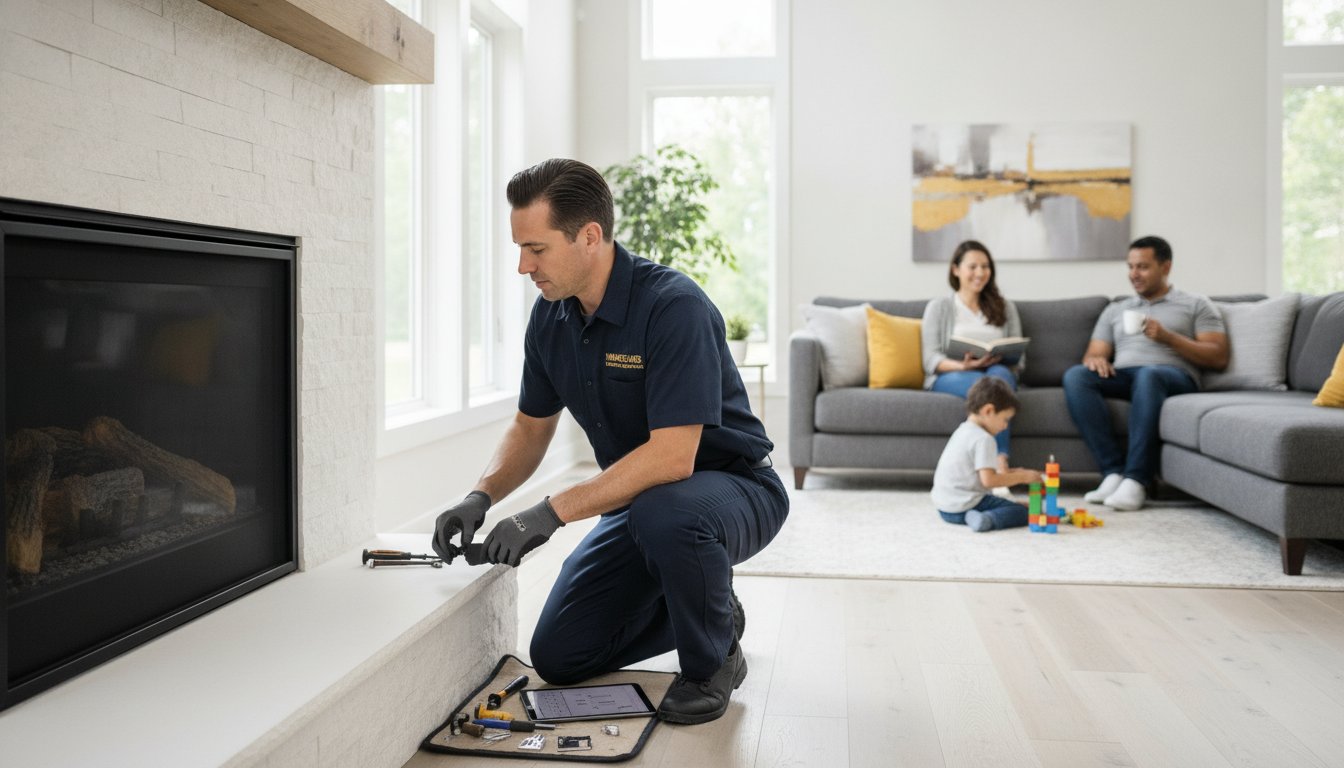
Professionalism starts with protection. We don't just walk into your home; we secure it. Every chimney sweep NJ service follows a disciplined 5-step protocol to ensure safety and cleanliness. First, we establish a "no-mess" zone using heavy-duty drop cloths and industrial-grade HEPA filtration systems. This prevents microscopic soot particles from escaping into your living room air. Second, we perform an external assessment of the chimney cap and masonry. Third, the flue is mechanically cleaned using specialized brushes designed for your specific liner type, whether it's clay tile or stainless steel. Fourth, we inspect the firebox, smoke chamber, and damper. Finally, we provide a detailed safety report that documents our findings and any necessary repairs.
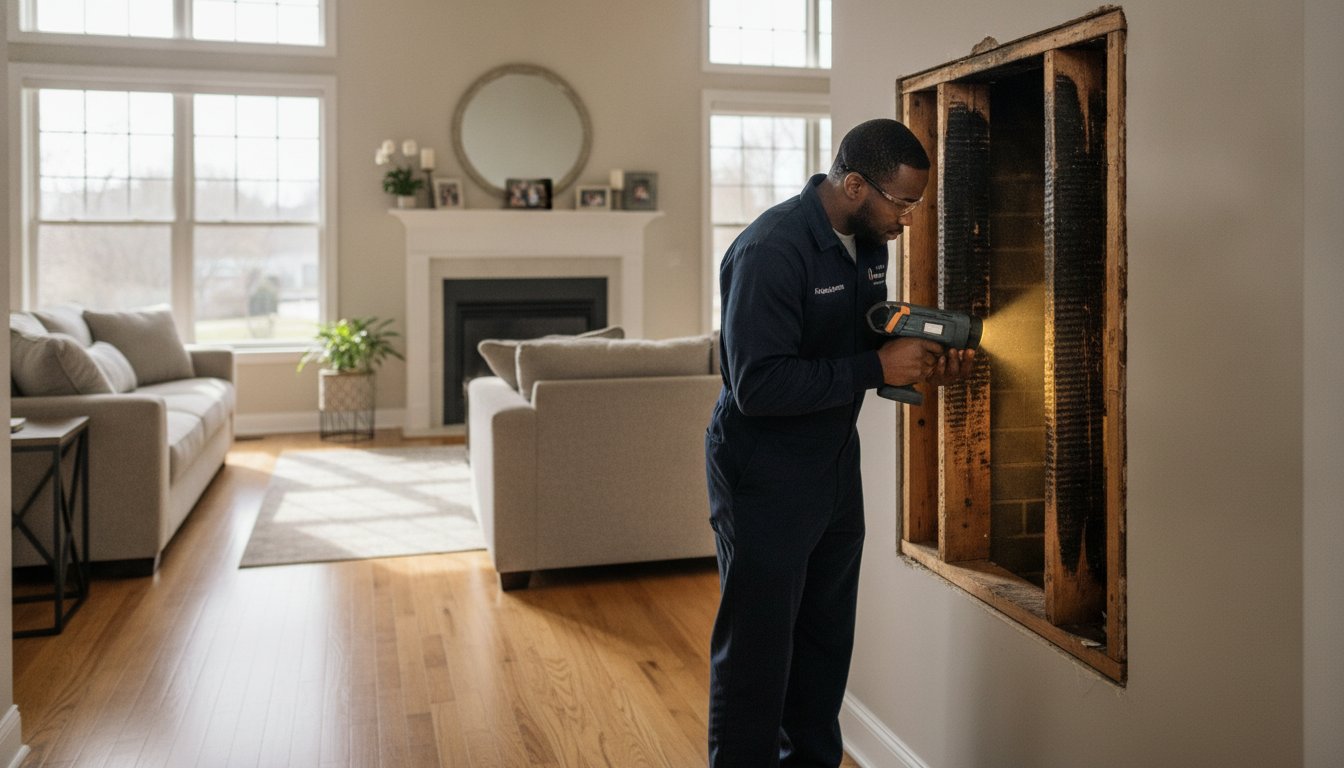
Precision matters. We use internal camera technology to see what the naked eye misses. This is especially critical for identifying hidden cracks in the flue liner that could allow heat or gases to escape into your home. From the hearth and lintel to the chimney cap, every structural component is evaluated for performance and safety. We check the smoke shelf for debris and ensure the firebox bricks are sound. If you haven't had your system checked recently, you can schedule a professional chimney inspection to secure your home and family.
Level 1 vs. Level 2 Chimney Inspections
A Level 1 inspection is the standard annual check. It's a visual review of the readily accessible parts of your fireplace and chimney. It is perfect for systems that have remained unchanged and are in continuous use. A Level 2 inspection is more intensive. It's required during real estate transactions, after a chimney fire, or when changing fuel types. High-definition camera inspections are the only definitive method to verify flue liner integrity and detect hairline fractures. A chimney sweep NJ specialist who is also a CSIA-certified chimney sweep has the training to interpret these video scans accurately.
What We Look for During the Sweep
We don't just look for soot; we look for dysfunction. A malfunctioning damper is a primary cause of heat loss and high utility bills. We verify it seals tightly to keep your conditioned air inside. We also search for "hot spots." These are areas where excessive heat transfers from the flue to your home's wooden framing. This is a major fire risk that often goes unnoticed. Finally, we assess the chimney crown and flashing. These components are your first line of defense against water intrusion. If they fail, moisture will seep into your walls and cause rapid masonry deterioration.
Creosote, Blockages, and Silent Threats to Your Home
"I only use my fireplace on holidays." This is the most dangerous assumption a homeowner can make. Frequency of use does not dictate safety. Even occasional fires leave behind residue that accumulates over time. Every fire produces creosote. This substance is a highly flammable byproduct of wood combustion. It sticks to your flue liner like glue. If you haven't scheduled a chimney sweep NJ service recently, you're rolling the dice with every match you strike.
Smoldering fires are a terrifying reality. They don't always roar. Sometimes, they burn slowly inside your walls, undetected for hours. This happens through a process called pyrolysis. Over years, the heat from your chimney bakes the wooden framing of your house. This lowers the ignition temperature of that wood. Eventually, the framing can catch fire even without a direct flame touching it. Professional cleaning removes the fuel source that causes this extreme heat transfer.
Blockages are another critical concern. New Jersey wildlife is persistent. Bird nests, squirrel debris, and even raccoons can clog your flue during the spring and summer. When you combine this with fallen masonry caused by our humid coastal climate, you have a recipe for disaster. These obstructions trap lethal carbon monoxide inside your home. They also prevent proper drafting. A professional chimney sweep NJ technician identifies these hidden hazards before they become life-threatening emergencies.
The Three Stages of Creosote Buildup
- Stage 1: This is dusty, black soot. It's the easiest to remove. However, it indicates restricted airflow. If left alone, it will quickly transition to more dangerous forms.
- Stage 2: This looks like crunchy, tar-like flakes. It's much harder to brush away. Removing it requires specialized mechanical tools and professional expertise.
- Stage 3: This is the nightmare scenario. It's a glossy, rock-hard, hardened glaze. It's essentially solid fuel lining your chimney. This is the primary cause of explosive chimney fires.
Signs Your Chimney is Blocked or Dangerous
Your chimney often provides warning signs before a total failure. Pay attention to drafting issues. If smoke backs up into your living room, your flue is restricted. A strong, acrid, campfire-like smell when no fire is burning is another red flag. This odor is often worse on humid NJ days. Finally, listen for the sound of "clinking" or falling debris. If you hear material dropping behind your damper, your masonry or liner is deteriorating. Do not light another fire until a certified expert inspects the system.
Preparing for Your Service: A Homeowner’s Checklist
A professional service visit is a partnership between the technician and the homeowner. Efficiency ensures a thorough inspection. It also guarantees your home remains spotless. When you prepare correctly, our team can focus entirely on the technical safety of your system. A few simple steps prevent delays and protect your belongings from soot exposure. To ensure your pets are also prepared for the technician's arrival, check out Pro-Dog K9 Academy for specialized at-home training. Every chimney sweep NJ appointment should be approached with these proactive measures in mind.
Safety is our primary concern. We use heavy machinery and specialized brushes that require ample workspace. Removing obstacles before we arrive allows us to set up our "no-mess" zone immediately. This discipline reflects our commitment to your home's integrity. It also ensures that the technician can move freely to access every component of the hearth and flue. Vigilance during prep leads to a safer outcome for everyone.
24 Hours Before the Sweep
The 24-hour rule is absolute. Stop using your fireplace or wood stove at least one full day before your appointment. Masonry retains heat for a long time. Our high-suction vacuums cannot handle hot embers or high temperatures. A cold system is a safe system. Clear a 10-foot radius around the hearth. Move furniture and rugs. This prevents accidental damage and provides a path for our vacuum lines. Our professionals handle ash removal safely.
During and After the Appointment
Keep the work area clear. Pets and children should remain in another room for safety. Once finished, review the findings and ask for your written safety report. This document is vital for insurance and future home sales. Discuss any drafting issues or odors now. Don't wait for the first frost to book next year. Secure priority placement by scheduling your next visit before the technician leaves. Ready to secure your fireplace? Book your certified chimney sweep NJ service today to ensure your home stays safe.
Why Absolute Chimney Pros is the Trusted NJ Choice
Choosing a chimney sweep NJ provider is a decision about home safety. It shouldn't be a gamble. Absolute Chimney Pros operates with disciplined expertise and a "no-nonsense" approach to home protection. We don't just provide a service; we deliver peace of mind through professional oversight. Our commitment to CSIA-certified expertise means every technician is trained in the latest safety protocols and fire codes. We maintain active NJ licensing to ensure we meet every state standard for professional conduct and ethical transparency.
Efficiency is our hallmark. We respect your schedule. This is why we offer same-week appointments for homeowners across NJ and Philadelphia PA. While others might make you wait for weeks during the peak season, we prioritize your safety. We understand that a blocked flue or a venting issue is an urgent risk. Our team shows up on time, assesses the situation with technical mastery, and executes the task with precision. We are the protective partner you need for a secure home environment.
Our care extends beyond the hearth. We look at your home's air quality holistically. This includes expert dryer vent cleaning and air duct cleaning. These systems often hide the same types of "silent threats" found in your chimney, such as lint blockages or dust accumulation. By addressing these together, we remove fire hazards and improve your home's heating and cooling efficiency. We provide the technical resolution required to keep your entire venting system safe and functional.
Transparent Pricing and No Hidden Fees
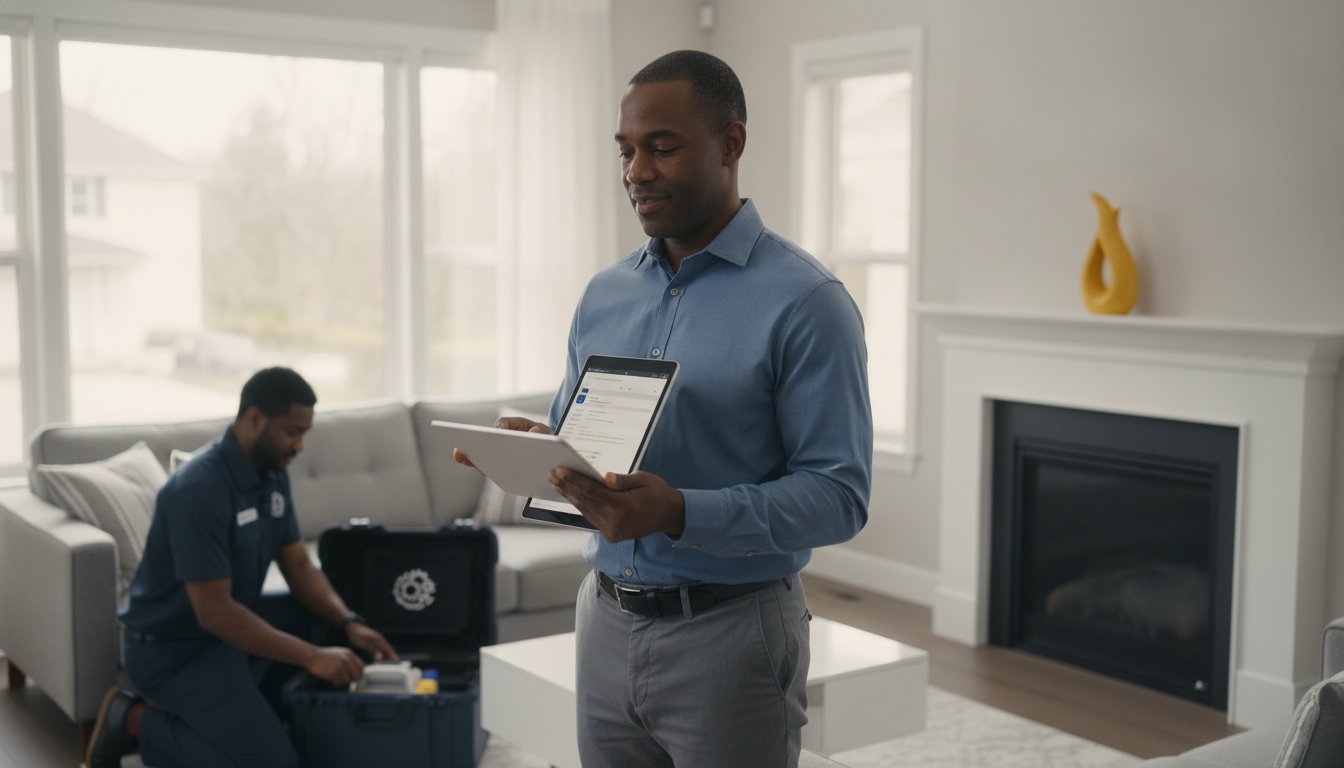
Guesswork has no place in home maintenance. Many homeowners suffer from "estimate anxiety" when hiring contractors. They worry that a low initial quote will balloon into a massive bill once the technician is on-site. We eliminate that stress. Our flat-fee inspection model is the most honest way to begin your chimney maintenance. There is no guesswork; just professional exactness. We provide solutions, not just sales pitches. You will receive a clear, documented report of our findings without any hidden charges or surprise fees.
Local Experts Serving NJ and Philadelphia
We have deep roots in the local community. Our technicians are familiar with the specific architectural styles of NJ homes, from historic masonry to modern gas fireplaces. We understand how local humidity and freeze-thaw cycles impact your chimney's health. This local knowledge allows us to spot issues that national chains might overlook. We treat your property with the same care we would give our own. Book your certified NJ chimney sweep today to experience the difference that professional oversight and technical mastery make for your home.
Secure Your Home for the Season Ahead
Safety is a disciplined choice. You now understand the hidden risks of creosote glaze and the critical importance of annual NFPA 211 standards. A professional cleaning isn't just about removing soot. It's about identifying structural failures and preventing silent threats like carbon monoxide from entering your living space. By following a simple prep checklist, you ensure your next service visit is efficient, clean, and effective.
You deserve a protective partner who values transparency and technical mastery. Our CSIA-certified technicians provide the expert oversight your home requires. We eliminate estimate anxiety with our clear, flat-fee model and same-week appointment availability. Don't wait for a dangerous blockage or a winter emergency to compromise your family's well-being. Take the proactive step toward a fire-ready home with a trusted chimney sweep NJ professional. We are ready to secure your environment and restore your peace of mind.
Schedule Your Flat-Fee NJ Chimney Inspection Now and enjoy the warmth of your fireplace with total confidence this winter.
Frequently Asked Questions
How often should my chimney be cleaned in New Jersey?
You should have your chimney inspected at least once a year according to NFPA 211 standards. Actual cleaning frequency depends on how often you burn wood and the type of fuel used. New Jersey’s high humidity can cause creosote to harden faster, making annual professional oversight essential for safety. Regular maintenance prevents the accumulation of flammable soot before it becomes a hazard.
What is the average cost of a chimney sweep in NJ?
Pricing for a chimney sweep NJ service depends on several factors. These include the height of the chimney, the type of fuel burned, and the current level of creosote buildup. We utilize a flat-fee inspection model to provide total transparency. This approach eliminates the guesswork and estimate anxiety often associated with home repairs. Avoid companies that offer suspiciously low rates, as they often hide fees or lack proper certification.
Do I need a chimney inspection if I have a gas fireplace?
Yes. Gas fireplaces still require annual inspections to ensure proper venting and structural integrity. While they don't produce heavy creosote, they do generate water vapor and combustion byproducts that can deteriorate liners over time. Debris, bird nests, or fallen masonry can also block a gas flue. Professional technicians check for these obstructions and verify that your system is venting lethal gases safely out of your home.
What is the difference between a chimney sweep and a chimney inspection?
An inspection is a diagnostic process. It evaluates the structural condition and safety of the entire venting system. A chimney sweep is the physical act of removing soot and debris. Think of the inspection as the doctor’s exam and the sweep as the treatment. Both are necessary to ensure your fireplace is fire-ready and efficient. One identifies the threat; the other removes it.
How long does a professional chimney cleaning take?
A standard appointment usually lasts between 45 and 90 minutes. This timeframe allows for the setup of protective equipment, the mechanical cleaning of the flue, and a thorough inspection of all components. If we encounter heavy glazed creosote or complex blockages like animal nests, the process may take longer. We prioritize technical precision over speed to ensure no detail is overlooked.
Will a chimney sweep make a mess in my living room?
No. A professional chimney sweep NJ service uses a "no-mess" protocol. We secure the work area with industrial-grade drop cloths and utilize high-suction HEPA filtration vacuums. These systems capture even the smallest soot particles before they enter your air. Our goal is to leave your hearth cleaner than we found it while ensuring your furniture and carpets remain untouched.
What happens if my chimney fails its safety inspection?
You will receive a comprehensive report detailing the specific safety violations or structural defects. Common failures include cracked flue liners, masonry gaps, or excessive creosote glaze. If a system is deemed unsafe, you should not use the fireplace until the necessary repairs are completed. We provide clear, actionable solutions to restore your chimney to a safe, operational state.
Can I clean my own chimney to save money?
DIY cleaning is a significant safety risk. Household tools lack the power to remove hardened creosote and cannot reach every corner of the flue. More importantly, homeowners lack the specialized camera technology required to find internal cracks or structural weaknesses. Professional oversight is the only way to guarantee that your home is protected from undetected fire hazards and carbon monoxide leaks.