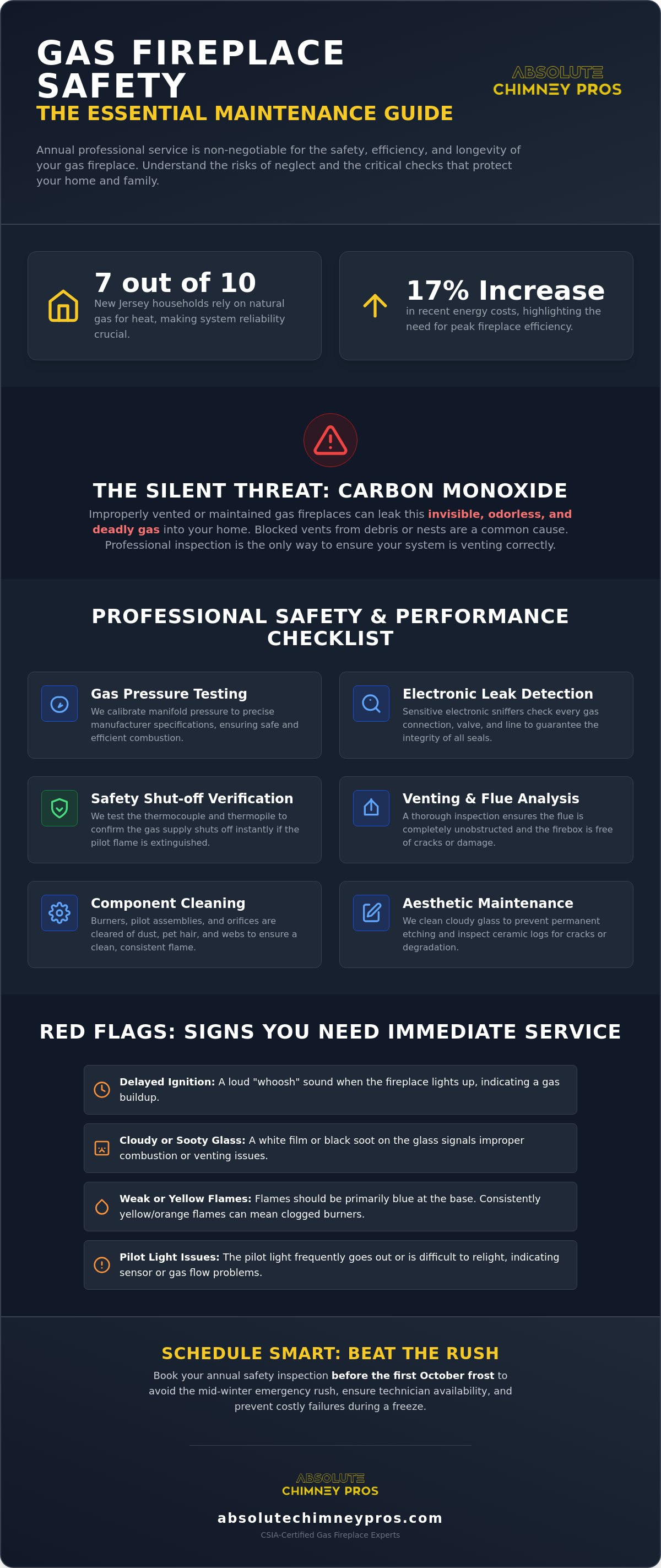
Would you ignore a gas leak just because the house still feels warm? It is a dangerous gamble. Many homeowners believe that because their pilot light stays lit, their system is safe. This is a misconception that puts families at risk. Seven out of ten New Jersey households rely on natural gas for heat. With energy costs rising nearly 17 percent recently, efficiency is a financial necessity. Professional gas fireplace maintenance NJ ensures your unit operates at peak performance while eliminating the silent threat of carbon monoxide.
You deserve a home that is both beautiful and secure. You shouldn't have to choose between a clear view of the fire and the safety of your family. This guide explains why annual service is a technical requirement for every NJ home. We will preview the critical components of a professional safety inspection. You will learn how to resolve pilot light frustrations, clean cloudy glass, and avoid the high costs of emergency repairs during a winter freeze.
Key Takeaways
- Understand why annual professional oversight is the only way to prevent carbon monoxide leaks and protect your family from silent hazards.
- Discover how a comprehensive gas fireplace maintenance NJ service verifies gas pressure and seal integrity to maximize heating efficiency.
- Identify critical red flags like delayed ignition and cloudy glass before they escalate into expensive emergency repairs or dangerous failures.
- Learn why scheduling your safety inspection before the October frost is the most effective way to avoid the mid-winter emergency rush.
- See why CSIA-certified expertise and flat-fee transparency provide the peace of mind that generic handymen cannot offer.
Why Annual Gas Fireplace Maintenance in NJ is Non-Negotiable
A gas fireplace is a sophisticated piece of machinery. It is not a static furniture piece. Like a furnace or a vehicle, it requires precision tuning to operate safely. Many homeowners treat these units as "set it and forget it" appliances. This is a dangerous mistake. Dust, pet hair, and spider webs settle into burner ports and pilot assemblies during the summer. These small obstructions lead to uneven flames, soot buildup, and ignition failure. Neglect turns a luxury into a hazard. You should never assume a fireplace is safe just because it turns on.
New Jersey winters demand reliability. Gas is the primary heating fuel for over 2.9 million households in the state. With energy costs rising nearly 17 percent between 2024 and 2025, a neglected unit is a financial liability. Professional gas fireplace maintenance NJ ensures your system converts fuel into heat with maximum efficiency. Without regular gas fireplace maintenance NJ, you risk unexpected downtime when the temperature drops. Most manufacturers mandate documented annual service to keep your warranty valid. Without it, a major component failure becomes a full out-of-pocket expense. Documented service protects your checkbook and your home's resale value.
The Silent Threat: Carbon Monoxide and Venting
Safety is the primary driver for annual service. Gas burns cleaner than wood, but it is not byproduct-free. Blocked vents from debris or animal nests cause carbon monoxide (CO) to back up into your living space. This gas is invisible and odorless. You will not see or smell the threat. A professional inspection verifies that the venting path is clear and all gaskets are airtight. A thermocouple is a safety sensor that shuts off the gas supply immediately if the pilot flame is extinguished. Reviewing Fireplace types and history shows how safety technology has advanced, yet even modern systems require expert oversight.
Protecting Your Investment and Warranty
Maintenance is about fiscal discipline. It is cheaper to clean a pilot assembly than to replace a seized gas valve. Cloudy glass is more than cosmetic; it signals a chemical imbalance in the combustion. If left uncleaned, this film can permanently etch the glass. If you sell your home, a documented service history is a major selling point. It provides the buyer with peace of mind. You protect the aesthetic value of your logs and glass while ensuring the unit remains a reliable heat source. High-performance homes require high-performance maintenance, and just as you care for your fireplace, ensuring your roof is managed by veteran-owned specialists like Thoughtful Roofer Inc. is essential for total home protection.
Our Professional NJ Gas Fireplace Service Checklist
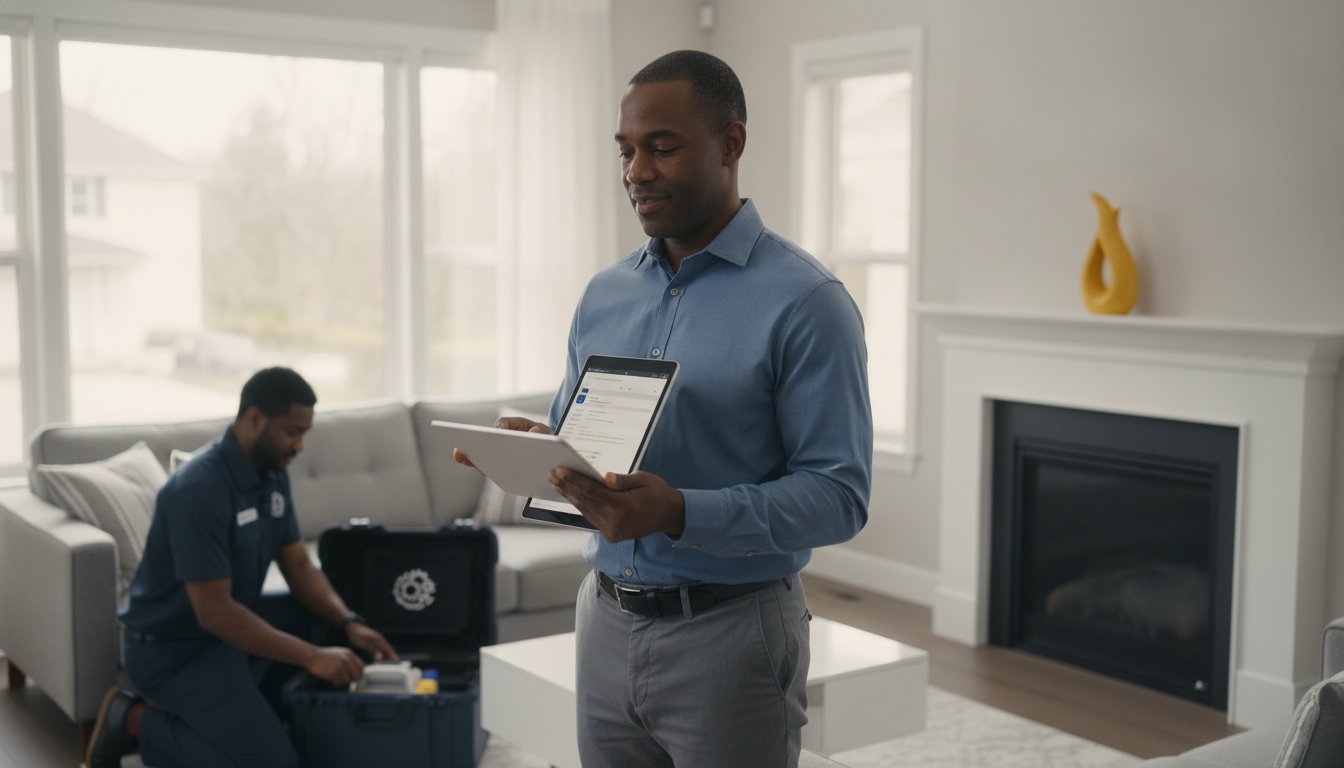
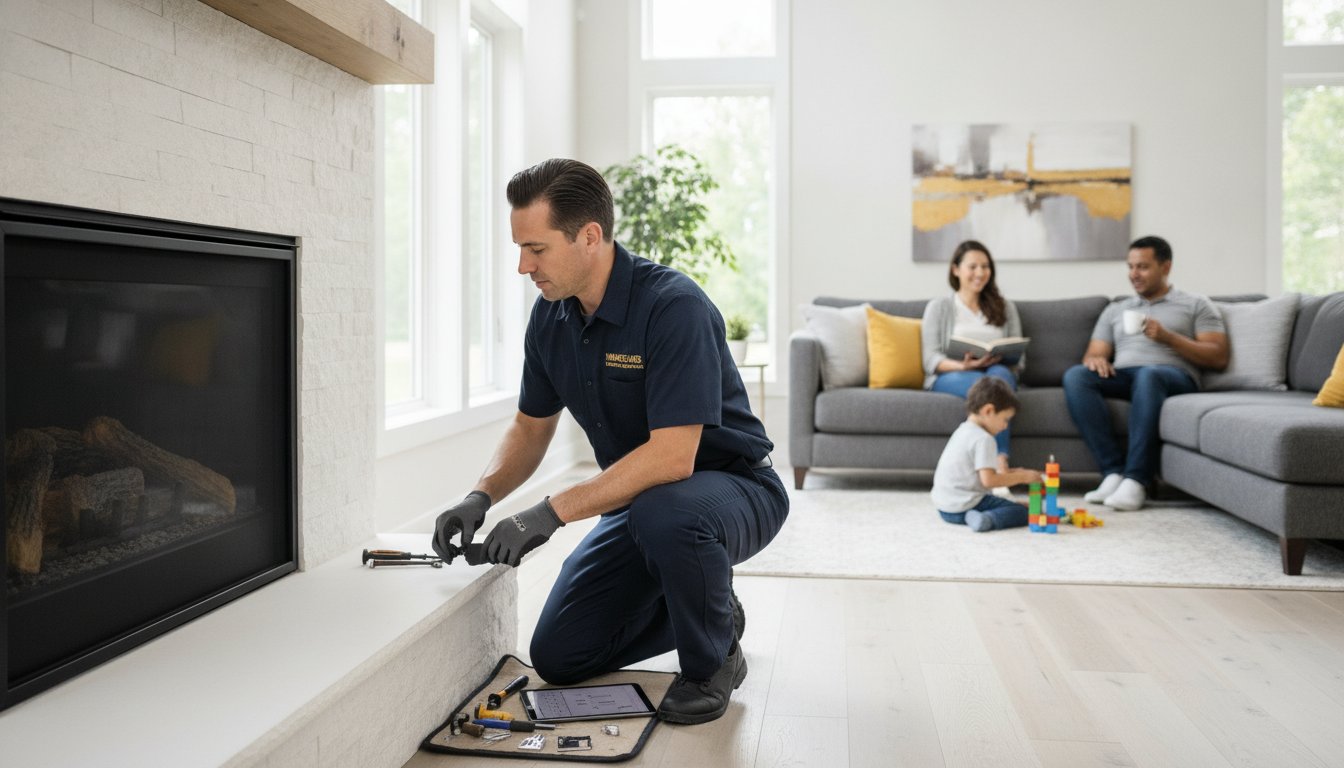
A professional technician does not just clean. They calibrate. At Absolute Chimney Pros, we treat every visit as a technical safety audit. We use specialized manometers to measure gas pressure at the valve. We use electronic leak detectors to verify the integrity of every seal. This level of precision is mandatory for gas fireplace maintenance NJ homeowners. You receive a comprehensive on-site report of our findings. We show you exactly what we found. Transparency is our standard.
Our technicians follow a rigorous protocol to ensure your unit is ready for the winter. We don't skip steps. Every inspection includes:
- Gas Pressure Testing: Verifying the manifold pressure matches manufacturer specifications for safe combustion.
- Leak Detection: Using electronic sensors to check all gas connections, valves, and pilot lines.
- Safety Shut-off Verification: Testing the thermocouple and thermopile to ensure the gas shuts off if the flame is extinguished.
- Venting Analysis: Inspecting the firebox for cracks and ensuring the flue or vent is completely unobstructed.
- On-site Reporting: A line-by-line breakdown of the unit's condition and any recommended repairs.
Internal Component Inspection and Cleaning
We start at the core. The burner and orifice are cleared of all obstructions like dust or pet hair. This ensures a consistent flame pattern and prevents carbon buildup. We inspect the pilot assembly and igniter for signs of wear. A failing igniter is a common cause of mid-winter frustration. This technical cleaning is a core part of gas fireplace maintenance NJ. We also test the communication between your remote control or wall switch and the gas valve. If the signal is weak, we fix it. It's about total reliability. We leave nothing to chance.
Glass, Logs, and Aesthetic Maintenance
Aesthetics matter. That white film on your glass is a byproduct of combustion chemicals. If ignored, it etches the surface permanently. We use non-abrasive professional cleaners to restore clarity. We also inspect the ceramic logs. We look for cracks or structural degradation. We then rearrange the glowing embers and volcanic rock. This isn't just for looks. Proper placement ensures optimal heat distribution and prevents "ghosting" flames. Our CSIA-certified team provides the vigilance your home requires. If you haven't had an inspection this year, it's time for professional gas fireplace service to secure your home's safety.
Recognizing the Signs Your Gas Fireplace Needs Immediate Service
Safety starts with observation. You know how your fireplace sounds and smells when it’s healthy. Don’t dismiss small changes as "old age." A mechanical system in decline is a safety risk. Professional gas fireplace maintenance NJ is your first line of defense against catastrophic failure. If the unit behaves differently today than it did last week, it’s time for a professional assessment. Vigilance saves lives.
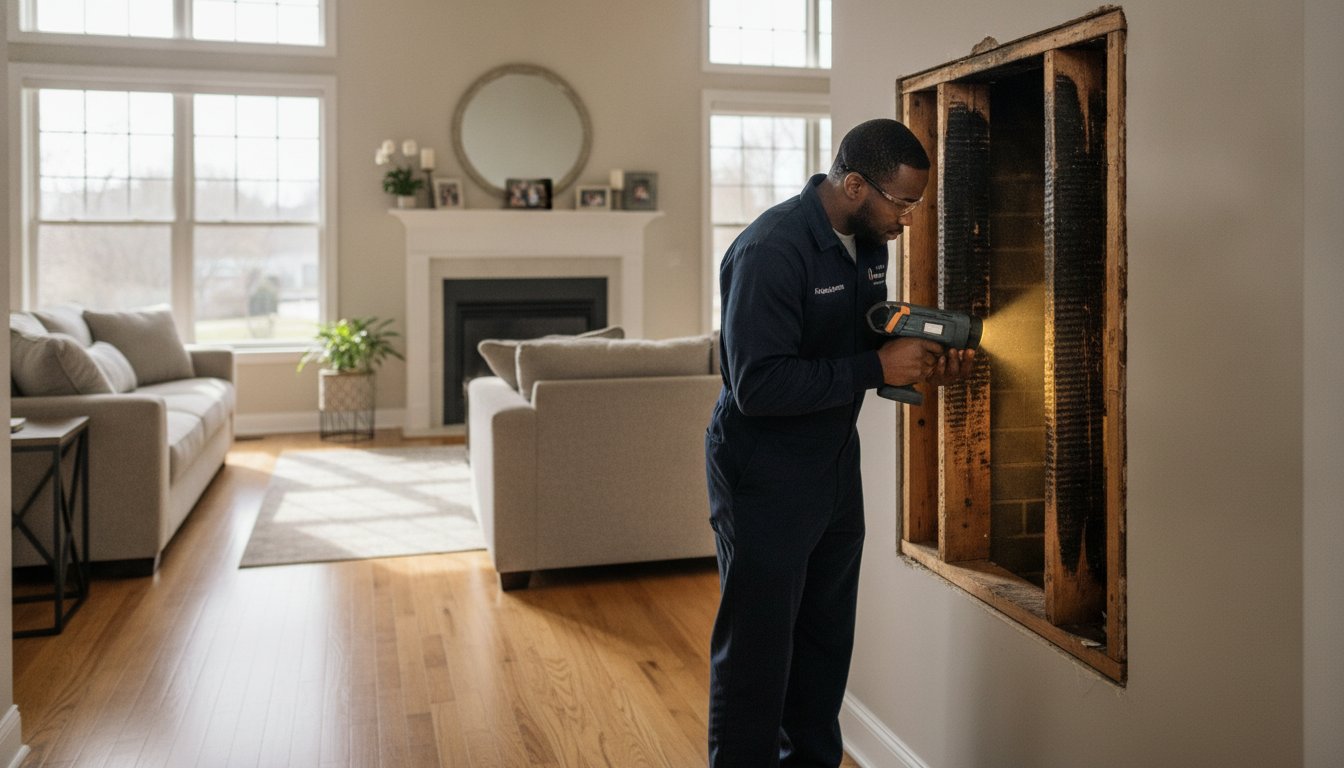
Delayed ignition is a critical warning. If you hear a "boom" or a loud "pop" when the burner finally catches, shut the unit off immediately. This sound is caused by gas accumulating before the spark ignites it. This "mini-explosion" can crack the ceramic glass or damage the firebox integrity. Similarly, soot buildup on your logs or glass is a major red flag. Gas fireplaces are designed to burn clean. Black residue indicates an improper air-to-gas ratio or a venting blockage. It means your system is producing excessive carbon monoxide. Do not wait for the alarm to sound.
Odors are your most urgent indicators. If you smell rotten eggs, you have a gas leak. Natural gas is odorless, so utilities add mercaptan to help you detect it. Leave the house immediately. Don't flip a light switch. Don't use your phone inside. Call your gas provider from a safe distance once you are clear of the building. Your safety is the only priority in that moment.
Pilot Light and Ignition Issues
A pilot light that won't stay lit is more than an inconvenience. It often signals a failing thermocouple. This sensor is a safety device. It detects the pilot flame’s heat to allow gas flow. If it’s worn out, it shuts the system down for your protection. Alternatively, the pilot tube might be clogged with spider webs or dust. Never try to force a gas valve that feels stuck or resistant. You risk snapping the internal seals and creating a permanent leak. Comprehensive gas fireplace maintenance NJ identifies the root cause without causing further mechanical damage.
Unusual Smells and Noises
You must distinguish between "burning dust" and "mechanical failure." A faint dusty smell during the first burn of the season is typical. A sharp chemical or metallic odor is a sign of wire degradation or component overheating. Clicking sounds usually indicate a faulty igniter or a loose electrical connection. Whistling noises often point to a gas line issue or a burner orifice that needs professional cleaning. If you have a hybrid system, you might ask: Is my chimney safe to use? Understanding the difference between normal mechanical noise and a safety hazard is essential for every New Jersey homeowner.
Timing Your Maintenance for the New Jersey Winter
Procrastination is a safety risk. The most effective time for gas fireplace maintenance NJ is before the first frost in October. New Jersey winters are unforgiving. Waiting until December leaves your family vulnerable to the "Emergency Rush." When temperatures plummet, service wait times skyrocket. A proactive inspection ensures your system is operational before you actually need it. You don't want to discover a pilot light failure during a January freeze.
Summer humidity in the Mid-Atlantic region is another hidden enemy. New Jersey's high moisture levels cause internal corrosion in dormant units. Condensation builds up inside the firebox and on the burner ports. This leads to rust and component degradation while the unit is off. Professional gas fireplace maintenance NJ identifies these issues before they become permanent damage. It also ensures your home is ready for holiday gatherings. A clean, safe fire is the centerpiece of a secure home.
Pre-Season Prep: Beat the Cold
Same-week appointments disappear once the snow falls. In October, scheduling is flexible. By late December, every technician in the state is booked with emergency repairs. Professional gas fireplace service NJ during the off-season guarantees your backup heating source is reliable. If your furnace fails during a storm, your gas fireplace is your primary defense against frozen pipes. Don't leave your secondary heat source to chance.
NJ/Philadelphia Regional Considerations
Local environment factors dictate your maintenance needs. In the NJ and Philadelphia region, pests like stink bugs and spiders are attracted to the smell of gas. They often nest inside burner tubes, causing uneven flames or ignition blockages. For homes along the Jersey Shore, coastal salt air accelerates the corrosion of exterior venting caps. High-wind events, common during autumn Nor'easters, can also cause pilot blowouts if your venting is compromised. We check for these local hazards during every visit. Secure your home today and schedule your annual gas fireplace inspection before the winter rush begins.
Absolute Chimney Pros: Certified NJ Gas Fireplace Experts
Expertise is the difference between a safe home and a potential hazard. Gas fireplaces are pressurized fuel systems. They require more than a surface-level cleaning. A generic handyman might overlook a micro-crack in a firebox or a failing gas valve. Absolute Chimney Pros technicians are CSIA-certified. We bring technical mastery to every gas fireplace maintenance NJ appointment. We serve homeowners across the entire state of New Jersey and the Philadelphia metropolitan area. Our team is fully licensed and insured. We prioritize your peace of mind through disciplined, expert service. We show up on time. We do the job right. We provide a clear report of our findings.
A professional service visit is a technical audit. We don't guess. We use electronic leak detectors to verify every connection. We measure gas pressure to ensure the burner operates at peak efficiency. This technical precision is what separates a certified expert from a general contractor. Our goal is to eliminate risks before they become emergencies. Just as you would rely on Uniedaken for specialized roofing repairs to protect your home’s exterior, we take responsibility for the well-being of your internal home environment. You can trust our technicians to provide an honest assessment of your system's condition.
Maintaining the exterior of your property is just as vital as internal system safety; for those seeking comprehensive exterior maintenance and specialized cleaning solutions, you can visit Snugs Services.
The Flat-Fee Inspection Advantage
Transparency is not a marketing slogan. It is our operational standard. We offer flat-fee inspections to eliminate the fear of hidden costs. You shouldn't have to worry about bait-and-switch pricing when it comes to your family's safety. Our technicians provide clear, on-site estimates before any work begins. This commitment to ethics is why NJ homeowners trust us. Our chimney inspection New Jersey flat-fee service includes a rigorous multi-point check. We verify every component from the pilot assembly to the venting cap. We check for gas leaks with electronic sensors. We verify the seal of the glass door. No guesswork. No surprises. Just facts.
Ready for a Safe Winter? Schedule Today
Winter doesn't wait for your schedule. We offer same-week appointments to ensure you aren't left in the cold. A malfunctioning fireplace is more than a nuisance; it's a loss of a critical heat source. While we are on-site, we can also address other household fire risks. Consider professional dryer vent cleaning NJ to protect your home from lint-fire hazards. Both gas fireplaces and dryer vents require vigilant maintenance to prevent household fires. Don't wait for a breakdown or a red flag to appear. Proactive gas fireplace maintenance NJ is the only way to guarantee a secure heating season. Schedule your inspection now to secure your home. Your safety is our priority.
Secure Your Home Before the First Frost
Safety is a choice you make before the emergency happens. You now understand that annual gas fireplace maintenance NJ is a technical necessity for your family's protection. Professional oversight eliminates the risk of carbon monoxide leaks and ensures your unit operates at peak efficiency. You shouldn't have to worry about pilot light failures or dirty glass when the temperatures drop. Vigilance today prevents expensive repairs tomorrow. It also protects your manufacturer warranty and your home's resale value; for those with properties in South Florida, working with an experienced team like Renegade Roofing Co. ensures that same level of structural protection and peace of mind.
Absolute Chimney Pros provides the disciplined expertise your home requires. Our CSIA-certified technicians offer flat-fee safety inspections with no hidden costs. We are fully licensed and insured in NJ and PA. We take responsibility for your home's environment so you can enjoy the warmth without the worry. Don't leave your safety to chance this winter. We offer same-week appointments to get your home ready quickly and efficiently. Precision matters when gas and fire are involved.
Schedule Your Same-Week Gas Fireplace Service in NJ and enjoy the peace of mind that comes with professional oversight. We are ready to help you prepare for a safe and comfortable heating season. Your family's well-being is our top priority.
Frequently Asked Questions
How often should I have my gas fireplace serviced in NJ?
You should schedule professional service once every year, ideally before the heating season begins in October. Annual gas fireplace maintenance NJ ensures that summer dust, humidity, or pests haven't compromised the burner tubes or pilot assembly. Regular service also satisfies manufacturer warranty requirements and prevents unexpected breakdowns during the coldest months of the year. Waiting until mid-winter increases the risk of component failure when you need heat the most.
Why is my gas fireplace glass turning white or cloudy?
Cloudy glass is caused by a buildup of minerals and combustion byproducts like sulfur that accumulate over time. If you don't clean this film regularly, the heat will eventually etch the glass surface permanently. You must use a specialized, non-abrasive gas fireplace glass cleaner to restore clarity. While fireplace glass requires specific products, for professional cleaning of your home's standard windows, you can check out Vitres Ultra Nettes. Standard window cleaners often contain ammonia, which can damage the heat-resistant glass and create dangerous fumes when the fireplace is ignited.
Is it safe to clean my own gas fireplace?
It is safe to clean the exterior surfaces and the glass, but you should never attempt to service the gas components, valves, or internal sensors yourself. These systems involve pressurized fuel and sensitive safety mechanisms that require specialized tools to calibrate. A certified professional must handle the technical inspection to ensure there are no gas leaks. DIY attempts on gas lines can lead to fire hazards or voided insurance policies.
How long does a professional gas fireplace maintenance visit take?
A standard professional maintenance visit typically takes between 45 and 90 minutes to complete. This timeframe allows the technician to perform a full safety audit, clean the internal components, and verify manifold gas pressure. If repairs or part replacements are necessary, the visit may take longer depending on the complexity of the unit. We provide a full, transparent report on-site immediately following the inspection so you know the exact status of your system.
What should I do if I smell gas near my fireplace?
If you smell a "rotten egg" odor, you must evacuate the building immediately and call your gas provider from a safe distance. Do not flip any light switches, use a telephone inside, or attempt to find the leak yourself. This smell indicates that mercaptan, an additive in natural gas, is present in your living space. A leak is a critical safety emergency that requires immediate intervention by the utility company or a licensed professional.
Can a gas fireplace cause carbon monoxide poisoning?
Yes, a malfunctioning gas fireplace can cause carbon monoxide poisoning if the venting is blocked or the burner is misaligned. Carbon monoxide is an odorless, invisible byproduct of incomplete combustion that can be fatal. Professional gas fireplace maintenance NJ includes testing for CO leaks and ensuring the flue or vent is completely clear of obstructions. You should also maintain working CO detectors on every level of your home for constant protection.
Why won’t my gas fireplace pilot light stay lit?
A pilot light that won't stay lit usually indicates a failing thermocouple or a clogged pilot orifice. The thermocouple is a safety sensor that must detect heat from the pilot flame to allow the main gas valve to open. If it's worn out or covered in carbon buildup, it shuts the system down to prevent unburned gas from entering your home. Cleaning or replacing this component is a routine part of a professional safety service visit.
Does a gas fireplace need a chimney sweep?
A gas fireplace does not produce creosote like a wood fire, but it still requires a specialized inspection of the venting system. Debris, bird nests, or structural damage to the flue can block exhaust gases and force them into your living space. While it isn't a traditional "sweep" for soot, we include a venting integrity check as part of our comprehensive service. This ensures that all combustion byproducts are safely exiting your home.