

A small chimney leak can turn into a larger home repair when water keeps getting in. The cost of ignoring a chimney leak in Philadelphia depends on where the water enters and how far the damage has spread, from deteriorating mortar and brick to rot or mold indoors. Identifying the source early helps clarify what repairs are needed.
It’s easy to put off a leak when the stain seems minor. But water can travel beyond the visible spot, so check both the flashing where the roof meets the chimney and the attic below when tracing its path. Repair costs depend on the source, the condition of the masonry and flashing, and the extent of any interior damage. A project quote reflects those factors.
This article explains what ongoing water intrusion can damage, what checks of the flashing and attic may reveal, and how to weigh repairs against the risks of waiting. You’ll also find a practical guide to help you decide when a leak needs attention.
Key Takeaways
- Trace water stains beyond the visible spot; attic checks can help show whether moisture is reaching wood or insulation.
- Inspect the flashing where the chimney meets the roof, but remember that a nearby leak alone doesn’t prove flashing is the cause.
- Compare repair options by the source of the leak and the extent of masonry, roof-junction, or interior damage.
- If chimney damage may affect safe venting, stop using the system until a qualified professional evaluates it.
Chimney leak damage and water intrusion
Philadelphia rowhome chimneys can be 80 to 130 years old, and water entering through worn masonry can spread beyond the chimney. Compare the damage path before deciding what repair scope may be needed.
Water Damage to Mortar and Bricks
Water can speed up mortar breakdown, soften bricks, rot nearby wood, and contribute to mold growth inside a home. Eroded mortar joints let in more water, allowing damage to spread from the chimney surface toward framing or interior finishes. Unlike a leak confined to the roof junction, masonry deterioration may require repairs to affected brick and mortar, not just the point where water enters.
Freeze-Thaw and Acid-Rain Damage
Moisture trapped in porous masonry can worsen damage as temperatures shift between freezing and thawing. Philadelphia-area acid rain also damages exterior chimney masonry. These conditions wear down exposed brick and mortar over time, while a flashing leak concentrates water where the chimney meets the roof. During an inspection, look for crumbling joints, loose bricks, and surface deterioration rather than assuming one visible stain shows the full extent of the problem.
Homeowners Insurance and Chimney Damage
Homeowners insurance coverage depends on the policy and the circumstances of the damage. An untreated leak may be assessed differently from damage caused by a sudden event, so review your policy and document what you observe. Photograph the chimney, interior staining, and any visible water path. These records can help explain the timeline, but they don’t determine coverage. Compare the insurer’s decision with the repair scope before proceeding.
When requesting an estimate, describe the leak and ask for a written scope covering the inspection and proposed chimney repairs. For Pennsylvania home improvement work, homeowners should ask for the contractor’s registration number and a written contract.
Permit requirements depend on the planned work and applicable Philadelphia rules. Ask the City of Philadelphia permitting office whether the specific repair requires a permit. Don’t assume masonry, flashing, and structural work all follow the same rule.
| Damage option | Likely area affected | What to compare |
|---|---|---|
| Mortar and brick deterioration | Chimney masonry | Extent of damaged joints and brick |
| Freeze-thaw or acid-rain wear | Exposed masonry | Surface condition and water entry |
| Interior water damage | Wood or finished areas | Moisture path and affected materials |
Choose a repair scope that addresses the identified water path and the full area of damage, not just the most visible symptom.
Water penetration at the roof and chimney junction
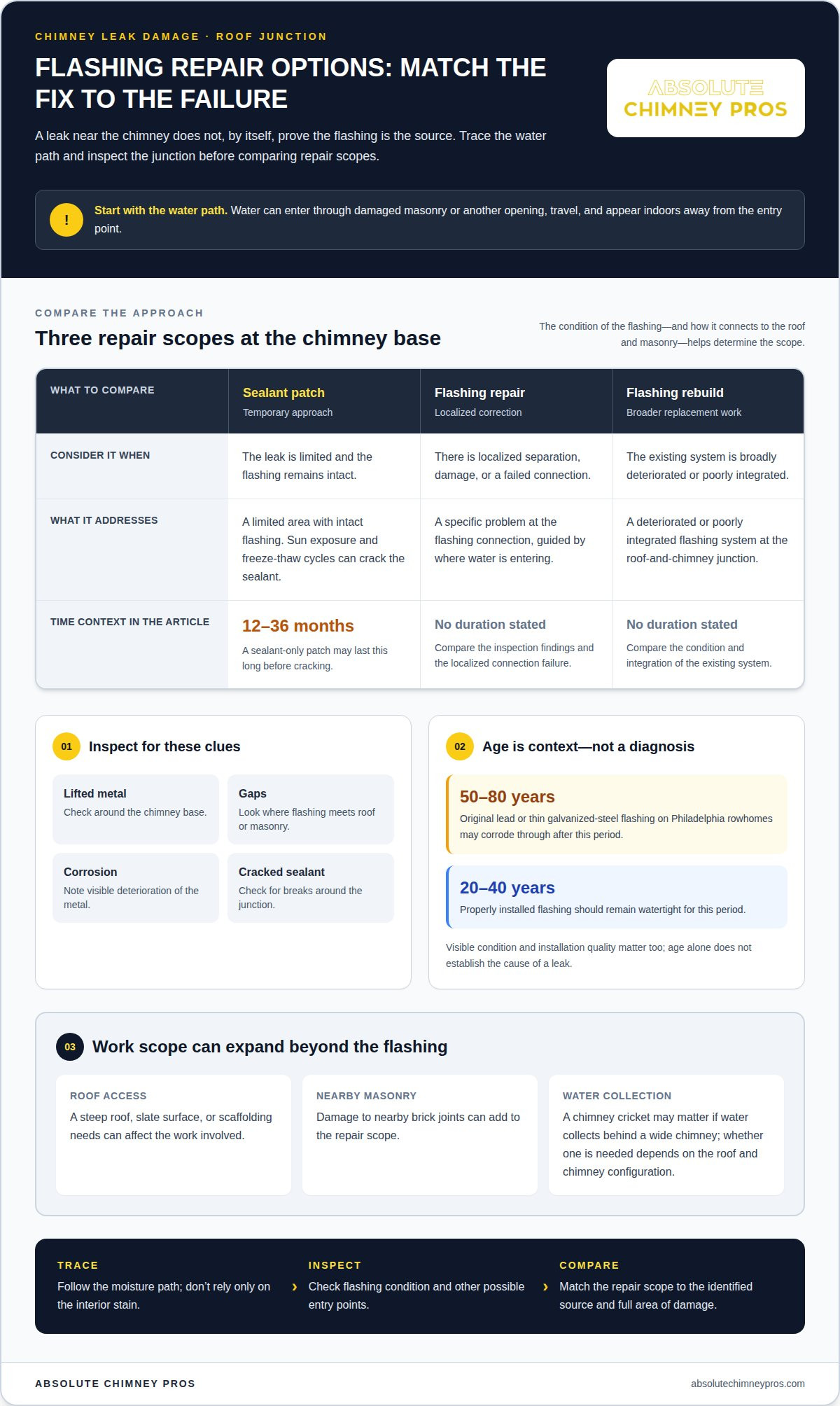
Chimney flashing seals the joint where the masonry meets the roof, but a nearby leak doesn’t prove that flashing is the cause. Water may enter through damaged masonry or another opening, then travel before appearing indoors. During a chimney inspection, trace the moisture path instead of assuming the nearest roof component has failed.
Look for lifted metal, gaps, corrosion, or cracked sealant around the chimney base. Original lead or thin galvanized-steel flashing on Philadelphia rowhomes may corrode through after 50 to 80 years. Properly installed flashing should remain watertight for 20 to 40 years. Those ranges help frame the inspection, but visible condition and installation quality matter too.
A sealant-only patch may last 12 to 36 months before sun exposure and freeze-thaw cycles crack it. That temporary approach differs from rebuilding flashing, which addresses how the metal pieces meet the roof and masonry. If a patch fails repeatedly, note where water returns and whether damage follows the same path. That record can help identify whether the underlying junction remains open.
Use these checks to compare repair approaches:
- Sealant patch: Consider whether the leak is limited and the flashing remains intact.
- Flashing repair: Look for localized separation, damage, or a failed connection.
- Flashing rebuild: Consider this when the existing system is broadly deteriorated or poorly integrated.
Roof type and access affect the work involved. A steep roof, slate surface, scaffolding needs, or damage to nearby brick joints can expand the repair scope. A chimney cricket may also matter if water collects behind a wide chimney. Whether one is needed depends on the chimney and roof configuration.
For a leak at this junction, a professional chimney inspection can help identify the entry point before repair work begins. Compare the findings with the observed water path and the condition of the flashing, not just the interior stain.
What interior repairs can a leaking chimney cause, and what do they cost?
Water inside a home can damage more than the ceiling below a chimney. As moisture spreads, it can affect drywall, insulation, trim, and nearby framing. Water exposure can rot wood and contribute to mold growth. A ceiling mark near the chimney, for example, may not show how far moisture has traveled behind the surface.
Separate the repair into two steps: stop the water entry, then assess the interior materials. Replacing stained drywall without fixing the leak leaves the cause in place. Wet insulation or softened wood may also need attention, depending on the affected area. An inspection can help trace moisture and distinguish surface staining from damage to concealed materials.
Interior repairs may involve removing damaged finishes, drying affected areas, replacing materials, and addressing mold growth if it has developed. The scope depends on which materials are wet, how far moisture has spread, and whether wood has deteriorated. A small, isolated stain is different from water that has reached multiple surfaces or hidden framing.
- Ceiling or wall finishes: Check for staining, bubbling, peeling, or soft drywall.
- Insulation: Note whether it is damp or compressed near the leak path.
- Wood framing or trim: Look for softness, discoloration, or visible deterioration.
- Musty areas: Record locations where mold growth or persistent dampness appears.
Interior repair costs depend on the affected materials, the size of the damaged area, and the work needed after the leak is stopped. An estimate should separate chimney work from interior restoration to clarify the scope and cost factors. The price depends on the situation and is provided after a quote request; key factors include the extent of damage, materials, access, and whether concealed areas need repair.
Photograph each affected area and note when staining appears, such as after rainfall. Keep those observations with the repair scope. This helps clarify what needs replacement and what can remain, rather than treating every interior mark as proof of widespread damage.
What are signs a chimney is leaking and needs immediate repair?
Watch for fresh water stains near the chimney, damp odors after rain, peeling paint, or crumbling masonry. In the attic, check the framing beside the chimney and nearby insulation for dampness or discoloration. A stain that darkens after rainfall may help connect the symptom to water intrusion, but the visible mark may not show the full path.
- Active dripping: Place a container beneath the leak and note when water appears.
- New ceiling or wall stains: Photograph each mark and record whether it grows after rain.
- Loose or crumbling material: Look for deteriorated mortar or brick around the chimney.
- Flue concerns: Treat evidence of damage inside the flue as a safety issue.
Act promptly if water is entering the home or the masonry is visibly breaking down. Ongoing moisture can reach wood and interior finishes, so document the affected areas and arrange an assessment of the chimney and possible water-entry points. Avoid climbing onto the roof to inspect the flashing. Ground-level photos and attic observations provide useful details without requiring roof access.
Flue damage deserves special attention. If damage to the chimney flue may affect safe venting, stop using the system until a qualified professional evaluates it. This matters especially when water intrusion coincides with changes in fireplace or appliance operation. A ceiling stain alone doesn’t prove the flue is damaged, so keep the observation separate from the diagnosis.
Keep a simple record for the inspection: note when the leak appears, which rooms show staining, and whether the affected area changes after rainfall. The Chimney Safety Institute of America recommends annual chimney inspections. A new leak or suspected damage calls for attention based on the condition observed, not just the calendar.
For visible leaks, damaged masonry, or suspected flue concerns, schedule a chimney inspection to assess the condition and identify the next repair step.
Absolute Chimney Pros: Chimney Sweep
Absolute Chimney Pros provides chimney inspections and repairs to assess leaking chimneys. Arrange an inspection if you notice recurring water entry, deteriorating masonry, or signs that moisture has reached the attic. The assessment can clarify the chimney’s condition and the next step, whether it involves a repair, chimney sweep, or liner installation.
A chimney leak and a venting concern are different issues, but both deserve attention. If flue damage may affect safe venting, stop using the system until a qualified professional evaluates it. Share what you’ve observed, including where staining appears and whether it follows rainfall, to help focus the assessment.
For help assessing your chimney, contact Absolute Chimney Pros or visit absolutechimneypros.com.
Take the Next Step Before Water Spreads
The cost of ignoring a chimney leak in Philadelphia can rise as moisture reaches materials beyond the original entry point. Make your next decision using a clear record: note where water appears, when it happens, and which areas have changed. These details help focus the assessment on the actual problem.
Separate the source repair from any interior restoration in the proposed scope. This makes it easier to see which work stops water entry and which restores affected materials. Repair costs depend on the situation and are provided after a quote request; key factors include the leak source, affected materials, access, and required work.
Absolute Chimney Pros offers chimney inspections, chimney sweeping, and chimney liner installation. The right next step depends on the assessment findings, so share your observations and ask about the work that addresses them.
Contact Absolute Chimney Pros for help and move toward a clear, informed repair plan.
Frequently Asked Questions
How Much Does Chimney Repair Cost in Philadelphia?
Chimney repair costs in Philadelphia depend on the leak source, the chimney’s condition, roof access, and the work required. A localized flashing issue differs from deteriorated masonry or damage involving the roofline. Ask for a written scope that separates water-entry repairs from interior restoration. This makes the proposed work and its cost factors easier to understand before you decide how to proceed.
What is the average cost to repair a chimney leak in Philadelphia?
There isn’t one useful average for every Philadelphia chimney leak because the repair scope varies. A single failed connection differs from water entering through damaged masonry and affecting interior materials. The cost of ignoring a chimney leak in Philadelphia can change as damage spreads. Compare estimates by the identified source, affected areas, materials, roof access, and the work included in each scope.
How much does it cost to repair common causes of chimney leaks, such as flashing, masonry, or a chimney cap?
Repair costs depend on which component has failed and how much surrounding damage exists. Flashing work addresses the roof-to-chimney junction; masonry work addresses deteriorated brick or mortar. A cap may be relevant if rain enters through the flue opening. These are different repair scopes, so compare estimates by the diagnosed cause and included work rather than treating the fixes as interchangeable.
How much more can chimney leak repairs cost if water damage is left untreated?
There’s no fixed additional amount: costs depend on what the water reaches and which materials need repair. If a leak spreads from a chimney opening to interior finishes, repairs may involve more than stopping water entry. Damp insulation, damaged drywall, deteriorated framing, and mold growth each affect the scope. A documented inspection can help separate leak repairs from interior restoration.
Can a chimney leak cause mold, structural damage, or fire and carbon monoxide hazards?
Yes, water exposure can contribute to mold growth and wood rot, but a leak alone doesn’t prove there is a fire or carbon monoxide hazard. Those risks require a separate assessment of the chimney and venting condition. If flue damage may affect safe venting, stop using the system until a qualified professional evaluates it. Don’t assume an interior water stain reveals the condition of the flue.
How do Philadelphia weather and freeze-thaw cycles affect chimney leak damage?
Philadelphia’s freeze-thaw cycles can worsen moisture-related wear in porous brick and mortar. Water enters small openings, and temperature changes can contribute to further deterioration. Acid rain in the area also damages exterior chimney masonry. After a wet or freezing period, note fresh cracks, crumbling joints, or changes in interior staining. These observations can help distinguish ongoing water entry from older, stable damage.


