
A home inspection can include a visual check of accessible chimney components, but it doesn’t establish that the entire chimney is safe and working properly. If you’re getting your house ready to sell, a chimney inspection can reveal issues a general home inspection may miss. A Level 2 chimney inspection is required before selling a home.
It’s easy to assume a buyer’s inspection will catch every chimney problem. It may not: hidden flue damage, a faulty liner, or moisture intrusion can affect safety and lead to repair negotiations late in the sale. This guide explains what a home inspector typically checks, which chimney repairs may need attention, and when to schedule a Level 2 inspection before listing. You’ll also learn what that inspection covers and how an early assessment can give you time to understand the findings and plan next steps. Clear information before you list can help you prepare for questions about the chimney and avoid surprises during the sale.
Key Takeaways
- A general home inspection may note visible chimney concerns, but it can miss hidden flue or liner problems.
- Use a pre-listing chimney assessment to understand needed repairs and prepare for buyer questions or negotiations.
- Address visible damage, such as deteriorating mortar or flashing, early to allow time for repairs before closing.
- Consider scheduling a Level 2 inspection before listing to examine accessible chimney components and identify issues that may not be visible from the ground.
Are chimneys part of the home inspection?
Yes. A general home inspection may include a visual check of accessible chimney areas for damage or signs that cleaning is needed. The inspector may look at visible masonry, the chimney opening, and accessible parts of the flue, liner, and damper, which help vent combustion gases safely. This review can flag concerns, but it cannot establish the condition of concealed parts.
A standard home inspection covers major systems and structures, not every hidden surface. Inspectors check electrical, gas, heating, and cooling systems, along with appliances that will remain in the home, such as the stove, oven, refrigerator, garage door, and water heater. They also examine structural features such as the roof, attic, siding, windows, and doors. The scope depends on what is accessible during the inspection.
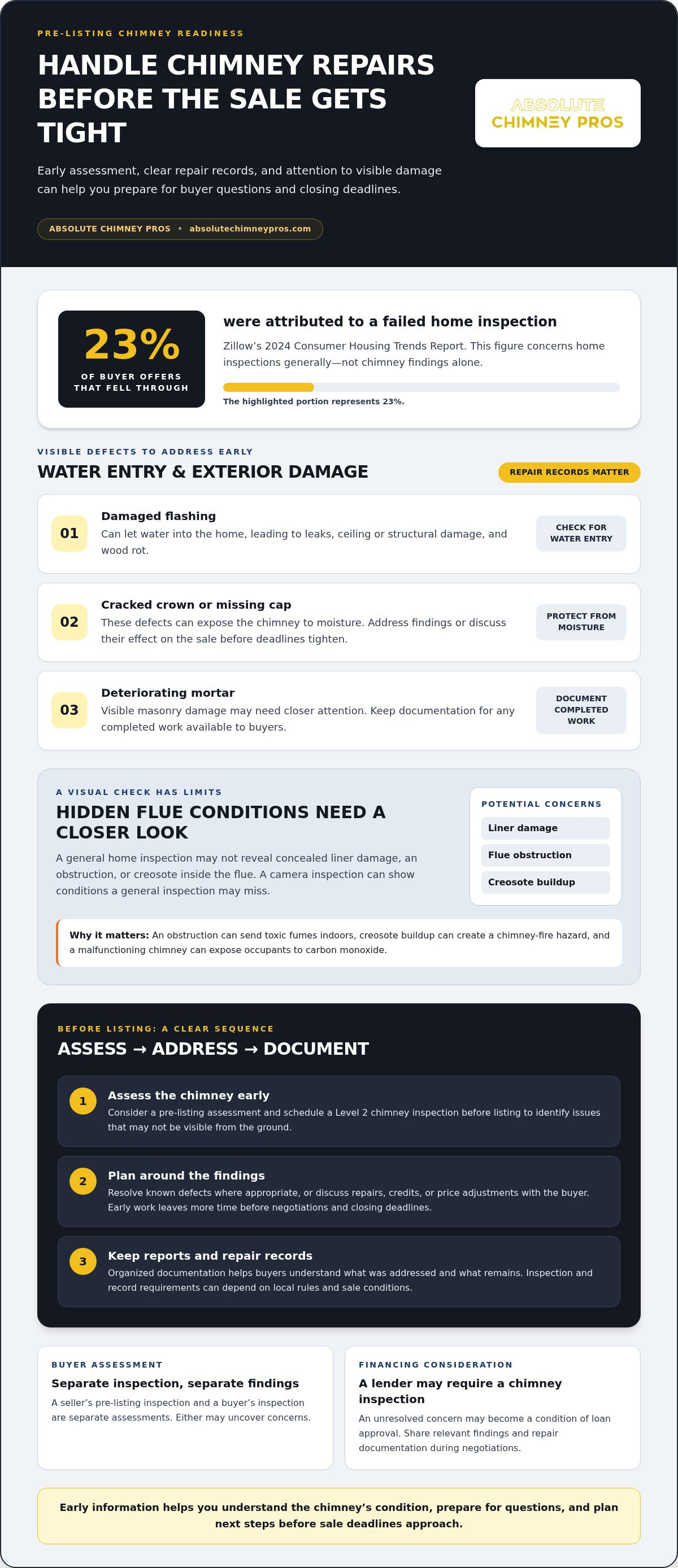
That limitation matters for chimneys. A brief visual review may not reveal a damaged liner, an obstruction, or creosote inside the flue. A camera inspection can show concealed flue conditions a general home inspection may miss. An obstruction can send toxic fumes indoors, and creosote buildup can create a chimney-fire hazard. A malfunctioning chimney can also expose occupants to carbon monoxide.
- Visible masonry: Cracked bricks or deteriorating mortar can signal damage that needs closer attention.
- Chimney opening: An inspector may notice visible blockage or signs that cleaning is needed.
- Accessible components: The liner and damper may receive a visual check, but concealed surfaces remain beyond that view.
A home inspector may give an on-site verbal warning if a chimney or heating appliance presents an imminent safety hazard. For a more detailed assessment, arrange a separate chimney inspection. It can examine areas beyond a general inspection’s visual scope, helping you understand whether the flue and related components need attention before buyers review the property.
Do I need to repair the chimney before selling my home?
Repair decisions depend on the inspection findings, sale terms, and any lender requirements. A documented defect can affect buyer negotiations, so address the report clearly rather than leaving room for uncertainty.
Separate Inspections for Buyers and Sellers
A seller’s pre-listing inspection and a buyer’s inspection are separate assessments, and either may uncover chimney concerns. A mortgage lender may also require a separate chimney inspection to assess safety and habitability. The person who pays for an inspection owns its report. If the buyer pays, request a copy so you can understand the findings and discuss repairs, credits, or price adjustments.
Records and Local Requirements
Inspection and repair record requirements depend on applicable state or local rules and the sale’s conditions. The National Fire Protection Association-211 Code Book requires a chimney inspection before a property is sold or transferred. Requirements can vary by jurisdiction, so don’t assume one rule applies to every home. Keep available reports and repair records organized to support clear discussions with buyers.
When a report identifies a defect, sellers and buyers can negotiate who will handle the repair. They may agree that the seller completes specified work before closing or account for outstanding repairs in the sale price. A buyer-paid report can inform that discussion, and the seller can request a copy to review the findings directly.
Use the report to distinguish a safety concern from a maintenance issue. For example, a damaged liner may raise different questions from visible mortar deterioration. Clear records of completed work help buyers understand what was addressed and what remains. If the chimney needs work, professional chimney repair can help address identified defects before closing.
Financing can affect the timeline. A lender may require a separate chimney inspection, so an unresolved concern can become a condition of loan approval. Share relevant findings and repair documentation during negotiations. This gives both parties a clearer basis for deciding whether repairs, a credit, or a price adjustment makes sense.
Pre-listing repairs and avoiding closing delays
Address visible chimney defects before listing, then keep clear records of completed work. Early attention leaves time to plan repairs before buyer negotiations or closing deadlines.
Repairs Before an Inspection
Pre-listing repairs are completed before a buyer’s inspection, based on known defects or an early assessment. They can help you understand the chimney’s condition and present the property with fewer unresolved questions. For example, damaged flashing can let water into the home, while a cracked crown, missing cap, or deteriorating mortar can expose the chimney to moisture. Keep repair documents available for buyers.
Preventing Closing Delays
Completing necessary work early can reduce the chance that new inspection findings trigger last-minute negotiations. Zillow’s 2024 Consumer Housing Trends Report says 23 percent of buyer offers that fell through were attributed to a failed home inspection. That figure covers home inspections generally, not chimney findings alone. A clear report and records showing what you repaired give buyers concrete information during the sale.
Pay attention to water entry. Damaged flashing can lead to leaks, ceiling or structural damage, and wood rot. A chimney professional can assess the issue and determine whether repair is needed. If an inspection finds deteriorated mortar or a damaged crown, address the finding or discuss its effect on the sale before deadlines tighten.
Homes with septic systems may involve a separate inspection and repair process. The timing and expense depend on the findings, the affected components, and the work required. Treat septic issues as a parallel task rather than assuming chimney work resolves them. Keeping both assessments and related repair records organized helps buyers understand outstanding items and supports a more orderly closing.
Schedule inspections early enough to allow time for assessment, repair planning, and buyer review. If a defect remains, document it and include it in negotiations rather than letting an unexpected report drive rushed decisions. The goal is a transparent sale, with the chimney’s condition and any completed work clearly understood.
Scheduling a Level 2 chimney inspection before listing
Getting your house ready to sell with a chimney inspection means assessing the system before listing, while there’s still time to review findings and plan repairs. An early inspection can help prevent chimney concerns from surfacing for the first time during buyer negotiations.
A Level 2 inspection includes the requirements of a Level 1 inspection and examines readily accessible chimney components. The inspector checks interior and exterior areas for damage, including accessible portions of attics, crawl spaces, and basements. This broader view can reveal moisture evidence near flashing or other signs of deterioration that a basic visual check may not show.
The inspection also includes a visual examination of internal flue-liner surfaces and joints. A video scan or another method can help assess the liner. The inspection does not require removing permanently attached chimney parts or damaging the building’s structure or finish. The U.S. Environmental Protection Agency notes that an inspection can include the caulked joint where the breeching enters a masonry chimney.
Consider an inspection if your home has a fireplace, wood stove, gas fireplace, furnace, or boiler. It’s especially useful before listing if you notice brick or mortar damage or have an active wood-burning setup. If you’re getting your house ready to sell, scheduling the assessment early gives you time to review its findings before a buyer does.
For a home with an existing chimney or flue still in service, the U.S. Environmental Protection Agency says the specification requires a Level II inspection under NFPA 211, performed by a CSIA-certified chimney sweep or similarly certified professional. Keep the completed report with your sale documents, then use its findings to plan any needed work. That gives you time to address issues before closing discussions become urgent.
Schedule a Level 2 chimney inspection before your listing goes live to identify accessible concerns and prepare for buyer questions.
Absolute Chimney Pros: Chimney Sweep
Absolute Chimney Pros helps sellers assess chimney conditions and address issues before a home goes on the market. A chimney inspection can identify concerns that need attention; a chimney sweep can remove soot and creosote when cleaning is needed. If the findings reveal damaged components, chimney repair or liner installation can address the specific problem.
Share inspection findings or previous repair records to help clarify the work needed. Addressing documented concerns before buyer negotiations can make the chimney’s condition easier to explain. The right service depends on what the inspection identifies, from cleaning needs to liner damage.
Contact Absolute Chimney Pros to arrange a chimney inspection, sweep, or repair as you prepare to sell your home.
Make Your Next Listing Step Count
Getting your house ready to sell with a chimney inspection also gives you a clear baseline for your records. Keep the inspection report, repair documents, and follow-up notes together. This gives you one place to refer to as listing plans progress and questions arise.
Before setting your timeline, decide who will keep the documents and how you’ll share relevant updates during the sale. Clear records keep communication focused on the home’s condition and the next practical step. If the report identifies work to consider, discuss the findings directly instead of relying on assumptions.
For help planning an inspection or addressing chimney needs before listing, contact Absolute Chimney Pros today. A clear starting point can make the next steps easier to manage, so you can move toward listing with confidence.
Frequently Asked Questions
Beyond the Roof: What Else Do You Have to Fix Before Selling a House in New Jersey or Pennsylvania?
For a home in New Jersey or Philadelphia, Pennsylvania, there isn’t one universal repair list for every sale. The purchase agreement, inspection findings, and buyer’s lender can shape which items need attention before closing. For example, a reported chimney defect may lead the parties to negotiate repairs or a credit. Review each written condition in the context of the specific sale, rather than relying on generalized rules.
So what actually has to get fixed before you close?
Repairs agreed to in the purchase contract or required by the buyer’s lender can become closing conditions. A lender may require a separate chimney inspection to assess safety and habitability. If the report identifies a concern, the parties can document a repair, credit, or price adjustment in their agreement. Specify the work covered and its completion deadline to reduce uncertainty before closing.
Should you get a chimney inspection before selling a house?
Yes. When getting your house ready to sell, a chimney inspection can help reveal concerns before a buyer evaluates the property. Consider it if you have an active fireplace or wood stove, visible masonry damage, or a history of smoke or draft issues. Absolute Chimney Pros recommends reviewing your system annually, and a sale is a practical time to ensure your chimney is ready for scrutiny.
What chimney inspection level is recommended when selling a home?
A Level 2 inspection is typically recommended when preparing a home for sale. It examines accessible chimney components and includes a visual review of the flue liner’s internal surfaces and joints, using video scanning or another method. The inspection also covers accessible areas such as attics, crawl spaces, and basements without requiring removal of permanently attached building components.
What chimney problems commonly affect home sales or inspections?
Findings may include an incorrectly sized or connected liner, inadequate clearance from combustible materials, or an improperly installed wood stove. Absolute Chimney Pros often notes damaged flashing, a cracked chimney crown, a missing cap, or deteriorating mortar during pre-sale evaluations. These conditions can indicate moisture entry or venting problems, and a clear written report helps distinguish routine maintenance needs from defects that require repair.
Should sellers repair chimney defects before listing or offer a credit?
Choose based on the defect, its safety implications, the repair schedule, and the buyer’s financing conditions. Completing work before listing gives you repair records to share with potential buyers. A credit may be negotiated if the buyer prefers to manage the work, but put the agreement in writing. Document whether the seller will complete a specific repair or whether it will be reflected in the final sale terms.


