
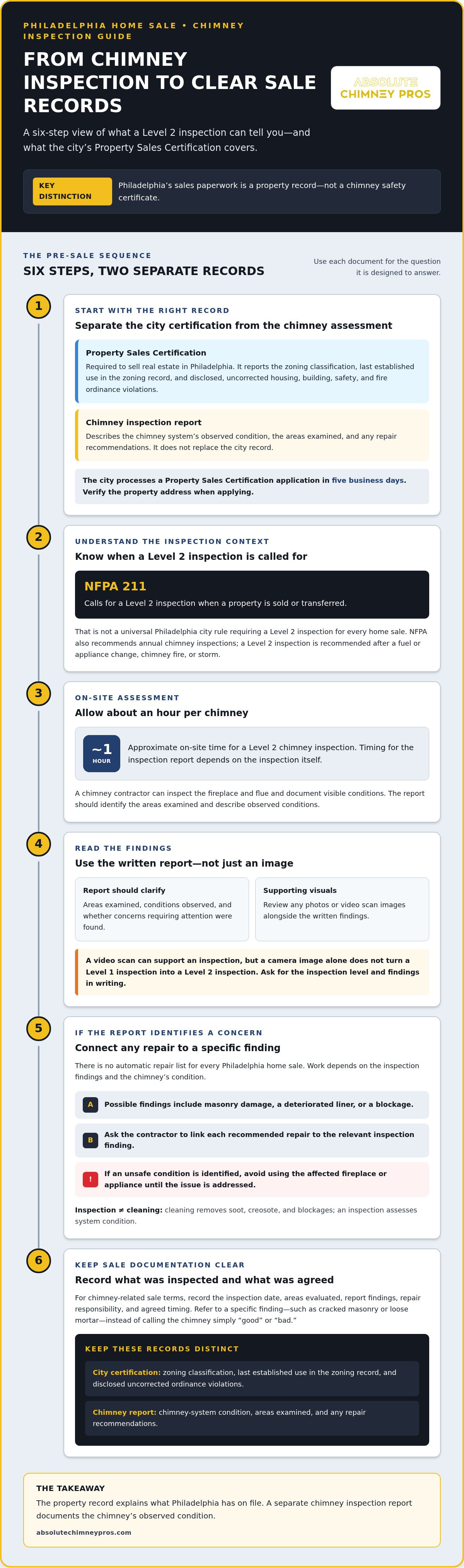
A Level 2 chimney inspection is not required by a universal Philadelphia rule for every home sale. NFPA 211 calls for one when a property is sold or transferred, so chimney certification for a home sale in Philadelphia can still matter even when it isn’t a city sales requirement.
Selling a home brings plenty of paperwork, so it’s reasonable to want a clear answer about chimney certification for a home sale in Philadelphia. A city Property Sales Certification is separate from a chimney inspection: one addresses property records and violations, while the other assesses the chimney system’s condition.
Here, you’ll learn how those requirements differ, what a Level 2 inspection covers, and when it may help identify issues before closing. You’ll also find out what to expect from the inspection and which chimney and fireplace contractors serve Philadelphia, so you can plan the next step with fewer surprises.
Key Takeaways
- Separate the city’s property sales paperwork from a chimney condition assessment so you know which document answers which question.
- Review the sales certification for zoning details and any disclosed, uncorrected property violations.
- Plan ahead: the city processes a Property Sales Certification application in five business days, while chimney inspection timing depends on the inspection itself.
- Know what a Level 2 inspection examines and how its findings can guide next steps if repairs are needed.
Chimney and fireplace contractors serving Philadelphia
Philadelphia sellers should separate a chimney assessment from the city’s property sales paperwork. No universal Philadelphia legal rule requires a Level 2 inspection for every home sale, but NFPA 211 calls for one when property is sold or transferred.
That distinction helps sellers plan the right step. A chimney contractor can inspect the fireplace and flue, document visible conditions, and explain whether further evaluation or repairs are indicated. NFPA 211 defines three inspection levels. A video scan can support an inspection, but a camera image alone doesn’t make a Level 1 inspection a Level 2 inspection. Ask for the inspection level and findings in writing.
Inspection report and certification timing
A Level 2 chimney inspection takes about an hour per chimney on site. The inspection report should identify the areas examined, describe observed conditions, and make clear whether the inspection found concerns requiring attention. Read the findings alongside any photos or video scan images provided. Philadelphia processes a Property Sales Certification application in five business days; that city document is separate from a chimney inspection report.
Common pre-sale chimney repairs
There is no automatic repair list for every Philadelphia home sale. The work depends on the inspection findings and the chimney’s condition. A report may identify masonry damage, a deteriorated liner, or a blockage that needs attention. Sellers can use documented findings to understand the work involved and share clear information with buyers.
Ask the contractor to connect each recommended repair to a specific inspection finding. For example, a liner concern calls for a clear explanation of the affected area and the proposed next step. Cleaning is different from repair: cleaning removes soot, creosote, and blockages, while an inspection assesses system condition. The National Fire Protection Association recommends annual chimney inspections, regardless of use. A Level 2 inspection is also recommended after a fuel or appliance change, chimney fire, or storm.
Information provided by the certification
Philadelphia’s Property Sales Certification gives buyers and sellers information from the property’s zoning record and violation history. It states the zoning classification, the last established use in that record, and any disclosed, uncorrected housing, building, safety, and fire ordinance violations. These details help explain the property’s recorded status. They don’t describe the chimney’s interior condition or certify that a fireplace or appliance is safe to use.
Applicants must verify the property address when applying. Review the certification for an address mismatch, the recorded use, and each listed violation. For example, a disclosed fire-code violation is part of the property record, while a damaged flue needs a chimney inspection to assess its condition. The city document and a chimney inspection report answer different questions.
This distinction matters when preparing sale documents. A camera image of the flue, exterior photos, or a basement view may help document chimney conditions, but none changes what the city certification covers. Nor does a property record establish whether an appliance vents correctly. Keep chimney findings and municipal disclosures organized as separate records.
- Property certification: zoning classification, last established zoning-record use, and disclosed uncorrected ordinance violations.
- Chimney inspection: observed condition of the chimney system, including areas examined and any repair recommendations.
A city appointment is required for an in-person visit to the Philadelphia Permit and License Center. That visit concerns the municipal process, not a chimney examination. If a carbon monoxide alarm sounds, leave the building and follow local emergency guidance. Don’t treat an active alarm as a routine appointment or wait for a home-sale inspection.
Use the certification to understand what Philadelphia’s property record discloses. Use a separate chimney report to document the fireplace, flue, and connected appliance. Keeping the documents distinct helps prevent a zoning record from being mistaken for a technical safety assessment.
Philadelphia property sales certification requirement
Pennsylvania law requires a Property Sales Certification to sell real estate in Philadelphia. It is a municipal property record, not a chimney safety certificate.
Options after an unsafe inspection
A chimney inspection finding does not, by itself, establish that a Philadelphia sale is prohibited. The report gives the parties information to discuss before closing. If it identifies an unsafe condition, avoid using the affected fireplace or appliance until the issue is addressed. Buyers and sellers can document agreed next steps, such as repair arrangements or further evaluation, in the sale paperwork.
Chimney condition terms in sale agreements
Record the inspection date, areas evaluated, and report findings. State any repair responsibility and agreed timing in plain language. For example, if an inspection notes cracked masonry or loose mortar, refer to that specific finding rather than describing the chimney as simply “good” or “bad.” Clear terms help both parties understand what was inspected and what action they agreed to take.
The city certification provides the property’s zoning classification, the last established use in the zoning record, and disclosure of uncorrected housing, building, safety, and fire ordinance violations. It does not assess a chimney’s interior, masonry, mortar, or appliance venting. Keep the municipal record and chimney inspection report separate so each document is used for its intended purpose.
Verify the property address carefully when applying. Philadelphia processes a Property Sales Certification application in five business days. Use that timeline to plan the municipal paperwork, while arranging a chimney evaluation and any repair discussions separately. The city document does not replace a chimney inspection, and a completed inspection report does not replace the required property certification.
If an inspection identifies a concern, share the relevant report details with the other party and state the agreed response in the contract. Specific wording can clarify whether repairs will be completed before closing or handled another way. For legal advice about sale-agreement terms, consult a Pennsylvania real estate attorney.
How long does it take to get a chimney inspection report or certification?
Plan the chimney inspection and Philadelphia sales paperwork as separate tasks. A Level 2 chimney inspection takes about an hour per chimney on site. The Property Sales Certification follows a separate city process, which Philadelphia processes in five business days. Those timelines cover different work, so completing one doesn’t complete the other.
Before the inspection, leave the fireplace or stove unused for 24 hours. A cool system allows the contractor to assess it safely. Make access available to the fireplace and connected appliance, and clear the area around them. If the property has multiple chimneys, allow for onsite time at each one.
The inspection report documents the assessment and its findings. Review which chimney areas it covers, any photos or video images, and recommended next steps. If the report identifies a concern, use its specific observations to plan a repair discussion or further evaluation. Keep the report with the sale records so buyers can see what was examined.
- Onsite inspection: about an hour per chimney for a Level 2 inspection.
- Philadelphia certification: five business days for the city to process the application.
- Before arrival: don’t use the fireplace or stove for 24 hours before inspection.
Build both steps into the sale schedule. Submit the city application with the property address verified, and arrange the chimney assessment early enough to review the findings. If repairs are recommended, the seller and buyer can discuss next steps before finalizing their agreement. The inspection and any follow-up work have separate schedules.
For a chimney assessment tied to a sale, schedule a chimney inspection. Share the property details and sale timing when arranging the appointment. That gives you a clear starting point for organizing the inspection and reviewing its report alongside Philadelphia’s certification paperwork.
Absolute Chimney Pros: Chimney Sweep
Absolute Chimney Pros provides chimney inspections for Philadelphia-area sellers who want to understand their chimney’s condition before closing. An inspection can document observed issues and help clarify whether chimney repair or liner installation may be needed. If the system needs cleaning, a chimney sweep addresses soot, creosote, and blockages. These services support informed decisions, but they don’t replace Philadelphia’s Property Sales Certification.
Arrange a chimney inspection when you need a condition assessment, or discuss chimney repair if an inspection identifies a problem. Keep the report with your sale records and share relevant findings with the buyer as appropriate.
Contact Absolute Chimney Pros to arrange a chimney inspection for your Philadelphia-area home sale.
Move Forward With a Clear Chimney Plan
Give the chimney its own place in your sale timeline. Keep the inspection findings together, then use them to decide what action makes sense before ownership changes. A documented plan helps both parties understand what remains to be addressed without confusing chimney work with municipal paperwork.
For chimney certification for a Philadelphia home sale, match the work to the chimney’s condition. Absolute Chimney Pros offers chimney inspections, chimney sweeps, chimney liner installation, and chimney repair. An inspection can help determine whether cleaning or repair deserves attention, while liner installation addresses liner needs identified for the system.
Take the next step at a pace that fits your sale plans. Contact Absolute Chimney Pros to discuss chimney service for your property and move ahead with a clearer plan.
Frequently Asked Questions
Is Level 2 required for every home sale?
No universal Philadelphia legal rule requires a Level 2 chimney inspection for every home sale. NFPA 211 calls for a Level 2 inspection when property is sold or transferred, so it’s relevant to the transaction even though that standard isn’t the same as a city sales-code requirement. If you’re preparing a sale, distinguish the standard’s inspection guidance from the municipal documents required for the property.
What Does a Chimney Inspection Cost in Philadelphia?
The cost depends on the work involved. Absolute Chimney Pros offers a flat-fee inspection option, with the inspection scope determined by the chimney and areas being assessed. A straightforward inspection may differ from one involving multiple systems or additional access needs. Ask for an inspection that clearly defines the assessment, rather than assuming cleaning or repairs are included.
What Is the Difference Between Level 1 and Level 2?
Level 2 is the inspection level NFPA 211 calls for when property is sold or transferred. It covers masonry and factory-built chimneys serving fireplaces, stoves, furnaces, boilers, and water heaters, including gas appliances. A camera image alone doesn’t turn a Level 1 inspection into Level 2. Ask which level the written report documents, especially if you need it for a sale or transfer.
Is a Level 2 chimney inspection required when buying a house in Pennsylvania?
NFPA 211 calls for a Level 2 inspection when property is sold or transferred, making it relevant to a Pennsylvania home purchase. This standard is distinct from a universal state purchase-law requirement. Buyers can use the inspection findings to understand the chimney system before closing. If a report identifies a concern, keep the written findings available for discussions about the property and next steps.
Is chimney certification required when selling a home in Philadelphia?
Philadelphia requires a Property Sales Certification to sell real estate, but that city document is not a chimney certification. For chimney certification for a home sale in Philadelphia, distinguish the city’s property record from a technical chimney assessment. The municipal document doesn’t assess the flue or fireplace, so identify each document clearly in sale discussions to prevent confusion about property records and chimney condition.
What chimney inspections or certifications are required by Philadelphia code for a home sale?
No universal Philadelphia legal rule requires a Level 2 chimney inspection for every sale. For chimney certification for a home sale in Philadelphia, the required city document is the Property Sales Certification, which discloses zoning information and uncorrected housing, building, safety, and fire ordinance violations. It doesn’t evaluate chimney condition. A separate inspection report can provide chimney-specific findings if buyers or sellers need that information.


