
A flat-fee chimney inspection in South Jersey doesn’t have one set cost for every home. In Trenton, the price depends on the inspection scope and is provided after a quote request. Homeowners should have a professional inspect their chimney at least once a year, and NFPA recommends annual Level 2 inspections.
It’s reasonable to want a clear price before booking a flat-fee chimney inspection in South Jersey, especially when you want to know what the visit covers. A useful fee comes with a defined scope, including what the inspector checks in the flue and liner, and what may call for additional work.
This guide explains how inspection scope shapes the fee, what a chimney appointment may examine, and when a more detailed inspection may be relevant. You’ll also learn what to expect during the visit so you can make an informed decision about your chimney’s condition and next steps.
Key Takeaways
- Learn which parts of the chimney an inspection may examine, from the firebox and hearth to the flue and liner.
- Understand how inspection scope and the condition of the chimney influence the quote in Trenton.
- Know when a more detailed inspection may be appropriate, such as after a weather event or when an initial check finds a concern.
- See how inspection findings can point to practical next steps, including chimney sweeping, repair, or liner installation.
What to expect during a service appointment
A scheduled inspection gives a professional the opportunity to assess the chimney and identify visible concerns. In Trenton or elsewhere in South Jersey, ask for a clear explanation of the areas examined and the findings.
Standard Inspection Inclusions
Which South Jersey chimney companies offer flat-fee inspections? Chimney service businesses may offer a flat-fee option, but the fee structure and inspection scope can differ. A flat fee describes how you’re charged, not a uniform checklist.
What does a standard chimney inspection include? A professional typically examines the flue, checks for deposits, and looks for obstructions. The fireplace, hearth, and surrounding masonry may also be checked for damage, corrosion, or hazardous buildup. Ask for a report that identifies the areas inspected and the findings.
Expect the inspector to assess the chimney’s condition, including visible weather-related damage. For example, the visit may identify debris or animal activity blocking the flue. These checks can reveal concerns affecting how smoke exits the home and how the fireplace functions.
Emergency chimney services are different from scheduled inspections. A routine appointment assesses condition; it is not an emergency response. In South and central New Jersey, service coverage can vary by town. Share the property’s location and describe the concern when arranging chimney service.
Inspector Credentials and Insurance
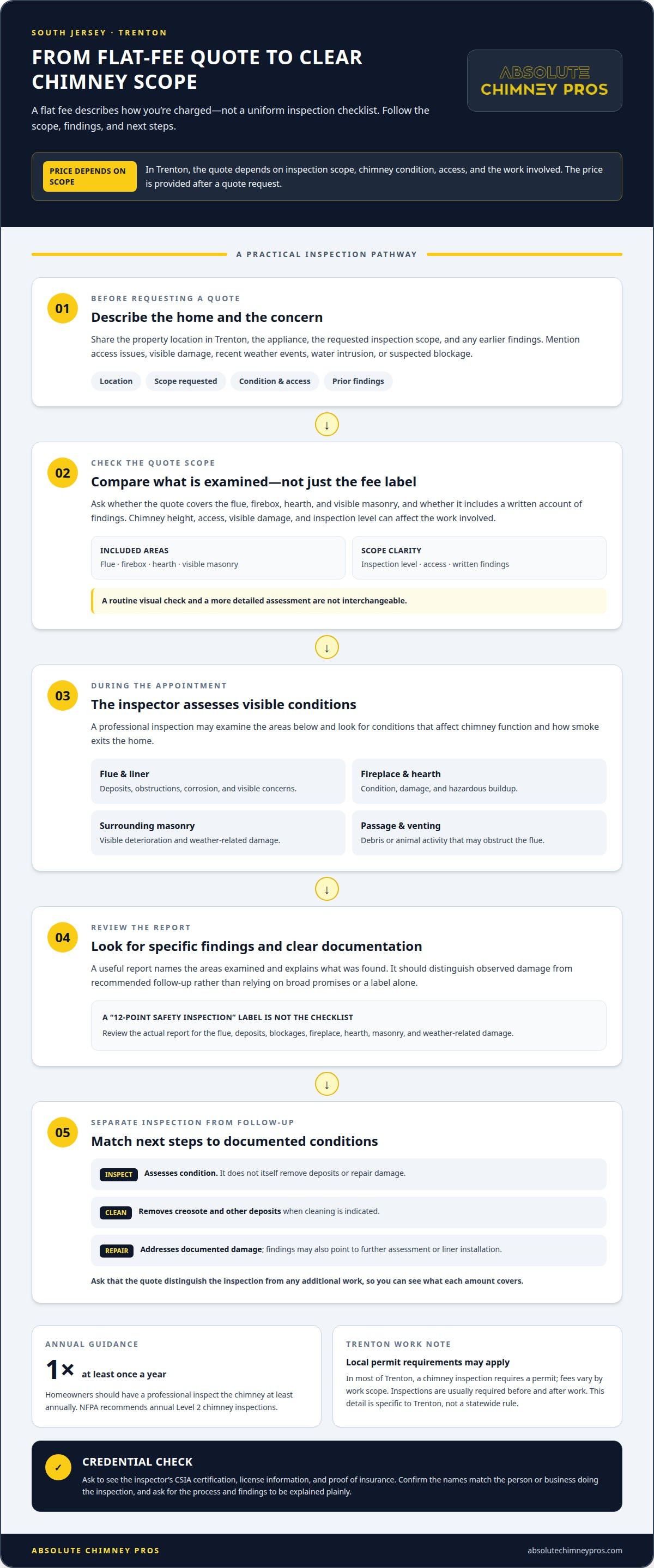
How can homeowners verify a South Jersey chimney inspector’s credentials and insurance? Ask to see the inspector’s CSIA certification, license information, and proof of insurance before the appointment. Confirm that the name on those documents matches the person or business doing the inspection.
During the visit, note whether the inspector explains the process and findings in plain language. A useful report names the areas examined, such as the flue or firebox, and distinguishes observed damage from recommended follow-up. Specific findings and clear documentation are more useful than broad promises.
How Much Does it Cost to Inspect Chimney in Trenton?
Trenton inspection quotes depend on the inspection scope, chimney condition, and access. The price depends on the case and is given after a quote request; inspection level and the work involved shape the quote.
Annual Inspection and Maintenance
Homeowners should have a professional inspect the chimney at least once a year. The NFPA recommends annual Level 2 chimney inspections. Regular checks help identify deposits, debris, and structural concerns before they worsen.
Inspection and cleaning address different needs. An inspection assesses condition; cleaning removes creosote and other deposits. Ask what the appointment covers, whether the flue and masonry are examined, and how findings are documented. New Jersey homeowners often schedule before regular fireplace use begins, such as in late summer or early fall.
Comparing Flat-Fee Quotes
How can homeowners compare flat-fee chimney inspection quotes in South Jersey? Compare the inspection level and areas examined, not just the flat-fee label. Check whether the quote covers the flue, firebox, hearth, and visible masonry, and whether it includes a written account of findings.
A flat fee describes the billing arrangement, not necessarily an identical inspection at every home. Chimney height, access, visible damage, and the requested inspection scope can affect the work involved. A routine visual check and a more detailed assessment are not interchangeable.
Separate the inspection from any follow-up work. If the inspector finds creosote, debris, or damage, ask which findings call for cleaning, repair, or further assessment. The quote should distinguish the inspection from additional work so you know what each amount covers.
Keep the details together: the property location in Trenton, the requested scope, and the findings from any earlier inspection. These specifics make quote comparisons more useful. For a defined inspection scope, review the chimney inspection service and note what the appointment needs to assess.
Chimney inspections and safety checks
A thorough inspection looks for concerns that can affect fireplace and wood stove use. In Trenton, local requirements may also matter, particularly when an inspection is connected to chimney work.
What South Jersey or New Jersey rules apply to chimney inspections and fireplace safety? In most of Trenton, a chimney inspection requires a permit, and fees vary by work scope. Inspections are usually required before and after work. These details are specific to Trenton, so don’t treat them as a statewide rule.
A “12-point safety inspection” label doesn’t explain what the inspector checks. Review the actual checklist and report. Look for findings on the flue, deposits, blockages, fireplace, hearth, masonry, and weather-related damage. A chimney sweep may also identify debris or animal activity that obstructs the passage.
What warning signs mean a chimney needs an inspection before use? Water entering through damaged masonry, visible deterioration, corrosion, heavy deposits, or debris in the chimney all warrant attention. An animal nest or blockage can interfere with smoke venting away from the home.
For a wood stove or fireplace, note changes after storms and periods of disuse. Look for damaged masonry, loose debris, or signs of water intrusion. These observations don’t replace an inspection, but they can help focus it. A clear report can distinguish cleaning needs from structural concerns that may call for repair.
- Before the visit: Describe the appliance, recent weather damage, and any visible blockage.
- During the visit: Ask which areas were checked and how each finding affects safe use.
- After the visit: Use the report to plan chimney cleaning or repairs based on documented conditions.
Keep the report with your home maintenance records. If it identifies a concern, address that specific finding before using the fireplace or wood stove. This gives you a practical next step without confusing a routine inspection with completed repair work.
Inspection of liners and flues
The flue carries smoke out of the home, while the liner forms its inner passage. During an inspection, the professional examines the flue, checks for deposits, and looks for obstructions. The liner’s visible condition matters too. The findings help show whether the passage is clear and whether follow-up attention may be needed.
Look for specific observations in the report, not just a general statement that the chimney passed. The report can identify deposits, visible damage, or debris affecting the flue. Ask which sections were accessible and whether the inspector observed the liner’s condition. Clear notes make it easier to understand the chimney’s function and plan the next step.
Animals or nesting material can obstruct the passage and interfere with smoke venting away from the home. Creosote and other deposits are also relevant findings. Sweeping removes deposits, while an inspection assesses condition. The two tasks address different needs, even when they involve the same flue.
- Flue: Ask whether the passage was checked for deposits and obstructions.
- Liner: Note any visible gaps, cracks, or areas the report identifies as damaged.
- Access: Record which areas the professional could examine during the appointment.
- Next step: Match each recommendation to a documented finding, such as cleaning or repair.
A concern about the liner does not automatically mean replacement is necessary. The documented condition and inspection scope guide the recommendation. If findings indicate liner damage, discuss whether repair or liner installation addresses the issue. A clear explanation supports an informed decision.
For a focused assessment of liner and flue condition, schedule a chimney inspection. A written account of findings can help you understand the chimney’s condition and decide on appropriate follow-up. That clarity can bring peace of mind while helping the system operate efficiently.
Absolute Chimney Pros: Chimney Sweep
Absolute Chimney Pros can help when inspection findings point to cleaning, repair, or liner concerns. A chimney sweep addresses deposits and debris; an inspection assesses the chimney’s condition. If the report identifies liner damage, liner installation may be a suitable next step. Chimney repair can address documented damage to the chimney structure.
Bring the inspection report and note specific concerns, such as recurring debris or visible liner damage. This gives the service team useful context and helps keep the next step focused on the findings. Choose the service that matches the condition rather than treating cleaning, inspection, and repair as interchangeable.
Contact Absolute Chimney Pros to discuss your chimney’s inspection findings.
Make Your Next Chimney Step Count
A clear inspection report gives you a practical starting point. Use its findings to plan the next action, whether that means scheduling maintenance, addressing a documented concern, or keeping the results with your home records. This makes a chimney check a useful part of ongoing home care.
If you’re considering a flat-fee chimney inspection in South Jersey, focus on the scope and findings that matter for your home. A defined next step can make it easier to move forward without guesswork.
Contact Absolute Chimney Pros to discuss your chimney needs. Take the next step toward a clear plan for your home.
Frequently Asked Questions
How Often Should NJ Homes Get Inspected?
New Jersey homeowners should arrange a professional chimney inspection annually. Add it to your home’s regular maintenance calendar, especially before using a fireplace after a long break. If you notice damage, water intrusion, or a change in how the fireplace operates, arrange an assessment sooner rather than waiting for the next scheduled check. Keep the inspection record with your other home maintenance documents.
What is the typical flat fee for a chimney inspection in South Jersey?
A flat fee is a set charge for an agreed inspection scope, rather than an open-ended hourly bill. The amount depends on what the inspection includes and the chimney’s condition. Compare written scopes, including which areas the inspector will examine and whether the appointment covers a basic or more detailed assessment. This puts the fee in context without treating different inspections as equivalent.
How do Level 1, Level 2, and Level 3 chimney inspections differ?
The levels describe different inspection scopes. A Level 2 inspection may be relevant when buying a home, after a weather event, or when an earlier inspection finds concerns. The appropriate level depends on why the inspection is needed and what the initial findings show. Review the stated scope so you understand which areas and conditions the assessment addresses.
Are chimney inspection fees in South Jersey affected by home size or chimney type?
Inspection fees are best compared by scope, not home size alone. Chimney layout, access to the areas being examined, condition, and the requested inspection level can affect the work involved. For example, an inspection focused on a liner concern may require a different scope from a routine assessment. Compare what each quote actually includes.
What additional charges may apply for chimney cleaning, repairs, or a Level 2 inspection?
Cleaning and repairs are separate work from assessing chimney condition, so identify them as distinct items in any proposed scope. A Level 2 inspection also has a different scope from a basic assessment. Review the written estimate for the inspection, any recommended cleaning, and each repair separately. This helps you see which work responds to a specific finding.
How often should a chimney be inspected under NFPA 211 guidance?
The NFPA recommends annual Level 2 chimney inspections. Annual scheduling gives homeowners a consistent maintenance checkpoint, including homes where a fireplace sees limited use. Keep the date and findings in your home records, then use them to plan the next inspection. A new concern, such as visible weather damage, is a reason to consider an assessment before the routine annual appointment.


