
A Level 1 chimney inspection is a basic visual check for soot, creosote, blockages, and animals in the chimney. The most useful questions to ask a chimney sweep company clarify what the inspection covers and whether you’ll receive a report documenting the chimney system’s condition. A clear answer helps you understand what the inspection can reveal before discussing any recommended work.
It’s reasonable to want more than a quick look and a verbal summary. You should know who will inspect your chimney, how to assess the company’s credentials and references, and what the quoted cleaning price includes. This guide explains what a Level 1 inspection involves, which questions can help you evaluate experience and past work, and how to ask about possible extra charges. You’ll also learn what details can affect a cleaning quote, so you can compare estimates clearly and make an informed decision without feeling pressured.
Key Takeaways
- Learn how to verify a technician’s CSIA certification and what credentials to ask about before an inspection.
- Use personal references to assess a company’s communication, workmanship, and care for the home.
- Know what to look for in an inspection report so findings and recommended work are clearly documented.
- Ask what a cleaning estimate includes and whether additional work could affect the final cost.
1. #4 – Are You CSIA Certified?
Ask whether the chimney sweep company is CSIA certified and insured. The Chimney Safety Institute of America certifies technicians based on their knowledge and experience. Ask which technician will inspect your fireplace, then request that person’s certification badge and CSIA number. Verify those details before the appointment; a company’s general claim doesn’t establish that the assigned technician holds the credential.
You can use the CSIA directory to look up certified technicians and companies. If you’re comparing credentials, match the technician’s name and details with the directory listing. Clarify whether the person who will attend your home is the credentialed technician, rather than relying on a general company claim.
Ask about other credentials, too. Homeowners are advised to look for companies that belong to the CSIA or the National Chimney Sweep Guild. Membership and technician certification are different things, so clarify which technicians hold certifications and which organizations the company belongs to. For example, if creosote buildup or a damaged flue raises a serious concern, you’ll want to know who is assessing the chimney and what qualifications they bring.
Insurance deserves a separate check. Ask whether the company has adequate insurance, the proper licenses, and bonding where required. Request proof of insurance, then verify it directly with the insurance carrier. That confirms the document comes from the carrier rather than relying only on a copy supplied by the company. For a chimney and fireplace inspection, these steps help you assess both the technician’s training and the business’s coverage before work starts.
2. #2 – Can You Provide References?
Ask for references you can contact personally, not only a collection of online ratings. A homeowner who recently hired the company can describe what happened from scheduling through cleanup. Ask about response time, work quality, quoted prices, and respect for the home. Those details show how the company handles a real chimney service visit, beyond how it presents itself in advertisements.
Read reviews for specific examples rather than relying on a star score alone. Look for descriptions of the technician’s arrival, explanation of findings, protection of floors, and communication about the work. Compare comments across platforms, and note whether customers describe similar strengths or recurring problems. Online reviews can be fake, so treat them as leads to investigate, not proof by themselves.
Check whether the reviewers live within the company’s stated service area. A nearby homeowner’s experience may better reflect local scheduling and service conditions than a review from a distant town. Confirm the company’s physical address and business history, too. A consistent local presence and clear account of past work give useful context when you’re hiring someone to inspect a chimney or address a structural concern.
Ask references practical follow-up questions. Did the technician explain the work before starting? Did the final charge match the quote? Was the home left orderly? Did the company provide clear documentation? For example, a reference who can describe how a certified chimney professional handled an unexpected finding offers more useful detail than a brief recommendation.
Also review recent complaints and lawsuits. Avoid a company with more than one recent or current serious complaint or lawsuit. Look for the company’s response and whether the issue was resolved, but don’t treat a polished reply as a substitute for a reference. A directory or credential connected with the Chimney Safety Institute of America can help identify a certified professional; references can then shed light on the customer experience.
3. What does a Level 1 inspection include?
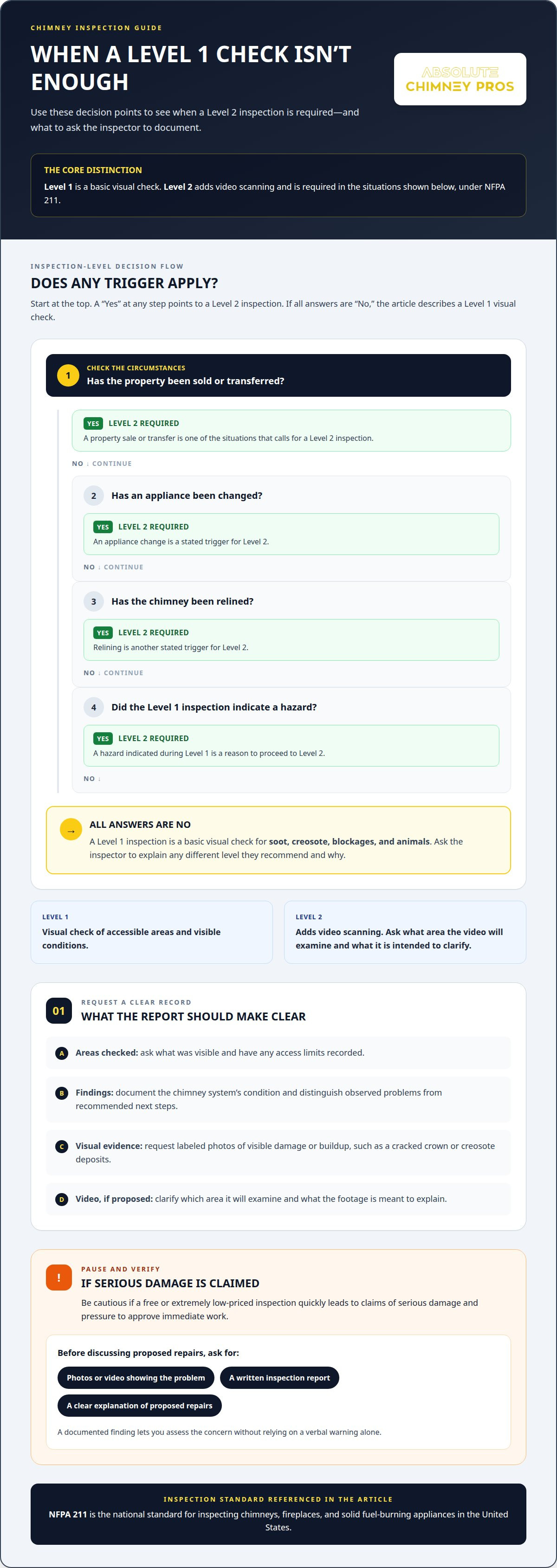
A Level 1 inspection is a basic visual check for soot, creosote, blockages, and animals in the chimney. Ask the inspector to explain what areas were visible and record any limits to access. A written report should document the chimney system’s condition, identify findings, and distinguish observed problems from recommended next steps. That record gives you something specific to review before discussing chimney repair.
Ask what the inspection covers and how findings will be documented. A comprehensive chimney inspection typically assesses the flue liner, firebox, smoke chamber, chimney crown and cap, masonry exterior, draft, and ventilation. Request labeled photos of visible damage or buildup, such as a cracked crown or creosote deposits. If video scanning is proposed, ask which area it will examine and what the footage is intended to clarify.
Inspection levels matter. A Level 1 check is visual; a Level 2 inspection adds video scanning. Under NFPA 211, a Level 2 inspection is required after a property sale or transfer, an appliance change, relining, or when a Level 1 inspection indicates a hazard. Ask the inspector to explain why a different level is recommended and what additional documentation it provides.
Yes. Local building codes and fire-safety rules can affect repair work. Ask which specific requirement applies and how it differs from an inspection finding or maintenance recommendation. NFPA 211 is the national standard for inspecting chimneys, fireplaces, and solid fuel-burning appliances in the United States.
Be cautious if a free or extremely low-priced inspection quickly leads to claims of serious damage and pressure to approve immediate work. Request photos or video that show the stated problem, a written report, and a clear explanation of proposed repairs. A documented finding lets you assess the chimney safety concern without relying on a verbal warning alone.
4. Cleaning cost estimates and possible extra charges
Ask for a written estimate that separates chimney cleaning from repairs or other recommended work. Have the company explain what the quoted service includes, what conditions could change the scope, and whether extra work requires your approval first. The price depends on the chimney’s condition, access, and work required; it’s given after a quote request. Clear details make estimates easier to compare before hiring.
According to the National Fire Protection Association, every chimney, fireplace, and vent should be inspected at least once annually. The National Fire Protection Association recommends inspecting every chimney, fireplace, and vent at least once annually. Ask what the technician found and how that affects the recommended cleaning or repairs. A specific explanation is more useful than a vague claim that the chimney needs immediate work.
Equipment matters. HEPA-filter vacuums are recommended for chimney sweeping because regular vacuums can recirculate fine soot particles into the home. Ask before hiring what cleaning methods and equipment the crew will use, and how they’ll contain soot around the fireplace. A thorough job should include a clear plan for protecting nearby flooring and furnishings, then cleaning the work area afterward.
Be wary of bait-and-switch offers. An unusually low advertised cleaning price may be followed by claims of serious problems and pressure to approve extra work. Request evidence for any added repair, along with an itemized estimate that explains the work and its cost factors. References can also help you learn whether past customers experienced clear pricing and careful cleanup.
The recommended repairs should match documented findings, such as a damaged liner or masonry problem. The estimate should describe the proposed work and explain how the chimney’s condition and job scope affect the quote. For a clear starting point, request an on-site chimney estimate and ask what the cleaning includes before approving additional work.
Absolute Chimney Pros: Chimney Sweep
Absolute Chimney Pros provides chimney sweeping, inspections, and repairs. Its licensed, insured, and CSIA-certified technicians can explain the chimney’s condition and recommended next steps. The company also offers stainless-steel chimney liner installation, with a free estimate for liner work and repairs.
Turn to a professional sweep when buildup needs attention, or arrange an inspection when you need the system assessed. On-site estimates help clarify the work before it begins, with no hidden fees. You can use the questions in this guide to discuss the inspection, cleaning scope, and any recommended repairs.
Contact Absolute Chimney Pros to discuss your chimney cleaning or inspection needs.
Make Your Next Chimney Visit More Informed
Before scheduling, write down what you want the visit to resolve: routine maintenance, an unfamiliar odor, smoke entering the room, or a concern raised during a home inspection. This short note helps keep the conversation focused on your fireplace and the observations that prompted you to seek help. Bring any prior inspection documents or repair records, too. They can give the technician useful context without replacing a fresh assessment.
Use the questions to ask a chimney sweep company as a conversation, not a checklist to rush through. Take notes on the technician’s answers, keep estimates and reports together, and review proposed work before deciding. If a recommendation is unclear, ask which documented condition it addresses and what the next step involves.
For help with your chimney, contact Absolute Chimney Pros. A focused conversation is a practical next step toward making an informed decision.
Frequently Asked Questions
What does a Level 1 inspection include?
A Level 1 inspection is a visual assessment of accessible parts of the chimney. Before the appointment, note the fuel type, any recent appliance changes, and issues such as smoke entering the room. Share those details with the technician. They can help frame the assessment and clarify whether the visible inspection addresses the concern you called about.
#1 – How Long Have You Been in Business?
Ask how long the company has operated, but weigh tenure alongside relevant experience. A business operating for a year or two may still be worth considering; a long history can also help demonstrate consistent service. Ask for examples of work on chimneys similar to yours, such as a masonry fireplace or a system with a liner, and consider whether the explanation is specific and clear.
#2 – Can You Provide References?
Yes. Ask for references you can contact directly, ideally homeowners whose chimney work resembles yours. A reference for a masonry repair may be more relevant than one for routine sweeping. Ask whether the completed work matched what the homeowner expected and whether the company explained the result. Keep brief notes so you can compare firsthand accounts with written estimates and inspection findings.
#4 – Are You CSIA Certified?
Ask whether the technician assigned to your home holds CSIA certification, rather than relying only on a company-level claim. The Chimney Safety Institute of America provides a directory homeowners can use to locate certified technicians and companies. Match the technician’s name and certification details before the visit, then confirm the person who arrives is the one you expected.
#5 – Are You Insured, Licensed, and/or Bonded?
Absolute Chimney Pros’ technicians are licensed, insured, and CSIA-certified, and the company is bonded. These credentials matter when arranging chimney work because they clarify professional qualifications and business protections. The company serves homeowners in New Jersey and Philadelphia, Pennsylvania, with same-week appointments. Ask which technician will attend and what work the planned visit covers so you know what to expect.
What questions should I ask when hiring a chimney sweep?
Useful questions to ask a chimney sweep company cover who will do the work, what the visit includes, and how findings will be explained. Ask what cleanup is included, how additional work is handled, and what records you’ll receive. Before approving repairs, make sure you understand the written estimate and the specific condition each recommended task addresses.


