
A single chimney fire can cause between $4,000 and $20,000 in property damage. That is a high price for a preventable problem. You value the warmth of your hearth, but the fear of a hidden hazard is hard to ignore. Strange, smoky smells or falling debris shouldn't be part of your evening. Learning to spot the early signs of creosote buildup is the only way to ensure your family stays safe. Vigilance today prevents a disaster tomorrow. It's about protecting your investment and your people.
You deserve total peace of mind when you light a fire. It's common to feel confused by the different types of soot and glazed residue lining your flue. We're here to remove the guesswork. This guide provides a systematic checklist to help you self-inspect for dangerous accumulation. We will explain the three distinct stages of creosote and how to recognize each one. You'll gain a clear understanding of when your chimney requires urgent professional cleaning. Let's replace your worry with a concrete plan for home safety.
Key Takeaways
- Understand how wood smoke condenses into a highly flammable chemical byproduct. Creosote is a silent threat that accumulates every time you light a fire.
- Identify visual signs of creosote buildup across three distinct stages. Look for everything from fine black soot to crunchy, tar-like deposits.
- Monitor your fireplace for performance red flags. Sluggish drafting and smoke entering the room signal a dangerous restriction in your flue.
- Execute a five-minute home safety inspection. Use a high-powered flashlight to check the smoke shelf and ensure the damper operates smoothly.
- Know when to call a professional. Advanced stages of accumulation require specialized equipment and certified technicians to restore safety.
What is Creosote and Why is it a Silent Threat?
Creosote is more than just a messy byproduct. It is a highly flammable, carbonaceous chemical residue that builds up inside your flue every time you burn wood. This substance forms when smoke, water vapor, and gases exit the fire but condense on the relatively cool walls of the chimney. In New Jersey and Pennsylvania, our heavy winter humidity levels often accelerate this condensation process. Damp air makes it harder for your chimney to stay warm. This leads to faster solidification of tars and oils. Understanding What is Creosote is the first step in protecting your home. Ignoring the early signs of creosote buildup creates a restricted passage. It forces smoke back into your living space. It significantly increases the risk of carbon monoxide poisoning. It is a silent, growing danger.
The Chemistry of Incomplete Combustion
Every fire releases unburned oils and tars. These substances exit the combustion zone as a hot vapor. When these vapors hit a cool flue surface, they transition from a gas to a solid or semi-liquid state. This is the essence of creosote formation. Your choice of fuel matters here. Seasoned wood is your primary defense against rapid accumulation. Green or wet wood contains high moisture content. This moisture saps heat from the fire. It creates a cooler smoke that condenses almost instantly. Hardwoods common in the NJ and PA regions, like oak and maple, must be properly dried. If the wood isn't seasoned, the chemistry of your fire changes. It becomes inefficient. It becomes dangerous.
Why Creosote is the #1 Cause of Chimney Fires
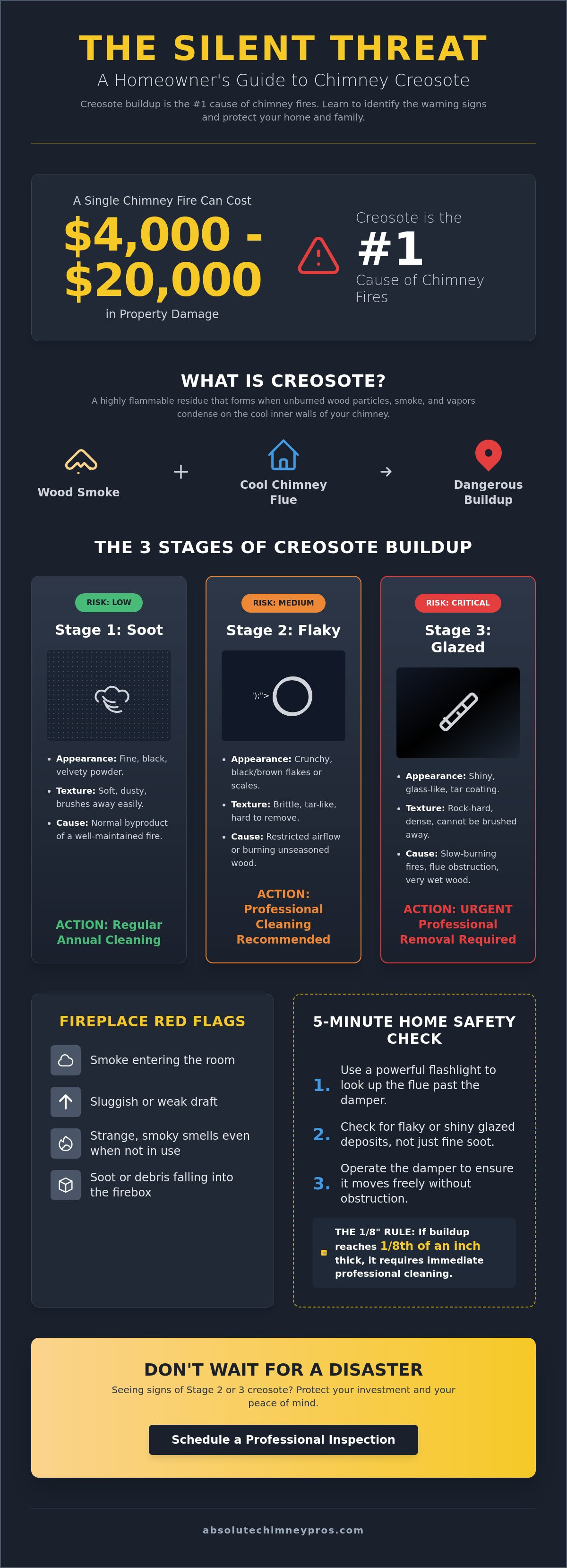
Creosote is incredibly volatile. It can ignite at temperatures as low as 451°F. This is a remarkably low threshold for a chimney environment. Once a small patch ignites, it creates a deadly thermal feedback loop. The heat from the burning residue fuels more ignition further up the stack. It burns with an intense, roaring heat that can melt mortar and crack masonry. Safety standards from the CSIA are clear on this point. Any buildup reaching 1/8th of an inch thick requires immediate removal. Anything thicker is an active fuel source for a structural fire. You won't always see the danger from your hearth. Identifying the signs of creosote buildup early is the only way to prevent a catastrophic event. Vigilance is mandatory. Safety is the priority.
The 3 Stages of Creosote: A Visual Identification Guide
Creosote is not a static substance. It is a dynamic hazard that evolves over time. Understanding the signs of creosote buildup requires a keen eye for its physical transformation. Each stage represents a significant increase in volatility. As the residue hardens, the threat to your home escalates. You must know what you are looking at before you strike a match. Visual identification is your first line of defense against a chimney fire. It provides the clarity needed to act before damage occurs.
Identifying Stage 1 and Stage 2 Deposits
Stage 1 creosote is primarily composed of soot. It looks like a fine, black, velvety powder. If you run a finger across it, the substance brushes away easily. This is the most common form found in well-maintained chimneys. However, even this "light" buildup carries health risks of creosote exposure if inhaled or handled without protection. It is the easiest to remove, but it shouldn't be ignored. It is the precursor to more dangerous stages.
Stage 2 is where the danger becomes tangible. These deposits look like crunchy, flaky scales. Some homeowners compare the appearance to parched earth or dried tar. It often forms a honeycomb-like structure inside the flue. To spot this, shine a high-powered flashlight up past the damper. Look for "crispy" textures rather than smooth soot. If you see these flakes, your system is struggling. Stage 2 usually indicates a serious airflow restriction or the use of wood with high moisture content. Standard brushes can struggle with these hardened flakes. Professional intervention is often necessary to clear this debris before it reaches the final, most dangerous phase.
The Dangers of Stage 3 "Glazed" Creosote
Stage 3 is the "point of no return" for DIY maintenance. This is known as glazed creosote. It appears as a shiny, glass-like coating that wraps around the flue liner. It looks like black wax has been poured down your chimney. This stage is extremely concentrated fuel. It is dense. It is heavy. Most importantly, it is highly flammable. Standard chimney brushes will simply bounce off this rock-hard surface. You cannot scrub Stage 3 away with traditional tools. It is a fire waiting to happen.
Removing this glaze requires specialized equipment. Professionals use chemical solvents to break down the chemical bond or heavy-duty rotary loops to physically shatter the glass-like layer. If you see a reflective, obsidian-like surface inside your flue, do not use your fireplace. The risk of ignition is at its peak. This is a critical safety hazard that demands an immediate professional chimney inspection. Do not wait for a fire to tell you the buildup has gone too far. Early detection saves lives. Professional oversight ensures total removal and restores your peace of mind.
Behavioral Signs: How Your Fireplace Tells You There is Buildup
Your fireplace communicates its condition through performance. It uses smoke, smell, and sound to signal distress. Ignoring these behavioral cues is a gamble with your household safety. One of the clearest signs of creosote buildup is a sudden change in how your fire burns. It shouldn't be a struggle to maintain a flame. It shouldn't fill your living room with a hazy mist. Watch for these signals. Listen to the flue. Trust your senses. Your chimney provides the data you need to prevent a disaster.
The Smoke Test and Drafting Efficiency
Drafting efficiency depends entirely on a clear, unobstructed passage. Just 1/4 inch of creosote can reduce your flue's venting capacity by nearly 20%. This restriction chokes the fire of the oxygen it needs to burn cleanly. You will notice a sluggish, smoldering flame that refuses to stay lit despite using seasoned wood. If visible smoke enters the room while the damper is fully open, the passage is likely too narrow. Don't confuse a cold flue with a blocked one. If the smoke persists after the chimney has warmed up, you have a dangerous accumulation. A restricted flue is a carbon monoxide hazard. It demands immediate attention.
Sensory Alerts: Smells and Visual Debris
Odors are a primary warning that the system is saturated. Many homeowners report a strong, unpleasant "campfire smell" even when the fireplace hasn't been used for days. This "dirty ash" scent becomes particularly overwhelming on humid New Jersey or Pennsylvania summer days. High humidity levels reactivate the chemical compounds in the residue. It's a persistent, acrid smell that won't go away with air fresheners. If you smell it, the creosote is there. It's waiting for a spark.
Look for physical evidence on the firebox floor. After a heavy rainstorm, check the area behind the grate. You might find black, crusty bits that have washed down from the smoke shelf. These are dislodged signs of creosote buildup that indicate a high volume of residue in the upper reaches of the stack. Also, inspect the damper and the fireplace lintel. Greasy, dark stains in these areas suggest that unburned tars are condensing before they even leave the hearth. This is a sign of an inefficient, dangerous burn environment.
Listen for unusual noises during a fire. Popping or crackling sounds coming from inside the chimney walls, rather than the logs, are major red flags. This often indicates that creosote is expanding or small "mini-fires" are occurring within the residue itself. If you hear a roaring sound like a freight train, a chimney fire is already in progress. Stop using the fireplace immediately. Your chimney is telling you it's no longer a safe environment for your family.
Homeowner Checklist: 5 Minutes to Verify Chimney Safety
Safety starts with a systematic inspection. You don't need a ladder to find the early signs of creosote buildup. You need five minutes and a high-powered flashlight. This checklist helps you identify hazards before they ignite. It is about taking responsibility for your home's environment. Follow these steps methodically. Don't skip any.
- Step 1: Open the damper completely. Check for smooth mechanical operation. Resistance often means residue is gumming up the hardware.
- Step 2: Shine your light past the damper. Focus on the smoke shelf and the lower flue walls. Look for the textures described in the visual guide.
- Step 3: Perform the scrape test. Use a plastic putty knife to gouge the residue. Measure the depth of the groove.
- Step 4: Conduct a sniff test. Lean close to the hearth. Acrid, tar-like odors are a definitive warning of saturation.
- Step 5: Step outside. Inspect the chimney cap. Look for black staining or sticky "goop" clinging to the mesh.
The Scrape Test: Measuring Your Risk
The scrape test provides concrete data. It removes the guesswork. Take a plastic putty knife and reach past the damper. Scrape a small section of the flue wall. If the soot is thin and dusty, you're likely in Stage 1. However, if the knife sinks into a layer of debris, you must measure it. The 1/8th inch threshold is the critical safety limit for any wood-burning appliance. If the buildup is equal to or thicker than 1/8th of an inch, stop using the fireplace immediately. This volume of fuel is enough to sustain a high-intensity chimney fire. It is no longer a matter of 'if' it will ignite, but 'when'.
Exterior Clues: Looking at the Chimney Cap
Your chimney's exterior tells a story. Look for "creosote bleeding" on the masonry. These are dark, oily streaks that run down the brickwork from the top. It indicates that creosote is liquefying and escaping the flue. Check the mesh on your chimney cap. Blocked mesh is a major fire hazard. It traps heat and sparks. Roofline stains are another red flag. They signal long-term venting issues that force smoke to linger near the exit. These signs of creosote buildup are often visible from your driveway. If you see black staining on your cap or masonry, the internal accumulation is likely severe. Professional intervention is the only way to clear these obstructions safely. Schedule your professional chimney sweep now to restore your system's integrity.
Professional Creosote Removal: The Absolute Chimney Pros Solution
Identifying the signs of creosote buildup is a critical first step. Resolution requires professional expertise. Stage 2 and Stage 3 deposits are not DIY projects. They are volatile fire hazards that demand technical mastery. Absolute Chimney Pros provides the disciplined oversight your home needs. We utilize CSIA-certified sweeps to handle advanced accumulation. Our flat-fee inspection process in NJ and PA removes the guesswork. We show up. We assess. We provide a clear report. There is no room for error when it comes to structural safety.
Our team uses state-of-the-art camera inspections to locate hidden creosote pockets. These tools allow us to see what a flashlight cannot. We find the glaze tucked behind bends, offsets, and smoke chambers. Our cleaning techniques are safe and mess-free. We protect your home interior with high-powered industrial vacuums and specialized drop cloths. Your living space remains pristine while your chimney is restored to a safe, functional state. We value your time and your property.
Advanced Mechanical and Chemical Cleaning
Stage 3 glaze requires more than a standard brush. We use specialized PCR (Poultice Creosote Remover) to break down the chemical bond of the glaze. This professional-grade treatment absorbs the oils and tars. It converts the slick glaze into a brittle substance that is easy to remove. We follow up with rotary power sweeping. This modern tool utilizes high-speed loops to shatter hardened deposits without damaging the underlying masonry. It is far more effective than traditional hand brushes. If the creosote has already damaged the flue, we provide immediate solutions for structural repairs. This may include a new chimney liner installation to ensure your home remains airtight. We don't just clean; we resolve the root cause of the hazard.
Schedule Your NJ/PA Safety Inspection Today
The peak winter "burn season" is approaching fast. Don't wait for a freeze to realize your system is compromised. Our schedule fills up quickly as temperatures drop. Book your appointment now to ensure priority scheduling and total home readiness. We operate with a strict "no hidden fees" policy for all local residents. You get transparency, punctuality, and exactness. Protect your home from fire risks with a Professional Chimney Inspection in New Jersey. Peace of mind is the ultimate outcome of professional oversight. Take responsibility for your hearth today. Let us be your protective partner for the season ahead.
Secure Your Hearth for the Season Ahead
Vigilance is your best tool. You now have the knowledge to identify the signs of creosote buildup before they escalate into a fire hazard. From visual stages to sensory alerts, your chimney provides clear data. Don't ignore the warnings. A clean flue is the foundation of a safe home. Professional oversight ensures no detail is missed. It removes the guesswork from winter maintenance. You've seen the stages. You've smelled the residue. Now, it's time to act. Safety is a choice you make every day.
Absolute Chimney Pros has served New Jersey and Philadelphia for over 20 years. Our CSIA-certified technicians provide transparent, flat-fee safety inspections. We utilize modern tools to provide traditional reliability. We take responsibility for your home's safety so you don't have to. You deserve the peace of mind that comes from a protective partner. Schedule your certified chimney sweep and creosote inspection today! Enjoy the warmth of your fireplace with total confidence. Your family's safety is our priority. We look forward to serving you.
Frequently Asked Questions
Can I remove creosote myself with a chimney brush?
You can only safely remove Stage 1 creosote using a standard DIY chimney brush. This fine, sooty powder is loose and responds well to mechanical scrubbing. However, Stage 2 and Stage 3 deposits are far more stubborn. These hardened layers often require industrial rotary loops or chemical solvents, which is why specialists like Best Chimney Services use advanced equipment to break the bond with the flue liner. Attempting to scrub glazed creosote yourself can damage the masonry without actually removing the fire hazard.
What does creosote smell like in a house?
Creosote has a distinct, acrid odor that resembles wood tar or a stale campfire. It's a heavy, smoky scent that lingers even when the fireplace is cold. This smell often intensifies during humid summer months when moisture reacts with the carbonaceous residue. If you notice a sharp, chemical-like stench coming from your hearth, it's a clear indicator of significant accumulation. Fresh air won't solve the problem; only a thorough cleaning will.
How much creosote buildup is considered dangerous?
Any accumulation reaching 1/8th of an inch is a critical safety hazard. This is the industry standard set by the CSIA. Once the layer hits this thickness, the volume of fuel is sufficient to sustain a high-intensity chimney fire. You must stop using your fireplace immediately if your scrape test reveals this level of buildup. Ignoring even a small increase beyond this limit drastically raises the risk of structural damage or house fires.
Does burning potato peels or salt really remove creosote?
Burning potato peels or salt is an ineffective myth that does not remove creosote. While these methods might slightly dry out the moisture in new deposits, they cannot break down existing Stage 2 or Stage 3 glaze. Relying on home remedies creates a false sense of security while the flammable residue continues to grow. The only reliable way to ensure your flue is safe is through a professional mechanical cleaning and inspection.
Why does my chimney smell like a campfire even when no fire is lit?
A persistent campfire smell is a primary indicator of saturated chimney walls. This occurs when the odors from the creosote residue are pulled into the living space by negative air pressure or high humidity. It's one of the most common signs of creosote buildup that homeowners notice during the off-season. The scent is a warning that the flue is coated in unburned tars and oils that require professional removal to restore indoor air quality.
What happens if a chimney fire starts from creosote?
A creosote-fueled chimney fire produces intense heat that can exceed 2,000°F. This extreme temperature can crack clay liners, melt metal flues, and ignite the surrounding wood framing of your home. You'll often hear a loud roaring sound like a jet engine or a freight train. These fires are often explosive and move rapidly. Even if the fire stays contained, the resulting structural damage usually makes the chimney unusable until major repairs are completed.
How often should I check for creosote buildup in New Jersey?
You should schedule a professional inspection at least once a year in New Jersey. The National Fire Protection Association (NFPA) recommends annual checks for all solid-fuel appliances. If you burn more than one cord of wood during a single winter, you should check more frequently. Our local humidity levels can accelerate the condensation process, making annual vigilance mandatory for preventing dangerous accumulation before the peak burn season begins.
Is there a specific wood that causes more creosote than others?
Green or unseasoned wood is the leading cause of rapid creosote formation. Softwoods like pine also contribute more residue because they contain high levels of resin and sap. These fuels burn at lower temperatures, which allows smoke to condense quickly in the flue. For the cleanest burn, always use seasoned hardwoods like oak or maple. These woods produce more heat and less smoke, which significantly slows down the rate of signs of creosote buildup.