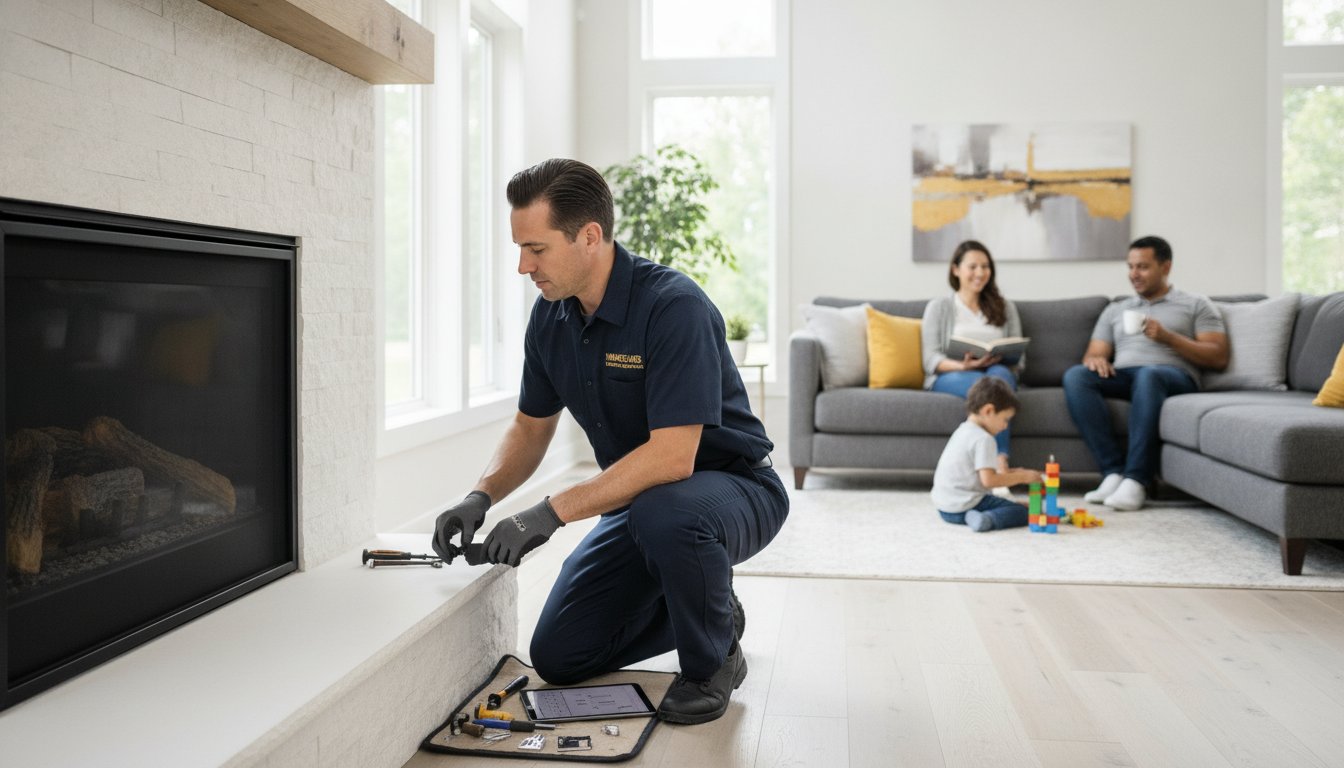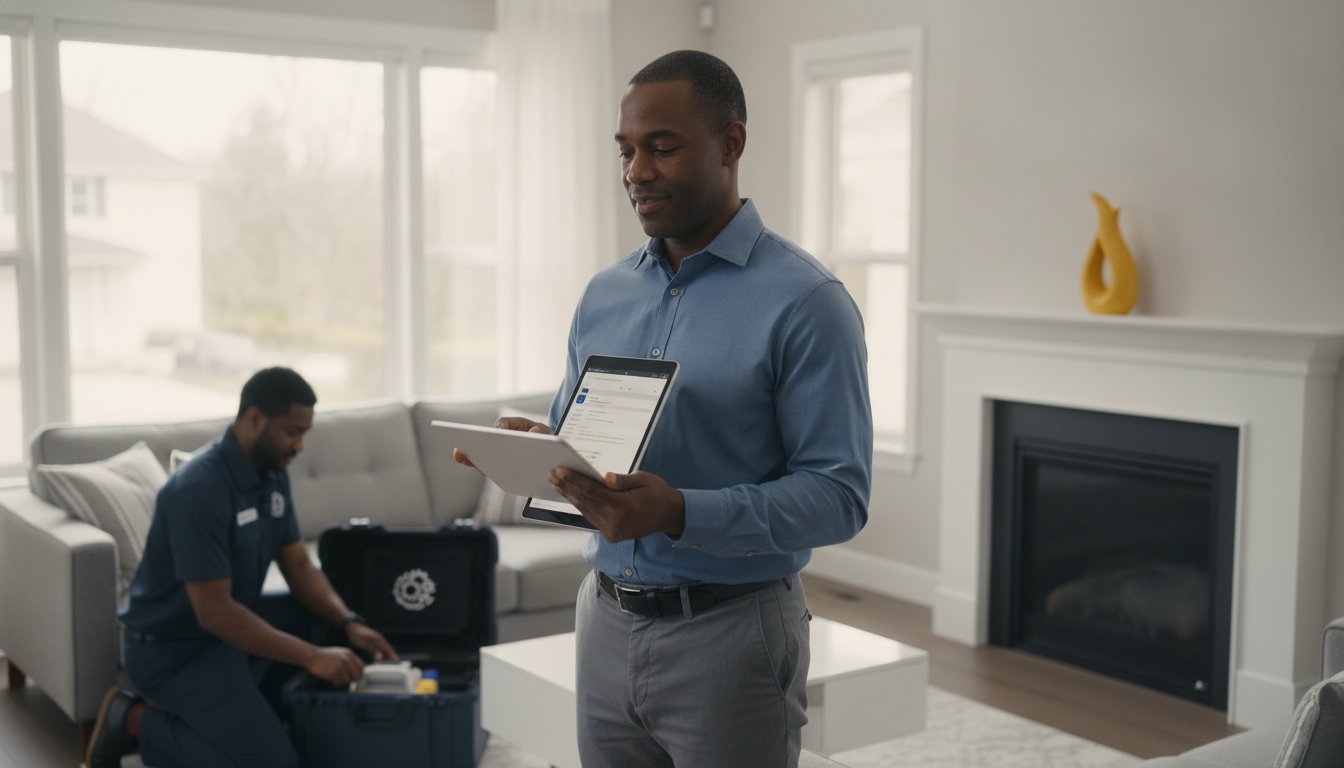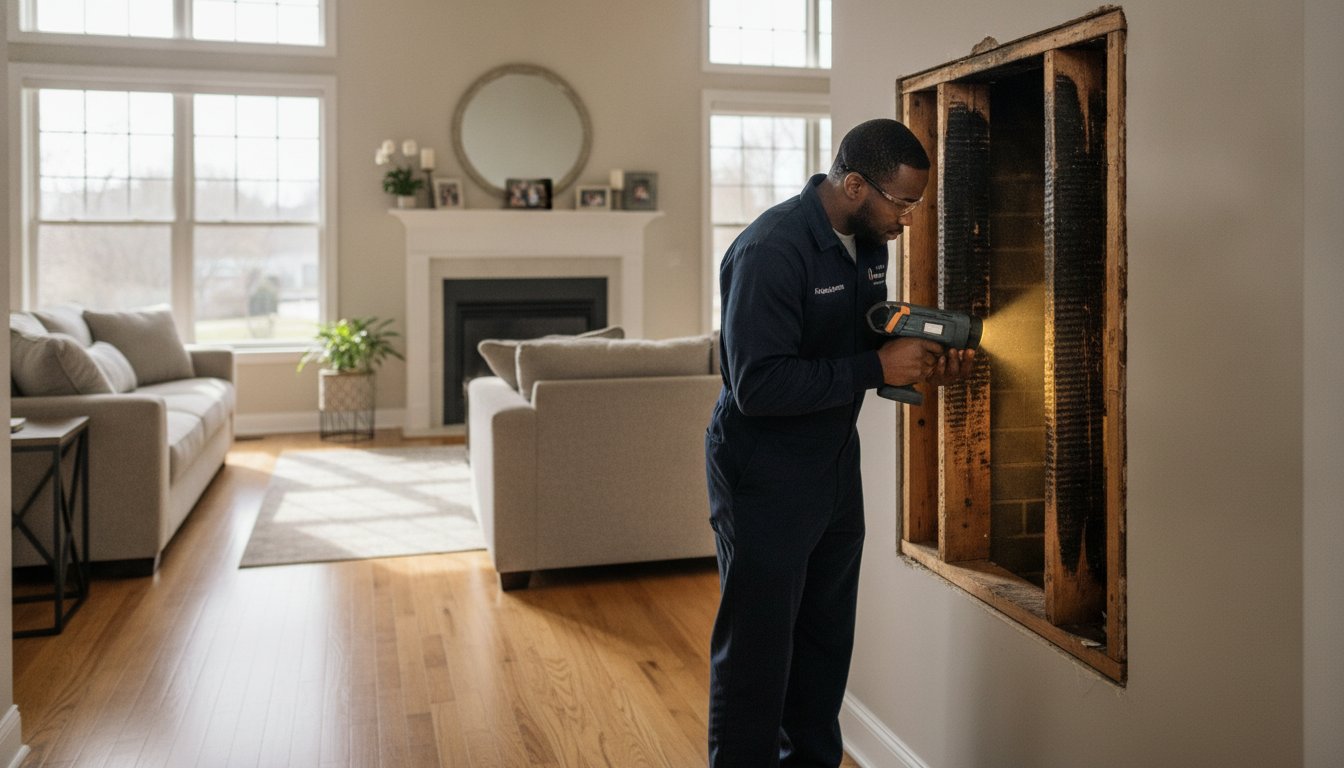
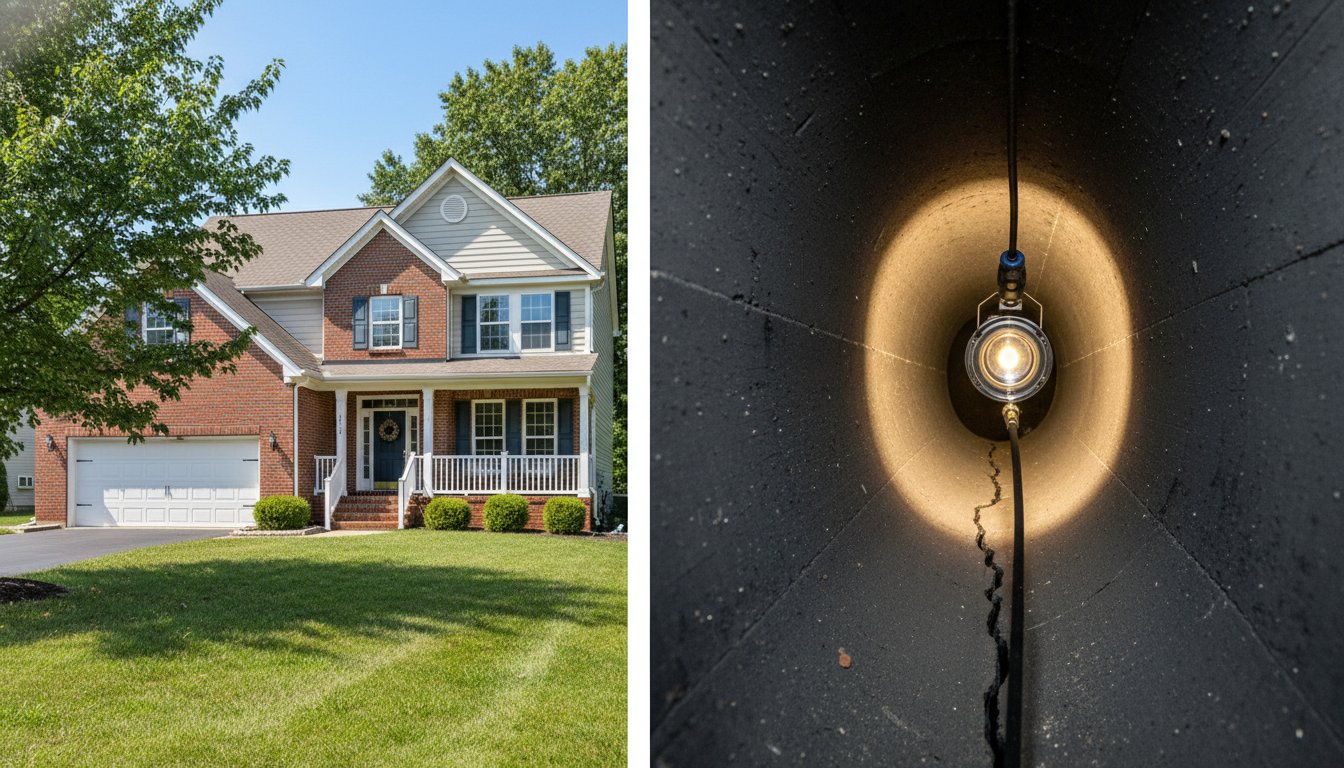
A standard flashlight is often the most misleading tool in a chimney technician's kit. It provides a false sense of security while leaving the most dangerous hazards hidden in the dark. You care about your family's safety and want to avoid the devastating reality of a house fire. A professional video chimney inspection is the only way to move beyond guesswork and see what's actually happening inside your flue. It's natural to feel anxious about hidden repair costs or the confusing requirements of a Level 2 assessment during a home sale. You need documented certainty, not just a verbal report.
This article reveals how high-definition cameras catch the "unseen killers" that a basic visual check misses. We'll break down industry jargon and explore the specific safety requirements for New Jersey and Pennsylvania homeowners. You'll discover how to secure the documented proof required to satisfy real estate standards and insurance providers. Our goal is to provide the technical clarity you need for total peace of mind before the winter season begins.
Key Takeaways
- Use high-definition 360-degree cameras to find hidden structural hazards that standard visual checks ignore.
- Learn when a video chimney inspection is legally required for property transfers and heating system upgrades.
- Spot dangerous liner cracks and separated joints before they cause a house fire or carbon monoxide leak.
- Get the documented proof you need for real estate compliance and personal peace of mind.
- Follow a disciplined assessment process that prioritizes technical precision and home safety.
What is a Video Chimney Inspection and How Does it Work?
A video chimney inspection is a high-resolution internal scan of your entire flue system. It is a forensic examination of the areas you cannot see from the hearth or the roof. While a standard visual check relies on a flashlight and a mirror, this method uses advanced technology to find hidden defects. It eliminates guesswork. It provides a clear, undeniable picture of your chimney's internal health. We use this process to identify early signs of deterioration before they become life-threatening hazards.
The technology involves specialized cameras mounted on heavy-duty, flexible rods. These cameras feature 360-degree rotation and powerful LED lighting. As the technician moves the camera through the flue, every inch of the liner is scrutinized. This level of detail is essential for detecting small cracks, missing mortar joints, or blockages that a flashlight simply cannot reach. A modern chimney sweep acts as a technical investigator. They don't just look for soot; they look for structural integrity. The final output is a digital record. You receive documented footage and high-resolution stills for your home maintenance records.
The Tools of the Trade
Professional gear is built for extreme conditions. We use high-definition cameras specifically designed for high-heat and low-light environments. These units feature self-leveling heads. This ensures the image remains upright and stable as the camera navigates the bends of your flue. You won't have to deal with dizzying or distorted footage. Most systems include a dedicated monitor setup. This allows you to watch the live feed alongside the technician. You see the hazards in real-time. This transparency builds trust and ensures you understand exactly why a repair may be necessary.
Certification Matters
Equipment is only as good as the person operating it. CSIA-certified expertise is a requirement for a legitimate video chimney inspection. A "guy with a camera" can show you a picture of a crack, but they may lack the training to interpret its severity. Certified professionals understand the NFPA 211 standards and local NJ safety codes. They know the difference between a minor surface stain and a dangerous breach in the liner. Certification ensures that your inspection meets the rigorous standards required by insurance companies and real estate regulators. It is the difference between a superficial look and a professional diagnosis.
Flashlight vs. Camera: Understanding Level 2 Inspection Standards
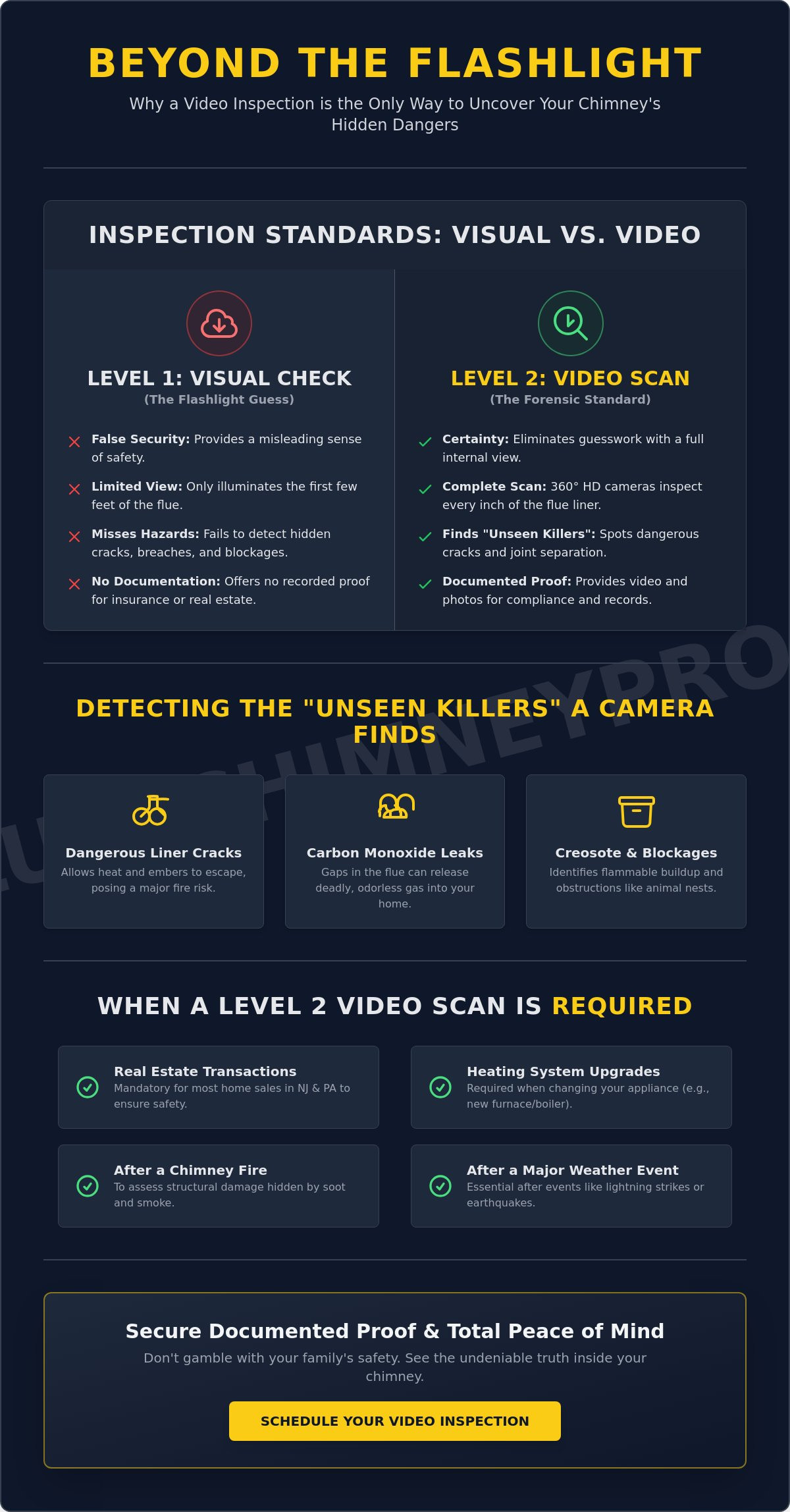
Safety standards aren't just suggestions. They are the barrier between a cozy evening and a residential disaster. The 2027 edition of NFPA 211 serves as the national benchmark for chimney safety. This document outlines three distinct levels of inspection. Most homeowners are familiar with the basic check, but they often ignore the more rigorous requirements of a Level 2 review. Relying on a flashlight is a gamble. It only illuminates the first few feet of the flue. It cannot penetrate the shadows where the most dangerous cracks hide. Professionals certified by the Chimney Safety Institute of America (CSIA) use these standards to protect your property.
Level 1: The Basic Visual Check
A Level 1 inspection is designed for routine maintenance. It is appropriate when your heating system has remained unchanged and you use it under normal conditions. The technician examines the exterior and the readily accessible interior portions. They check the hearth, the damper, and the visible roofline. While helpful, this level has significant limitations. Human eyes cannot see through layers of soot or around the bends in a masonry flue. If there is a hidden breach ten feet up, a Level 1 check will miss it. It's a starting point, not a final guarantee of safety.
Level 2: The Forensic Standard
A Level 2 safety review is a forensic-level examination. It is the industry standard for real estate transactions, chimney fires, and system upgrades. This is where a video chimney inspection is non-negotiable. The technician uses high-definition cameras to document the entire internal structure. This process is required if you're replacing a boiler or furnace in New Jersey, as the Uniform Construction Code mandates formal certification.
The triggers for a Level 2 inspection are specific and critical. You must have one if you've experienced a weather event like a lightning strike or if you're buying a new home. In Pennsylvania, while state law doesn't mandate annual checks, municipal codes often require Level 2 proof during property transfers. A video scan provides the documented evidence needed for insurance and legal compliance. It uncovers the "unseen killers" like liner cracks that a flashlight simply cannot find. You can request a detailed safety scan to ensure your home meets these essential national standards.
Detecting the "Unseen Killers" in Your Chimney Flue
A flashlight might illuminate the surface. It cannot reveal the forensic details of structural decay. A high-definition video chimney inspection uncovers the specific failures that lead to residential fires. We look for flue liner cracks. These tiny fissures are often invisible to the naked eye. They allow intense heat to transfer directly to the combustible wood framing of your home. This is how "unexplained" attic fires start. We identify these breaches before they become catastrophes.
Joint separation is another critical hazard. Chimneys shift over time. This happens due to house settling or seasonal temperature swings. When masonry joints separate, they create gaps in the ventilation path. These openings allow heat and sparks to bypass the safety of the liner. We also scan for creosote glazing. This is the most flammable stage of buildup. It looks like black glass on the camera feed. It is a high-octane fuel source waiting for a single spark. Structural masonry failure deep within the stack is the final major concern. Crumbling mortar or spalling bricks can lead to a total collapse of the internal venting system. We use the camera to see what others miss.
The Carbon Monoxide Risk
Hidden gaps do more than just start fires. They allow toxic gases to leak into your living spaces. Carbon monoxide is odorless and colorless. It is a silent killer. Your CO detector is your last line of defense. It is not your first. A cracked clay liner acts as a direct conduit for poison to enter your bedrooms and hallways. Adhering to Level 2 inspection standards ensures these breaches are identified before a tragedy occurs. We don't guess with your family's health. Precision matters.
Internal Blockages and Animal Nests
Standard sweep brushes can miss debris lodged in the offsets of a chimney. Birds and raccoons often build nests in these dark, protected spaces. These obstructions create dangerous backdrafts. They force smoke and carbon monoxide back into your home. A professional scan locates these blockages with precision. You can learn more about identifying chimney blockage signs to stay ahead of these risks. We use the camera to verify a clear path for every flue we service. It is about total transparency. It is about technical mastery. No guesswork. No shortcuts.
When to Schedule: Real-World Scenarios in NJ and PA
Timing is a matter of life and death. You don't wait for smoke to fill your living room to call a professional. In New Jersey, state law mandates annual inspections for all homeowners with oil, gas, or wood-burning chimneys. You must keep written documentation of these checks for at least five years. Pennsylvania relies on municipal enforcement of the International Mechanical Code. Regardless of your zip code, certain events demand a video chimney inspection immediately. A lightning strike, a chimney fire, or a severe winter storm can compromise your home's safety in seconds.
Winter weather in the Northeast is relentless. The freeze-thaw cycle destroys masonry. Water enters small cracks, freezes, and expands. This process, known as spalling, leads to internal structural failure that remains invisible from the ground. If you've just weathered a particularly brutal NJ or PA winter, a technical scan is the only way to verify your flue's integrity before the next heating season. Don't rely on luck. Rely on data. We provide the technical evidence you need to keep your family safe.
The Real Estate Transaction Requirement
General home inspectors are generalists. They check the roofline and the hearth. They often defer the internal safety of the flue to specialists. This is for your protection. A comprehensive video report protects both the buyer and the seller from the "hidden cost" trap. In New Jersey, the Uniform Construction Code requires a formal certification before you can even install a new furnace or boiler. A video scan provides the forensic proof required to satisfy these legal standards. It ensures you aren't inheriting a fire hazard when you sign the closing papers. You can schedule your real estate safety scan to ensure a smooth, safe property transfer.
System Changes and Upgrades
Switching from wood-burning to a gas fireplace insert is a major technical shift. It isn't a simple swap. Gas appliances have different venting requirements. They produce high levels of water vapor and acidic condensation. Your existing flue may be too large or improperly lined to handle this new load. A video chimney inspection verifies the condition of your current liner before an upgrade. It ensures the flue size matches the new appliance perfectly. If the liner is cracked or improperly sized, it will fail. This leads to carbon monoxide intrusion. Verification is the only path to a safe installation. We eliminate the guesswork so you can enjoy your new system with total confidence.
The Absolute Chimney Pros Video Inspection Process
We don't believe in guesswork. Our process is a disciplined, methodical execution of safety protocols. Every video chimney inspection we perform follows a strict four-step roadmap. We prioritize technical precision over speed. We start with an on-site assessment. There are no hidden fees. We identify the baseline condition of your hearth and exterior masonry before moving to the internal scan. This initial look ensures we have a complete understanding of your chimney's environment.
The second step is the full-length digital scan. We use state-of-the-art camera technology to probe the entire height of your flue. Our technicians guide the 360-degree rotating camera through every offset and bend. We look for the subtle failures discussed in previous sections, such as hairline cracks or separated joints. Step three is the real-time review. You don't have to take our word for it. You watch the live feed on our monitor. You see exactly what the technician sees. This transparency ensures you understand the "why" behind any recommendation. Finally, we provide a comprehensive digital report, often generated using specialized field service software like Repair-CRM. This document includes high-resolution stills and forensic notes, serving as the documented proof you need for insurance claims or NJ/PA real estate compliance.
Transparency and Honest Estimates
Our "no-nonsense" approach is the core of our reputation. We distinguish between immediate safety hazards and minor cosmetic wear. We won't sell you a repair you don't need. We value your time and your safety. We offer same-week appointments for homeowners throughout New Jersey and Philadelphia. Our flat-fee inspection model is built on honesty. You receive a definitive price upfront. This reliability is why families trust us to protect their homes before the winter freeze. We are your protective partner in home maintenance. We show up on time. We provide clear answers. We execute the task with professional oversight.
Taking Action on the Findings
Information is only valuable if you act on it. We prioritize findings based on immediate safety risks. A cracked liner is a Tier 1 hazard that requires urgent attention. Minor soot buildup may just require a standard chimney sweep. We use the recorded video footage to plan precise repairs. If your chimney needs a new liner installation or masonry repair, the video scan acts as our blueprint. It allows us to target the specific area of failure without unnecessary demolition. This efficiency saves you money and ensures the repair is done right the first time. Don't wait for a hazard to become a disaster. Schedule your video chimney inspection today and secure the peace of mind your family deserves.
Secure Your Home’s Safety with Technical Precision
Relying on a simple flashlight to inspect your chimney is a dangerous gamble. It leaves the most critical internal failures hidden in the dark. We've seen how high-definition internal scans identify the "unseen killers" like liner cracks and separated joints that lead to devastating house fires. These forensic details aren't just helpful; they are the required standard for real estate transactions and system upgrades across New Jersey and Pennsylvania. A professional video chimney inspection provides the documented evidence you need for insurance compliance and total peace of mind. It's about moving from guesswork to certainty.
We eliminate the confusion of industry jargon by providing a clear, visual report of your flue's health. Our team of CSIA-Certified Technicians is dedicated to your safety. We offer same-week appointments and provide honest, on-site estimates with no hidden fees. Don't wait for a small crack to become a major structural failure or a carbon monoxide risk. Secure your home before the winter season begins. Book Your Certified Video Chimney Inspection Now and ensure your fireplace remains a source of comfort, not a hazard. Your family's safety is our highest priority.
Frequently Asked Questions
Is a video chimney inspection worth the extra cost?
A video chimney inspection is a high-value investment in your home's safety. It prevents catastrophic fires and expensive structural repairs by finding defects that flashlights miss. Finding a single hairline crack early prevents a house fire that could cost thousands in property damage. It provides the documented proof you need for insurance and real estate compliance. You pay for certainty, not just a service. No guesswork involved.
How long does a video chimney inspection take?
A thorough scan typically takes between 45 and 90 minutes. This timeframe depends on the number of flues and the height of your chimney. We take the time to scrutinize every inch of the liner. We don't rush the process because technical precision is our priority. You receive a full digital report immediately following the on-site assessment. It is a methodical, organized process designed for efficiency.
Do I need a video inspection if I just had my chimney cleaned?
Cleaning and inspection are two different tasks. A chimney sweep removes flammable creosote, but it does not reveal the condition of the masonry behind the soot. A video chimney inspection is the only way to verify that your liner is still structurally sound. You can have a clean chimney that is still a fire hazard due to hidden cracks or gaps. Cleaning removes the fuel; the inspection identifies the structural risk.
Can a video inspection detect carbon monoxide leaks?
The camera identifies the structural breaches that allow carbon monoxide to enter your home. It finds separated joints and liner cracks that act as exit points for toxic gases. While the camera doesn't measure gas levels, it locates the "silent killers" before they compromise your air quality. It is your first line of defense against poisoning. We find the source of the leak before it becomes a tragedy.
What happens if the camera finds a crack in my chimney liner?
We document the location and severity of the crack immediately. Our technicians show you the footage on the monitor so you understand the risk. We then provide a clear estimate for the necessary repair or liner installation. A crack means the flue is no longer safe to use. We help you prioritize the fix to restore your home's safety. We provide a definitive solution for every hazard we find.
Is a video inspection required for home sales in New Jersey?
New Jersey real estate standards require a Level 2 inspection for all property transfers. This mandate includes a full video scan of the internal flue. General home inspectors often miss these details, so a specialist's report is essential for legal compliance. It protects both the buyer and the seller from inheriting or passing on a major fire hazard. It is a non-negotiable requirement for a safe transaction. If you are outside the NJ/PA area and need a comprehensive evaluation for a new home, you can check out A Premier Home Inspection for expert service.
Does a video inspection make a mess in my house?
We maintain a clean workspace with drop cloths and industrial vacuums. The camera equipment is self-contained and designed for minimal intrusion. We treat your home with respect. Our goal is to provide a technical report without leaving a trace of soot or debris behind. You get the data you need without the cleanup. We value your time and your environment.
How often should I have a video chimney inspection performed?
You should schedule a video chimney inspection annually if you live in New Jersey to comply with state law. Homeowners in Pennsylvania should follow the same schedule for maximum safety. You also need a scan after a chimney fire, a lightning strike, or when upgrading to a new heating appliance. Routine checks catch minor wear before it becomes a dangerous structural failure. Vigilance is the key to home safety.