
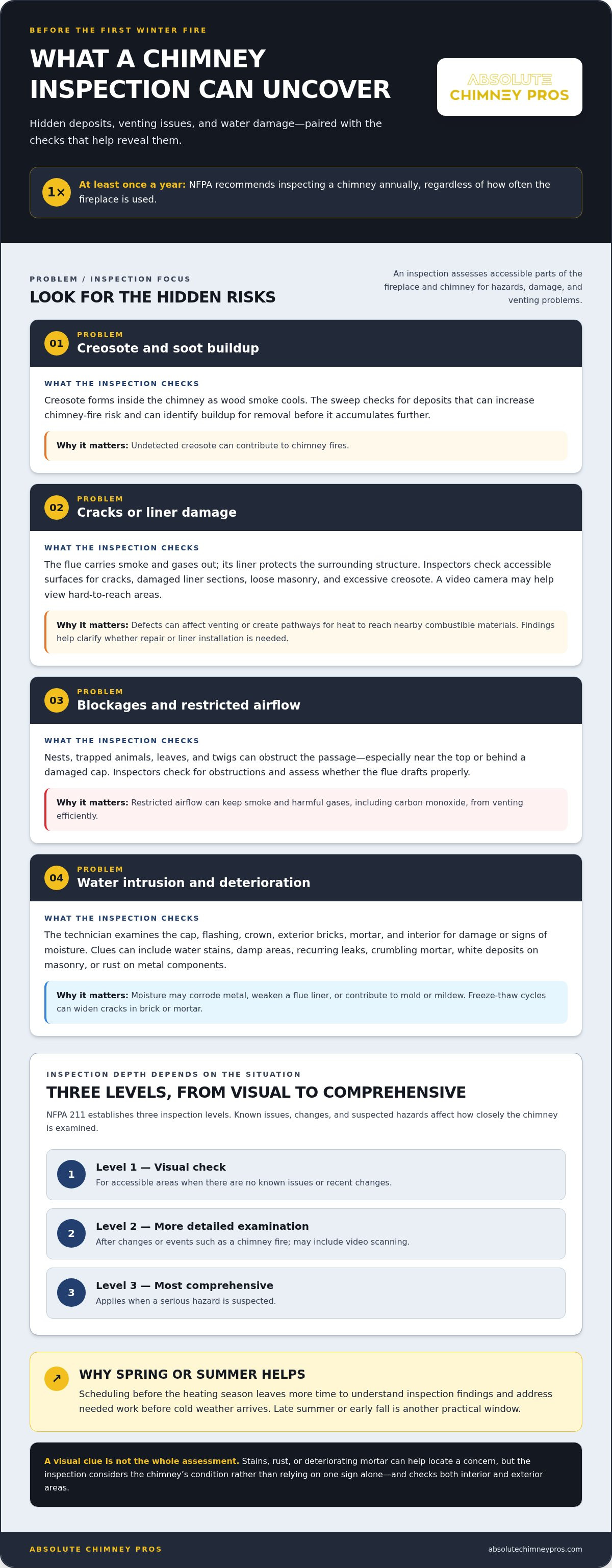
Before winter’s first fire, a peace-of-mind chimney inspection can uncover problems that are easy to miss from the hearth. Have your chimney inspected at least once a year, regardless of how often you use it. An inspection checks for creosote buildup, flue or liner damage, blockages, and signs of water intrusion.
It’s easy to focus on the fireplace and overlook the chimney above it. Knowing its condition helps you identify what needs attention before cold weather arrives. Spring and summer are practical times to schedule an inspection, leaving more time to address any findings before the heating season.
This guide explains what a chimney inspection covers, how a professional checks for hidden flue, liner, blockage, and moisture issues, and what happens after the assessment. You’ll learn when a visual inspection may be enough and when a change or suspected problem calls for a closer examination. Clear findings help you decide what to address before lighting the first fire.
Key Takeaways
- Creosote can build up inside a chimney and create a fire hazard. Learn what an inspection can reveal and why cleaning may be needed.
- Cracks in the liner and hidden debris can interfere with proper venting. Find out what an inspector looks for inside the flue.
- Damaged caps, flashing, or masonry can let water into the chimney. Recognize warning signs before moisture causes further deterioration.
- Booking ahead of the burning season leaves time to understand inspection findings and address needed work before winter.
What Is a Chimney Inspection, Really?
A chimney inspection assesses accessible parts of the fireplace and chimney for hazards, damage, and venting problems. Before winter, it can reveal issues that may affect safe operation.
Creosote and Soot Buildup
Creosote is a combustible deposit that forms inside a chimney as wood smoke cools. Soot and creosote buildup can increase chimney-fire risk. A chimney sweep can identify and remove deposits before they accumulate further, helping prepare a wood-burning fireplace for winter use.
NFPA 211 establishes three inspection levels. Level 1 is a visual check of accessible areas when there are no known issues or recent changes; Level 2 adds a more detailed examination, which may include video scanning, after changes or events such as a chimney fire. Level 3 is the most comprehensive and applies when a serious hazard is suspected.
Using a chimney without an inspection can leave creosote, a blockage, or liner damage undetected. These conditions can contribute to chimney fires, poor airflow, or smoke and harmful gases entering the home.
Inspection Requirements
Local code requirements vary by jurisdiction, and insurance conditions depend on your policy. Some policies require regular chimney inspections, so review your policy terms and keep records of completed inspections.
NFPA recommends inspecting a chimney at least once a year, regardless of fireplace use. For wood-burning chimneys, a yearly sweep can reduce creosote-related fire risk. Even a rarely used fireplace can have a blockage or damage that an inspection may find, but cleaning alone would not address.
Inspection findings determine what comes next. A flue with no known changes may need only a visual assessment, while a chimney fire, system modification, or suspected structural failure calls for a more detailed inspection.
Flue, liner, and blockage inspection
A chimney inspection can uncover cracks, liner damage, creosote, and blockages before winter. It also assesses whether the flue’s size, condition, and efficiency support proper venting.
Flue and Liner Checks
The flue carries smoke and gases from the fireplace through the chimney, while its liner protects the surrounding structure. An inspection checks for cracks, excessive creosote, and obstructions that could interfere with venting.
Inspectors examine accessible interior surfaces and may use a video camera to view hard-to-reach areas. Damaged liner sections or interior bricks can create pathways for heat to reach nearby combustible materials. Identifying defects helps clarify whether repair or liner installation is needed.
Blockages and Carbon Monoxide Risks
A blockage is debris or an object that obstructs the chimney passage and restricts airflow. Animal nests, trapped animals, leaves, and twigs can collect inside, especially near the top or behind a damaged chimney cap.
Restricted airflow can keep smoke and harmful gases, including carbon monoxide, from venting efficiently. An inspection checks for obstructions and assesses whether the flue drafts properly. Clearing a nest or debris before using the fireplace helps ensure exhaust isn’t relying on a blocked route.
The chimney cap is another key inspection point. A damaged or missing cap can let leaves, twigs, and animals enter. Inspectors also assess whether the flue’s size and condition suit the system, since cracks, loose masonry, and a faulty liner can affect safe operation.
These checks connect visible signs with the chimney’s interior condition. For a closer assessment of flue and liner concerns, professional chimney inspection can help identify what needs attention before winter use.
Water intrusion through damaged caps or flashing
A chimney cap and roof flashing help keep rain out. During an inspection, a technician examines the cap, flashing, crown, exterior bricks, and mortar for damage or deterioration. A loose cap can let in water and debris, while failing flashing can allow water through the roof-chimney connection. Address these entry points before the wet, cold season.
Moisture often leaves visible clues. Look for water stains inside, damp areas near the chimney, recurring leaks, crumbling mortar, or white deposits on exterior masonry. Rust on metal components can also indicate water exposure. These signs can help locate a problem, but the inspection assesses the chimney’s condition rather than relying on one stain alone.
Timing matters. Summer humidity can worsen existing water damage and encourage mold or mildew in a chimney. Later, moisture in cracks in brick or mortar can freeze and expand. Repeated freeze-thaw cycles may widen cracks, leaving masonry more vulnerable as winter continues.
Water can affect more than the outer bricks. Moisture may corrode metal components, weaken a flue liner, and contribute to mold or mildew. A thorough inspection considers the chimney’s interior and exterior, including signs that water may have reached the liner. Creosote is a separate concern, but a technician can assess both during a chimney inspection.
Before the season changes, note recurring leaks, rusty metal, or deteriorating mortar and share those observations during the assessment. The technician can examine the cap and flashing as well as the masonry, then explain which findings point to repair needs. Catching small cracks or a damaged cap early may help prevent further deterioration. A dry-looking fireplace surround alone won’t show whether water has entered through the roof connection, chimney cap, or hidden masonry.
Professional chimney inspection before winter
A professional inspection checks whether your chimney is ready for winter use. NFPA recommends inspecting a chimney at least once a year, regardless of fireplace use. Spring and summer leave time to address findings before cold weather, while late summer or early fall is another practical window. Don’t wait until the first fire to discover that the system needs attention. A peace-of-mind chimney inspection before winter also gives you time to review the findings before regular fireplace use.
A standard Level 1 inspection is a visual examination of accessible chimney areas when there are no known problems or recent changes. It generally takes between 30 minutes and a full hour. The technician checks the exterior for cracks, crumbling mortar, spalling bricks, and structural leaning, then examines accessible interior areas. The cap, crown, roof flashing, damper, and chimney alignment are also important components to assess.
Choose a technician certified by the Chimney Safety Institute of America (CSIA). A CSIA-certified chimney technician can identify problems and recommend remedies. If a home purchase, storm damage, fuel change, or chimney modification has changed the system, a Level 2 inspection may be appropriate. That examination includes Level 1 checks and may use a video camera to view areas that are difficult to see. A suspected serious hazard may require Level 3 inspection.
After the assessment, the technician provides findings and recommends any needed cleaning or repairs. The report gives you a clear record of conditions such as damaged mortar, a blocked flue, or a faulty damper. A chimney without blockages and creosote drafts better, supporting efficient burning. If you can’t recall the last inspection, arrange one before using the fireplace. A chimney can also be inspected during winter, but preparing beforehand leaves more time to address concerns. A peace-of-mind chimney inspection before winter clarifies the next steps.
Schedule a professional chimney inspection to assess your chimney before the burning season.
Absolute Chimney Pros: Chimney Sweep
Absolute Chimney Pros provides chimney sweeping and inspections to help homeowners understand what their chimney needs before winter. Turn to the team if an inspection identifies creosote buildup, a blockage, a damaged liner, or masonry that needs attention.
CSIA-certified, licensed, and insured technicians perform the work. Depending on the findings, the next step may be cleaning, chimney repair, or liner installation. A clear assessment helps you focus on the identified issue instead of guessing at the cause of smoke, draft, or visible damage.
If your chimney hasn’t been inspected before the burning season, contact Absolute Chimney Pros to arrange an inspection or sweep.
Make Your Next Step Before the First Fire
A peace-of-mind chimney inspection before winter starts by turning uncertainty into a clear plan. If you haven’t arranged an inspection, add it to your seasonal home checklist. Use the findings to decide what your chimney needs instead of waiting for a draft problem or visible damage to interrupt fireplace use.
Absolute Chimney Pros offers chimney inspections, chimney sweeping, and chimney liner installation. These services address different needs, from assessing the chimney’s condition to cleaning or liner work. The right next step depends on the inspection findings.
Contact Absolute Chimney Pros to discuss your chimney needs and prepare for the colder season. Contact Absolute Chimney Pros to take the next step with a clear plan for your home.
Frequently Asked Questions
How Can I Prepare My Chimney Before Winter Arrives?
Arrange an inspection and any needed cleaning before lighting your first seasonal fire. Note the last service date and any unusual smoke, weak draft, or water marks, then share these observations during the visit. In New Jersey and Philadelphia, planning ahead of fall demand leaves time to review findings and address needed work before regular fireplace use.
Should every chimney be cleaned every year?
No, a yearly cleaning isn’t automatically needed for every chimney. For wood-burning chimneys, a yearly sweep is recommended to reduce creosote-related fire risk. An inspection is recommended annually regardless of fireplace use, but cleaning depends on the chimney’s condition and deposits. Keep inspection and cleaning separate in your maintenance plan.
What signs tell me that my chimney needs repair?
Water stains, recurring leaks, crumbling mortar, white marks on exterior masonry, and rusty metal components can signal chimney damage. Cracks or loose bricks also deserve attention, as do smoke or draft problems during fireplace use. Record where and when you notice a sign. Sharing those details helps focus the assessment on the affected area.
Why schedule a chimney inspection before winter?
Scheduling before winter gives you time to understand the findings and plan repairs before relying on the fireplace. Late summer or early fall is a useful preparation window, while spring and summer can leave more time for work before cold weather. In New Jersey and Philadelphia, planning ahead can also help you avoid the fall rush for chimney appointments.
What does a professional chimney inspection include?
A professional inspection assesses accessible interior and exterior components, including the flue, liner, damper, masonry, cap, and roof flashing. A technician may use a camera to examine hard-to-see interior areas. Afterward, you receive the findings and recommendations for cleaning or repairs. If the chimney has changed or a serious hazard is suspected, a more detailed inspection may be appropriate.
How often should homeowners have a chimney inspected?
Have your chimney inspected once a year, even if you rarely use the fireplace. Arrange an additional assessment after a chimney fire, storm damage, a fuel change, or modifications to the fireplace or chimney. These events can change the system’s condition, so a previous annual inspection may no longer reflect its current state.


