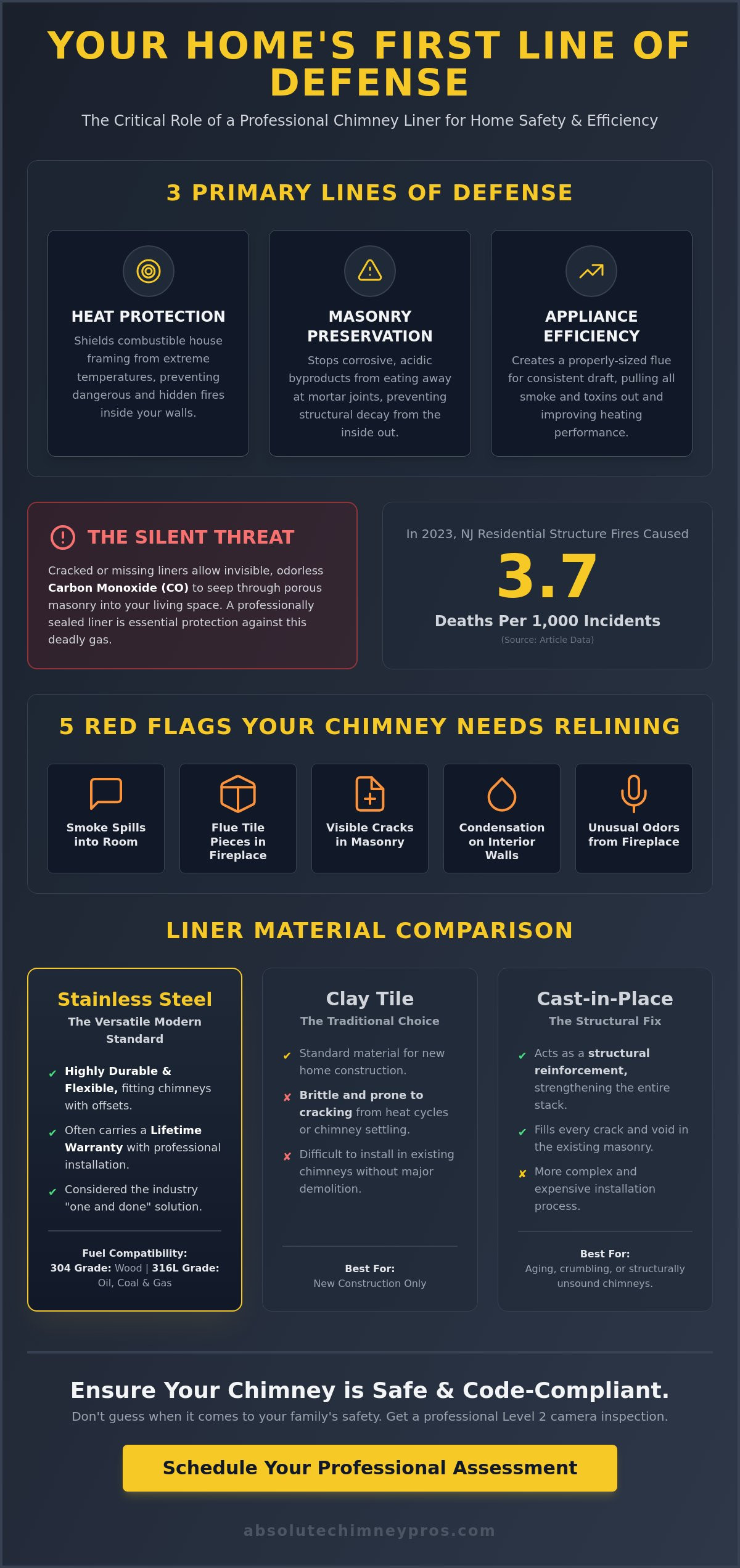
In 2023, residential structure fires in New Jersey caused 3.7 deaths for every 1,000 incidents. Most homeowners don't realize that a single crack in a flue tile can lead to a devastating house fire or a silent carbon monoxide leak. Your chimney isn't just a stack of bricks. It's a high-heat exhaust system that requires a fail-safe barrier. Investing in professional chimney liner installation NJ is the most critical step you can take to protect your family and your property's structural integrity.
You want a safe, code-compliant home without the headache of confusing contractor quotes or the fear of damaging your historic masonry. We understand that true peace of mind comes from technical precision and honest advice. This guide explains why a professional liner is your home's first line of defense and how to select the right installation for your specific New Jersey property. We'll examine modern safety standards, fuel-specific materials, and the best ways to improve your heating efficiency for the long term.
Key Takeaways
- Protect your home's structural integrity by understanding the three essential roles a liner plays in heat containment and masonry preservation.
- Identify immediate danger signs, such as shaling clay tiles or interior wall condensation, before they lead to a system failure.
- Compare the longevity of stainless steel against traditional clay to determine the most cost-effective chimney liner installation NJ for your property.
- Ensure your system meets 2021 International Residential Code standards through mandatory Level 2 camera inspections and precise flue sizing.
- Eliminate guesswork with transparent, professional assessments that prioritize safety and appliance efficiency over high-pressure sales.
What Is a Chimney Liner and Why Is It Essential for NJ Homes?
Your chimney is more than a brick structure. It is a high-performance exhaust system. Many New Jersey homeowners overlook the internal components that keep their property standing. A What Is a Chimney Liner search reveals that it is a protective conduit. It contains combustion byproducts and directs them safely outside. Without this barrier, your home is at risk.
Professional chimney liner installation NJ provides three primary lines of defense. First, it offers heat protection. It shields combustible house framing from extreme temperatures. Second, it ensures masonry preservation. It stops acidic gases from destroying your mortar from the inside out. Third, it maximizes appliance efficiency. A proper liner creates the consistent draft needed to pull smoke and toxins away from your living space. It's a precision-engineered solution for a dangerous problem.
Silent threats are the most dangerous. Cracked or missing liners allow carbon monoxide to seep through porous masonry. This gas is invisible. It is odorless. You won't know it's there until it's too late. A secure liner seals these gaps. It ensures every bit of exhaust reaches the atmosphere, not your bedroom. In New Jersey's dense residential areas, this protection isn't just for you; it's for your neighbors too.
The Science of Flue Protection
Liners prevent dangerous heat transfer. When your fireplace burns, the heat travels through the bricks. If those bricks touch wooden studs, a fire can start inside your walls. A chimney liner is a UL-listed safety barrier required by NFPA 211 standards. Beyond heat, liners combat chemical warfare. Modern fuels produce sulfur and nitrogen oxides. These mix with moisture to form corrosive acids. These acids eat away at mortar joints, turning solid structures into piles of loose debris. A liner stops this contact completely.
Why Unlined Chimneys Fail
Age is a major factor in New Jersey. Homes built before 1940 often lack any internal lining. Decades of use have left these chimneys brittle and dangerous. Modernizing your heating system adds another layer of risk. This makes professional chimney liner installation NJ a necessity for anyone upgrading their furnace or boiler. High-efficiency gas appliances produce cooler exhaust. This leads to more condensation. This moisture accelerates the decay of old brickwork. If you suspect your flue is compromised, consult our chimney inspection New Jersey guide for diagnostic tips. Don't wait for a collapse or a fire to take action.
Comparing Liner Materials: Stainless Steel vs. Clay vs. Cast-in-Place
Choosing a liner material isn't just about price. It's about chemical compatibility. Your fuel source dictates the physics of your flue. Wood, oil, and gas each produce different corrosive byproducts. Selecting the wrong material can lead to premature failure or dangerous leaks. Precision matters here. Safety first. No compromises.
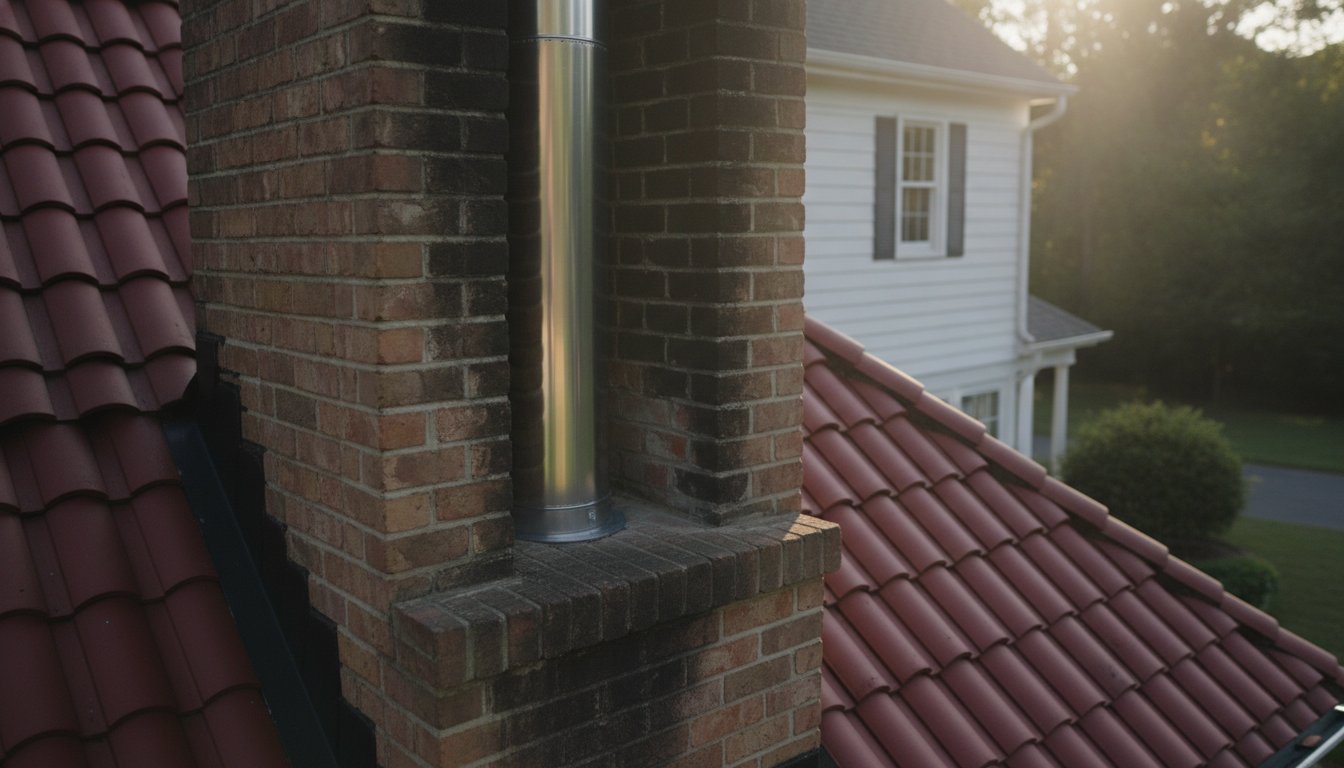
Stainless steel is the industry standard for most chimney liner installation NJ projects. It is durable. It is versatile. It fits almost any flue configuration. Clay tile remains standard for new construction, but it's often the wrong choice for a relining job. It's brittle. It's difficult to install in existing structures without major demolition. Cast-in-place solutions offer a third path. They act as a structural reinforcement for aging masonry. Each option has a specific purpose.
Stainless Steel: The Versatile Heavyweight
Stainless steel liners come in two primary grades. Grade 304 is suitable for wood-burning appliances. Grade 316L is the heavy-duty choice. It handles the highly corrosive exhaust from oil, coal, and gas. Flexible stainless liners are perfect for chimneys with bends or offsets. Rigid liners provide the best airflow for straight vertical runs. When you choose a high-quality steel liner, you are often securing a lifetime warranty. This assumes professional installation and regular maintenance. It's a "one and done" solution for the modern homeowner.
When to Consider Cast-in-Place Solutions
If your chimney's masonry is crumbling, a poured-liner might be necessary. This process involves pumping a lightweight, cement-like material into the flue. It fills every crack. It strengthens the entire stack. This material provides exceptional thermal insulation. It keeps the flue gases hot, which improves the draft of your wood stove or furnace. While more complex and expensive than steel, it's a permanent fix for structural instability. It turns a liability into an asset.
Matching your liner to your fuel source is a legal requirement under New Jersey Safety Codes and the International Residential Code. Wood fires create creosote. Gas furnaces create acidic condensation. Your liner must withstand these specific stressors. Don't guess with your family's safety. If you're unsure which material fits your heating system, a professional assessment is the only way to be certain. Consider a chimney liner installation NJ consultation to identify the safest, most efficient path forward for your property.
5 Red Flags That Your Chimney Needs Immediate Relining
Vigilance saves lives. Your chimney often provides physical evidence of failure before a disaster occurs. Ignoring these signals puts your property at risk. Homeowners must watch for specific changes in how their fireplace or furnace performs. These aren't just maintenance nuisances. They are structural warnings. If you notice any of the following signs, it's time to prioritize chimney liner installation NJ.
Finding thin, leaf-like flakes of clay in your firebox is a warning you cannot ignore. This is shaling. It means your original clay liner is delaminating. It's literally falling apart. Moisture is another silent signal. If you see damp spots on the walls near the chimney path, your flue is likely compromised. These signs often point to a breach in the system. Smoke should never enter your home. If a fire causes smoke to back up, your flue is either blocked or improperly sized. Check the exterior of your chimney too. White, powdery stains, known as efflorescence, prove that moisture is moving through your masonry. Crumbling bricks or "spalling" mean the structural integrity is fading fast.
Upgrading your heating system changes the physics of your home. High-efficiency furnaces vent at much lower temperatures. This causes exhaust to cool before it exits the chimney. The result is massive condensation in old, oversized flues. This moisture is acidic. It destroys mortar joints. A new appliance requires a specific liner size to maintain a proper draft and prevent internal rot.
The Danger of Shaling Clay Tiles
Shaling occurs when moisture enters the clay and freezes. The expanding ice shears off layers of the tile. These fragments don't just sit at the bottom. They can stack up and create a deadly blockage. This prevents toxic gases from escaping. Finding clay debris in your fireplace is a definitive sign of a failed liner. It indicates the structural failure of the original flue. You cannot patch this. You must replace it.
Modern Appliance Compatibility
In New Jersey basements, we often see the "Orphaned Water Heater." This happens when a large furnace is replaced with a high-efficiency model that vents through a wall. The old water heater is left alone in a massive masonry flue. It cannot generate enough heat to create a strong draft. Exhaust cools and turns into liquid acid. This eats your chimney from the inside out. Following The Professional Installation Process ensures your new liner is sized perfectly for the appliance it serves. Before any chimney liner installation NJ, we recommend a thorough chimney sweep NJ to clear existing debris. This provides a clean, safe workspace for the new system.
The Professional Installation Process and New Jersey Safety Codes
Precision is mandatory. A chimney liner is a life-safety component. It is not a weekend DIY project. In New Jersey, the installation process is governed by strict building codes and the International Residential Code (IRC). Professional chimney liner installation NJ ensures every connection is smoke-tight and every calculation is accurate. Failure to follow these standards doesn't just risk a fire. It can invalidate your home insurance and lead to costly municipal fines.
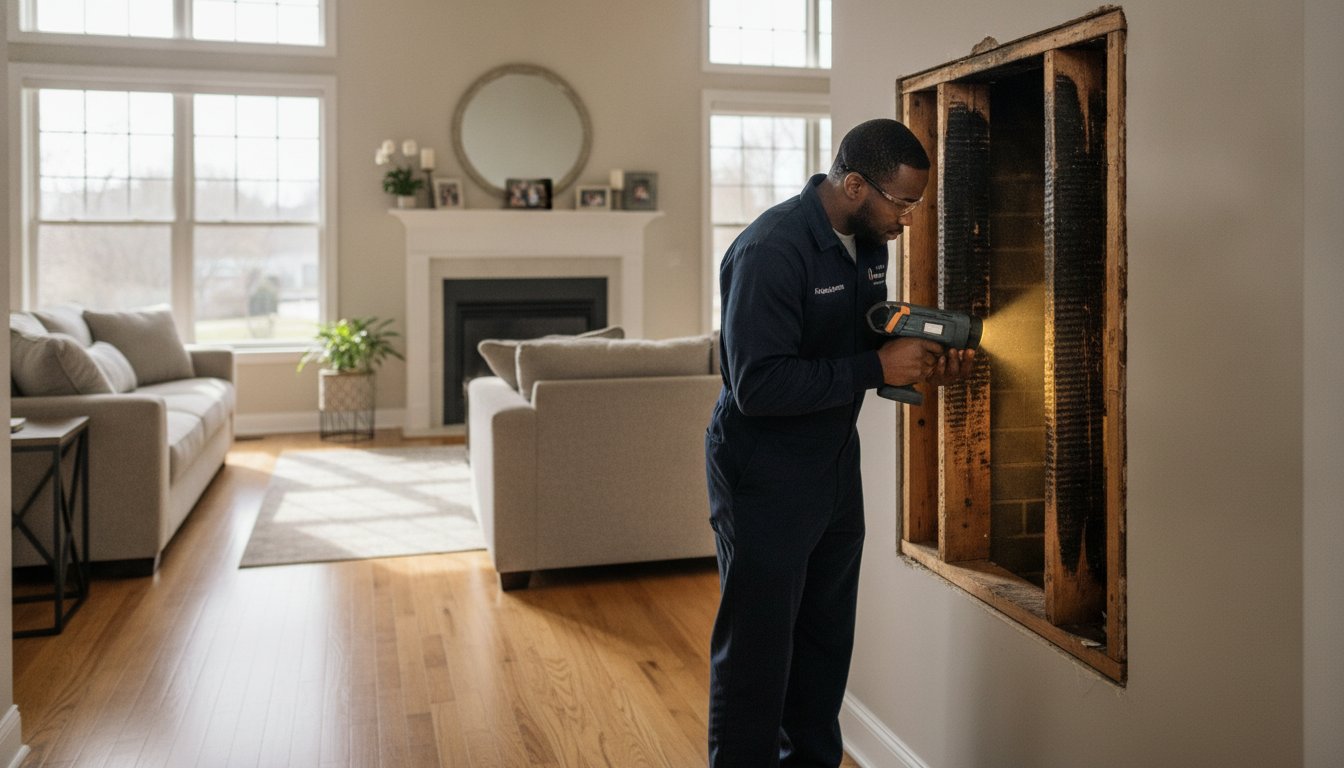
The process begins with a Level 2 camera inspection. This is a code requirement when changing heating appliances or relining a flue. We use high-resolution internal video to identify hidden voids, missing mortar, and structural shifts. Once the assessment is complete, we calculate the exact flue size needed. This is critical. If a liner is too large, exhaust gases cool and stall, creating a backup of carbon monoxide. If it's too small, the appliance cannot "breathe," leading to inefficient combustion and soot buildup.
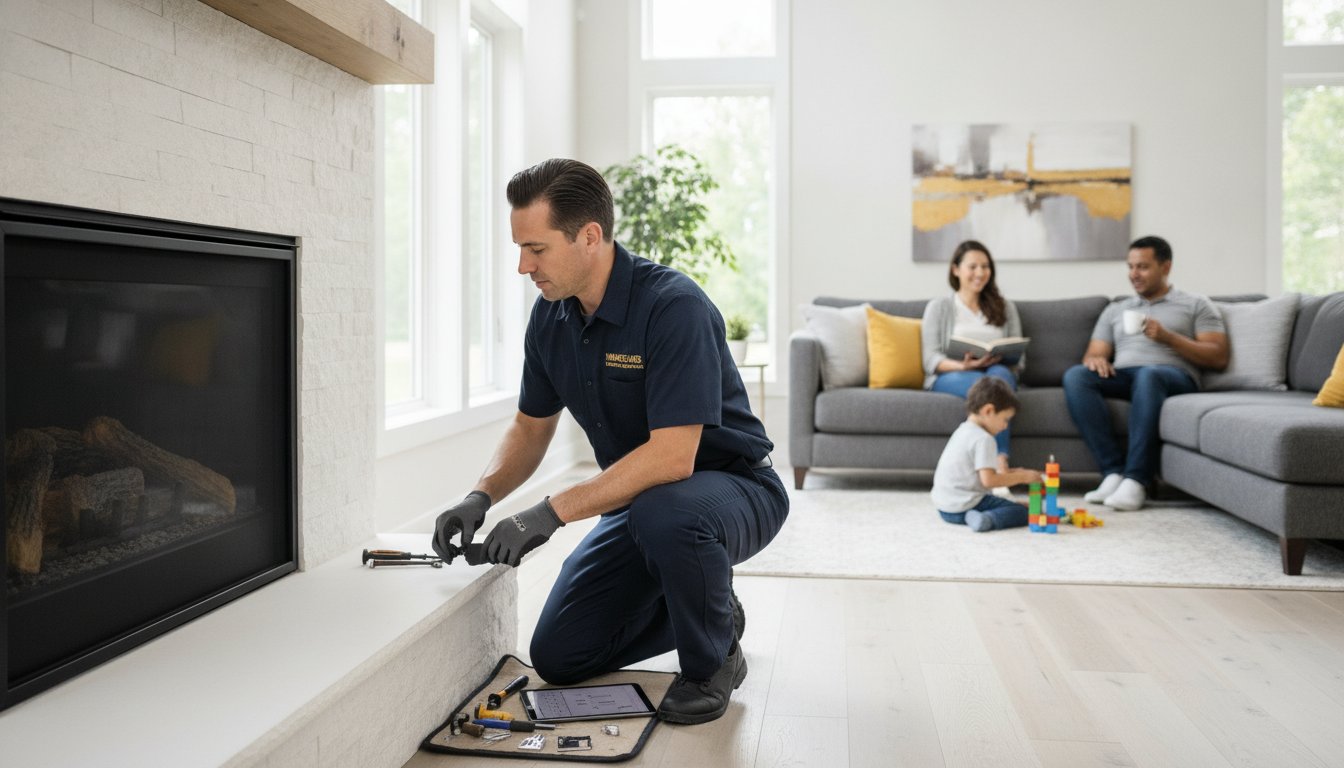
On installation day, we prioritize your home's cleanliness. Technicians use drop cloths and specialized dust-containment systems. The new liner is carefully seated and secured from the roof down. After the physical install, we conduct a smoke-tightness test. We verify that the draft meets the manufacturer's specifications for your furnace, boiler, or fireplace. This final verification provides the documentation you need for local code compliance.
Why CSIA Certification Matters in NJ
A general handyman lacks the specialized tools and training required for high-heat exhaust systems. Certified chimney technicians understand the NJ-specific amendments to the 2021 International Residential Code. We handle the permit process and ensure the work passes municipal inspections. This professional oversight protects your property value and your liability. If a fire occurs, your insurance company will look for proof of professional service. Without it, your claim is at risk. Certification is your guarantee of technical mastery.
The Role of High-Tech Camera Inspections
We believe in total transparency. You shouldn't have to take a contractor's word for it. Absolute Chimney Pros utilizes internal video scans to show you exactly what is happening inside your chimney. We identify cracks and blockages that are invisible from the ground. Once the new liner is seated, we run the camera again. This confirms a perfect fit and a clear path for exhaust. It eliminates guesswork. It builds trust through visual evidence.
Don't leave your home's safety to chance. Ensure your system meets every local regulation with a professional chimney liner installation NJ from our certified team.
Reliable Chimney Liner Installation in NJ: The Absolute Chimney Pros Standard
Safety is not a luxury. It is a requirement. At Absolute Chimney Pros, we treat every chimney liner installation NJ as a critical safety mission. Our CSIA-certified technicians serve homeowners throughout New Jersey and the Philadelphia area with a focus on technical mastery. We don't guess. We verify. Our team brings precision to every job site, ensuring your flue meets the highest industry standards for fire prevention and carbon monoxide containment. This isn't just about code compliance; it's about protecting the people inside the home.
Transparency is our foundation. We provide on-site estimates that are detailed and direct. You won't find hidden fees or aggressive "upsell" tactics here. We identify the specific hazard and provide the definitive solution. Because chimney hazards don't wait for a convenient time, we offer same-week appointments whenever possible. We aim to resolve urgent safety concerns before the heavy winter usage begins. Your time is valuable. Your safety is paramount. We respect both by showing up on time and working efficiently.
We respect your property as much as your safety. Our technicians follow a strict protocol to leave your home cleaner than we found it. We use professional-grade dust containment, drop cloths, and specialized vacuums to ensure no soot or debris enters your living space. This is the "Absolute" standard of service. No mess. No stress. Just a safe, efficient chimney system that performs exactly as intended.
A Local Partner for Home Safety
New Jersey’s architecture is diverse. From historic Victorian masonry in Cape May to modern builds in North Jersey, we understand the unique challenges of local housing stock. We offer a flat-fee inspection before any repair begins. This provides a clear, honest assessment of your system's health without financial surprises. Our approach is high-impact and no-nonsense. We focus on the technical details that keep your family secure, from correct flue sizing to proper material selection. We are your protective partners in home maintenance.
Ready to Secure Your Home?
Don't wait for a red flag to become a crisis. Booking your professional assessment is simple and fast. Our "no hidden fees" promise ensures you know the scope of your project before the work starts. We provide the clarity you need to make an informed decision for your property. A failing flue is a liability you don't have to carry. Take the first step toward total peace of mind and long-term masonry protection today. Our experts are standing by to secure your home.
Schedule your professional chimney liner estimate with Absolute Chimney Pros today!
Protect Your Property and Your Peace of Mind
A safe home starts with a secure flue. You now understand that a liner is not an optional accessory. It is a vital safety component. Whether you choose stainless steel for its durability or a cast-in-place solution for structural support, the goal remains the same. You need a system that contains heat and directs toxic gases out of your living space. Professional chimney liner installation NJ ensures your property meets modern safety codes while protecting your masonry from long-term decay.
Don't wait for a dangerous blockage or a structural failure to take action. Our team of CSIA-Certified Technicians is licensed and insured in NJ and PA. We prioritize technical precision and ethical transparency. We offer flat-fee inspection options to give you a clear, honest assessment of your chimney's health without the guesswork. You deserve the confidence that comes from professional oversight and reliable expertise.
Book Your Professional Chimney Liner Assessment with Absolute Chimney Pros today. Let's ensure your home remains a safe, warm environment for years to come.
Frequently Asked Questions
How much does chimney liner installation cost in New Jersey?
Total costs depend on the material, chimney height, and internal flue condition. Stainless steel is a popular long-term choice for many homeowners. Cast-in-place solutions are a structural investment for aging masonry. Factors like flue offsets or the type of heating appliance also impact the project scope. We provide flat-fee inspection options to help you understand your specific needs. Every project requires a custom assessment for accuracy.
Can I install a chimney liner myself to save money?
No. This is a high-stakes safety project that requires technical mastery. New Jersey building codes require specific permits and certified expertise for this work. DIY attempts often lead to improper drafting or significant fire hazards. Professional chimney liner installation NJ secures your insurance coverage. It guarantees that the system is smoke-tight and code-compliant. Don't gamble with carbon monoxide risks.
How long does a stainless steel chimney liner last?
A high-quality stainless steel liner can last 25 years to a lifetime. This longevity depends on the grade of steel and the fuel type used in your home. Grade 316L is the industry standard for durability against corrosive acids. Annual maintenance and professional cleaning are mandatory to preserve the manufacturer's warranty. It is a permanent solution for most modern properties.
Do I need a new liner if I'm only using a gas fireplace?
Yes. Gas appliances are highly corrosive to unlined chimneys. They produce cooler exhaust that turns into acidic condensation on cold masonry surfaces. This liquid eats away at mortar joints from the inside out. A liner creates a non-porous path for these toxic gases. It prevents structural decay and ensures your gas fireplace vents safely and efficiently every time.
How long does the actual installation process take?
Most projects are completed in four to eight hours. A standard chimney liner installation NJ is typically a one-day job for a certified crew. Complex flues with multiple offsets or existing masonry damage may require more time for preparation. We prioritize technical precision over speed. We ensure your home is clean and the system is tested before we leave the site.
Will installing a new liner improve my furnace's efficiency?
Yes. A correctly sized liner improves the draft of your heating system. This allows your furnace to operate at its peak performance without "choking" on its own exhaust. Better drafting leads to more complete combustion. This reduces fuel waste and lowers your monthly energy costs. It also extends the life of your heating equipment by preventing internal corrosion.
Does a chimney liner need to be cleaned like a regular chimney?
Yes. All liners require an annual inspection to ensure they are clear of obstructions. Wood-burning liners accumulate flammable creosote that must be removed. Gas and oil liners collect soot and scale that can cause dangerous blockages. Regular cleaning maintains the integrity of the liner material. It ensures the system remains safe and functional for the next heating season.
What happens if I continue to use a chimney with a cracked liner?
You risk a devastating house fire or silent carbon monoxide poisoning. Cracks allow extreme heat to transfer directly to the wooden house framing. This can ignite a fire inside your walls that is difficult to detect. Toxic gases also seep through these gaps into your living areas. A cracked liner is a failed system. It must be addressed immediately to protect your home.