

If your gas fireplace won’t light, the safest first step may be to stop trying to relight it. Searching “gas fireplace not working Philadelphia” can leave you unsure whether you’re dealing with a simple control issue or a problem that needs professional attention. You can check a few external controls safely, but gas components and warning signs call for a clear stop.
It’s reasonable to want answers before scheduling a repair, especially when you’re concerned about gas safety. This guide explains what you can check without opening the fireplace, which symptoms mean troubleshooting should end, and what a professional service visit can assess. If you smell gas, leave the area and call Philadelphia Gas Works at 215-235-1212 from a safe location.
We’ll cover common causes of ignition and operating problems, then explain how inspection, cleaning, and repair can help identify the issue. When basic checks don’t solve it, Absolute Chimney Pros provides gas fireplace service for Philadelphia-area homeowners. Licensed, insured technicians assess the fireplace and explain the next steps.
Key Takeaways
- If you smell gas, leave the home and call 911 or the gas utility from outside. Don’t use switches or flames.
- For a gas fireplace not working Philadelphia homeowners can make only basic checks, following the appliance manual for controls, remote batteries, and power.
- Ignition, pilot, controls, and venting can all affect operation. Symptoms can point to an area to inspect, but they don’t confirm the cause.
- Persistent ignition trouble, a pilot that won’t stay lit, or abnormal operation are reasons to stop troubleshooting and arrange professional service.
- Absolute Chimney Pros provides gas fireplace inspection, cleaning, and repair, backed by licensed, bonded, insured, and CSIA-certified technicians.
Gas Fireplace Not Working in Philadelphia? Start With Safety
A fireplace that won’t start, won’t stay lit, or no longer provides heat is frustrating, especially when the cause isn’t clear. Before troubleshooting, check for signs of danger. If you’re searching for “gas fireplace not working Philadelphia,” start with this rule: safety comes before figuring out the fault.
A control problem may be simple, but a suspected gas-appliance fault isn’t something to diagnose through repeated attempts. Gas fireplaces combine fuel, ignition, and venting components. General information about fireplace types and potential health risks is available in Wikipedia’s Fireplace overview, but it can’t determine whether your appliance is safe to use.
Which symptoms mean troubleshooting should stop?
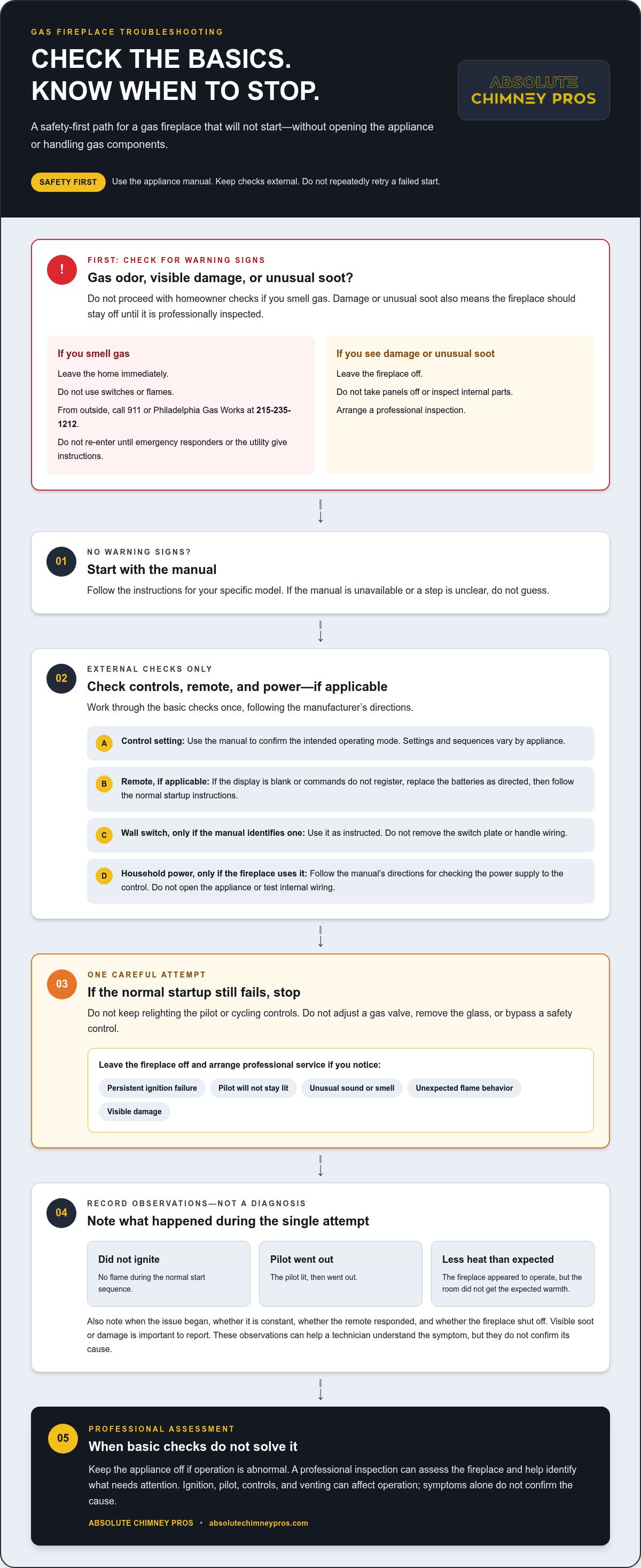
Stop using the fireplace if you smell gas, see visible damage, or notice unusual soot. Don’t try to relight it, investigate the source, or operate switches or flames if you smell gas.
If you smell gas, leave the home immediately. From outside, call 911 or Philadelphia Gas Works at 215-235-1212. Don’t re-enter until you’ve received instructions from emergency responders or the utility. If there’s no gas odor but you see damage or unusual soot, leave the fireplace off and arrange a professional inspection.
Repeated ignition attempts won’t diagnose the problem. If a normal start attempt fails, stop rather than cycling the controls again and again. Retrying won’t establish whether the cause is a control setting, an ignition issue, or another appliance fault.
What does “not working” look like?
Describe only what you can observe during one normal start attempt, following the appliance manual. Note when the problem began and what happens: does the fireplace fail to ignite, does the pilot light and then go out, or does the flame operate without providing the heat you expect? These are useful distinctions, not diagnoses.
- Failure to ignite: The fireplace doesn’t produce a flame during the normal start sequence.
- Pilot won’t stay lit: The pilot lights but goes out instead of remaining on.
- Weak or absent heat: The fireplace appears to operate, but the room doesn’t receive the expected warmth.
Write down whether the issue is constant or began at a particular time, and note any visible soot or damage. Don’t remove panels, reach into the unit, or take apart components to look for a cause. Clear observations can help a technician understand what you experienced, while an inspection is needed to assess the appliance itself. If a warning sign appears at any point, stop and follow the safety steps above.
Safe Checks to Try When a Gas Fireplace Will Not Start
Once you’ve ruled out immediate warning signs, limit troubleshooting to simple external checks described in the appliance manual. For a gas fireplace not working Philadelphia homeowners can start with the controls, remote, and power supply, but not internal parts. Follow the manufacturer’s instructions for your specific model. If the manual is unavailable or a step is unclear, don’t guess.
Check the controls, remote, and power supply
Follow the manual for homeowner checks; leave diagnosis of the gas system to a professional. Work through the basic checks once, and stop if the usual startup procedure doesn’t work as directed.
- Confirm the control setting. Use the manual to check that the fireplace is in the intended operating mode. Controls vary, so don’t assume a setting or sequence based on another appliance.
- Check the remote if applicable. If its display is blank or commands aren’t registering, replace the batteries as directed. Then follow the manufacturer’s normal startup instructions.
- Check the wall switch only if the manual identifies one. Use it as instructed. Don’t remove the switch plate or handle wiring.
- Check household power only if the fireplace uses it. Follow the manual’s directions for checking the power supply to the control. Don’t open the appliance or try to test internal wiring.
These checks can help rule out an incorrect setting or depleted remote batteries. They can’t establish whether an ignition, pilot, or gas-system component is functioning properly.
When should you stop a basic check?
Stop if the manufacturer’s normal startup procedure doesn’t work after one careful attempt. Don’t keep relighting the pilot, adjust a gas valve, remove the glass, or bypass a safety control. Those actions go beyond basic homeowner checks and may expose you to a hazard or interfere with safe operation.
Persistent failure, an unusual sound or smell, unexpected flame behavior, or visible damage means it’s time to leave the fireplace off and seek professional service. If you smell gas, don’t continue troubleshooting. Leave the home and call 911 or Philadelphia Gas Works from outside.
Before arranging service, note which steps you tried and what happened. For example, record whether the remote responded, whether the fireplace began its normal startup sequence, and whether it shut off. Don’t repeat a failed attempt just to gather more details. Clear observations help a technician assess the issue without you opening or handling gas components.
If manual-based checks don’t resolve the problem, professional gas fireplace service can help identify what needs attention. Keep the appliance off until it’s been assessed if operation remains abnormal or you’re unsure it’s safe to use.
Common Reasons a Philadelphia Gas Fireplace Stops Working
A fireplace that won’t ignite, shuts off unexpectedly, or produces less heat can point to different parts of the system. The symptom is a useful clue, not a diagnosis. For anyone searching “gas fireplace not working Philadelphia,” a simple control issue may be possible, but persistent or abnormal operation needs an on-site assessment to identify the cause and appropriate repair scope.
Ignition, pilot, controls, and venting can all affect operation. The table below connects what you may observe with system areas a technician may evaluate. It does not confirm a fault or provide a reason to open the appliance.
| Observed symptom | System area that may need assessment | Why the symptom isn’t a diagnosis |
|---|---|---|
| Fireplace doesn’t ignite | Controls or ignition system | A control setting or an ignition-related issue may produce a similar result. |
| Pilot lights but won’t stay lit | Pilot or related operating system | More than one condition can cause the flame to go out; inspection is needed to distinguish them. |
| Fireplace starts, then shuts off | Controls, ignition, or another operating system | A shutdown alone doesn’t identify the reason or which component is involved. |
| Flame operates but heat seems weak | Venting, airflow, or fireplace operation | Room conditions and appliance performance both affect the experience of heat. |
Pilot-light and ignition problems
Failure to ignite and a pilot that won’t remain lit are different observations, but neither identifies a single failed part. The ignition or pilot system may need professional inspection, especially if the problem repeats after the normal startup procedure. Don’t assume a thermocouple, valve, or ignition part needs replacement. These components require diagnosis, not trial-and-error repair.
Controls, power, and venting concerns
A remote, wall switch, or household power supply can affect startup, depending on the fireplace design. If the manual-based control checks don’t resolve the issue, the cause may be elsewhere. Venting or airflow concerns also require professional evaluation. Don’t remove panels, clean internal components, or make adjustments based on a symptom alone.
A technician can inspect the appliance in place, assess its operation and relevant system areas, and explain the findings. An on-site assessment is needed to establish the specific cause and repair scope. This keeps a symptom from being mistaken for a confirmed fault and helps determine whether inspection, cleaning, or repair is appropriate.
When to Call a Gas Fireplace Technician, and What to Prepare
Arrange professional service if the fireplace repeatedly fails to ignite, the pilot won’t stay lit, or the unit behaves unexpectedly. A control check that doesn’t resolve the issue is a useful stopping point, not a reason to keep trying different settings. If you’re dealing with a gas fireplace not working in Philadelphia, a technician can assess the appliance on site and identify whether inspection, cleaning, or repair is appropriate.
These are distinct service needs. An inspection assesses the fireplace’s condition and operation. Cleaning may be appropriate if buildup is affecting performance. Repair addresses a fault identified during assessment. One does not automatically mean all three are needed. Absolute Chimney Pros provides a flat $69 on-site inspection, with no hidden charges, so you can understand the findings and next steps. Gas Fireplace Service starts at $129.
What information helps the technician assess the issue?
Before the visit, gather details you can observe safely. You don’t need to recreate a failure or open the fireplace. A clear account of what happened can help focus the assessment.
- Describe the timing: Note whether the fireplace fails immediately during startup or begins operating and then shuts down.
- Record the make and model: Share this information if it’s readily visible on an accessible label or in the manual. Don’t remove panels or move the appliance to find it.
- Summarize checks already attempted: List the manual-directed control, remote, or power checks you tried and what happened afterward.
- Note unusual observations: Record any unexpected sounds, odors, visible soot, damage, or changes in flame behavior. Don’t inspect internal parts to investigate further.
If there’s an odor of gas or another immediate safety concern, don’t wait to collect these details. Leave the area and seek help from outside. Safety comes first; notes are only useful when it’s safe to make them.
What should homeowners expect from an inspection?
A technician assesses operation and condition before recommending next steps. The observed symptoms guide the inspection, but they don’t confirm the cause by themselves. After the assessment, the technician can explain what was observed and whether inspection, cleaning, or repair is warranted. Ask for a clear account of the findings and proposed work before proceeding.
For maintenance context, Absolute Chimney Pros’ Gas Fireplace Service NJ checklist can help homeowners understand routine care. If the fireplace’s symptoms persist or operation seems abnormal, arrange an on-site assessment rather than relying on a checklist to diagnose a fault. Schedule gas fireplace service with Absolute Chimney Pros for professional inspection, cleaning, or repair in the Philadelphia area.
Gas Fireplace Repair in Philadelphia: How Absolute Chimney Pros Helps
A persistent ignition failure, pilot that won’t stay lit, or fireplace that operates abnormally deserves a professional assessment. Absolute Chimney Pros provides gas fireplace inspection, cleaning, and repair for homeowners in Philadelphia and surrounding areas. The service visit starts with an on-site assessment of the fireplace’s condition. The findings help determine what attention is appropriate, rather than assuming every symptom has the same cause.
What Absolute Chimney Pros can assess and service
Inspection, cleaning, and repair address different needs. An inspection helps assess the unit’s condition and operation. Cleaning may be appropriate based on what’s observed, while repair addresses an identified issue. These steps aren’t automatically bundled. The technician explains the findings and recommended next steps so you can make an informed decision.
If the fireplace continues to have ignition, pilot, or operating problems after safe checks, professional service can help assess the system. A symptom alone doesn’t mean a particular part has failed or that a specific repair is needed. For broader maintenance context, the Gas Fireplace Service NJ annual maintenance checklist can help you understand routine care alongside problem-focused service.
Absolute Chimney Pros’ technicians are licensed, bonded, insured, and CSIA-certified. The company holds a 4.9-star Google rating, supported by more than 200 verified reviews. These credentials and customer feedback offer added context as you consider service for your home.
Book a transparent local inspection
Knowing what happens during a visit can make the next step more straightforward. Absolute Chimney Pros offers a flat $69 on-site inspection with no hidden charges. A technician assesses the fireplace and explains the observed condition and potential next steps. Inspection, cleaning, or repair is recommended according to what the assessment shows, not treated as an automatic package.
Same-week and next-day appointments are available for homeowners in the New Jersey and Philadelphia area. If you’re searching for help with a gas fireplace not working Philadelphia homeowners can turn to Absolute Chimney Pros for local gas fireplace service, professional assessment, and clear communication about the work indicated.
Schedule gas fireplace service with Absolute Chimney Pros to arrange an inspection, cleaning, or repair for your fireplace.
Move Forward With a Clear Next Step
Uncertainty can make it tempting to keep trying the fireplace or put off a decision. Don’t let either become the plan. If normal, manual-directed checks haven’t resolved the problem, leave the appliance off and arrange an assessment instead of guessing at the cause. For anyone searching “gas fireplace not working Philadelphia,” professional service can turn an unexplained symptom into a clearer path forward.
Before the visit, keep your notes about what happened and which basic checks you tried. They give the technician a useful starting point without requiring you to open or adjust the unit. From there, an on-site inspection can help establish what the fireplace needs and what the appropriate next step may be.
Schedule a gas fireplace inspection with Absolute Chimney Pros to take that next step. A careful assessment can replace repeated attempts and uncertainty with informed guidance. Your fireplace can be evaluated with safety and clear communication in mind.
Frequently Asked Questions
Why will my gas fireplace not turn on?
Several issues can prevent startup, including an incorrect control setting, depleted remote batteries, loss of household power to a control, or a fault affecting ignition. If you searched “gas fireplace not working Philadelphia,” remember that the symptom alone can’t identify the cause. Check the manual for the normal startup sequence, then note what happens. If the fireplace still won’t start, avoid opening it or adjusting gas components.
Is it safe to use a gas fireplace that will not stay lit?
No. If the pilot repeatedly goes out or the fireplace shuts down during operation, leave it off until the issue is assessed. A flame that won’t stay lit doesn’t reveal whether the cause is minor or a fault affecting safe operation. Don’t repeatedly relight it to keep using the appliance. If you also notice gas odor, visible damage, or unusual soot, stop using the fireplace and follow the appropriate safety steps.
Can dead remote batteries stop a gas fireplace from working?
Yes, if your fireplace relies on a remote for its normal controls, depleted batteries may prevent the remote from sending a command. Replace them only as directed by the manual, then try the manufacturer’s normal startup procedure once. If the remote responds but the fireplace still doesn’t operate, the batteries may not be the only issue. Don’t use alternate controls or change settings unless the manual describes them for your model.
What should I do if I smell gas near my fireplace?
Leave the home immediately. Don’t operate switches, use flames, or try to find the source. From outside, call 911 or Philadelphia Gas Works at 215-235-1212. Stay out until emergency responders or the utility provide instructions. Don’t return to the fireplace to turn it off or gather belongings. Once the area is safe, arrange appropriate professional assessment before using the appliance again.
How do I know if my gas fireplace needs professional repair?
Arrange an assessment if it continues to fail after the manual’s normal startup steps, the pilot won’t remain lit, or operation seems abnormal. Visible damage, unusual soot, or unexpected flame behavior are also reasons to keep it off and seek service. These signs don’t identify a specific failed part, but they do warrant attention. Record what you observed and share it with the technician instead of attempting internal repairs.
Can a power outage affect a gas fireplace?
It can, depending on how the fireplace’s controls and ignition are powered. Some models use household electricity for certain operating functions, while others may use different control arrangements. Check the manual to see whether your model needs household power and what it says to do after an outage. Don’t assume a gas supply issue or try to reset or bypass a control without manufacturer instructions.
How often should a gas fireplace be professionally serviced?
Follow the maintenance schedule in your fireplace’s manual, since service guidance can vary by model and use. Arrange an assessment sooner if you notice a change in ignition, flame behavior, or operation, rather than waiting for routine maintenance. An inspection can help identify whether the appliance needs cleaning or repair. Keep a record of service visits and recurring symptoms to make future assessments more informed.


