
What if a few simple steps could make your appointment easier to manage? Knowing how to prepare for a chimney sweep starts with keeping the fireplace completely cool, moving furniture and fragile items away from the hearth, and keeping children and pets clear of the work area.
You don’t need to overhaul the room. A clear route to the fireplace and any chimney access points helps the technician get to work. A few details about recent use, smoke issues, or past chimney work can also make the conversation more useful. If you’re unsure whether the fireplace should be used beforehand, leave it unused until the sweep is finished and the technician says it is ready.
This checklist covers what to move, what to share, and what to expect when the technician arrives, so you can prepare without unnecessary work. Absolute Chimney Pros provides residential chimney sweeping and inspection in New Jersey with CSIA-certified technicians. A little preparation helps the appointment run smoothly and safely.
Key Takeaways
- Learn how to prepare for a chimney sweep with a short checklist that keeps the appointment focused and safe.
- Arrange the room in a practical order, protecting nearby furnishings without dismantling fireplace parts.
- Know which preparation is safe to handle yourself and which chimney work belongs to trained professionals.
- Gather useful details about fireplace use and any changes or concerns you’ve noticed.
- See how a prepared work area helps Absolute Chimney Pros serve homeowners in New Jersey and the Philadelphia area.
How to prepare for a chimney sweep before appointment day
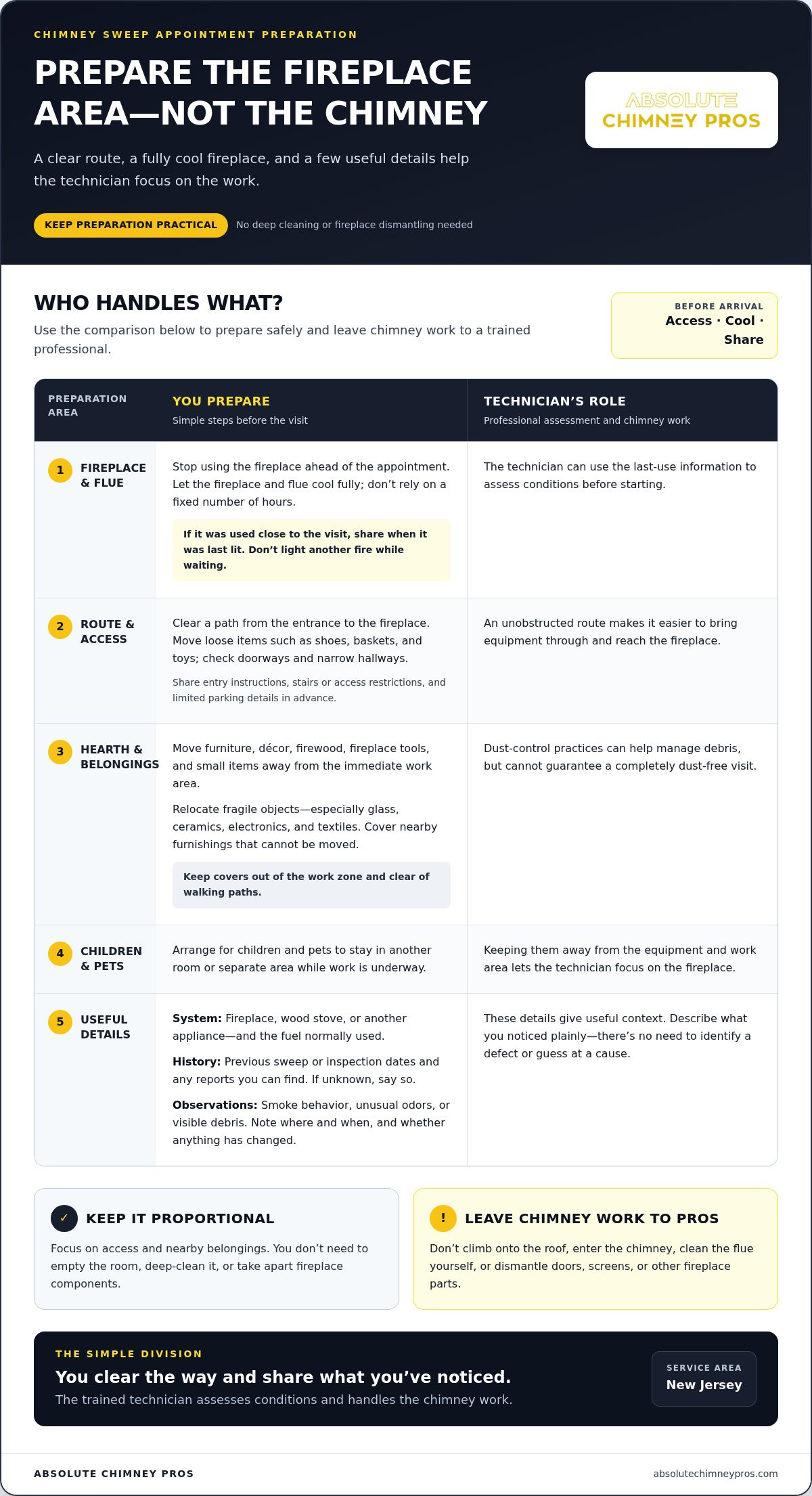
Preparation is straightforward. Give the technician safe, clear access to the fireplace and chimney. Before the appointment, stop using the fireplace, clear the immediate work area, and gather a few details about how you use it and any concerns you’ve noticed. You don’t need to deep-clean the room or take apart fireplace components.
A chimney sweep works on the chimney and fireplace, not general room cleaning. The work involves removing soot and creosote deposits from the system. A chimney sweep article offers broader background on the trade and its purpose. Clearing the work zone lets the technician focus on the job. For inspection-specific context and preparation, see the New Jersey chimney inspection safety checklist.
- Stop using the fireplace ahead of the appointment so it and the flue can cool fully.
- Clear a route to the fireplace and move nearby belongings that could block access.
- Gather previous sweep or inspection paperwork, along with notes about recent use or problems.
When should you stop using the fireplace?
Let the fireplace and flue cool fully before the technician arrives. A set number of hours may not suit every fireplace or recent fire, so don’t rely on a fixed timetable. If you used it close to the appointment, tell the technician when it was last lit. That information helps them assess conditions before starting. Don’t light another fire while waiting for the visit.
What information should you have ready?
A few simple notes can make the initial conversation more useful. You don’t need to identify a defect or interpret what you’ve seen. Share observations plainly, including when they happen and whether they have changed.
- System type: Note whether you have a fireplace, wood stove, or another appliance, and the fuel you normally burn.
- Service history: Gather the dates of previous sweeps or inspections and any reports you can find. If you don’t know the dates, say so.
- Recent observations: Describe smoke behavior, unusual odors, or visible debris. Mention where you noticed it and when, without guessing at the cause.
This information gives the technician useful context, but it doesn’t replace a professional assessment. When considering how to prepare for a chimney sweep, prioritize access, a fully cool fireplace, and clear, accurate details. Keep preparation safe and proportional: don’t climb onto the roof, enter the chimney, or attempt to clean the flue yourself. Leave the chimney work to trained professionals.
Clear and protect the fireplace area before the chimney sweep arrives
A little room preparation makes it easier for the technician to reach the fireplace and set up for the work. Focus on the immediate area and the path leading to it. You don’t need to empty the room, take apart the fireplace, or do a full housecleaning. This part of how to prepare for a chimney sweep is practical: move anything that could obstruct access, protect belongings that must stay, and keep people and pets clear.
Work through these steps in order:
- Clear the route. Move shoes, baskets, toys, and other loose items from the entrance to the fireplace. Check doorways and narrow hallways so the technician can bring equipment through without navigating around obstacles.
- Make space around the hearth. Move furniture, décor, firewood, and fireplace tools away from the immediate work area. Keep the hearth itself clear, including small items that are easy to overlook.
- Move or cover fragile belongings. Relocate breakable objects, framed photos, and delicate decorations. If a nearby furnishing can’t be moved out of the room, cover it to help protect it from dust. Don’t place covers where they block the work zone or create a tripping hazard.
- Secure children and pets. Arrange for them to stay in another room or a separate area while work is underway. This keeps them away from equipment and lets the technician focus on the fireplace.
Which items should you move or cover?
Prioritize objects closest to the fireplace, especially glass, ceramics, electronics, and textiles. A nearby armchair or rug may be easy to move; a large sofa may be better covered if it can’t be relocated. Use a cover you can remove easily, and keep it out of the technician’s path. Leave fireplace components in place. Don’t dismantle doors, screens, or other parts to make extra room.
How can you make the work area accessible?
Think beyond the hearth. The technician needs an unobstructed route from the home’s entrance to the fireplace. If the usual entrance is locked, there are stairs or access restrictions, or parking is limited, share those details when arranging the visit. Provide any necessary entry instructions in advance. On appointment day, keep the route clear and make sure children and pets stay away from the immediate work area.
Dust-control practices can help manage debris, but they can’t guarantee a completely dust-free visit. Moving fragile belongings and covering furnishings that must remain nearby are sensible precautions, not a sign that a major cleanup is expected. Keep preparation proportional. Don’t enter the chimney or try to modify the fireplace yourself.
Once the area is ready, the technician can focus on the chimney work rather than clearing obstacles. If you’re scheduling a sweep, learn about chimney sweep service in New Jersey from Absolute Chimney Pros.
Prepare the fireplace safely without trying to clean the chimney yourself
Your role before the appointment is to make the fireplace accessible and share useful observations. The chimney work itself belongs to a trained professional. You can prepare access, but chimney sweeping requires professional equipment and training. Keep that boundary clear: don’t climb onto the roof, put tools into the flue, or try to sweep the chimney yourself.
DIY work can create risks without resolving the underlying concern. A deposit or obstruction may be out of view from the fireplace opening, and trying to reach it can expose you to falling debris or unsafe conditions. Leave fireplace components in place, too. Don’t remove doors, dampers, or other parts to look inside or make the technician’s job easier.
What should you do with ashes and fireplace contents?
Leave ash and other contents undisturbed unless the service team has specifically instructed you to handle them. Never touch hot embers, even if they appear inactive. Before the visit, make sure the fireplace is no longer in use, and don’t add fuel or light the appliance while you’re waiting. If anything in the firebox looks unusual, tell the technician what you noticed rather than trying to move it.
Why leave creosote and blockages to the technician?
Creosote deposits and concealed obstructions can’t always be assessed safely or accurately from the room. What looks like loose debris may be part of a larger issue, and reaching into the firebox or flue won’t show the full condition of the chimney. Avoid scraping, vacuuming, or removing material yourself. Share what you’ve observed and leave assessment and cleaning to the professional. The New Jersey chimney sweep service guide explains the professional cleaning process and how it fits into home preparation.
This is especially important if you notice debris, a blockage, or a change in how the fireplace behaves. Don’t try to identify the material or test the system by lighting another fire. Note where you saw the issue and when, then pass that information along. Clear observations are useful; a homeowner diagnosis isn’t necessary.
Keep your preparation simple and safe. Make sure the work area is accessible, leave the fireplace unused so it can cool fully, and leave ash, deposits, and unknown debris alone unless you’ve received specific instructions. You don’t need to enter the chimney, inspect hidden areas, or take anything apart. Professional sweeping is the technician’s work. Your part is to provide safe access and communicate what you’ve noticed.
What to prepare for the chimney sweep appointment day
On appointment day, focus on access, a brief handoff, and clear communication. Have the entry route ready and be available to let the technician in, or leave clear entry instructions if you can’t be there. Keep the fireplace area accessible until the visit is complete. You don’t need to prepare a technical explanation or identify a problem. Straightforward observations are enough.
What should you tell the technician?
Share the details you know about the fireplace or appliance, including its type, the fuel you normally use, and when it was last lit. If you’ve noticed smoke entering the room, changes in draft, unusual odors, or concerns during operation, describe what happened and when. Stick to what you observed rather than guessing at the cause.
Previous service notes, inspection reports, or relevant property details can provide helpful context. If you don’t have paperwork or can’t recall a date, say so. There’s no need to search the house for every record before the appointment. A short, accurate account is more useful than a diagnosis.
- Share the appliance type, usual fuel, and last known use.
- Describe any smoke, draft, odor, or operating concerns in plain language.
- Provide previous service notes or relevant property details you already have.
How can you keep the visit running smoothly?
Be ready to provide access and point out any entry instructions or obstacles that could affect arrival. Keep the fireplace area clear while the technician works, and give them room to explain what they find. If you need to step away, arrange access and a way to communicate in advance.
Before discussing additional work, ask for a clear explanation of the findings, the proposed scope, and the next steps. A chimney sweep and an inspection are distinct services, so confirm what the scheduled appointment covers rather than assuming one automatically includes the other. If the technician recommends further work, make sure you understand the estimate and scope before that work proceeds.
Absolute Chimney Pros provides on-site estimates with no hidden charges. For a chimney inspection, the flat on-site inspection fee is $69. A clear conversation helps you understand the work being proposed and decide how to proceed, without needing to diagnose the chimney yourself. Keep your notes handy, share what you’ve observed, and ask questions if any part of the explanation is unclear. This simple handoff helps the appointment stay focused on your fireplace and concerns.
For a professional chimney sweep in New Jersey, schedule chimney sweep service with Absolute Chimney Pros.
Book a prepared, professional chimney sweep in New Jersey
A clear work area and a few helpful details make it easier for the technician to focus on the scheduled work. You don’t need special tools or an elaborate cleaning routine. Keep the fireplace cool, make the route to it accessible, and have any relevant service notes ready. That simple preparation sets up a focused appointment and gives you a clear starting point for discussing the fireplace.
Absolute Chimney Pros provides residential chimney sweep services for homeowners in New Jersey and the Philadelphia area. Its technicians are CSIA-certified, licensed, bonded, and insured. These credentials tell you who is handling the work, while the appointment conversation gives you room to share concerns and understand the next steps.
What to expect from Absolute Chimney Pros
Absolute Chimney Pros offers same-week and next-day appointments. Technicians provide on-site estimates with no hidden charges, so you can understand the proposed work before moving forward. The company also has a 4.9-star Google rating with more than 200 verified reviews. Your appointment should still begin with a clear discussion of the work being considered.
Use the visit to make sure the service scope is understood. A chimney sweep and a chimney inspection are distinct services, so ask what the scheduled work includes and request a clear explanation if additional work is proposed. You should know what the technician observed, what action is recommended, and whether that action is part of the original scope or a separate next step. Clear explanations help you make an informed decision without needing to diagnose the chimney yourself.
Ready to schedule your chimney sweep?
If you’ve been wondering how to prepare for a chimney sweep, the essentials are manageable: let the fireplace cool fully, keep the work area accessible, and be ready to describe what you’ve noticed. The details you gathered can make the arrival conversation more efficient. You don’t need to enter the chimney, handle deposits, or take the fireplace apart. Leave the chimney work to the technician.
Absolute Chimney Pros serves homeowners across New Jersey with professional chimney sweep service. Schedule an appointment, then use your completed checklist to get the fireplace area and household ready. A cool fireplace and a clear work area are the main preparation steps. Schedule your chimney service with Absolute Chimney Pros.
Make your next step a simple one
Knowing how to prepare for a chimney sweep is less about doing more and more about leaving the chimney work to a professional. Once your appointment is arranged, use the checklist to get your household ready, then let the technician explain any findings and options clearly. You can make informed decisions without trying to diagnose or fix anything yourself.
Absolute Chimney Pros serves homeowners in New Jersey with chimney sweep services. Its technicians are CSIA-certified, licensed, bonded, and insured. If you’re ready to take the next step, schedule your service and start with a clear conversation about your fireplace.
Schedule your chimney service with Absolute Chimney Pros. A little preparation is enough to help you feel ready for the visit.
Frequently Asked Questions
How long should I wait after using my fireplace before a chimney sweep?
Wait until the fireplace and flue are completely cool before the appointment. The time it takes can vary with how recently and how long the fire burned, so don’t rely on a fixed number of hours. If there’s any chance the fireplace may still be warm, leave it unused and tell the technician when it was last lit. Never handle embers to check.
Should I remove ashes before a chimney sweep arrives?
No. Leave ashes in place unless the service team has specifically instructed you to remove them. Ash can hide hot embers, even when the fireplace looks inactive. Don’t reach into the firebox or stir the contents to check. If you’re unsure whether the fireplace is fully cool, keep clear and let the technician know it was used recently.
Do I need to move furniture before a chimney sweep?
Move furniture that blocks the hearth or the technician’s route to it, but you usually don’t need to clear the whole room. For example, shift a side table or chair away from the fireplace if it limits working space. If a bulky item can’t be moved, leave a clear path around it and mention any tight access before the visit.
Will a chimney sweep make a mess in my home?
Professional dust-control practices help manage soot and debris, but no visit can be guaranteed completely dust-free. The amount of dust may depend on the fireplace and the work needed. To limit worry, secure loose belongings and keep the immediate work area accessible. If you notice any debris after the visit, point it out to the technician before they leave.
Should I cover my furniture before a chimney sweep?
Cover nearby furnishings that can’t be moved away from the work area, especially upholstered pieces or items with fabric surfaces. Use a cover that stays secure and doesn’t create a trip hazard or block access. Move smaller delicate objects elsewhere rather than leaving them under a cover. These steps help protect belongings, though they can’t guarantee a dust-free room.
Can I use my fireplace the day before a chimney sweep?
You can use it the day before only if it will be completely cool by the appointment. Don’t light another fire close to the visit or assume that a specific overnight interval is enough for every fireplace. If it was used the evening before, tell the technician when it was last lit so they can assess conditions before starting.
Do I need to be home during a chimney sweep appointment?
Being available can make it easier to provide entry, answer questions about fireplace use, and hear the technician’s findings. If you can’t be home, arrange clear access instructions in advance and plan how you’ll receive an update about the visit. Keep your phone accessible if possible, especially if the technician may need clarification about the appliance or a concern you reported.


