
What if the chimney concern that could delay your sale isn’t something a general home inspection can fully assess? For New Jersey homeowners, understanding how to pass home inspection chimney requirements NJ starts with knowing what a general inspection can, and can’t, tell you.
It’s natural to worry when an inspector notes cracked masonry, water staining, or another visible concern. But an observation is not always a full diagnosis. A general home inspector may identify an issue and recommend further evaluation, while a qualified chimney professional can assess the system in more detail. No inspection or repair can guarantee a home-inspection pass, but clear findings can help you decide what to do next.
This guide explains the chimney concerns a New Jersey home inspector may flag, how a general home inspection differs from a specialist assessment, and what practical steps to take before and after the inspection. You’ll also learn when professional follow-up may help clarify a finding, and why a cosmetic fix alone may not address an underlying concern.
Key Takeaways
- Learn what a general home inspector may observe and when a chimney concern calls for a specialist assessment.
- Prepare by making accessible areas available and gathering records, rather than relying on cosmetic fixes or a promised pass.
- Check current state, local, and transaction-specific requirements before treating a chimney document or evaluation as mandatory.
- Use the inspection report to clarify the concern and decide whether further assessment, cleaning, or repair is appropriate.
- Ask a qualified chimney professional what was assessed, what was found, and what practical next steps may be needed.
What New Jersey Home Inspections Can Reveal About Your Chimney
If you’re preparing to sell a New Jersey home, you may be wondering whether a chimney concern will affect the inspection. No article, checklist, or repair can guarantee a passing result. A useful first step is to understand what a general home inspection can reveal and where its limits begin.
A home inspection is generally a visual assessment of accessible areas and visible conditions. The inspector’s scope, access to the chimney, and local practice can affect what they observe. Don’t assume every New Jersey inspector follows an identical checklist or can examine concealed chimney components.
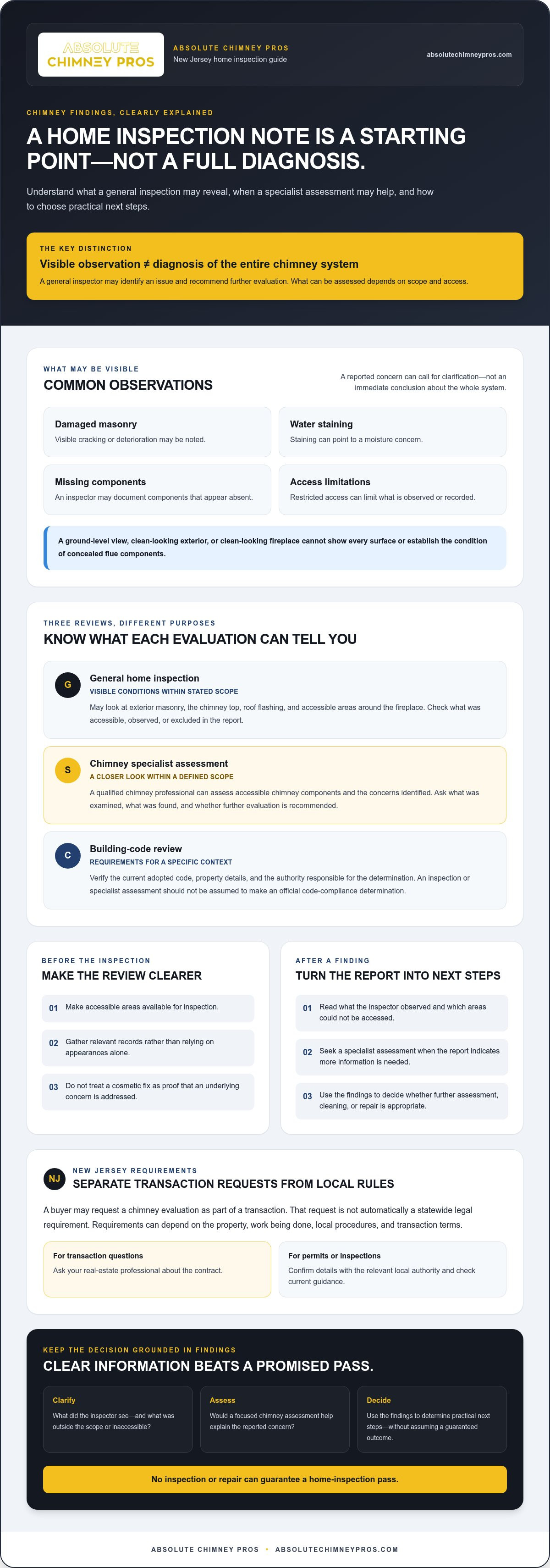
Visible concerns may include damaged masonry, water staining, missing components, or apparent deterioration. These observations can point to maintenance or moisture concerns, but they don’t establish the full condition of the chimney system. During a sale, a note in the report may call for clarification or further evaluation rather than an immediate conclusion about the chimney’s condition.
A home-inspection observation describes what was visible; it isn’t a diagnosis of the entire chimney system.
What does a home inspector typically look at on a chimney?
Depending on access and scope, an inspector may look at exterior masonry, the chimney top, flashing where the chimney meets the roof, and accessible areas around the fireplace. They may document visible damage, staining, or components that appear absent or deteriorated. A view from the ground or another accessible vantage point cannot reveal every surface, and restricted access can limit what’s recorded. Check the report to see what the inspector observed and which areas they could not access.
Does a home inspection certify that a chimney is safe?
No. A general home inspection is not necessarily a full chimney-system assessment. A clean-looking exterior or fireplace doesn’t establish the condition of concealed flue components. Check the inspector’s stated scope and report language, especially if it recommends specialist evaluation. A qualified chimney professional can provide a more focused assessment. Professional chimney sweeps also perform cleaning and maintenance as part of chimney care. Ask what areas were examined and what the findings support before deciding on next steps.
If you’re researching how to pass home inspection chimney requirements NJ sellers may face, focus on clear findings, not appearances alone. Use the general inspection to identify visible concerns, then seek a specialist assessment when the report indicates more information is needed. This helps distinguish a surface observation from a concern that requires further attention.
New Jersey Chimney Requirements: Separate Local Rules from Inspection Findings
A buyer’s report, a chimney professional’s findings, and a code review answer different questions. Don’t treat a concern in a home inspection as proof that a statewide chimney rule has been violated. Requirements can depend on the property, work being done, local procedures, and the terms of a real-estate transaction. Verify the details before treating any document or evaluation as mandatory.
Are chimney inspections legally required when selling a New Jersey home?
There isn’t enough context to give every New Jersey sale a universal yes-or-no answer. A buyer may request a chimney evaluation as a condition of the transaction, but that request isn’t automatically a statewide legal requirement. Ask your real-estate professional about the contract, then confirm permit or inspection questions with the relevant local authority. Check current guidance before acting.
| Review type | Main purpose | What to verify |
|---|---|---|
| General home inspection | Notes visible conditions within the inspector’s stated scope. | What was accessible, observed, or excluded from the report. |
| Chimney specialist assessment | Focuses on accessible chimney components and the concerns identified. | Inspection scope, findings, and whether further evaluation is recommended. |
| Building-code review | Considers applicable construction requirements in a specific context. | Current adopted code, property details, and the authority responsible for the determination. |
What is the difference between an inspection and a code review?
A general inspection describes observed conditions. A specialist assessment takes a closer look at the chimney within its defined scope. Neither should be assumed to make an official code-compliance determination. That depends on the work and circumstances, the applicable requirements, and the appropriate authority. For a starting reference, consult the New Jersey Residential Code chapter on chimneys and fireplaces, then verify the currently adopted edition and local application with the authority having jurisdiction.
NFPA 211 and CSIA materials may help readers understand industry practices and professional credentials. They aren’t a substitute for confirming which rules apply to a particular property. Check the current edition and applicability of any standard you rely on, especially before describing it as a legal requirement.
When researching how to pass home inspection chimney requirements NJ, keep the report’s observations separate from transaction requests and official code determinations. For a focused assessment that may help clarify chimney findings, consider a professional chimney inspection. Its findings can inform next steps, but they can’t guarantee a home-inspection outcome.
Home Inspector or Chimney Specialist: Which Evaluation Do You Need?
A general home inspector and a chimney specialist have different roles. The home inspector assesses visible conditions within the inspection’s scope. A chimney specialist can focus on chimney components and investigate a concern in greater depth, depending on access and the evaluation requested. The NFPA 211 standard describes levels of chimney inspection. Ask the provider which level and scope are appropriate for your situation.
| Evaluation | Purpose and access | Documentation and likely next step |
|---|---|---|
| General home inspection | Reviews visible, accessible areas as part of a broader home assessment. | Records observed concerns or limitations; may recommend specialist follow-up. |
| Chimney specialist assessment | Focuses on the chimney system, with access and methods determined by the requested scope. | Can describe areas assessed, findings, and whether further evaluation, cleaning, or repair should be considered. |
A recent chimney cleaning doesn’t automatically answer every inspection concern. Cleaning may remove soot and debris, but it isn’t the same as evaluating every component or resolving visible damage, moisture concerns, or an area that couldn’t be accessed. Keep available service records and compare their stated scope with the concern in the home inspection report.
A focused chimney assessment adds useful information when a reported concern needs a closer look than the general inspection could provide.
When is a chimney specialist assessment worth considering?
Consider follow-up if the report flags damage, moisture, a possible blockage, or a component the inspector couldn’t access. Specialist input may also be appropriate after an event or change that could affect the chimney, such as suspected impact or work on a connected appliance. A photograph or surface mark alone can’t confirm the cause or severity. Ask a qualified professional to assess the concern rather than guessing from appearance.
What should a chimney inspection report help clarify?
Ask what areas were reviewed, what was accessible, what the professional observed, and what action they recommend. If a concealed area needs more access or further evaluation, the report or discussion should make that limitation clear. Providers may document findings differently, so confirm what you’ll receive before scheduling.
Use each evaluation for its intended purpose when working out how to pass home inspection chimney requirements NJ. A specialist assessment can clarify findings and inform practical next steps, but it can’t guarantee a home-inspection result.
How to Prepare Your New Jersey Chimney Before the Home Inspection
How to pass home inspection chimney requirements NJ: practical preparation
Preparation is about making the chimney accessible and sharing accurate information, not hiding a concern. Start with a simple review of what you can safely see and the records you already have. Don’t climb onto the roof or try to repair suspected damage yourself.
- Make the fireplace area accessible. Move furniture, stored items, and other obstructions away from the fireplace so the inspector can reach accessible areas. Don’t disturb loose masonry or debris that may be connected to a concern.
- Look for visible changes from a safe position. Note water staining, loose or damaged masonry, or a component that appears damaged or missing. These signs don’t confirm a specific defect. Record what you noticed and where.
- Gather relevant records. Set aside prior chimney inspection reports, maintenance records, and repair documentation. Share them with the inspector, but don’t assume an older report describes the chimney’s current condition.
- Disclose known concerns honestly. Tell the inspector about known damage, leaks, prior problems, or work performed. Don’t cover a stain with paint, conceal damage, or use the fireplace to test a suspected problem.
- Prepare questions. If you’ve noticed a change or don’t understand a past finding, write it down. A qualified professional can assess the issue. A quick visual check or photograph can’t establish its cause.
A New Jersey chimney inspection checklist can help you organize observations, while a chimney sweep guide can explain routine cleaning. Neither replaces an assessment when a specific concern needs professional follow-up.
How should you respond to a chimney concern in the report?
Read the exact wording first. Ask which area the inspector observed and whether access or visibility limited the assessment. If the report recommends a specialist, arrange qualified follow-up rather than guessing at the cause or applying a cosmetic fix. Keep the written findings and repair records available for relevant transaction discussions. Cleaning, repair, or further evaluation should depend on what the assessment finds.
Clear access and accurate records help the inspector understand the chimney’s visible condition. They don’t guarantee a passing inspection, and preparation can’t substitute for addressing a documented concern. If you need a professional assessment to clarify chimney findings, schedule a chimney inspection with Absolute Chimney Pros.
After a Chimney Finding: Get a Clear Evaluation and Decide What Comes Next
A chimney finding is a reason to get specific, not to guess at repairs. Start by clarifying the home inspector’s exact observation and whether it needs a focused chimney evaluation. Then review the specialist’s findings before deciding whether cleaning, repair, or further assessment is appropriate. The right next step depends on documented conditions, not a generic checklist for passing.
- Clarify the report. Ask which area raised concern and whether the inspector could access it.
- Arrange the right evaluation. Share the report with a qualified chimney professional and confirm the inspection scope before scheduling.
- Review the findings. Ask what was examined, what remains uncertain, and whether additional access or assessment is recommended.
- Consider your options. Cleaning, repair, or further evaluation should address the findings, not simply make the chimney look better.
- Keep the records. Save the specialist’s findings and documentation of completed work for relevant transaction discussions.
Professional chimney findings can inform your decisions, but they can’t guarantee the outcome of a home sale.
How do you choose a chimney inspection provider in New Jersey?
Ask about technician credentials, insurance, inspection scope, and the documentation you’ll receive. Confirm whether the inspection fee is flat and what it includes. If the assessment identifies recommended work, ask for an on-site estimate before deciding whether that work fits your needs. Absolute Chimney Pros serves New Jersey homeowners with chimney inspections, cleaning, and repairs. Its technicians are CSIA-certified, licensed, and insured.
What should you do with the findings?
Review each recommendation with the professional who assessed the chimney. Ask which concerns need attention, what can wait, and whether the findings call for further evaluation. Keep the written assessment and records of any work together. Share relevant documents during transaction discussions, while recognizing that buyers, agents, and local authorities may have separate requirements.
If you’re working through how to pass home inspection chimney requirements NJ, a documented assessment can replace guesswork with clearer options. It can help you understand what was found and which steps may be appropriate, without promising a particular inspection or sale result. For professional follow-up, request a chimney inspection from Absolute Chimney Pros.
Take the Next Step With Clear Chimney Findings
Preparing for a New Jersey home inspection starts with knowing the limits of a general visual review. Visible concerns can prompt further evaluation, but they aren’t the same as a specialist’s assessment or a code determination. Keep records accessible, share known concerns honestly, and confirm any transaction-specific requirements with the appropriate professionals.
If you’re researching how to pass home inspection chimney requirements NJ, focus on understanding the findings and choosing practical next steps, not on cosmetic fixes or promises of a passing result. Cleaning, repair, or further assessment should depend on what a qualified professional documents.
Absolute Chimney Pros provides New Jersey chimney inspections, cleaning, and repairs. Its technicians are CSIA-certified, licensed, and insured. Homeowners can ask about the flat-fee inspection option and request an on-site estimate with no hidden fees. For professional follow-up, request a professional chimney inspection.
A clear assessment can help you make informed decisions. Take it one step at a time, and move forward with greater confidence.
Frequently Asked Questions
Can a chimney fail a home inspection in New Jersey?
A home inspector may document visible chimney damage, deterioration, moisture, or another concern, but the outcome depends on the property and inspection scope. The report may recommend specialist evaluation rather than issue a simple pass-or-fail decision. Read the exact wording and ask what the inspector observed and could access. Confirm transaction-specific requirements with your real-estate professional or the relevant local authority.
Is a chimney inspection required when selling a house in New Jersey?
Don’t assume one statewide rule applies to every New Jersey home sale. Requirements may depend on local circumstances, transaction terms, or direction from a specific authority. Ask your real-estate professional and local authority what applies to your property. A buyer may also request a chimney evaluation as part of the transaction, even when no other requirement applies. Treat a buyer’s request and a legal requirement as separate questions.
What chimney problems do home inspectors look for?
Inspectors may note visible concerns such as damaged masonry, water staining, deterioration, or missing or damaged components in accessible areas. The exact scope varies, and an inspector may not be able to assess concealed flue conditions. Treat a report observation as a prompt to clarify what was seen and whether further evaluation is recommended. It shouldn’t be read as a complete diagnosis of every part of the chimney system.
Can I use the fireplace before a home inspection?
Don’t use the fireplace to test it if you suspect damage, blockage, smoke problems, or another safety concern. A brief fire can’t establish that the chimney is in suitable condition. Tell the inspector what you’ve noticed, and arrange qualified follow-up if appropriate. Follow the operating and maintenance guidance for your specific fireplace and appliance. If you’re unsure whether it’s safe to use, ask a qualified professional before lighting a fire.
Should I get a chimney inspection before listing my New Jersey home?
Consider a chimney inspection before listing if you have visible damage, limited maintenance records, or a prior report that recommended follow-up. A qualified evaluation can help clarify documented findings and inform next steps, but it can’t guarantee a buyer’s inspection result or replace advice about your sale or local requirements. Absolute Chimney Pros provides chimney inspections in New Jersey and Philadelphia, Pennsylvania, for homeowners seeking professional follow-up.
What happens if a home inspector finds a chimney problem?
The inspector records the concern in the report and may recommend further evaluation. Read the observation carefully, ask which area was visible or accessible, and contact a qualified chimney professional if specialist review is advised. Keep the home inspection report, specialist findings, and records of completed repairs together. Use those documents in relevant transaction discussions. Don’t assume every finding requires the same repair; the next step should reflect the assessment and your transaction needs.
Does chimney cleaning help a home inspection pass?
Chimney cleaning may address soot or creosote when cleaning is appropriate, but it doesn’t repair masonry, flashing, liners, or other defects. It also can’t guarantee a passing inspection. First, understand the concern noted in the report. Then ask a qualified chimney professional whether cleaning, repair, or further assessment fits that finding. A clean appearance alone doesn’t establish the condition of concealed components or resolve a documented concern.


