

What if the dust returning minutes after you clean, or the allergy symptoms that flare up at home, point to more than a housekeeping problem? Dirty air ducts symptoms can be easy to overlook, but they don’t prove your HVAC system is making your family sick. Dust and irritation can have other causes, too. The right next step is to check for visible clues and mechanical issues instead of guessing.
You’re not alone in wondering whether contaminated ductwork is behind persistent dust, indoor discomfort, or rising energy bills. This checklist will help you spot warning signs, understand what they may indicate, and know when a professional inspection is warranted. It also explains why duct cleaning isn’t recommended as routine maintenance for every home, and why an evidence-based assessment matters.
Look for signs such as debris around vents, unexplained airflow problems, or evidence of pests or moisture. Then learn how a camera-assisted inspection by a CSIA-certified technician can help identify issues such as disconnected ductwork. A clear diagnosis can guide practical next steps, support cleaner indoor air, and help you make informed decisions about your HVAC system.
Key Takeaways
- Learn which dirty air ducts symptoms, from recurring dust to residue at registers, deserve a closer look.
- Compare musty odors and uneven room temperatures with other possible HVAC issues before drawing conclusions.
- Use a simple home health audit to note when symptoms occur and whether they coincide with HVAC use.
- See how a professional inspection can help distinguish visible buildup from hidden ductwork or airflow problems.
- Find out what to look for in a thorough, evidence-based air duct cleaning assessment.
What Are Dirty Air Ducts? Defining the Hidden Hazard
Air ducts are the pathways that carry heated or cooled air between an HVAC system and the rooms in your home. Think of them as part of the system’s “lungs,” moving air through supply ducts and returning it to be conditioned again. For a general overview of their design and function, see What Are Air Ducts?
As a system operates, particles can settle inside ducts, especially where airflow slows, filters don’t fit properly, or debris enters through gaps. But a dusty vent cover isn’t proof of extensive buildup inside the ductwork. Surface dust is visible and easy to wipe away; deeper deposits may extend farther into the system and require a closer inspection to confirm. “Dirty” can also refer to moisture-related biological growth, accumulated debris, or a mechanical issue such as disconnected ductwork. The visible clue alone doesn’t identify the cause.
Common Contaminants Hiding in Your Vents
Ducts may collect household dust, pet dander, pollen, and other particles that enter with everyday indoor and outdoor air. Dust mite allergens are another common indoor allergen, though they’re often associated with places such as bedding and upholstered furniture, not necessarily duct interiors. In New Jersey, seasonal pollen can enter through open doors and windows, while moisture in or around ductwork can create conditions that support mold or mildew. Humidity alone doesn’t confirm growth; visible evidence and the source of moisture matter.
The “Recirculation Loop” Explained
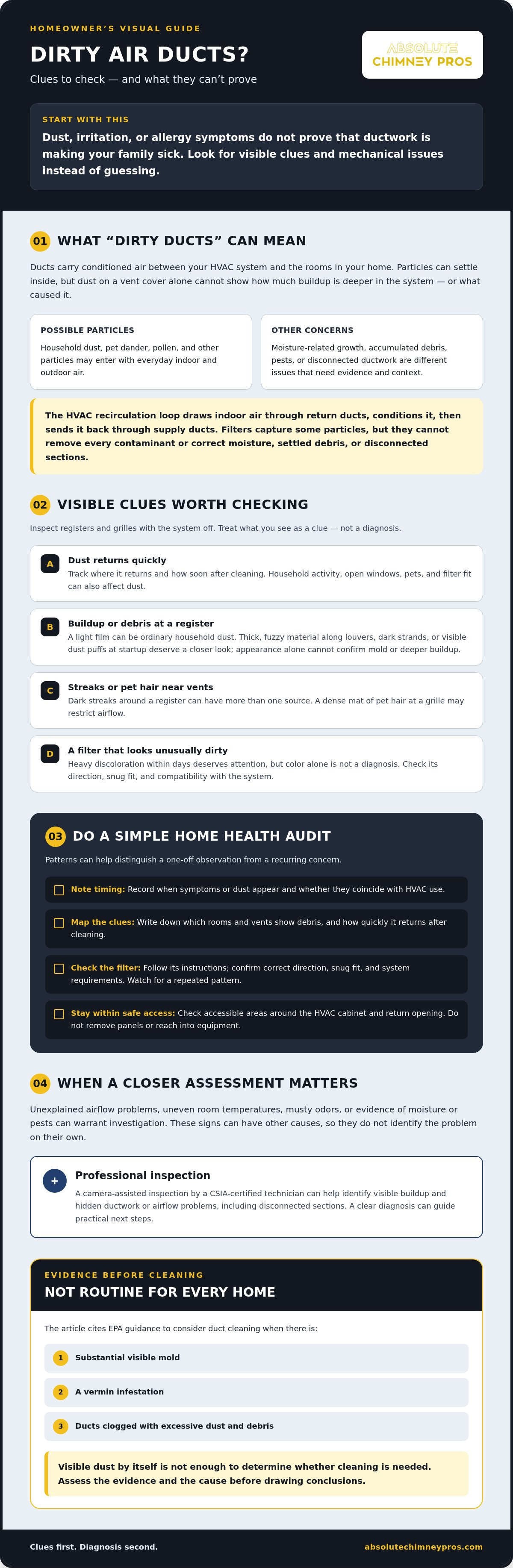
The recirculation loop is the HVAC cycle of drawing indoor air through return ducts, conditioning it, and sending it back through supply ducts, which can redistribute particles if they’re present in the airflow.
Filters capture some airborne particles, but they can’t remove every contaminant or correct problems such as moisture, debris already settled inside ducts, or disconnected sections. Fit and timely replacement matter, too. If you’re noticing dirty air ducts symptoms, treat them as clues to investigate, not a diagnosis. The U.S. Environmental Protection Agency recommends considering duct cleaning when there’s substantial visible mold, a vermin infestation, or ducts clogged with excessive dust and debris, rather than as automatic routine maintenance. A careful assessment can help distinguish a visible surface issue from a condition that needs attention inside the system.
Visual Symptoms: How Your Home Signals a Problem
Dust returning soon after you clean is frustrating, but it doesn’t automatically mean the ducts are dirty. Household activity, open windows, pets, and filter fit can all affect how quickly dust settles. Treat rapid buildup as a pattern to investigate, especially if it appears alongside visible debris at vents or dust puffs when the HVAC starts.
Register and Vent Grille Inspection
With the system off, look at the supply registers and return grilles. A light film can be ordinary household dust. Thick, fuzzy buildup packed along the louvers, or dark strands that resemble cobwebs, may be lint, fibers, or other debris. Their appearance alone can’t confirm mold or show how much buildup is deeper in the ductwork.
Check nearby walls and ceilings, too. Dark streaks around a supply register can form as air carries particles that collect on the surrounding surface, though other sources may cause staining. Pet hair gathered at a grille may restrict airflow if it forms a dense mat. Also check accessible areas around the HVAC cabinet and return opening for accumulated debris, without removing panels or reaching into equipment.
The Air Filter as a Diagnostic Tool
A filter that darkens gradually across its surface is collecting particles. A filter that becomes heavily discolored within days deserves attention, but color alone isn’t a diagnosis. Check that it’s installed in the correct direction, fits snugly, and matches the system’s requirements. Smoke, heavy household dust, or a filter that was already dirty can also affect its appearance.
A clogged filter restricts airflow. If the filter is poorly fitted or the return side has gaps, some air may bypass it, depending on the system’s design. Don’t assume this is happening from filter color alone. Replace the filter according to its instructions and watch for a repeated pattern.
- Dust puffs at startup: Note whether particles visibly emerge from a register when the system turns on.
- Recurring debris: Record which rooms and vents show buildup, and how quickly it returns after cleaning.
Visual clues call for context, not a rushed conclusion. The EPA guidance on duct cleaning explains why visible dust by itself isn’t enough to determine whether cleaning is needed. For help understanding inspection considerations and service value, see this New Jersey air duct cleaning guide. If several dirty air ducts symptoms appear together, consider an air duct inspection to get a clearer picture before deciding what to do.
Mechanical Symptoms: HVAC Performance and Odors
Not every change in comfort points to dirty ductwork. A musty odor, weak airflow, or a rising energy bill can have several causes, so look for patterns and avoid treating one symptom as a diagnosis. In New Jersey, humid conditions can contribute to moisture problems if water enters or remains in ductwork. Humidity alone, however, doesn’t confirm mold or mildew. The key is to identify the moisture source and inspect for visible evidence.
Identifying Unusual HVAC Odors
A brief dusty smell as heating starts after a period of disuse may come from dust warming on system components. A persistent musty or moldy odor, especially if it returns when the HVAC runs, calls for closer investigation. A rotten or decaying smell may have a different source, including an animal that has entered or become trapped in a duct. Note where the odor is strongest and whether it appears only when the system operates. Smell can guide an inspection, but it can’t identify the cause on its own.
Animal entry can affect fireplaces as well as ductwork, but these are separate systems. For related guidance on fireplace issues, see Chimney Blockage Signs.
Airflow Restrictions and System Strain
If one room feels unusually warm while another stays cold, compare airflow at the registers and check for obvious obstructions. A dirty filter, closed register, duct leak, disconnected section, or equipment problem can all contribute to uneven temperatures. Dust deposits may reduce airflow in some conditions, but dirty ducts aren’t the only explanation. Thick buildup on HVAC components can also interfere with heat transfer, while restricted airflow may make the blower work harder.
Restricted airflow can contribute to a frozen air-conditioning evaporator coil. If you see ice or notice the system isn’t cooling properly, turn off cooling and contact a qualified HVAC professional rather than trying to diagnose the equipment through the ducts. Persistent leaks or moisture can also damage nearby building materials over time, so don’t ignore signs of water around ductwork.
Whistling may point to air moving through a narrow opening, a poorly fitting filter, or a leak. Rattling can come from a loose grille or duct component. Note when the sound starts and which room it comes from. Those details help narrow down where an inspection should focus.
When an inspection or cleaning is appropriate, ask what the process covers. NADCA’s professional duct cleaning standards describe methods for cleaning HVAC systems. Absolute Chimney Pros offers air duct inspection, including camera-assisted diagnostics for disconnected ductwork. If these dirty air ducts symptoms persist, consider arranging an air duct inspection rather than guessing at the cause.
Home Health Audit: A Checklist for Homeowners
Use this checklist to look for patterns, not to diagnose a health problem or assume the ducts are responsible. Note when symptoms occur, which rooms are affected, and whether they change when the HVAC runs. A written record gives you more useful information to share with a healthcare professional or an air duct inspector.
- Symptoms and HVAC use: Are family members sneezing more often when the system runs? Does coughing or throat irritation ease when they leave home?
- Nighttime discomfort: Have headaches or sinus congestion become more noticeable at home, or do dry eyes or skin irritation occur during winter? These symptoms can have many causes, so track timing and discuss persistent concerns with a healthcare professional.
- Visible particles: Do you see dust puff from a register when the fan starts? Note the vent and whether the issue repeats.
- Maintenance history: Do you know when the ductwork was last inspected? NADCA’s 3-to-5-year cleaning interval is a general guideline, not a fixed schedule for every home. Consider household conditions and whether there’s a specific reason to inspect.
- Recent work: Have you remodeled, replaced flooring, or completed construction? Fine drywall dust and sawdust can enter return vents and settle in parts of the HVAC system, especially if openings weren’t protected during the work.
The Post-Construction Warning
Renovation debris can be finer than ordinary household dust. It may collect in return grilles, filters, or duct sections and won’t necessarily be removed by vacuuming floors and wiping surfaces. After construction, check the filter and accessible grilles, then look for recurring dust or reduced airflow. Don’t push a household vacuum hose into ductwork or HVAC equipment. If debris may have reached areas you can’t see, an inspection can establish whether there’s a problem before you choose a next step.
Health Red Flags: When to Consult a Professional
Persistent coughing or throat irritation that improves away from home deserves attention, but it doesn’t prove dirty ductwork is the cause. Talk with a healthcare professional about ongoing symptoms, particularly if breathing is affected. Dirty ducts may circulate particles that can irritate some people or contribute to asthma triggers, but duct cleaning hasn’t been conclusively shown to prevent health problems.
If your audit points to a possible duct issue, arrange an air duct inspection to help clarify what’s happening inside the system.
Taking Action: Professional Inspection and Cleaning
Visible buildup or recurring dirty air ducts symptoms call for evidence, not pressure to buy a full cleaning immediately. A “blow-and-go” visit that offers little inspection may leave you unsure what was found or what work was done. Ask for a clear assessment first. Absolute Chimney Pros provides air duct inspection and cleaning, with CSIA-certified technicians and camera-assisted diagnostics that can help identify issues such as disconnected ductwork. Certification and camera access support a more informed evaluation, but neither replaces a clear explanation of the findings.
A flat-fee inspection can help you understand the condition of the ductwork before deciding whether cleaning is appropriate. Ask what the inspection covers, what the camera can and can’t show, and whether the estimate separates inspection findings from proposed work. Clear scope and pricing help you make a decision without guesswork.
What to Expect from a Diagnostic Visit
Use these steps as questions to guide the conversation. Confirm the provider’s actual process before work begins.
- Inspect: Ask how the accessible ventilation path will be assessed and whether camera-assisted checks are appropriate for suspected hidden or disconnected sections.
- Review findings: Request an on-site estimate that explains the recommended work and any related costs before authorizing cleaning.
- Understand the cleaning method: Ask whether the work uses mechanical agitation and a high-powered vacuum under negative pressure, and which HVAC components are included. NADCA’s guidance on proper duct cleaning methods offers a useful reference for comparing answers.
Don’t assume a filter change or a quick pass at the registers addresses debris throughout the system. A thorough scope should make clear what will be cleaned and what won’t.
Protecting Your NJ and Philadelphia Home Long-Term
NADCA’s 3-to-5-year interval is a general cleaning guideline, not a mandatory schedule for every home. Renovation debris, pets, allergies, moisture, and visible contamination may affect when an inspection makes sense. Keep records of filter changes, repairs, and previous inspection findings so you can spot changes over time. Dryer vents are a separate pathway with their own maintenance needs; review this dryer vent cleaning safety checklist for related guidance.
Persistent health symptoms should be discussed with a healthcare professional; don’t assume ductwork is the cause. For a clearer picture of your system, schedule a professional air duct inspection.
Turn Warning Signs Into a Clear Next Step
Dust that keeps returning, unusual odors, or uneven airflow can be reasons to investigate, but none confirms contaminated ductwork on its own. The key takeaway: track patterns, check accessible vents and filters, and consider the full HVAC system before deciding whether cleaning is needed. Persistent symptoms deserve attention, too, but don’t assume dirty air ducts symptoms are the cause. Consult a healthcare professional about ongoing health concerns.
A careful inspection can replace guesswork with a clearer picture. Absolute Chimney Pros provides air duct inspections with CSIA-certified technicians and camera-assisted diagnostics. You can review the findings and an on-site estimate before deciding on next steps.
Breathe easier, book your certified air duct inspection today. Get a transparent assessment for your NJ or Philadelphia home, then make an informed decision with greater peace of mind.
Frequently Asked Questions
Can dirty air ducts make you sick?
Dirty ducts may circulate dust and other particles, which can irritate some people, but they aren’t automatically the cause of illness. The EPA says duct cleaning hasn’t been conclusively shown to prevent health problems. If symptoms worsen at home or breathing concerns persist, consult a healthcare professional and note whether symptoms change when the HVAC runs. An inspection can assess visible duct conditions, but it can’t diagnose a medical issue.
How do I know if my air ducts need cleaning?
Look for specific evidence, such as substantial visible mold inside hard-surface ducts, a vermin infestation, or ducts clogged with excessive dust and debris. Dust near a register alone doesn’t prove the duct system needs cleaning. Check filters and accessible grilles, and note recurring debris, odors, or airflow changes. These dirty air ducts symptoms can prompt an inspection, which helps distinguish a duct issue from another HVAC or household cause.
What are the symptoms of mold in air ducts?
A persistent musty odor when the system runs, visible growth inside a duct, or signs of moisture around ductwork can warrant investigation. Odor alone can’t confirm mold, and allergy-like or respiratory symptoms have many possible causes. Don’t disturb suspected growth or assume cleaning will solve a moisture problem. Have the suspected area assessed and address the source of moisture. Consult a healthcare professional about ongoing health concerns.
Can I clean my own air ducts?
You can safely clean removable vent covers and vacuum dust around accessible registers, and you should replace the HVAC filter according to its instructions. Avoid pushing a household vacuum or tools deep into ductwork or opening HVAC equipment. DIY surface cleaning won’t assess hidden buildup, disconnected ducts, or other system conditions. If there’s visible contamination, suspected pests, or substantial debris, consider a professional air duct inspection before deciding whether cleaning is needed.
How often should residential air ducts be cleaned in New Jersey?
There isn’t a fixed schedule that fits every New Jersey home. NADCA offers cleaning every 3 to 5 years as a general guideline, while the EPA advises cleaning as needed rather than routinely. Consider factors such as renovation debris, pets, visible contamination, or a pest problem. Local humidity can make moisture concerns worth checking, but it doesn’t by itself mean ducts need cleaning. Base the decision on evidence and your system’s condition.
Does air duct cleaning actually help with allergies?
It may remove accumulated debris when cleaning is warranted, but it isn’t a guaranteed allergy treatment. The EPA says duct cleaning hasn’t been conclusively shown to prevent health problems, and some dust inside ducts may remain attached to surfaces rather than entering living areas. Consider other indoor sources, such as bedding, carpets, pets, and filters. If allergy symptoms persist, consult a healthcare professional and ask whether an inspection has found a specific duct concern.
What does a professional air duct inspection involve?
A professional inspection assesses accessible ductwork and looks for visible debris, moisture concerns, pest evidence, or mechanical issues. Camera-assisted diagnostics can help examine concealed sections and identify problems such as disconnected ductwork. Ask what areas will be checked and request a clear explanation of findings before authorizing cleaning. In New Jersey and Philadelphia, Absolute Chimney Pros provides air duct inspections with CSIA-certified technicians and flat-fee inspection options.
Why do my air vents smell musty when the AC turns on?
A musty smell at startup can point to moisture or microbial growth somewhere in the HVAC system, but it doesn’t confirm mold inside the ducts. Other sources may include a damp filter, drain pan, or nearby materials. Note whether the odor comes from one register or several, and whether it fades or persists. Check the filter and visible areas for moisture. If the smell continues, arrange an inspection to help locate its source.


