
A no-hidden-fee chimney cleaning quote in Philadelphia should account for the chimney’s condition and the work involved. Creosote, loose debris, a blockage, limited access, or separate inspection and repair work can change the scope. The price depends on the case and is provided after a quote request.
It’s reasonable to want a clear quote before work begins. Check what the cleaning covers and whether any additional service is being recommended. This guide explains how chimney condition and debris affect the work, what to ask about an estimate, and how technicians protect the room while removing soot and debris.
You’ll also learn how an inspection recommendation differs from routine sweeping, what to expect when a chimney needs more than cleaning, and how work-area protection helps limit mess. A clear on-site estimate helps you understand the service and any separate work recommended after assessing the chimney.
Key Takeaways
- Learn which chimney conditions can change a cleaning quote and why repair recommendations should be separate from routine work.
- See how creosote, debris, and blockages can affect the cleaning process, even when warning signs aren’t obvious.
- Understand what details make chimney-cleaning quotes easier to compare, including the work included and any additional services.
- Find out how a professional chimney sweep protects the work area while addressing buildup and reporting chimney concerns.
Repair recommendations and separate pricing
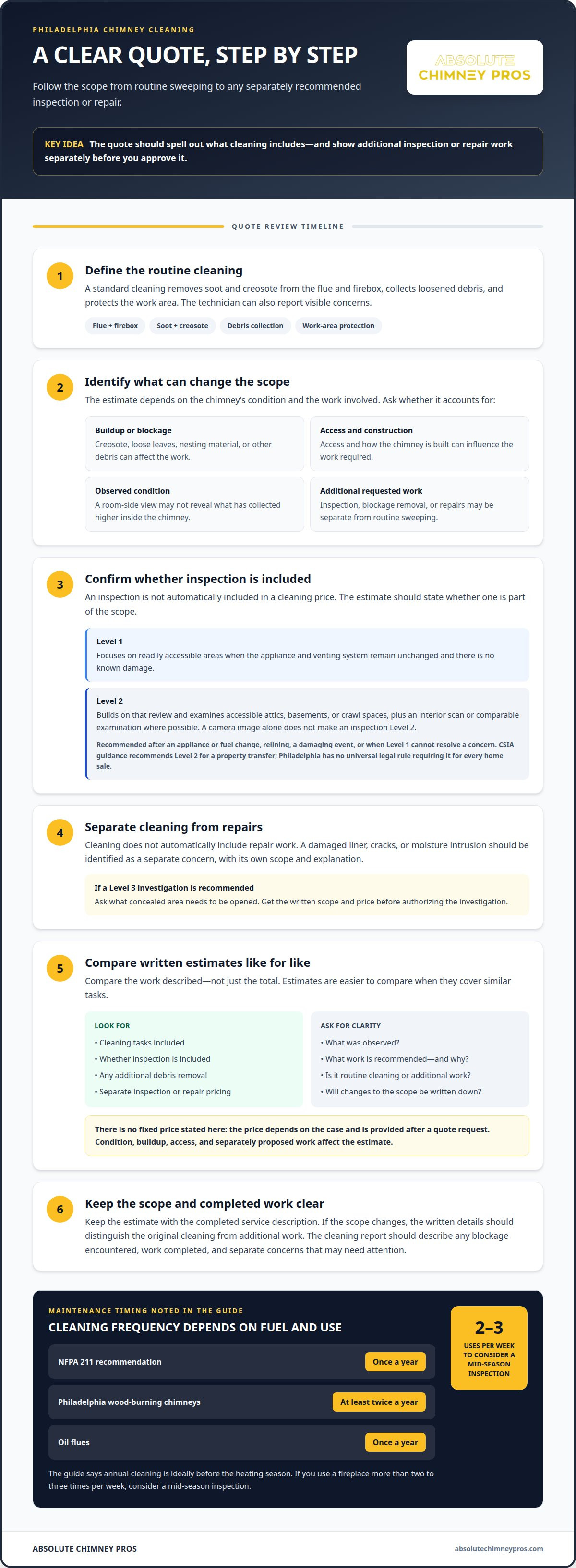
A chimney cleaning quote covers the cleaning work, not automatic repairs. A standard service removes soot and creosote from the flue and firebox, collects loosened debris, and keeps the work area protected. The cleaner can also report visible concerns. Repair work, such as addressing a damaged liner or cracks, needs its own scope.
That distinction matters because routine maintenance can reveal cracks, liner damage, or moisture intrusion before they worsen. Early attention to minor problems may lower the likelihood of costly emergency repairs. A recommendation should identify the observed issue and explain whether it calls for a separate chimney inspection or repair, rather than folding additional work into the cleaning without explanation.
Cleaning frequency depends on the chimney’s fuel and use. NFPA 211 recommends cleaning once a year, ideally before the heating season. For Philadelphia homes, wood-burning chimneys are recommended for cleaning at least twice a year, while oil flues are recommended for cleaning once a year to prevent blockage. Homeowners using a fireplace more than two to three times per week should consider a mid-season inspection.
When a Level 3 chimney investigation is recommended, ask what concealed area needs to be opened. Get the written scope and price before authorizing that work. This helps distinguish an investigation from routine sweeping and makes clear what the proposed work addresses. A cleaning quote should state its included tasks; an inspection or repair recommendation should describe the separate work and why it is needed.
The price depends on the case and is provided after a quote request. Chimney condition, buildup, access, and whether separate inspection or repair work is proposed affect the scope. A clear estimate separates cleaning from additional work, so you can understand each recommendation before approving it.
Chimney debris and blockages
Creosote, leaves, and other debris can restrict a chimney before a homeowner notices a problem. A blocked flue can interfere with smoke leaving the fireplace, and creosote buildup creates a fire risk even when the hearth looks clean. A view from the room may not show what has collected higher inside the chimney.
During professional cleaning, technicians remove soot and creosote and clear debris that obstructs the flue. They use tools suited to the chimney and manage loosened material to limit dust entering the living space. Protecting nearby surfaces and containing debris help keep the work area controlled. The steps depend on where material has collected and how the chimney is built.
Blockages can have different causes. For example, a buildup of creosote differs from loose leaves or an obstruction in the flue. The finding affects the work required, so a cleaning report should explain what was encountered and whether further attention is recommended. Routine cleaning may reduce fire risk, carbon monoxide buildup, and structural damage in Philadelphia homes.
- Creosote: Accumulation can narrow the passage and increase fire risk.
- Loose debris: Leaves or nesting material can obstruct airflow.
- Smoke and odor: Chimney maintenance may reduce smoke, odors, and airborne particulates entering the home.
After debris is removed, clear communication matters. The technician should describe the blockage, the cleaning completed, and any separate concern that affects safe operation. A cleaning addresses buildup; it doesn’t automatically repair damaged chimney components. For a fireplace with recurring smoke or odors, professional chimney cleaning can help address debris and identify concerns that need further evaluation.
Philadelphia chimney-cleaning pricing
For no-hidden-fee chimney cleaning in Philadelphia, compare the written scope as well as the total. Chimney construction, condition, access, and requested work shape the estimate.
Quote Comparisons and Hidden Fees
Estimates are comparable only when they describe similar work. One may cover routine cleaning, while another includes additional debris removal or a separate service. For a no-hidden-fee chimney cleaning quote in Philadelphia, look for a clear description of the cleaning and any proposed inspection or repairs. The estimate should explain what’s included and present additional work separately before you approve it.
Inspection Inclusion in Cleaning Prices
Chimney inspections aren’t automatically included in cleaning prices; the estimate should state whether an inspection is part of its scope. Philadelphia has no universal legal rule requiring a Level 2 inspection for every home sale. CSIA guidance recommends Level 2 for a property transfer.
A Level 1 inspection focuses on readily accessible areas when the appliance and venting system remain unchanged and there’s no known damage. Level 2 builds on that review, examining accessible attics, basements, or crawl spaces, plus an interior scan or comparable examination where possible. A camera image alone doesn’t make an inspection Level 2.
A Level 2 inspection is recommended after an appliance or fuel change, relining, or damaging event, or when Level 1 can’t resolve a concern. These factors can change the scope. The price depends on the case and is given after a quote request; condition, access, buildup, and separately proposed work affect the estimate.
Keep the estimate with the completed service description. If the scope changes, the written details should distinguish the original cleaning from additional work. This record helps you see what you approved and how the completed work matches the estimate.
How can I compare chimney cleaning quotes and confirm there are no hidden fees?
Compare the written scope, not just the quote total. A clear estimate separates routine cleaning from inspection, blockage removal, and repairs. That makes it easier to see whether two quotes describe the same work.
Use the same details for each estimate: chimney type, appliance, visible condition, access, and requested service. A fireplace with a liner, for example, may require a different scope from an unlined stove. Differences in these details can explain why estimates vary.
- Cleaning tasks: Identify which chimney areas the service covers and how soot or creosote is handled.
- Inspection: Note whether an inspection is included, its level, and which areas it examines.
- Additional work: Separate repairs, liner work, and further investigation from routine cleaning.
- Changes: Show how added work will be described and priced before authorization.
Look for specific descriptions rather than broad labels such as “complete service.” A camera scan, for example, doesn’t by itself make an inspection Level 2. If the estimate recommends a Level 3 investigation, it should identify the concealed area to be opened and give a written scope and price before that work is authorized.
The price depends on the case and is given after a quote request; chimney condition, access, buildup, and separately proposed work shape the scope. An on-site estimate can account for visible conditions that a brief description may miss. Clear written details help distinguish an original cleaning quote from later recommendations.
Keep the estimate with the completed service description. Compare them to confirm the agreed cleaning tasks and any separately approved work. This record makes changes in scope easier to understand and gives you a clear basis for reviewing the final bill.
Request a clear chimney-cleaning quote that describes the proposed scope before work begins.
Absolute Chimney Pros: Chimney Sweep
Absolute Chimney Pros provides chimney sweeping, inspection, and repair for homeowners dealing with buildup, suspected damage, or unclear cleaning scopes. Its CSIA-certified, licensed, and insured technicians provide on-site estimates with no hidden fees.
A chimney sweep can address soot and creosote buildup, while an inspection can assess concerns that cleaning alone won’t resolve. If the inspection identifies liner damage or another repair need, the estimate can distinguish that work from routine cleaning. This gives you a clear scope before deciding how to proceed.
Contact Absolute Chimney Pros to discuss chimney cleaning, inspection, or repair for your home.
Make your next chimney decision with clarity
A clear written scope gives you a practical starting point: you can decide which work addresses your chimney’s needs and review any additional recommendations separately. For no-hidden-fee chimney cleaning in Philadelphia, focus on the work described, not just the estimate’s headline. A specific scope makes the next decision easier.
Absolute Chimney Pros offers chimney sweeping, inspections, and stainless-steel chimney liner installation. These services address routine upkeep, assessment needs, and liner concerns as separate parts of chimney care. Choose the service that fits the issue, then review the estimate to understand its scope before proceeding.
Ready to discuss your chimney’s needs? Contact Absolute Chimney Pros to start the conversation. A clear next step can help you move forward with confidence.
Frequently Asked Questions
What Can Change an Inspection Quote?
An inspection quote can change with the requested inspection level, chimney access, and concerns requiring closer examination. For example, a Level 2 inspection includes accessible attics, basements, or crawl spaces, as well as an interior scan where possible. If a Level 3 investigation is recommended, the scope should identify which concealed area needs opening before you authorize that work.
Will my house get dirty during the chimney cleaning?
Technicians take steps to protect the work area and contain loosened soot and debris, though cleaning cannot make dust impossible. Clear surfaces near the fireplace and keep pets away from the immediate work zone. If soot escapes containment or a surface is disturbed, point it out before the crew leaves so it can be addressed during the visit.
What is the typical price for chimney cleaning in Philadelphia?
There isn’t one quote that fits every Philadelphia chimney. The amount depends on the appliance, chimney condition, buildup, access, and whether the requested work goes beyond routine cleaning. A freestanding stove and a fireplace with an insert, for example, can require different work. An estimate based on the actual setup is more useful than treating a broad range as your final quote.
Which Philadelphia chimney cleaning companies offer upfront, all-inclusive pricing?
Absolute Chimney Pros provides on-site estimates with no hidden fees for Philadelphia homeowners. Its technicians are licensed, insured, and CSIA-certified, and same-week appointments are available. Its Chimney Sweep includes a full cleaning and safety inspection, helping define the work in the estimate. Review the stated scope so you know what the service covers and which separate work would require its own estimate.
What fees can be added to a chimney cleaning quote, such as inspection or travel charges?
Added charges depend on the work proposed, so the written estimate should identify each service separately. For example, a routine sweep and a more detailed inspection are distinct scopes, while repair work addresses a separate condition. Don’t assume travel charges apply or are included. The useful detail is whether the estimate lists them, along with any other charge, before you approve the work.
When does chimney cleaning require extra work or cost more?
Extra work may be needed when the cleaning reveals an obstruction, heavy buildup, or a damaged chimney component. A blocked flue may need debris removal, while a damaged liner could call for separate repair or liner installation. If a Level 3 investigation is proposed, its written scope should explain the concealed area to be opened. Approve added work only after its scope and price are clear.


