
An open fireplace can send warmth up the chimney instead of keeping it in the room. Improving fireplace efficiency starts with choosing the right equipment and fuel: a fireplace insert can deliver more heat while using less fuel, and a cast-iron fireback absorbs heat and returns it to the room. Season wood for at least six months, according to the U.S. Environmental Protection Agency, and consider EPA-certified fireplaces and accessories.
If a fire leaves your room chilly, the fireplace may be working against your comfort instead of helping. Changing how you burn wood can make a difference, but the appliance and chimney matter too. This guide covers inserts, firebacks, seasoned wood, and certified equipment, along with how chimney condition affects performance. You’ll find practical ways to keep more warmth in the room while considering the checks that help your fireplace operate as intended.
Key Takeaways
- Consider a fireplace insert to help retain more heat and use fuel more efficiently than an open fireplace.
- A cast-iron fireback can absorb heat from the fire and return it to the room.
- Season firewood for at least six months, as recommended by the U.S. Environmental Protection Agency.
- Look for EPA-certified fireplaces and accessories, and keep chimney condition in mind when assessing heat loss.
1. Installing a fireplace insert
A fireplace insert fits inside an existing fireplace as an enclosed heating unit. It works much like a wood-burning stove, with a steel liner running through the chimney. Compared with an open fireplace, an insert is designed to deliver more heat while using less fuel. For homeowners focused on improving fireplace efficiency, it reduces the heat that would otherwise escape through the open firebox and flue.
A fireplace insert is the most direct upgrade. A top-sealing damper can help control drafts when the fireplace is off, and glass doors can reduce airflow through the chimney and separate the firebox from the room. These options serve different purposes: an insert produces heat, while a damper and doors help limit air movement. A chimney liner can also improve insulation and help contain heat.
Before choosing an insert, assess the fireplace opening and chimney. The unit needs to fit the existing fireplace, and its liner must suit the chimney. Soot or creosote buildup can obstruct airflow and reduce performance, so include the chimney’s condition in your assessment. A clean, unobstructed flue helps the appliance vent as intended. If the chimney is damaged or drafty, address that as part of the upgrade rather than expecting the insert alone to solve the problem.
A fireplace blower draws room air into the fireplace area, then circulates warmed air back into the living space. This can spread heat beyond the area directly in front of the fire. The added warmth depends on the heating setup, room layout, and airflow. A blower circulates heat; it doesn’t replace the insert’s role in producing it. When deciding whether a blower suits your needs, consider the insert’s heating system and how air moves through the room.
2. Using a cast-iron fireback to return heat to the room
An open fireplace can lose warmth through its flue, even when no fire is burning. The open passage lets indoor air escape, while an older, poorly sealed chimney may allow cold air in. A top-sealing damper helps control drafts when the fireplace is off. It addresses heat loss through the flue; a fireback helps return some heat to the room while a fire is burning.
A cast-iron fireback absorbs heat from the fire and radiates it into the living space. It acts as a heat-reflecting surface at the back of a traditional fireplace, not as a replacement for an enclosed heating appliance. It captures warmth that might otherwise be absorbed by the masonry, then releases it into the room. A fireback can complement other efficiency upgrades, but it won’t stop drafts through an open flue.
Traditional open fireplaces generally use more wood to produce less heat than more efficient appliances. A fireplace insert is more energy efficient than a typical open fireplace, while a wood stove is another enclosed heating option. The warmth you feel also depends on airflow and the fireplace’s condition. A fireback can return more heat to the room, but it won’t turn an open hearth into a sealed insert.
Glass doors reduce airflow through the chimney and can help retain heat in the surrounding space. They also affect airflow around a burning fire, so use them only as directed for that fireplace. Don’t assume they should be closed during every fire. When the fireplace is off, closing the doors can limit airflow through the opening, while a top-sealing damper addresses drafts higher in the flue. The doors and damper target heat loss; the fireback helps return heat to the room.
3. Burning seasoned wood
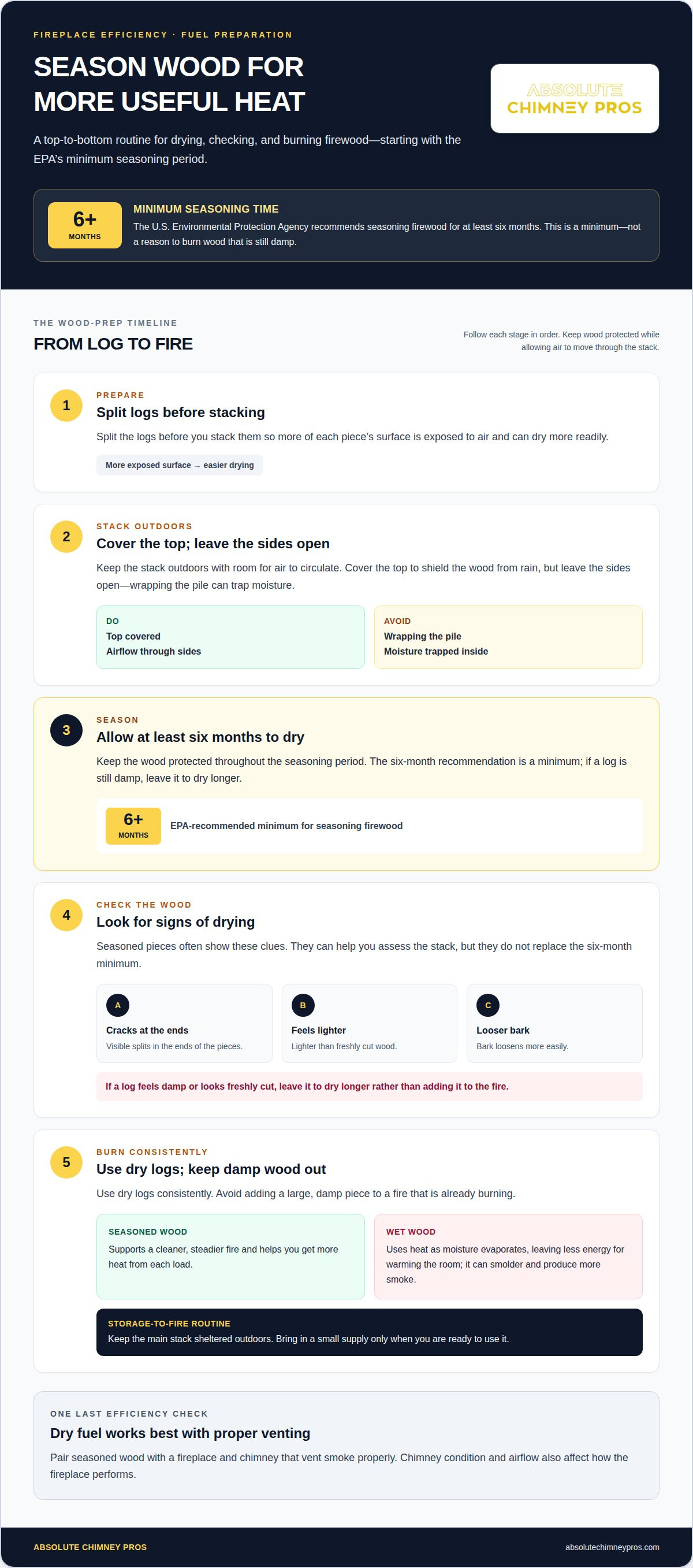
For a wood-burning fireplace, fuel condition affects how much useful heat reaches the room. Wet wood consumes heat as its moisture evaporates, leaving less energy for warming the room. The U.S. Environmental Protection Agency recommends seasoning firewood for at least six months. Treat this as a minimum drying period, not a reason to burn wood that is still damp.
Plan ahead by splitting logs before stacking them so their exposed surfaces can dry more readily. Store the stack outdoors with room for air to circulate, and cover the top to shield it from rain. Leave the sides open rather than wrapping the pile, which can trap moisture. A covered stack with open sides allows airflow while limiting direct exposure to precipitation. Keep the wood protected throughout the seasoning period.
Look for visible signs of drying before adding a log. Seasoned pieces often have cracks at the ends, feel lighter than freshly cut wood, and have bark that loosens more easily. These clues help assess a stack, but they don’t replace the EPA’s six-month minimum. If a log feels damp or looks freshly cut, leave it to dry longer instead of adding it to your fire.
Use dry logs consistently, and don’t add a large, damp piece to a fire that’s already burning. Wet fuel can smolder and produce more smoke, while seasoned wood supports a cleaner, steadier fire. Keep the main stack sheltered outdoors, bringing in a small supply only when you’re ready to use it. This routine helps you get more heat from each load and waste less fuel. For an efficient burn, pair seasoned wood with a fireplace and chimney that vent smoke properly.
4. Choosing EPA-certified fireplaces and accessories
Certification offers a useful starting point when comparing fireplace options. Look for fireplaces and accessories identified as certified by the Environmental Protection Agency. Check the model name and certification details in the product documentation rather than relying on a general claim such as “high efficiency.” This lets you compare specific equipment and see exactly which fireplace or accessory the certification covers.
Next, match the appliance to how you plan to heat your home. Wood-burning fireplaces, gas fireplaces, and inserts use different fuels and installation arrangements. Consider where the appliance will sit, how it will vent, and whether it suits your existing fireplace and chimney. For an insert, proper fit and chimney connection are essential; certification doesn’t replace correct installation or a sound venting path.
Check accessories as carefully as the main appliance. Documentation should identify any certified accessory and explain its intended use. Compare components with the requirements for your specific fireplace model rather than assuming an accessory fits every unit. Keep the model information and instructions together so you can identify the equipment later and follow the manufacturer’s operating guidance.
EPA certification alone doesn’t establish eligibility for a tax credit or utility rebate. Eligibility depends on the equipment and requirements of the specific program, so review its terms before buying. Don’t treat a certification label as proof that you qualify for financial benefits. The model documentation and program criteria are separate checks.
For help assessing how fireplace options fit your home’s setup, discuss your fireplace needs. A careful comparison considers certification, fuel type, appliance compatibility, and the chimney’s venting condition together. That approach makes the label useful without treating it as a substitute for sound equipment selection and installation.
Absolute Chimney Pros: Chimney Sweep
Absolute Chimney Pros provides chimney sweeping and inspections to help homeowners address buildup, airflow problems, and chimney condition. A sweep can remove soot and creosote that interfere with a clear flue, while an inspection helps identify damage or other issues that may affect fireplace operation. These steps matter when an open fireplace drafts poorly, smoke doesn’t vent as expected, or an efficiency upgrade needs a sound chimney.
If an inspection reveals a liner or masonry problem, Absolute Chimney Pros also provides chimney liner installation and chimney repair. Resolving those underlying issues can support safer, more dependable fireplace use. For a fireplace that needs fuel-system attention, the company also offers gas fireplace service.
Contact Absolute Chimney Pros to discuss chimney sweeping, inspection, or repairs for your fireplace.
Make your next fireplace decision with confidence
Better heat starts with a fireplace system that works as a whole. Look beyond the appliance and consider how the chimney supports its operation. That makes improving fireplace efficiency a practical home decision, not just an equipment choice. If you’re planning an upgrade or your fireplace isn’t performing as expected, an assessment can help identify what needs attention.
Absolute Chimney Pros offers chimney sweeping, chimney inspections, and chimney liner installation. These services can address maintenance and chimney conditions that affect fireplace use. Choose the next step based on what your home needs, whether that’s routine care, an inspection, or liner work.
Contact Absolute Chimney Pros today to discuss your fireplace. A clear next step can help you make better use of the warmth your home already has.
Frequently Asked Questions
How much does a fireplace insert cost to buy and install in the United States?
The total depends on the insert, installation work, and the condition of the existing fireplace and chimney. A project may also require chimney or liner work, which affects the scope. The price depends on the case and is provided after a quote request. Compare estimates by checking whether they cover the appliance, installation, venting connection, and any necessary preparation.
How can I reduce heat loss through a fireplace when it is not in use?
Close the damper only when the fireplace is completely cold, and make sure it shuts fully. A top-sealing damper can limit drafts at the chimney top, while properly fitted glass doors can reduce airflow through the fireplace opening. If you still feel cold air nearby, look for gaps around the damper or signs that it doesn’t seal well. Never close a damper over a fire or hot embers.
How do I use a fireplace efficiently, including choosing firewood and building a fire?
Use dry, seasoned firewood and build a fire with room for air to move between the pieces. Start with small, dry kindling, then add logs gradually instead of tightly packing the firebox. A crowded fire can restrict airflow and encourage smoky burning. Keep the fire steady rather than adding more wood than needed for warmth, and follow the fireplace’s operating instructions.
How can I tell whether my fireplace damper or chimney is leaking air?
When the fireplace is cold and unused, check whether a draft comes from the firebox or the damper fails to close snugly. Daylight, visible gaps, or a loose-fitting damper can indicate an opening that needs attention. Cold air near the fireplace may also point to chimney-sealing or masonry issues. If the cause isn’t clear, a chimney inspection can help identify it.
What fireplace and chimney maintenance improves efficiency and safety?
Regular chimney cleaning and inspection can help identify creosote, blocked airflow, or damage. Creosote is highly flammable, and a damaged or improperly vented chimney can allow carbon monoxide into the home. Look for deteriorated mortar, damaged brick, or water leaks, which can contribute to drafts and further deterioration. Addressing the cause supports reliable fireplace operation.
Are there U.S. building codes, permits, or EPA rules for fireplace inserts and wood-burning appliances?
EPA certification and building-code or permit approval are separate considerations. Choose EPA-certified fireplaces and accessories, and account for the installation requirements that apply to your property. Requirements can vary by appliance and location, so homeowners in New Jersey and the Philadelphia area should identify local rules before work begins. Certification alone doesn’t confirm that an installation has the required approvals.


