
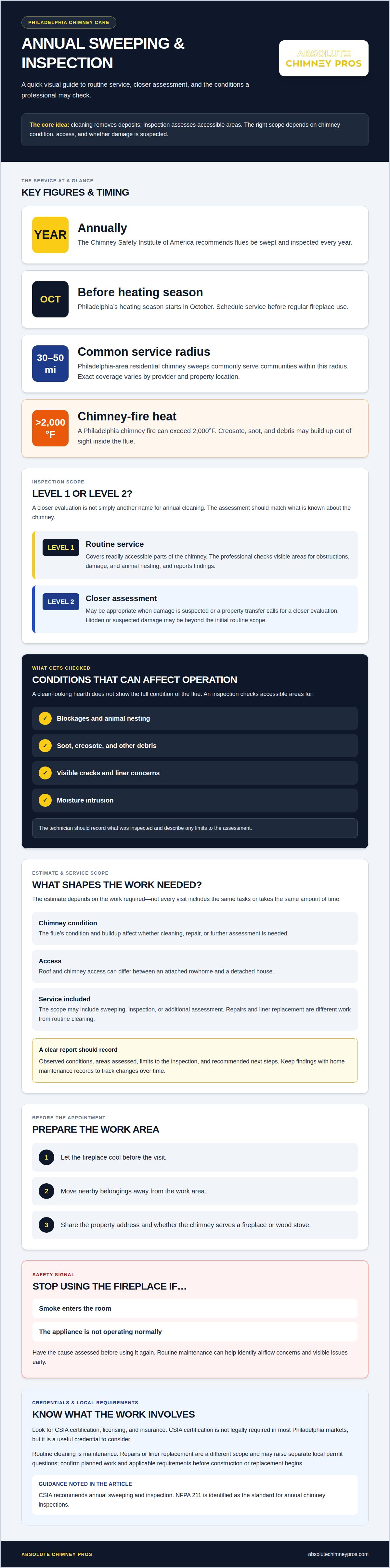
A clean-looking fireplace can still hide trouble in the flue. The Chimney Safety Institute of America recommends annual flue sweeping and inspection, and a Philadelphia chimney flue cleaning service can remove soot, creosote, and debris while checking accessible areas for problems. For routine service, a Level 1 inspection covers readily accessible parts of the chimney.
It’s reasonable to think of chimney care as a seasonal task, especially before the heating season starts in October. But cleaning is only part of the picture: blockages, liner wear, cracks, or moisture can affect safe operation even when the fireplace appears fine. If damage is suspected, a Level 2 inspection may be appropriate. This guide explains what sweeping and inspection include, when a closer assessment may be needed, and how regular maintenance supports airflow and helps identify issues early. You’ll also learn what shapes a service estimate and what to expect from a professional visit, so you can make a clear, informed decision about your Philadelphia home.
Key Takeaways
- A chimney service estimate depends on the work needed, including the flue’s condition, access, and whether inspection or cleaning is required.
- Plan maintenance around fireplace use and seasonal needs, and understand what a routine inspection can and can’t assess.
- Creosote, debris, and hidden damage can create risks in attached rowhomes; stop using the fireplace if smoke enters the room or the appliance isn’t operating normally.
- Cleaning and inspection can help identify airflow issues, cracks, liner damage, and moisture intrusion; professional gas fireplace service is another option when the appliance needs attention.
Need a pro for your chimney sweeping project in Philadelphia, PA?
A Philadelphia chimney flue cleaning service can sweep the flue and inspect accessible areas. The work needed depends on the chimney’s condition and access, and whether repairs or liner replacement are required.
Sweep and Level 1 Inspection Scope
A standard sweep removes soot, creosote, and debris from the flue. A Level 1 inspection covers readily accessible areas during routine service. The professional checks visible parts for obstructions, damage, and animal nesting, then reports findings. If the flue has hidden or suspected damage, the initial scope may not be enough to assess it fully. Ask for a clear distinction between cleaning and any recommended replacement or repair.
Cleaning time depends on access, buildup, and the chimney’s condition, so visits do not all take the same amount of time. Before the appointment, let the fireplace cool and move nearby belongings away from the work area.
Residential Service Area
Philadelphia-area residential chimney sweeps commonly serve communities within a 30 to 50 mile radius. The exact reach depends on the provider’s service territory and the property’s location. An attached rowhome, for example, may need the same flue attention as a detached house, but roof and chimney access can differ. Share the property address and whether the chimney serves a fireplace or wood stove when arranging service. That information helps clarify access and the work being requested.
Credentials and Local Requirements
When choosing a chimney professional, look for CSIA certification, licensing, and insurance. CSIA certification is not legally required in most Philadelphia markets, but it is a useful credential to consider. Routine cleaning is maintenance; repairs or liner replacement involve a different scope of work and may raise separate local permit questions. Confirm the planned work and applicable local requirements before construction or replacement begins.
Annual Sweeping and Inspection
The Chimney Safety Institute of America recommends having flues swept and inspected annually. Schedule service before using the fireplace for the season, so a sweep can remove buildup and assess accessible areas before regular operation. An inspection can also identify visible cracks, liner concerns, or obstructions that may need attention. Keep the findings with your home maintenance records to remember what was assessed and what work may be needed next.
Annual chimney inspection and cleaning guidance
Annual chimney care pairs a flue inspection with cleaning when buildup needs to be removed. The findings help distinguish routine maintenance from repairs or further assessment.
Inspection Costs and Bundled Services
The work included determines the inspection price. Factors include the chimney’s condition and access, whether sweeping is needed, and whether findings call for further assessment. A combined appointment can cover cleaning and inspection, but the scope should clearly identify each task. A written report should record observed conditions, assessed areas, and recommended next steps, helping homeowners understand whether chimney repair needs attention.
Annual Maintenance Guidance
The Chimney Safety Institute of America recommends that homeowners have flues swept and inspected annually. Plan the visit before regular fireplace use, with Philadelphia’s heating season starting in October. NFPA 211 is identified as the standard for annual chimney inspections. A technician can assess accessible areas, note buildup or visible concerns, and explain whether the flue needs cleaning. Keeping inspection records from each season helps track recurring findings and makes changes easier to identify.
Identifying structural issues early can help address smaller repairs before damage develops into more costly emergency work. For example, a visible crack or moisture concern can be documented for follow-up instead of being overlooked during routine chimney care.
Inspection Safety Checks
A chimney inspection checks accessible parts for conditions that could affect operation, including blockages, creosote, cracks, liner damage, and moisture intrusion. The technician should record what was inspected and describe any limits to the assessment. If a property transfer or suspected damage calls for a closer evaluation, a Level 2 inspection may be appropriate. That is a different inspection scope from routine review, not simply another name for annual cleaning.
Use the findings to choose the next step: cleaning for deposits or a repair assessment for visible damage. If smoke enters the room or the fireplace stops operating normally, stop using it until the cause is assessed.
Creosote and chimney-fire risks in attached rowhomes
After winter fireplace use, soot, ash, and creosote can collect inside the chimney flue. In attached Philadelphia rowhomes, routine cleaning helps remove buildup that may not be visible.
Creosote and Soot Hazards
Creosote, debris, and blockages can compromise chimney safety before visible warning signs appear. A smoky fireplace or unusual odor may prompt attention, but a clean-looking hearth doesn’t show the flue’s full condition. A Philadelphia chimney fire can exceed 2,000 degrees Fahrenheit. That heat makes accumulated deposits a dangerous concern, especially when they go unnoticed between seasons. A thorough inspection assesses accessible areas and can identify conditions that need cleaning or further evaluation.
In attached homes, chimney maintenance matters to the household and its surroundings. Make routine care a priority rather than waiting for visible smoke or falling debris.
Creosote Removal
Creosote removal targets deposits lining the flue, not just ash in the firebox. A chimney sweep assesses buildup and access, then cleans the areas included in the service. Ask for a clear explanation of the inspection findings and cleaning performed. If damage or a blockage is found, cleaning alone may not resolve the underlying issue. The findings help determine whether further assessment or repair is needed.
The work and estimate depend on the flue’s condition, access, and amount of buildup. A clear estimate separates cleaning from any additional work recommended after inspection.
Soot Removal
Soot and ash can accumulate alongside creosote after fireplace use. A professional sweep removes deposits from the flue and checks accessible areas for debris or obstructions. This supports safer fireplace operation and can improve airflow. It also helps address deposits that may remain hidden after surface ash is cleared from the hearth.
Schedule cleaning as part of seasonal chimney care instead of treating visible soot as the only concern. If smoke enters the room or you suspect an obstruction, stop using the fireplace until the cause is assessed.
Fireplace cleaning and maintenance
Fireplace care involves more than clearing visible ash. Cleaning and inspection can identify debris, airflow concerns, and signs of structural wear before the next season of use. For example, exposed masonry in a Philadelphia rowhome near the Delaware River may face moisture from winter weather. Annual attention connects what you see around the hearth with the chimney’s condition.
The U.S. Consumer Product Safety Commission estimates that fireplaces and chimneys are involved in 15,400 fires per year. The National Fire Protection Association identifies failure to clean as the leading cause of chimney fires nationwide. These facts make regular cleaning a practical safety measure, not just a way to remove soot. Cleaning can also improve airflow and may help a fireplace or wood stove burn more efficiently.
During maintenance, an inspection can identify cracks, liner damage, or moisture intrusion. Philadelphia chimneys can sustain mortar cracks, liner deterioration, or leaks from snow, ice, and fluctuating temperatures. Exposed masonry waterproofing is advised every 5-7 years. The right maintenance step depends on the condition found: debris calls for cleaning, while visible structural damage may require repair assessment.
Use the appointment to get a clear account of the work completed and any concerns found. A useful report distinguishes cleaned areas from structural issues that need follow-up. If smoke enters the room, an obstruction is suspected, or the appliance isn’t operating normally, stop using it until the cause is assessed. A clean-looking hearth does not prove that the flue is clear.
Make annual fireplace care part of your home maintenance plan, rather than waiting for a problem during the heating season. A professional assessment can help identify whether cleaning, inspection, or repair is the appropriate next step. Arrange a fireplace maintenance appointment to address buildup or concerns before regular use.
Absolute Chimney Pros: Gas Fireplace Service
Absolute Chimney Pros provides Gas Fireplace Service for gas fireplaces that need professional attention. For a wood-burning fireplace or chimney flue, Chimney Sweep and Chimney Inspection cover cleaning and assessment. Inspection findings can also help determine whether Chimney Liner Installation is the appropriate next step.
Choose the service that matches the appliance and concern. Gas fireplace issues call for gas fireplace service; flue buildup or visible chimney concerns call for chimney care. Describe what you’ve noticed to help direct the work to the right system.
For help with gas fireplace service or related chimney work, contact Absolute Chimney Pros.
Make chimney care part of your home plan
Connect chimney maintenance with the way you use your home. Note changes in fireplace performance, keep service findings with your household maintenance records, and use them to guide future appointments. A clear record helps track the flue’s condition over time and keeps seasonal care from becoming an afterthought.
For a Philadelphia chimney flue cleaning service, Absolute Chimney Pros offers Chimney Sweep, Chimney Inspection, and Chimney Liner Installation. The right service depends on whether you need buildup removed, accessible areas assessed, or liner work. Share your concern and the type of fireplace or chimney involved so the requested work is clear from the start.
When you’re ready to take the next step, contact Absolute Chimney Pros to discuss chimney care for your home. A clear plan can make it easier to keep your fireplace maintained and ready for its next season of use.
Frequently Asked Questions
What Does Chimney Cleaning Cost in Philadelphia?
Chimney cleaning cost in Philadelphia depends on the flue’s condition, access, and work required. A quote should distinguish sweeping from inspection and identify any separate repair or liner work. For example, an obstruction may need further assessment beyond routine cleaning. Ask for an estimate that clearly describes the work included before scheduling, so you understand the scope rather than relying on a general figure.
How Is a Sweep Different From a Level 2 Inspection?
A sweep removes soot, creosote, and debris; a Level 2 inspection provides a closer assessment when circumstances warrant it. A property transfer or suspected chimney damage may call for Level 2 review. For example, if a home purchase involves a chimney with visible concerns, a basic cleaning alone won’t assess those conditions. The inspection level determines what areas and conditions are evaluated.
What Can Change the Chimney Cleaning Quote?
The quote depends on buildup, chimney access, and the flue’s condition. A blocked passage or visible liner damage may require work beyond removing deposits. The requested tasks matter too: a cleaning appointment differs from one that includes inspection or repair. When requesting an estimate in Philadelphia, describe the fireplace, recent use, and any known chimney concerns.
What can cost extra during a chimney sweep?
Separate repairs or liner work can add to a chimney sweep’s scope. For example, if an inspection finds a damaged liner, installing a liner is distinct from removing soot and creosote. A blockage that needs further assessment may also require work beyond routine sweeping. Request an itemized estimate that separates cleaning from any additional service, so each recommended step is clear.
When Should a Chimney Be Swept?
Have the chimney swept annually and schedule service before regular fireplace use for the season. The Chimney Safety Institute of America recommends annual flue sweeping and inspection. In Philadelphia, planning before the heating season starts in October gives you time to address findings before using the fireplace regularly. If the chimney hasn’t been maintained or its condition has changed, arrange an assessment before lighting another fire.
When should I schedule chimney service in Philadelphia?
Schedule chimney service before the heating season starts in October or in spring after regular winter fireplace use. Spring maintenance can address leftover deposits and give you time to plan follow-up work before colder weather returns. If smoke enters the room, you suspect a blockage, or the appliance isn’t operating normally, stop using it until the cause is assessed. Don’t wait for the next routine appointment in those cases.


