

What helps most with preventing chimney spalling in winter? It’s usually not covering damaged brick, but finding and addressing how water gets in. Moisture can enter through cracks in brick, mortar, or the chimney crown. When that water freezes and expands, masonry can flake or break away. A patch of peeling brick may look minor from the ground, but it can also signal a moisture problem that needs attention.
Repeated freeze-thaw weather can make existing damage worse, so it’s worth addressing water entry before winter rather than hiding the visible symptoms. This guide explains what causes spalling, which early signs you can look for from a safe viewing position, and how basic maintenance can help reduce moisture exposure.
You’ll also learn when a professional inspection is appropriate and why repair recommendations should follow an assessment of the chimney’s condition. An inspection can help identify visible masonry damage and possible moisture-entry concerns, giving you a clearer basis for deciding what to do next. With that information, you can better distinguish a surface issue to monitor from damage that warrants professional attention.
Key Takeaways
- Look for flaking, chipping, and loose brick from the ground, and note whether the damage is changing.
- For preventing chimney spalling in winter, focus on identifying and reducing water entry rather than simply coating damaged masonry.
- Before freezing weather, check visible brick, mortar, the crown, and flashing. Continue observing from a safe position during winter and after thaws.
- Cracks, worsening flaking, loose bricks, or recurring moisture concerns are reasons to arrange a professional chimney inspection.
- An assessment helps distinguish surface deterioration from broader repair needs, so recommendations can match the chimney’s condition.
What Is Chimney Spalling, and Why Does New Jersey Winter Make It Worse?
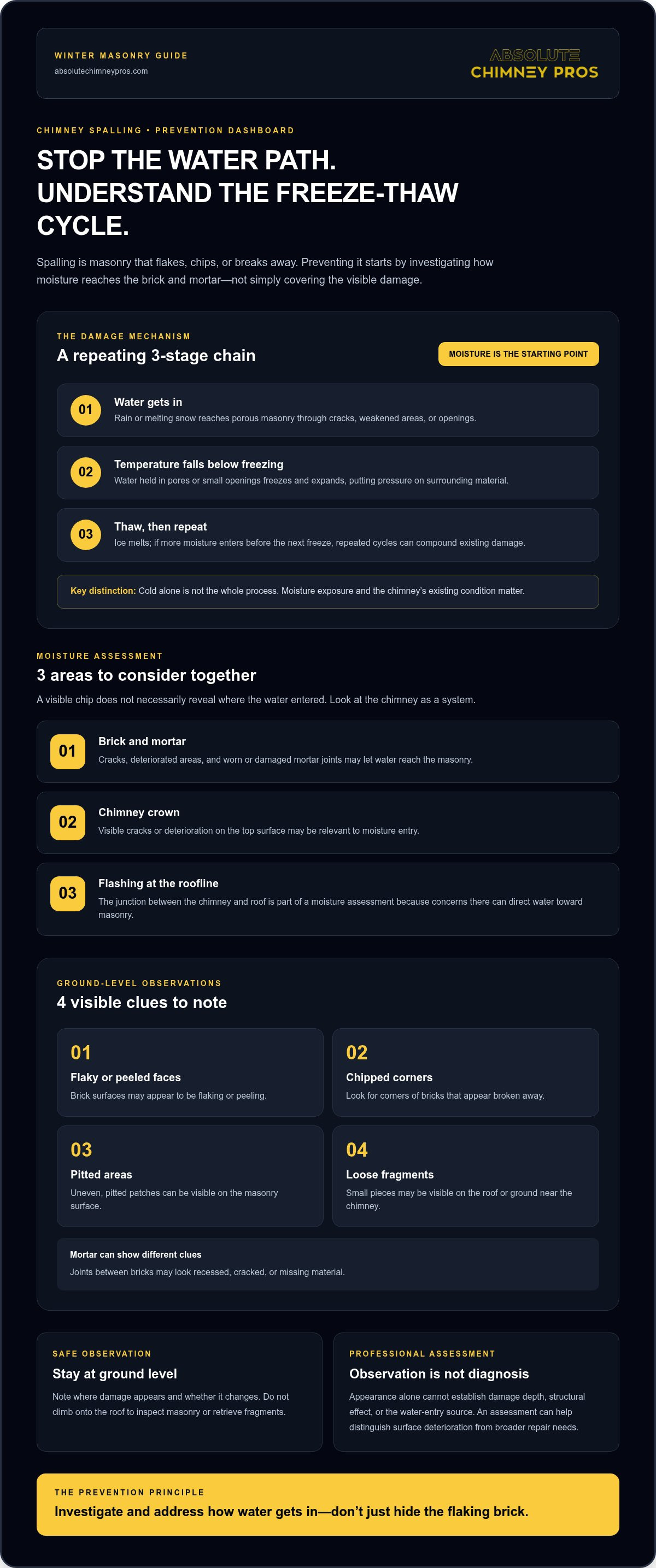
Spalling is the flaking, chipping, or breaking away of a masonry surface. On a chimney, it may affect the face or corners of a brick, or sections of the masonry. Brick and mortar are porous, so water can enter through the surface or existing gaps. When temperatures fall below freezing, trapped moisture expands and puts pressure on the surrounding material.
New Jersey winter weather can shift between freezing and thawing. During a thaw, moisture may enter exposed masonry. When temperatures drop again, that water can freeze inside pores or small openings, stressing already weathered brick and mortar. Visible spalling is a reason to investigate possible moisture, but it doesn’t by itself confirm structural failure. A professional assessment can help determine what the damage means for the chimney as a whole.
What does spalling look like on a brick chimney?
From the ground, look for brick faces that seem flaky or peeled, chipped corners, pitted areas, or small fragments on the roof or ground near the chimney. Mortar erosion looks different: joints between bricks may appear recessed, cracked, or missing material. These observations can help you describe what you see, but appearance alone can’t establish how deep the damage goes or whether the chimney is structurally affected.
Observe from a safe position at ground level. Don’t climb onto the roof to inspect masonry or retrieve fragments. If you notice a change over time, note its location and whether loose pieces are visible. That record can help a professional understand what prompted your concern.
Why are chimneys exposed to winter weather?
A chimney extends above the roofline, where it faces rain, snow, wind, and changing temperatures. The crown, mortar joints, and exposed brickwork can be vulnerable to moisture entry, especially if they’re cracked or deteriorated. Water may also reach masonry through openings around the chimney. A ground-level check can flag visible concerns, but it won’t reveal every possible entry point.
In plain language, chimney spalling is masonry flaking or breaking away after moisture enters and freeze-thaw changes stress the material. This concise explanation matches the general chimney spalling overview in Wikipedia’s chimney reference, while the condition of any specific chimney still requires assessment.
That distinction matters when deciding what to do next. A few chipped brick edges may be limited surface deterioration, while loose bricks, recurring moisture, or spreading damage deserve closer attention. Don’t try to judge the cause or extent from a single view. Preventing chimney spalling in winter starts with recognizing exposed masonry concerns and treating visible changes as a reason to investigate moisture, not as a diagnosis.
How Moisture and Freeze-Thaw Cycles Cause Chimney Spalling
Spalling usually develops through a chain of events, not from cold alone. Rain or melting snow reaches porous brick or mortar through an opening or weakened area, and the masonry absorbs some of that moisture. When temperatures fall below freezing, water inside the material freezes and expands, putting pressure on surrounding pores and surfaces.
As temperatures rise, the ice melts. If more water enters before the next freeze, the cycle can repeat. Existing cracks and worn mortar joints may give moisture easier paths into the masonry, allowing repeated freezing and thawing to compound damage over time. That doesn’t mean one winter will cause severe deterioration. The effect depends on the chimney’s condition and how much moisture reaches it.
Where can water enter a masonry chimney?
Assess likely entry points together rather than treating a chipped brick as an isolated problem. The crown is the chimney’s top surface, and visible cracks or deterioration there may be relevant. Damaged mortar joints can also let water reach brickwork. Include flashing, the junction between the chimney and roof, in a moisture assessment, since concerns there can direct water toward the masonry. These areas should be considered as parts of one system—an approach echoed by contractors like ALG Roofing Limited, who emphasize how critical roofline condition and junction integrity are to preventing water penetration.
Moisture exposure creates the conditions for freeze-thaw damage, but the extent of deterioration depends on the masonry and its existing condition.
Why do freeze-thaw cycles matter in New Jersey?
New Jersey winter temperatures can move above and below freezing. A thaw may allow moisture to enter exposed brick or joints, and a later temperature drop can freeze water still held in the masonry. This pattern may recur during the season. It’s a practical reason to pay attention to the crown, joints, and flashing before and during winter, without assuming every temperature swing causes visible damage.
The location of the first visible problem doesn’t always identify the source. For example, flaking brick below the crown could warrant an assessment of the crown and nearby joints, while water near the roofline makes the flashing area relevant. A ground-level view can help you notice changes, but it can’t confirm where water enters or how far damage extends. Don’t climb onto the roof to investigate.
For preventing chimney spalling in winter, ask not only, “Where is the brick damaged?” but also, “How might water be reaching it?” An inspection can assess visible masonry and possible moisture-entry concerns before repair recommendations are made. If you’re seeing recurring signs of water or worsening masonry, a professional chimney inspection can help clarify what needs attention.
Which Chimney Spalling Prevention Measures Address the Real Problem?
Effective prevention starts with identifying how moisture is reaching the chimney. Maintenance, repairs, and protective treatments serve different purposes. A surface treatment may help limit water absorption when it’s suitable for the masonry, but it won’t fix a damaged crown, open mortar joints, or a leak at the roof-to-chimney junction. For preventing chimney spalling in winter, match the response to the moisture source and the condition of the brickwork.
Use this comparison to understand what each approach can address. It’s a guide, not a diagnosis. Visible damage and its cause may need professional assessment before work begins.
Concern: Moisture may be entering through a damaged component. Prevention focus: Assess the crown, mortar joints, and flashing to locate possible entry points. Professional assessment is useful when: Water concerns recur or the source isn’t clear.
Concern: Mortar or masonry shows wear. Prevention focus: Maintain sound joints and repair deteriorated areas before relying on a coating. Professional assessment is useful when: Mortar is cracked or missing, or bricks appear loose.
Concern: Exposed masonry may absorb moisture. Prevention focus: Consider a suitable protective treatment only after evaluating the masonry and addressing known defects. Professional assessment is useful when: You’re unsure whether treatment is appropriate or existing damage needs repair.
Can chimney waterproofing prevent spalling?
A suitable waterproofing treatment may reduce water absorption in masonry, but whether it’s appropriate depends on the chimney’s materials and condition. It isn’t a universal fix. A coating won’t close every opening or correct a leak from a deteriorated crown, mortar joint, or flashing. Applying one over unresolved damage can leave the underlying moisture problem untouched. Have the source assessed first, then consider whether a protective treatment fits the repair plan.
When is masonry repair more relevant than surface protection?
Repair deserves priority when brick is loose or cracked, mortar is missing, or a chimney component shows visible deterioration. These signs call for assessment, not simply another layer on the surface. Preventive maintenance helps preserve masonry before significant damage appears; repair addresses damage that’s already present. The right recommendation should follow an evaluation of the chimney rather than an assumption that every case needs the same treatment. In the broader field of structural remediation, specialists like trdremedial.com.au similarly emphasize identifying and resolving root-cause moisture damage before undertaking restorative repairs.
Water entry can involve more than one area. If you’re investigating recurring moisture, the chimney leak repair guide explains why identifying the source matters. A professional chimney inspection can assess visible damage and possible entry concerns, while repair recommendations should reflect the chimney’s actual condition. Absolute Chimney Pros provides chimney inspections and structural repairs for homeowners in New Jersey and Philadelphia, Pennsylvania. An assessment helps replace guesswork with a clearer next step.
How to Reduce Winter Chimney Spalling Risk: A Seasonal Checklist
A seasonal routine can help you notice changes early and give a professional useful details for an assessment. Keep every check at ground level. You’re looking for visible changes, not trying to diagnose the cause or repair elevated masonry. Dated photographs taken from the same safe spot make it easier to compare the chimney over time.
Before freezing weather
Walk around the home and look for flaking brick, cracks, chipped areas, loose fragments, and mortar that appears worn or missing. From the ground, note visible concerns around the crown and the roofline where flashing meets the chimney. Look for recurring damp areas near the chimney, but don’t assume you’ve found the source.
- Take a dated photo of each visible concern from a safe location.
- Record where it appears, such as on one side of the chimney or near the roofline.
- Arrange a professional assessment for loose masonry, new cracks, or recurring moisture concerns.
Don’t climb onto the roof for a closer view or attempt elevated repairs. A ground-level check is a useful first step, not a substitute for an inspection.
During winter
After cold or wet weather, observe the same visible areas from the ground and compare them with your earlier photos. Note any new flaking, fragments below the chimney, or changes in visible mortar and the roofline. Don’t scrape brick to test its condition, disturb loose masonry, or apply a coating over damaged areas. Those steps can hide useful clues without addressing the cause.
After a thaw
Once conditions allow a safe view from the ground, check whether visible damage has changed since your last observation. Record the date and weather context, such as whether you noticed the change after rain, snow, or a thaw. Keep photos consistent in distance and angle where possible. This simple record can help show whether the issue appears stable or is worsening.
What should you do after noticing new damage?
Document the location and appearance, then avoid disturbing or covering the area before its cause is assessed. If damage grows, fragments appear, or moisture concerns return, arrange a chimney inspection. The New Jersey chimney inspection checklist can help you prepare for an assessment.
Preventing chimney spalling in winter means watching for changes and responding before guesswork turns into a repair attempt. An inspection can help identify visible damage and possible moisture-entry concerns, with repair recommendations based on the chimney’s condition. If you’ve documented a change or have concerns about your chimney, schedule a professional chimney inspection.
When to Schedule a Chimney Inspection for Winter Spalling
Arrange an inspection if you notice loose bricks, worsening flaking, cracks, or moisture concerns that keep returning. These signs don’t automatically mean the chimney has structural failure. They do mean the visible damage and possible water entry deserve closer assessment, especially before repeated winter weather adds stress to vulnerable masonry.
Don’t wait for a large section of brick to break away before seeking guidance. A professional assessment can help distinguish surface deterioration from broader repair needs. The right next step depends on the chimney’s condition, so repair recommendations should follow an inspection rather than a guess based on one symptom.
What can a professional chimney assessment help clarify?
An inspection can assess visible masonry and look for possible moisture-entry concerns around areas such as the crown, mortar joints, and flashing. A closer evaluation can help explain what the visible signs may indicate and which repairs, if any, are relevant. It won’t guarantee a particular outcome, but it gives you a clearer basis for deciding what to do next.
Absolute Chimney Pros’ chimney work is performed by CSIA-certified, licensed, and insured technicians. The company offers a flat-fee inspection option, followed by on-site estimates with no hidden fees when repair work is recommended. This separates the assessment from the repair decision, so recommendations can be based on the chimney’s condition.
How can New Jersey homeowners take the next step?
Absolute Chimney Pros provides chimney inspections and structural repairs for homeowners in New Jersey and Philadelphia, Pennsylvania. Same-week appointments are offered. If you’re preparing for an inspection, the chimney inspection guide outlines useful points to consider and helps you organize your observations.
Before the appointment, note where you’ve seen loose brick, cracks, or recurring moisture. Dated photos taken from a safe location can help show whether the appearance has changed. Don’t climb onto the roof or disturb loose masonry to gather more evidence. Leave close assessment and repair work to a professional.
Preventing chimney spalling in winter starts with responding to signs of damage instead of assuming they’re only cosmetic. An inspection can identify visible concerns and possible moisture paths, then clarify whether monitoring or repair is appropriate. If you’ve noticed worsening flaking, loose bricks, cracks, or recurring moisture, schedule a chimney inspection with Absolute Chimney Pros.
Make Your Next Step a Clear One
Winter damage can be hard to judge from the ground. You don’t need to determine the cause or choose a repair on your own. A clear assessment turns concern into a practical plan, whether that means monitoring a stable area or addressing a problem that needs attention.
As you plan for the next cold season, make chimney care part of your home’s regular maintenance. A timely inspection can help you make decisions before uncertainty grows and give you a better basis for protecting the masonry over time. That’s more useful for preventing chimney spalling in winter than waiting for visible damage to become harder to ignore.
If you’re concerned about your chimney’s condition, schedule a chimney inspection with Absolute Chimney Pros. Take the next step by arranging an assessment of the visible concerns and possible moisture paths.
Frequently Asked Questions
What causes chimney brick to spall in winter?
Moisture entering porous brick can freeze and expand, stressing the masonry surface. For example, rain may seep through a small crack, remain inside the brick, and freeze when temperatures drop. Repeated changes between freezing and thawing can add stress, especially where masonry is already worn. For preventing chimney spalling in winter, focus on identifying how water reaches the brick, not just treating the visible spot.
Can chimney waterproofing stop brick spalling?
Waterproofing may help limit absorption when the treatment suits the chimney’s masonry, but it can’t guarantee that spalling will stop. It won’t correct an active leak or repair deteriorated brick, mortar, or other components. Before applying a treatment, have the chimney’s condition and possible moisture sources assessed. A professional can help determine whether protection is appropriate or whether existing damage needs attention first.
Is chimney spalling dangerous?
Spalling doesn’t automatically mean the chimney is structurally unsafe, but loose or worsening masonry deserves attention. Fragments can fall, and visible surface damage may exist alongside deterioration that isn’t apparent from the ground. Keep people away from areas where pieces are coming loose, and don’t climb onto the roof to investigate. An inspection can help clarify whether the damage is limited or points to broader repair needs.
Can I repair spalling chimney bricks myself?
Leave repairs involving loose, cracked, or missing chimney masonry to a professional. Work at roof height creates a fall risk, and patching the visible area without understanding the moisture source may leave the underlying problem unresolved. From the ground, you can record the location and date of what you see. Avoid scraping the brick, disturbing loose pieces, or covering damaged masonry before it’s assessed.
How can I tell if chimney spalling is getting worse?
Compare dated photographs taken from the same safe ground-level position. Look for a larger flaking area, newly chipped edges, fresh fragments below the chimney, or cracks that weren’t visible before. Dampness or staining near the chimney inside the home is also worth recording, though it doesn’t prove the chimney is the source. If changes appear, share your observations with a professional rather than trying to inspect the roof yourself.
How much does it cost to repair spalling chimney bricks?
Repair cost depends on the extent of the damage and what the chimney needs after assessment. A small area of surface deterioration may call for a different repair than loose masonry or damage involving several parts of the chimney. Absolute Chimney Pros offers a flat-fee inspection option and provides on-site estimates with no hidden fees. An inspection helps establish the scope before repair recommendations are made.
Should I wait until spring to have spalling bricks inspected?
Don’t assume you need to wait if you see loose bricks, worsening flaking, new cracks, or recurring moisture. An inspection can help assess visible damage and possible water entry while you plan appropriate next steps. Avoid attempting repairs in unsafe weather or accessing the roof yourself. If the damage appears stable, a professional can still advise when further work is appropriate based on the chimney’s condition.
Can damaged mortar cause chimney bricks to spall?
Yes. Cracked or missing mortar can provide a path for water to reach nearby brickwork, and the brick and joint may deteriorate together. Look for recessed or broken joints near chipped or flaking bricks, but don’t assume mortar is the only source of moisture. An assessment of the surrounding masonry can help determine whether the joints, brick, or another area needs attention.


