

Moisture is the main cause of chimney brick spalling. When water enters porous brick and freezes, it expands approximately 9%, creating pressure that can crack the clay and make the surface flake or break away. Effective spalling brick chimney repair starts with finding the moisture source, not simply covering the damaged area.
White stains, flaking brick, or crumbling debris near the chimney can signal moisture damage. If you’ve spotted these signs, you may be wondering whether the problem is limited to the surface or spreading deeper. This article explains how rain, snow, freeze-thaw cycles, aging materials, and other factors contribute to spalling, what warning signs to look for, and why an inspection can help identify the cause before damage worsens.
Key Takeaways
- Look beyond visible brick damage: cracks, a failing chimney crown, leaking flashing, and gutters can all let water reach the masonry.
- Age, poor mortar, construction flaws, settling, and harsh cleaning methods can also weaken chimney brick.
- The right repair depends on how far deterioration has spread, from addressing damaged mortar to replacing bricks or rebuilding sections.
- Identifying and correcting the moisture source is essential to help prevent repaired masonry from deteriorating again.
What Causes Chimney Spalling?
Moisture is the main cause of spalling brick chimney damage, but cracks, the crown, and mortar can determine where it starts. White stains, flakes, or debris on the roof are useful warning signs.
Moisture and Freeze-Thaw Damage
Spalling happens when moisture weakens brick and its outer surface flakes, chips, or crumbles. As trapped water freezes, it expands and can crack the clay; repeated freeze-thaw cycles worsen the damage. Look for white efflorescence, water in the firebox, musty fireplace odors, or loose flakes about 1/4 inch thick. A certified inspection should assess the flue, crown, and full structure to locate moisture and judge whether damaged bricks need repair or replacement.
Cracks and Damaged Crowns
Cracks in the masonry and a damaged chimney crown can let rain and snow enter the structure. Water may reach the flue, spread through porous brick, and break down the masonry from within. Watch for damp walls or ceilings nearby, a rusted damper, and crumbling debris near the chimney. Permit and building-code requirements vary by municipality and repair scope. The local building department can explain the rules for the proposed work.
Mortar Quality and Brick Deterioration
Weak or deteriorated mortar provides less protection for brick during freeze-thaw cycles. Age, settling, older unglazed or salvaged bricks, and harsh cleaning methods such as sandblasting can also damage masonry. Tuckpointing can restore missing or weakened mortar, but it cannot replace a severely deteriorated brick. Choose a chimney professional with CSIA certification, appropriate licensing and insurance, and an inspection that explains the damage and repair scope.
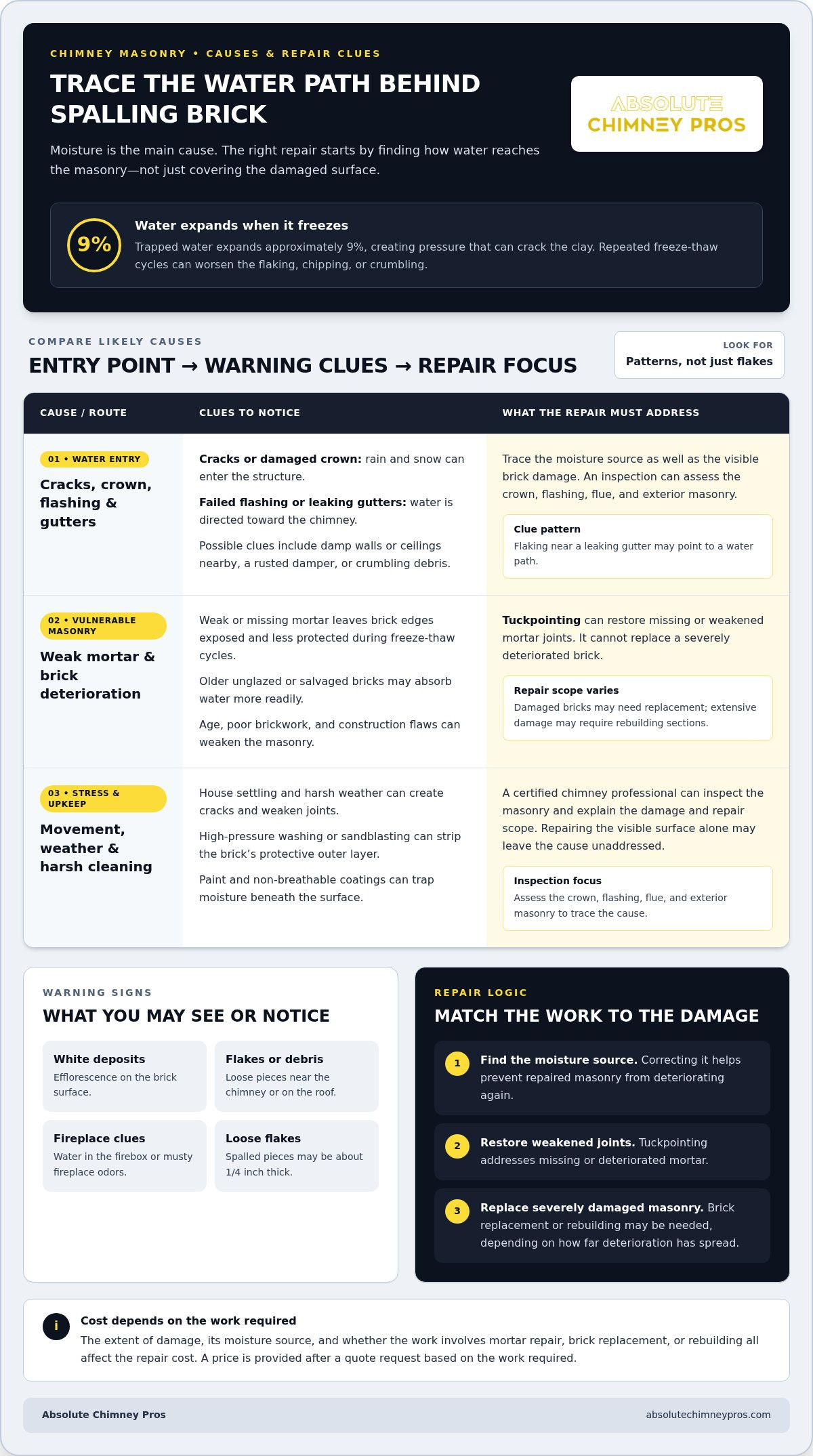
Causes of chimney brick spalling
Moisture is the main driver of spalling brick chimney damage, but it can enter through several points. Leaking gutters and failed flashing direct rain toward the chimney instead of away from it. Older bricks without protective glazing, including salvaged bricks, may absorb water more readily. Once the brick surface breaks down, water can damage the masonry beneath it.
Construction and maintenance also affect chimney masonry. Poorly built brickwork, house settling, or repeated exposure to harsh weather can create cracks and weaken joints. High-pressure washing and sandblasting may strip away the brick’s protective outer layer. Missing mortar leaves brick edges exposed, while paint and non-breathable coatings can trap moisture and allow deterioration to continue beneath the surface.
Note where the damage appears. Flaking near a leaking gutter may point to a water path; loose mortar around a crack may suggest another source. A certified chimney professional can inspect the crown, flashing, flue, and exterior masonry to trace the cause. Effective repair addresses that source as well as the visible damage. Tuckpointing can restore deteriorated mortar joints, while extensively damaged bricks may need replacement.
How much does spalling brick chimney repair cost in the United States? The cost depends on the extent of the damage, its moisture source, and whether the work involves mortar repair, brick replacement, or rebuilding. A price is provided after a quote request, based on the work required.
If you notice loose brick or missing mortar, a chimney inspection can help identify the damage and its cause before repairs are planned.
Absolute Chimney Pros: Chimney Sweep
Absolute Chimney Pros provides chimney inspections and repairs for homeowners who notice flaking bricks, missing mortar, or signs of water entry. An inspection helps identify the damage and its likely source, while chimney repair addresses affected masonry. A chimney sweep can help maintain the fireplace and chimney system, but cleaning alone will not repair spalling bricks.
Absolute Chimney Pros’ CSIA-certified, licensed, and insured technicians provide on-site estimates. Contact Absolute Chimney Pros or visit absolutechimneypros.com to discuss your chimney.
Take the Next Step Toward a Sound Chimney
Before arranging spalling brick chimney repair, note what you can see from the ground: which side is affected, whether there is loose debris, and whether you’ve noticed nearby signs of water. These details can help focus the discussion during an inspection. Avoid climbing onto the roof or disturbing unstable masonry; leave close assessment to a qualified professional.
Absolute Chimney Pros offers chimney inspections and sweeping, as well as chimney liner installation when liner work is needed. The right next step depends on whether the inspection finds a concern with the masonry, the flue, or both. A clear assessment helps you understand which work addresses the problem.
Contact Absolute Chimney Pros to discuss your chimney. Taking a measured next step can help you move forward with greater confidence.
Frequently Asked Questions
What is brick spalling?
Brick spalling is the loss of a brick’s outer face. The surface may peel, chip, or break away while the rest of the brick remains in place. It differs from ordinary discoloration: a white deposit may wipe or brush away, while spalled material leaves a rough or recessed area. On a New Jersey or Philadelphia chimney, note whether the damage is isolated or appears across several courses.
What's Causing My Chimney Bricks To Fall & What Can I Do About It?
Water intrusion, weak mortar, aging masonry, and movement can all contribute to falling chimney bricks. Look for a pattern: damage below a roofline may point to water entry, while gaps across several joints may indicate broader deterioration. Keep people clear of loose masonry, avoid patching over unstable brick, and arrange a chimney inspection to assess the structure and repair needs.
Why Should Spalling Be Repaired Early?
Addressing damage early can limit how far it spreads. A loose brick may expose neighboring joints, while water entering the chimney can affect nearby ceilings, insulation, or wall surfaces. In New Jersey and Philadelphia, tell the inspector if you’ve also noticed damp areas indoors or debris after storms. That context can help connect visible exterior damage with possible problems inside the home.


