
Could two estimates for the same Philadelphia chimney cover very different work? Absolutely. One may address a small section of worn mortar, while another accounts for failing joints across the stack or difficult access. That’s why chimney repointing cost Philadelphia depends on the mortar’s condition, the area needing repair, chimney height, and what a professional finds during an assessment.
Visible mortar damage can raise concerns about a larger problem or an estimate that leaves out important work. Repointing isn’t always the right fix for every chimney. An assessment can help distinguish deteriorated joints from damage that calls for more extensive repairs.
This guide explains what affects a project-specific estimate, which chimney conditions merit attention, and what a clear scope of work should spell out before repairs begin. Absolute Chimney Pros provides chimney repointing and repair, with on-site estimates and no hidden fees. Work is performed by CSIA-certified, licensed, and insured technicians, so you can understand the recommended scope before deciding on next steps.
Key Takeaways
- Understand why chimney repointing cost Philadelphia varies with mortar condition, repair area, access, and related masonry findings.
- Use a professional assessment to determine whether repointing suits the chimney’s condition and repair needs.
- Compare written estimates by checking which joints are included, what access and materials are assumed, and what work is excluded.
- Prepare for an assessment by noting visible concerns and reviewing the technician’s findings. Don’t climb onto the roof or remove masonry to investigate.
- Arrange an on-site assessment to clarify the repair scope before work begins.
What Shapes Chimney Repointing Cost in Philadelphia?
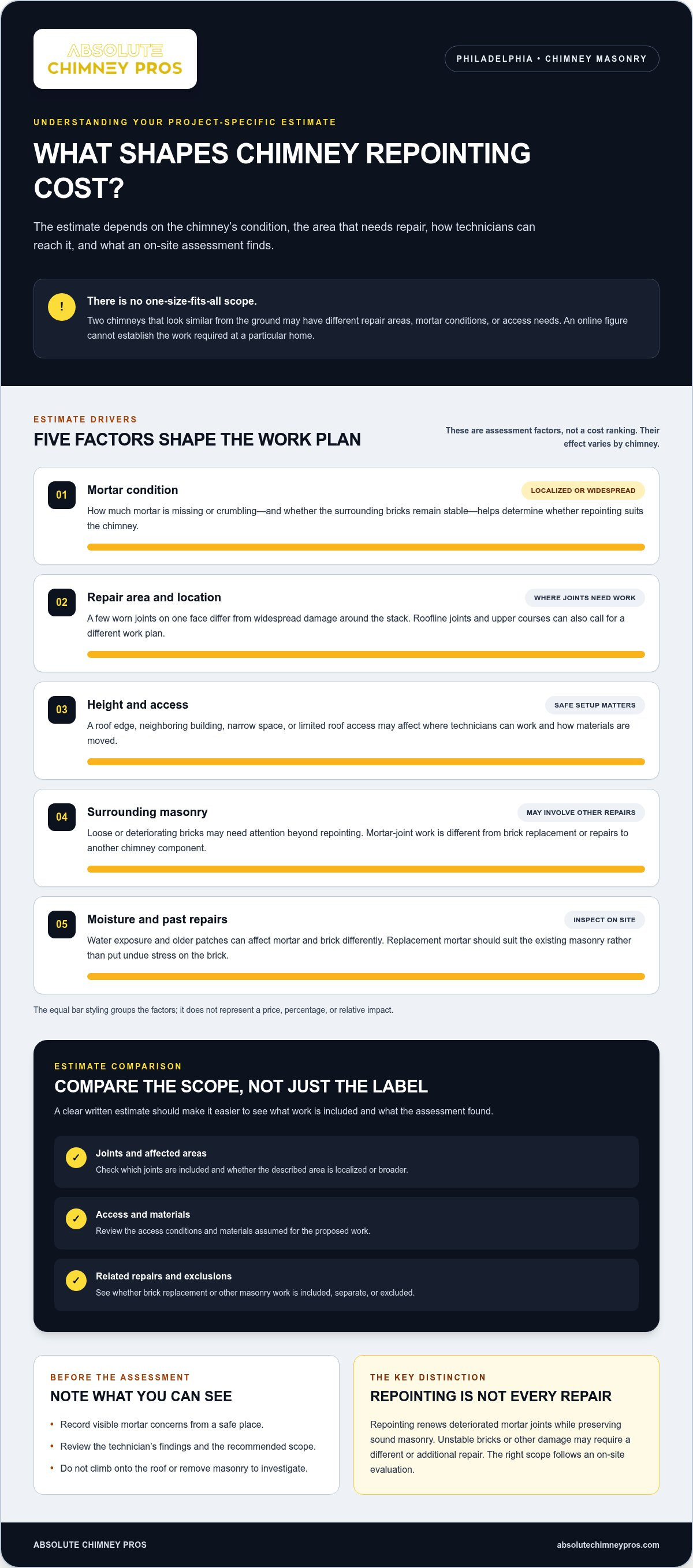
A useful estimate starts with the chimney’s condition and the work required, not a generic price range. The chimney repointing cost Philadelphia homeowners encounter can vary with the amount and location of deteriorated mortar, how the chimney can be reached, and whether the assessment reveals related masonry damage.
Repointing means removing deteriorated mortar from joints and replacing it while retaining sound masonry. The repair should suit the condition of the bricks and joints, not simply cover visible gaps. The general overview of Repointing also explains why the replacement mortar’s characteristics matter when working with existing masonry.
An online figure can offer context, but it can’t show how much mortar has failed on a particular chimney or what access the work requires. Two chimneys that look similar from the ground may have different repair areas or conditions once examined. An on-site assessment helps define the scope behind an estimate.
Which parts of a repointing project affect the estimate?
The affected area matters. A few deteriorated joints on one face require a different work plan from widespread damage around the stack. Location matters, too. Joints near the roofline, at the upper courses, or in a less accessible area may require different setup and labor than joints that are easier to reach.
Height and position influence safe access. A chimney close to a roof edge, beside another building, or above a narrow space may limit where technicians can work and how materials are moved. These conditions shape the plan before mortar work begins.
Visible deterioration is only part of the assessment. A technician also considers whether surrounding bricks remain stable and whether nearby masonry shows signs of damage. If the bricks are loose or deteriorating, repointing alone may not address the problem. The estimate should reflect the work supported by the findings.
Why Philadelphia homes can require different assessments
Philadelphia has older rowhomes and varied masonry, but a property’s age or neighborhood alone doesn’t determine a chimney’s condition. One home may have original brickwork; another may have previous repairs or different materials. Narrow alleys, neighboring buildings, and limited roof access can also affect inspection and work setup.
Water exposure and past repairs add more variables. Mortar joints exposed to moisture may show different wear from sheltered areas, while an older patch may affect the surrounding masonry. These details are best assessed on site rather than assumed from a photograph or an online cost guide.
A clear estimate should identify the affected areas and distinguish repointing from related masonry repairs. Absolute Chimney Pros provides on-site estimates with no hidden fees, helping homeowners in Philadelphia and New Jersey understand the proposed scope before work begins.
How Chimney Mortar Condition Changes a Philadelphia Repointing Estimate
Mortar condition helps determine whether a chimney needs localized joint work or a broader repair. A technician assesses how much mortar is missing or crumbling, whether the bricks remain stable, and whether damage extends beyond areas visible from the ground. Those findings shape the estimate and help establish whether repointing is appropriate.
Repointing renews deteriorated mortar joints while preserving masonry that remains sound. New mortar can’t resolve unstable bricks or other damage on its own. An assessment helps clarify the work needed before you compare estimates for chimney repointing cost Philadelphia.
Repointing, tuckpointing, and brick replacement are not identical
Repointing generally means removing deteriorated mortar from joints and renewing them. “Tuckpointing” is sometimes used as another term for this work, though it can also describe a particular joint-finishing technique. Usage varies, so the work description matters more than the label.
Mortar-joint work is different from replacing damaged bricks or repairing another chimney component. An estimate should distinguish these tasks rather than imply that repointing alone covers every masonry concern.
When mortar damage may point to a larger chimney repair
Loose or damaged bricks, widespread joint loss, and signs of water entry are reasons for a closer assessment. They don’t confirm a specific cause or repair by themselves. A patch on one face may also conceal deterioration nearby, so the visible spot may not represent the full scope.
A technician considers how the joints and surrounding masonry relate. If mortar is missing but adjacent bricks appear stable, repointing may suit that area. If bricks are cracked or loose, the repair plan may need to address them as well. Conclusions should follow an on-site evaluation, not a guess based on a photo.
Water-related damage deserves careful attention because moisture can affect mortar and brick differently. Previous patches can complicate the picture: their condition, coverage, and compatibility with the surrounding masonry may influence the appropriate repair. The NFPA 211 Standard for Chimneys is a reference for chimney-system construction and maintenance, underscoring why masonry condition belongs in a professional evaluation.
Compatible mortar matters: the replacement should suit the existing masonry rather than put undue stress on the brick. This is particularly relevant when assessing older properties, where original materials may differ from those used in past repairs. The right specification depends on the masonry at the property, not an assumption based on age or location.
For a clearer repair scope, arrange a chimney inspection and repair assessment. Absolute Chimney Pros’ CSIA-certified technicians evaluate chimney condition and provide an on-site estimate with no hidden fees.
How to Compare Chimney Repointing Estimates in Philadelphia
A total by itself doesn’t tell you what repair is proposed. To compare chimney repointing estimates fairly, start with the written scope: which areas are included, how the work will be accessed, and whether the estimate covers mortar joints alone or other masonry repairs too. Clear details let you compare like with like instead of choosing based on an unexplained number.
Documented findings are useful, too. An assessment can show why a recommendation focuses on particular joints or includes separate work, such as addressing damaged bricks. When considering chimney repointing cost Philadelphia, look beyond the total and check whether each estimate describes the same repair area and assumptions.
What a clear repointing estimate should explain
Look for the chimney face or faces involved and a clear description of the joints included. The estimate should also explain access assumptions, preparation, cleanup, materials, and relevant exclusions. If it identifies work beyond repointing, that work should be separated or described clearly enough to show how it changes the scope.
| Scope detail | What to compare |
|---|---|
| Joints included | Which chimney faces and mortar areas are covered? |
| Access assumptions | How will the work area be reached and set up? |
| Materials | What mortar or other materials are specified? |
| Exclusions | What related repairs or tasks fall outside the estimate? |
Use the table to spot differences before comparing totals. One scope may cover a single face while another includes additional areas. That doesn’t make either estimate automatically better; it means the proposed work differs and needs to be understood on its own terms.
Why estimates can differ for the same Philadelphia chimney
Even for one chimney, estimates may reflect different observations or access plans. One assessment might identify deteriorated joints in a limited area. Another may document damage across more faces or note masonry concerns that call for separate repair work. Roof position and available access can also affect setup. A higher or lower total alone doesn’t prove that a quote is unfair.
Compare the findings behind each scope. Do both estimates describe the same areas? Are access assumptions and materials explained? Is additional masonry work distinguished from repointing? Clarify anything that is unclear before deciding. A precise written description makes differences easier to evaluate and reduces the chance of mistaking a limited repair for a broader one.
Absolute Chimney Pros provides on-site estimates with no hidden fees. Its CSIA-certified, licensed, and insured technicians assess the chimney and explain the proposed repair scope, giving you a clearer basis for making a decision.
Preparing for Chimney Repointing in Philadelphia
A little preparation can make a chimney assessment more useful. Record what you’ve noticed, but leave close inspection and repair-scope decisions to a professional. Your observations can help the technician understand when changes appeared and where to focus. They don’t replace an on-site evaluation or establish the chimney repointing cost Philadelphia homeowners should expect for a specific property.
Use this sequence to get ready:
- Note visible concerns. From a safe place on the ground, record mortar gaps, loose debris, or staining. Note when you first saw a change or noticed a leak.
- Arrange a chimney assessment. Share your observations and any ground-level photographs. Don’t climb onto the roof or approach masonry that appears unstable.
- Review the findings. Ask which conditions were observed and which parts of the chimney need repair evaluation. Keep safety findings distinct from the proposed masonry work.
- Compare the scope. Check that written estimates clearly describe repair areas and any separate work before deciding how to proceed.
Which signs should a homeowner document safely?
From the ground, note visible mortar gaps, fallen debris, and discoloration on or near the chimney. If you see interior staining or notice a leak, write down where it appears and when it occurs. These observations give the technician helpful context, but they don’t prove the cause. Don’t climb onto a roof, touch loose material, or remove masonry to investigate.
Photographs can help show what you saw and whether the appearance changes over time. Take them only from a safe position. A close-up image isn’t a diagnosis: it may not show the full chimney, the condition of other faces, or what lies beneath a previous patch.
How inspection findings clarify the repair scope
A chimney inspection can document observed conditions and identify concerns that need repair evaluation. Safety findings and proposed repointing work are related, but they’re not interchangeable. A report may flag an issue for further assessment without establishing every repair detail. Some conditions may be concealed, so the scope should reflect what a technician can reasonably evaluate on site.
Review what the findings actually support. Which mortar joints are affected? Are there visible concerns beyond those joints? Is additional masonry work listed separately from repointing? Clear answers help explain why the proposed scope may be limited or broader, without assuming that every visible mark signals a major repair.
For broader safety context, consider the role of a chimney inspection alongside a repair assessment. Absolute Chimney Pros offers chimney inspections and on-site estimates, with work performed by CSIA-certified, licensed, and insured technicians. Arrange a chimney assessment to have the observed condition evaluated and the appropriate repair scope explained.
Get a Clear Chimney Repointing Estimate in Philadelphia
The clearest next step is an on-site assessment. A technician can review the chimney’s visible masonry, hear what you’ve observed, and identify the repair scope supported by the condition found. The estimate should reflect that evaluation, not assume every chimney needs the same work.
That matters if you’re trying to understand chimney repointing cost Philadelphia homeowners may face. An assessment helps distinguish deteriorated mortar joints from concerns that may need additional repair evaluation. It also gives you a clearer basis for reviewing the proposed work before deciding how to proceed.
What happens during an on-site assessment?
A technician reviews visible mortar joints and surrounding masonry, considers concerns you report, and notes conditions relevant to the repair scope. Share where you’ve seen gaps, staining, loose debris, or possible water entry. These details provide context, but they don’t establish the cause on their own. Absolute Chimney Pros’ CSIA-certified, licensed, and insured technicians use their assessment to explain the recommended work and prepare an on-site estimate with no hidden fees.
Ask for clarity on what the recommendation includes. The estimate should identify the areas proposed for repointing and distinguish that work from any separate repair evaluation or additional masonry work. The recommended scope and estimate depend on the chimney’s observed condition. An inspection can document visible findings, but it may not reveal every concealed condition.
Choose a next step based on the condition you observe
Visible gaps or loose-looking masonry warrant a professional assessment, especially if the condition appears to be changing. If you notice water entry or interior staining, share where and when it occurs. Those observations can guide the review, but avoid climbing onto the roof or trying to remove material. Leave close examination to a qualified technician.
Once you receive the estimate, take time to understand the areas covered and how the recommended work addresses the findings. Absolute Chimney Pros also offers a flat-fee chimney inspection option for homeowners seeking an inspection. The goal is a clear picture of the chimney’s condition and a repair scope grounded in what the technician observes.
Schedule an on-site assessment with Absolute Chimney Pros to review your chimney and get a clear estimate for the work it needs.
Make Your Next Chimney Decision with Confidence
The best next step isn’t guessing from a photo or committing to a repair based on a broad online figure. It’s getting a clear understanding of your chimney’s actual condition. Once the scope is tied to observed masonry, you can consider the recommendation, compare the work described, and make a decision with less uncertainty.
That’s the practical value of an assessment when researching chimney repointing cost Philadelphia. It turns a general concern into a project-specific conversation about what needs attention and why. If mortar is visibly missing or the masonry looks loose, arrange an assessment. Avoid inspecting the roof yourself.
Absolute Chimney Pros offers on-site estimates and a flat-fee chimney inspection option. Its CSIA-certified, licensed, and insured technicians can assess the chimney and explain the recommended scope. Schedule an on-site chimney assessment to take the next step with a clearer picture of your repair needs. A well-informed decision starts with knowing what you’re dealing with.
Frequently Asked Questions
How much does chimney repointing cost in Philadelphia?
There isn’t one price that applies to every Philadelphia chimney. The estimate depends on the specific repair scope, including the areas of mortar involved, access, and any additional masonry work identified during assessment. Online figures can’t account for those property-specific details. An on-site estimate from Absolute Chimney Pros is based on the chimney’s observed condition and explains the proposed work with no hidden fees.
What factors affect a chimney repointing estimate?
The main factors include how much mortar needs attention, where the affected joints are, and how technicians can safely reach them. The estimate may also change if the assessment finds loose bricks or other masonry concerns requiring separate work. Repairing joints on one accessible face differs from work across several faces near a difficult roofline. Compare the areas and tasks described, not just the totals.
Does chimney repointing fix a chimney leak?
It can help if water is entering through deteriorated mortar joints, but it won’t resolve every chimney leak. Moisture may also enter around other chimney components or through damaged masonry elsewhere. Note where staining or dampness appears and whether it follows rain, then share that information during an assessment. A technician can evaluate visible conditions and determine whether repointing is relevant or another repair needs consideration.
Can repointing fix loose or damaged chimney bricks?
No. Repointing renews mortar joints; it doesn’t replace a cracked brick or secure masonry that has become loose. If bricks are damaged, the repair plan may need to address them separately. Don’t try to push or remove a loose brick to test its stability. Keep clear of falling debris and arrange a professional assessment so the condition and suitable repair scope can be evaluated safely.
Do I need a permit for chimney repointing in Philadelphia?
Repointing alone typically doesn’t require a permit, while structural work such as a chimney rebuild may. The distinction depends on the actual work proposed, so don’t assume a project remains repointing if the assessment identifies structural repairs. Verify current requirements with the Philadelphia Department of Licenses and Inspections before work begins, particularly if the scope changes beyond renewing mortar joints.
How long does chimney repointing take?
Project time depends on the amount of masonry involved, chimney access, and whether the assessment identifies additional repairs. A focused repair on a limited area won’t necessarily follow the same schedule as work covering more of the chimney. Weather and site setup can also affect planning. Ask for the expected work sequence and schedule once the on-site assessment establishes the scope; avoid relying on a general online duration.
Can chimney repointing be done during cold or wet weather?
Not always. Cold or wet conditions can affect work planning and the mortar’s ability to set properly, so the technician must consider conditions at the chimney and the product requirements for the repair. Rain may also make roof access unsafe. Don’t assume a calendar date guarantees suitable conditions. The assessment and project plan should account for weather before work starts.


