
What can a chimney sweep miss by working only from inside your fireplace? A lot. Rooftop chimney sweeps can inspect areas a bottom-up cleaning may not reach, including the chimney cap, crown, and flashing. These components help keep water, debris, and other hazards out of your chimney.
A thorough cleaning should do more than remove soot. You also want a clear picture of your chimney’s condition and a straightforward explanation of the work. A camera-assisted inspection and rooftop assessment can help reveal issues that aren’t visible from the hearth.
This guide explains why professional roof access matters for chimney safety, what a complete sweep and inspection may involve, and how top-down and bottom-up cleaning differ. You’ll also learn what to look for in a CSIA-certified chimney professional serving New Jersey and the Philadelphia, Pennsylvania area, and how on-site estimates can clarify the proposed work. The goal is a cleaner fireplace, documented findings, and a better understanding of your chimney’s condition.
Key Takeaways
- Learn what rooftop chimney sweeps can assess that a firebox-only cleaning may miss, including exposed chimney components.
- Understand how a professional cleaning removes soot and debris from the flue.
- See how camera-assisted inspections can document chimney conditions and inform next steps.
- Recognize how creosote and dryer lint create separate ventilation hazards, and which cleaning services address them.
- Find out how CSIA-certified expertise and clear on-site estimates support informed chimney care in NJ and the Philadelphia, PA area.
The Critical Role of Rooftop Chimney Sweeps in Home Safety
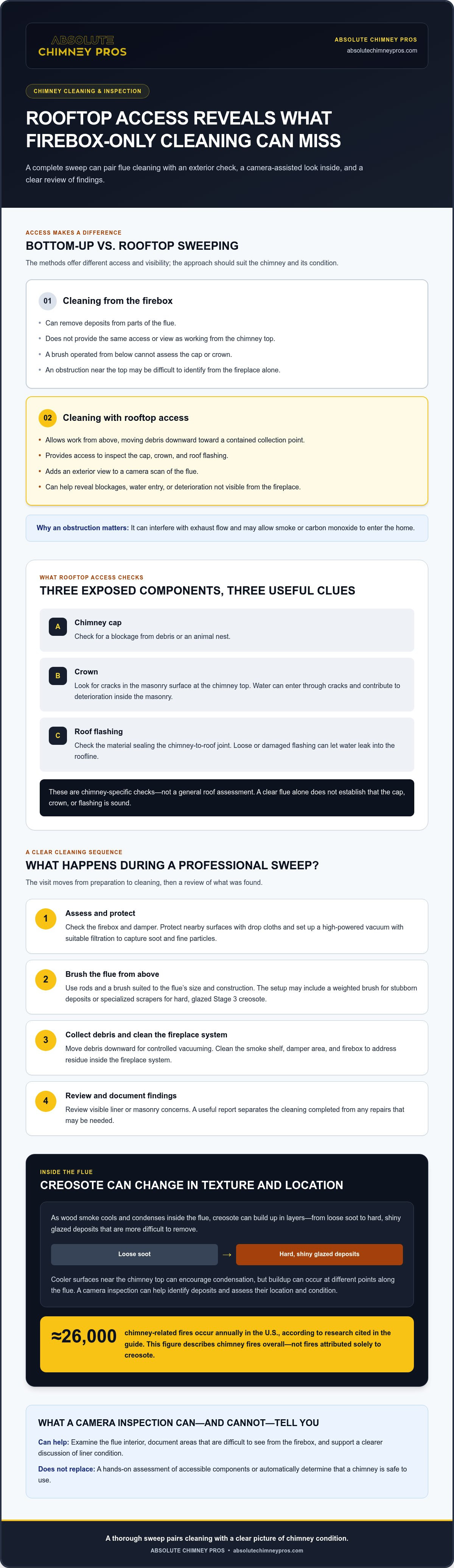
A thorough chimney sweep does more than run a brush through the flue and vacuum loose soot. Rooftop chimney sweeps combine cleaning with an assessment of accessible chimney components, including the cap, crown, and roof flashing. These exterior parts can reveal blockages, water entry, or deterioration that isn’t visible from the fireplace.
Rooftop access also adds useful context to a Level 2 inspection, which includes a camera scan of the flue. An exterior check helps assess areas above the roofline. Looking at both can connect an interior concern, such as a damaged liner, with visible exterior wear. The chimney’s height and condition matter, too. Height helps establish draft, the upward movement that carries smoke and combustion gases out of the home. Damage or an obstruction can interfere with that flow.
Beyond the Fireplace: The Exterior Inspection
From the roof, a professional can check whether the chimney cap is blocked by debris or an animal nest. They can also look for cracks in the crown, the masonry surface at the top of the chimney. Water can enter through those cracks and contribute to deterioration inside the masonry. Flashing, the material sealing the joint between chimney and roof, needs attention as well. Loose or damaged flashing can let water leak into the roofline. These are chimney-specific checks, not a general roof assessment.
Creosote: The Hidden Threat Under the Cap
Creosote forms as wood smoke cools and condenses inside the flue. It can build up in layers, from loose soot to hard, shiny glazed deposits that are more difficult to remove. Cooler surfaces near the chimney top can encourage condensation, so deposits may collect there, although buildup can occur at different points along the flue. A camera inspection helps identify deposits and assess their location and condition.
Creosote is a combustible byproduct of incomplete combustion, and the U.S. experiences approximately 26,000 chimney-related fires annually, according to the research cited for this guide. That figure describes chimney fires overall, not fires attributed solely to creosote. A professional sweep can remove combustible buildup and report conditions that may need further attention. For background on the history and role of chimney sweeps, see the general overview from Wikipedia.
Exterior findings matter because a chimney is a connected system. A clear flue alone doesn’t establish that the cap, crown, or flashing is sound. A rooftop assessment adds visible evidence that helps explain the condition of the chimney as a whole.
What Happens During a Professional Rooftop Chimney Cleaning?
A professional cleaning follows a clear sequence: assess the fireplace, contain dust, clean the flue and firebox, then review the findings. Rooftop chimney sweeps use equipment suited to the chimney’s shape and condition. The goal is to remove accessible soot and creosote while identifying concerns that cleaning alone can’t fix.
Step-by-Step Cleaning Protocol
The visit begins inside. A technician checks the firebox and damper, protects nearby surfaces with drop cloths, and sets up a high-powered vacuum with suitable filtration to capture soot and fine particles. This preparation helps keep dust from spreading through the room.
Next, the technician accesses the chimney top and uses rods with a brush suited to the flue’s size and construction. Sweeping from above moves debris downward, where it can be collected with controlled vacuuming. The smoke shelf, damper area, and firebox are also cleaned to address residue inside the fireplace system.
After cleaning, a final review helps establish what was found and whether the liner or masonry shows visible concerns. A useful report separates the cleaning completed from any repairs that may be needed. The NFPA 211 safety standards for chimneys provide a reference for chimney inspection and maintenance practices.
Tools of the Trade: Modern and Traditional
Brushes and rods remain central tools, but the right setup depends on the flue. A weighted brush can help work through stubborn deposits during a rooftop sweep, while specialized scrapers may be needed for hard, glazed Stage 3 creosote. That material can resist ordinary brushing, so its presence and condition should be assessed rather than treated like routine loose soot.
A chimney camera adds another layer of visibility. It helps a technician examine the flue interior and document areas that aren’t easy to see from the firebox. Camera findings support a clearer discussion of liner condition, but they don’t replace a hands-on assessment of accessible components or automatically determine that a chimney is safe to use.
Every home and chimney is different. For chimney cleaning and inspection in NJ or the Philadelphia, PA area, Absolute Chimney Pros provides chimney services with on-site estimates and no hidden fees.
Rooftop vs. Bottom-Up Sweeping: Why Professional Access Matters
Cleaning from the firebox can remove deposits from parts of a flue, but it doesn’t provide the same access or view as working from the chimney top. A brush operated from below can’t assess the cap or crown, and an obstruction near the top may be difficult to identify from the fireplace alone. That distinction matters because a blocked flue can interfere with exhaust flow and may allow smoke or carbon monoxide to enter the home.
Rooftop chimney sweeps can approach the flue from above, work debris downward toward a contained collection point, and inspect accessible components at the chimney top. The method should suit the chimney and conditions rather than serve as a one-size-fits-all shortcut.
The Advantages of Top-Down Cleaning
Top-down work uses gravity to move loosened soot and creosote toward the firebox, where it can be contained and vacuumed. From above, a technician can also inspect the cap and look for visible damage or blockages. A camera can provide a closer view of the liner interior, including joints that may not be visible during a basic visual check. A nest or debris obstruction near the top may also be easier to reach and assess from the roof.
These checks complement cleaning. They don’t guarantee that every concealed defect will be visible, but they give the technician a more complete basis for evaluating the accessible flue and chimney components. The Chimney Safety Institute of America provides professional education and credentials. Its Chimney Safety Institute of America (CSIA) certifications are one way to understand the role of formal training in chimney care.
When Is Bottom-Up Sweeping Acceptable?
Steep or slippery roof surfaces, high winds, rain, ice, or other unsafe conditions can make rooftop access inappropriate. A professional may adapt the cleaning method and work from the fireplace when the chimney and task allow it. That approach can address reachable deposits, but it can’t substitute for examining the cap and crown from above.
Be clear about the limits. If conditions prevent a full exterior assessment, the report should state what was inspected and what remains unseen. A follow-up rooftop inspection can complete the review when access is safe. If you suspect a blockage or notice smoke spilling into the room, stop using the fireplace until the chimney has been assessed. Safety comes before finishing the job in one visit.
Total Ventilation Safety: Chimneys, Dryer Vents, and Air Ducts
Your home has several paths that move air, heat, and exhaust. A safe chimney matters, as do the dryer vent carrying hot, moist air outdoors and the ductwork circulating conditioned air. Considering these systems together can help you spot maintenance needs beyond the fireplace.
The hazards differ. Creosote can accumulate in a chimney flue, while lint can collect in a dryer vent and restrict airflow. Air ducts serve another purpose, but dust and debris buildup may affect airflow and indoor cleanliness. A professional assessment helps identify what needs attention without assuming every dust or comfort problem comes from the ductwork.
Dryer Vent Hazards: The Chimney’s Silent Cousin
Longer drying times, a dryer or laundry area that feels unusually hot, and reduced airflow at the outdoor vent can signal a restriction. Lint is combustible, and a blocked exhaust path can make the dryer work harder and trap heat. These signs are reasons to arrange an assessment, not proof by themselves that the vent is clogged. For practical signs and safety guidance, read the dryer vent cleaning safety checklist.
Routine dryer vent cleaning removes lint and helps restore a clear exhaust route. If airflow remains poor, a technician can assess whether the vent needs repair. Don’t ignore repeated long cycles or overheating; they’re useful warning signs.
Air Duct Integrity and Your Family’s Health
Dust returning soon after cleaning, visible debris at supply registers, or worsening allergy symptoms may prompt a closer look at the ducts. These signs can have other causes, so they aren’t a diagnosis. An air duct inspection can help determine whether buildup or another visible issue is present. Professional cleaning removes accumulated dust and debris, which may support better airflow when contamination is restricting the system.
Clean ducts don’t guarantee a specific energy saving or resolve every indoor air concern. Reducing obstructions may help the HVAC system move air with less resistance, but the effect depends on the system’s condition and design.
A whole-home plan considers the chimney, dryer vent, and air ducts together while keeping each inspection focused on its own risks. Schedule services based on system condition and household use, and keep the findings for reference. Absolute Chimney Pros provides chimney, dryer vent, and air duct service.
Certified Chimney Services in NJ & PA: The Absolute Standard
Rooftop chimney sweeps need more than brushes and ladders. They need the training to inspect what they clean and explain what the findings mean. The Chimney Safety Institute of America (CSIA) Certified Chimney Sweep credential signals specialized knowledge of chimney safety and maintenance. Absolute Chimney Pros’ CSIA-certified technicians serve homeowners in New Jersey and the Philadelphia, Pennsylvania area, combining professional cleaning with inspection and clear findings.
Local conditions matter. Mid-Atlantic freeze-thaw cycles can stress masonry when moisture enters cracks and repeatedly freezes and thaws. A small defect in a crown or mortar joint can become more serious over time. A qualified chimney professional can assess visible deterioration and explain whether cleaning, inspection, or repair is the appropriate next step.
Local Expertise for NJ and PA Homeowners
Contractor rules differ between the states, and registration is not the same as a chimney-specific competency license. Absolute Chimney Pros is licensed and insured in NJ and PA. Technicians consider applicable requirements for the work and the home rather than relying on a one-size-fits-all checklist. For details on chimney sweeping and service preparation, read the guide to chimney sweep service in New Jersey.
Transparency and Professionalism
Homeowners should receive a clear explanation of the assessment, recommended work, and relevant findings. A flat-fee inspection option can make the initial safety assessment easier to understand before decisions about additional work. Absolute Chimney Pros also provides on-site estimates with no hidden fees, so the scope of proposed work is clear.
Inspection is preventive care, not just a response to a fireplace problem. Waiting until smoke, a blockage, or visible damage forces urgent action can leave less time to plan repairs. Arrange chimney cleaning or inspection before regular fireplace use, and have the condition assessed if you notice a change in draft, damage, or unusual odors. For more on the inspection process, see the New Jersey chimney inspection checklist.
For homeowners in NJ and the Philadelphia, PA area, professional chimney care means clear findings, transparent estimates, and technicians who understand the importance of protecting the home as well as cleaning the flue.
Make Your Next Fireplace Season Safer
A thorough chimney cleaning is about more than removing soot. Rooftop access helps technicians assess the cap, crown, and other areas that a firebox-only approach can’t fully inspect. Camera-assisted inspection and clear documentation can also help you understand your chimney’s condition and next steps.
Keep the whole home in view, too. Chimney creosote and dryer-vent lint pose different risks, while air duct inspections can help identify buildup that may affect airflow. Rooftop chimney sweeps make safety a priority by pairing careful cleaning with a closer look at the system.
Absolute Chimney Pros provides CSIA-certified technicians, is licensed and insured in NJ and PA, and offers on-site estimates with no hidden fees. Take a practical step toward a cleaner fireplace and greater peace of mind. Schedule your chimney sweep in NJ or the Philadelphia, PA area today.
With qualified care and clear findings, you can make informed decisions and feel more confident about protecting your home.
Frequently Asked Questions
How often should I have a rooftop chimney sweep perform a cleaning?
Have your chimney inspected at least once a year, and schedule cleaning when the inspection finds soot or creosote buildup that needs removal. The National Fire Protection Association’s Standard 211 recommends annual chimney and vent inspections. How often sweeping is needed depends on factors such as fireplace use, fuel, and the condition of the flue. Regular inspection helps catch developing issues before the next heating season.
Do chimney sweeps always have to go on the roof?
No. Some chimney cleaning can be performed from inside the home, depending on the chimney and work required. But an interior-only visit can’t fully assess the cap or crown from above. Rooftop access helps a technician examine those exposed components and check for visible blockages or damage. If weather or roof conditions make access unsafe, the technician may adapt the method and explain what couldn’t be inspected.
What are the signs that my chimney needs an urgent rooftop inspection?
Stop using the fireplace and arrange a prompt assessment if smoke spills into the room, the draft changes suddenly, or you see debris or a nest blocking the flue. A carbon monoxide alarm, visible masonry damage, or a strong smoke odor indoors also warrants immediate attention. If a carbon monoxide alarm sounds, leave the home and contact emergency services. Don’t climb onto the roof to investigate.
Will a chimney cleaning leave dust or soot inside my home?
Professional cleaning is designed to control soot and dust, but no cleaning process can promise that a home will remain completely dust-free. Technicians typically protect the work area with drop cloths and use a high-powered vacuum to capture soot and fine particles. Clear the immediate area around the fireplace beforehand, and mention delicate furnishings or concerns so the technician can account for them during preparation.
How long does a professional rooftop chimney sweep take?
The time varies with the chimney’s height, access, condition, and the scope of cleaning or inspection. A straightforward sweep may take less time than a visit involving heavy deposits, a camera inspection, or additional areas that need assessment. An on-site estimate can explain the planned work. A careful visit should allow time to review findings, rather than focusing only on finishing quickly.
Can you perform a chimney sweep in the rain or snow?
Not always. Rain, snow, ice, or high winds can make rooftop access unsafe, so the technician must assess conditions before working above the roofline. A bottom-up method may be possible for some cleaning tasks, but it won’t allow a full rooftop assessment of the cap and crown. If access is unsafe, the technician can explain what can be completed safely and whether an exterior inspection should be rescheduled.
What is the difference between a chimney sweep and a chimney inspection?
A chimney sweep removes soot, creosote, and other deposits from the flue and related areas. An inspection evaluates the chimney’s condition, looking for issues such as damage, obstructions, or concerns with the liner and masonry. These services can be performed during the same visit, but cleaning doesn’t replace inspection. The appropriate inspection level depends on the chimney’s history, condition, and reason for assessment.
How much does a chimney sweep cost in New Jersey?
There isn’t one price that fits every New Jersey chimney. The scope can vary with access, deposits, chimney condition, and whether inspection or additional work is needed. Absolute Chimney Pros offers flat-fee inspection options and on-site estimates with no hidden fees, so you can understand the proposed scope before deciding on work. The company serves homeowners in New Jersey and the Philadelphia, Pennsylvania area.


