
You hear scratching above the fireplace, then spot twigs near the hearth. Is it a bird’s nest, a trapped bird, or chimney debris? If you’re considering birds nest removal from chimney NJ, don’t reach into the flue or light a fire while an obstruction may be present.
It’s understandable to want the problem cleared quickly. But the bird species and whether a nest is active can affect what action is allowed. Disturbing a nest before its status is understood could create legal and safety concerns. A guess can also leave a blocked or damaged chimney unnoticed.
This guide explains what to do first, what signs may point to a nest, a trapped bird, or ordinary debris, and why nest status matters in New Jersey. You’ll also learn what to expect from a professional chimney assessment. Absolute Chimney Pros inspects chimneys to assess suspected obstructions and the chimney’s condition. Once an obstruction has been appropriately addressed, chimney cleaning can help remove remaining debris. Start with a clear assessment, not a risky attempt at removal.
Key Takeaways
- Chirping, twigs, feathers, droppings, unusual odors, or changes in smoke can signal a chimney concern. Observe from a safe distance and note what you notice.
- A nest or loose debris may interfere with the flue, the passage that carries smoke and combustion gases outside. If you suspect an obstruction, stop using the fireplace until the chimney is assessed.
- For birds nest removal from chimney NJ, the species and whether the nest is active can affect the appropriate next steps. Don’t assume that visible access makes reaching into the chimney safe.
- Share any sounds, smoke changes, and visible debris when arranging a chimney assessment. An inspection can help evaluate a suspected obstruction and the chimney’s condition.
- After an obstruction is appropriately addressed, professional chimney cleaning may help clear remaining debris. Absolute Chimney Pros’ CSIA-certified, licensed, and insured technicians also provide chimney repair.
Bird Nest in a New Jersey Chimney: Signs and Immediate Safety Concerns
Unfamiliar sounds, debris near the fireplace, or a change in how smoke moves deserve careful attention. They can point to a bird, nesting material, or another obstruction, but none confirms what is inside the chimney. If you suspect the flue is obstructed, stop using the fireplace until the chimney has been assessed.
Clues to note include:
- Sounds: Chirping, fluttering, or scratching from the chimney may indicate a bird, but sound alone cannot identify a nest or tell you whether a bird is trapped.
- Visible material: Twigs or feathers near the fireplace or at the chimney opening may be associated with nesting activity. Droppings can also be a clue.
- Changes during fireplace use: Smoke that drafts differently or enters the room may signal a problem with the smoke path. It does not, by itself, establish that a bird or nest is the cause.
- Unusual odor: A new smell near the fireplace can have several causes. Note when it occurs and mention it during an assessment.
What signs may point to a nest or bird in the flue?
Look and listen from a safe place. A bird may be inside the flue even when you can’t see a nest or nesting material from the fireplace. Don’t climb onto the roof to inspect the chimney or reach into the flue. A visible opening doesn’t make the interior safe to access. Material or an animal may be out of reach, and a quick glance cannot reliably identify what is there.
Different birds can use chimneys. If you hear repeated calls or see activity at the opening, record what you observe without approaching or disturbing it. Chimney Swift nesting habits offer background on one bird associated with chimneys. Your observations can help inform an assessment, but they are not a substitute for identifying what is present.
Why can chimney nesting material become a safety concern?
The flue is the passage that carries smoke and combustion gases out of the home. Nesting material or loose debris may interfere with that passage, though not every nest completely blocks it. A change in draft or smoke behavior is a reason to stop using the fireplace and arrange a professional chimney assessment, not a reason to guess at the obstruction.
Bird droppings and nesting debris can also make cleanup unpleasant and require care. Don’t sweep material into the room or attempt to remove it yourself. A suspected flue obstruction warrants professional assessment because the fireplace’s visible opening can’t show whether smoke and combustion gases have a clear path out. For birds nest removal from chimney NJ, the safe first step is understanding what is present and the chimney’s condition, not reaching in or burning through the problem.
How a Chimney Nest Affects the Flue, Draft, and Fireplace Use
The flue carries smoke and combustion gases from a fireplace out of the home. A nest or loose debris inside it can interfere with that route, but a nest doesn’t automatically mean the flue is completely blocked. The location and amount of material matter, and those details aren’t always visible from the fireplace opening.
A chimney inspection can assess the flue and chimney condition for an obstruction or other concerns. It won’t, by itself, determine a bird’s species, whether a nest is active, or what wildlife laws apply. Keep these assessments distinct: one addresses the chimney, while the other concerns the bird and the appropriate next steps.
What changes when a nest or debris obstructs a chimney flue?
Restricted venting can affect airflow and the normal movement of smoke. You might notice smoke entering the room, lingering longer than usual, or behaving differently during fireplace use. These are warning signs, not proof that nesting material is the cause. Other chimney conditions may also affect draft, so don’t diagnose the problem from a symptom alone.
If smoke enters the living space or venting seems abnormal, stop using the fireplace. Don’t light another fire to test the draft or try to push debris through the flue. A professional chimney inspection can help determine whether an obstruction is present and assess the chimney’s condition before use resumes.
Why does the response differ for an active nest or trapped bird?
A suspected nest, an active nest, and a bird that may be trapped are different situations. Activity and species can affect what action is appropriate and lawful. Don’t disturb a nest while its status and the applicable rules remain unclear. The U.S. Fish & Wildlife Service explains the protected status of chimney swifts, a species known to nest in chimneys.
Federal and New Jersey requirements can depend on the species and circumstances. Verify the current rules before anyone disturbs a nest or handles a bird. A chimney inspection helps establish what’s happening inside the flue, but it isn’t a legal determination of nest status. That distinction matters for birds nest removal from chimney NJ: assessing the chimney and establishing an appropriate wildlife response are related, but separate, steps.
Until the situation is assessed, leave the fireplace unused if you suspect a flue obstruction. Share observed smoke changes or sounds when arranging an inspection. A professional chimney inspection can evaluate the flue and help clarify the chimney’s condition. It does not provide permission to disturb wildlife.
DIY Removal or Professional Assessment: Choosing a Safe Chimney Response in NJ
Seeing twigs at the fireplace opening can make removal seem simple. It isn’t. You can’t tell from a visible opening how far material extends, whether a bird is inside, or whether a nest is active. Visible access is not safe access. Don’t reach into the chimney or climb onto the roof to investigate.
Each role has limits. Homeowners can observe and report signs. A chimney technician can assess the flue and chimney condition. Determining a bird’s species, nest activity, and the lawful wildlife response is a separate question.
| Step | What it can establish | What it cannot establish |
|---|---|---|
| Homeowner observation | Sounds, visible debris, smoke changes, or other details to share. | Whether a nest is active, what species is present, or whether removal is lawful. |
| Chimney inspection | Chimney condition and whether an obstruction or damage is present. | Wildlife identity, legal nest status, or authorization to disturb it. |
| Nest or wildlife determination | Information needed to consider an appropriate response under current rules. | A substitute for assessing the chimney’s safe operating condition. |
A chimney inspection assesses the chimney, not whether the law authorizes disturbing a nest. Keep those decisions separate. For birds nest removal from chimney NJ, the safe response starts with an assessment, not a do-it-yourself attempt.
What should homeowners avoid doing themselves?
Don’t reach into the flue, climb onto the roof, use smoke bombs or chemical deterrents, or light a fire to drive a bird or nest out. These actions can injure an animal, expose you to debris, damage chimney components, or push material into a position that worsens an obstruction. Don’t use a fireplace to test whether the flue is clear.
A blocked chimney can pose serious risks. The Consumer Product Safety Commission discusses the dangers of blocked chimneys and carbon monoxide. That’s a reason to take a suspected blockage seriously, not to assume every nest causes the same hazard. Pause fireplace use and arrange a chimney assessment if you suspect an obstruction.
How do nest status and applicable rules shape next steps?
An empty nest, an active nest, and a trapped bird are not interchangeable situations. An empty-looking structure may still need careful identification. Activity may indicate that birds are using it, while a trapped bird raises a different concern. Don’t disturb a nest until its status and the applicable requirements are understood.
The federal Migratory Bird Treaty Act and New Jersey rules may apply, but protections depend on the species and circumstances. Don’t assume every bird or nest has identical protection. Before any disturbance, verify current federal and New Jersey guidance for the species and situation. A chimney technician can assess the flue, but that inspection alone does not identify wildlife or settle the legal question.
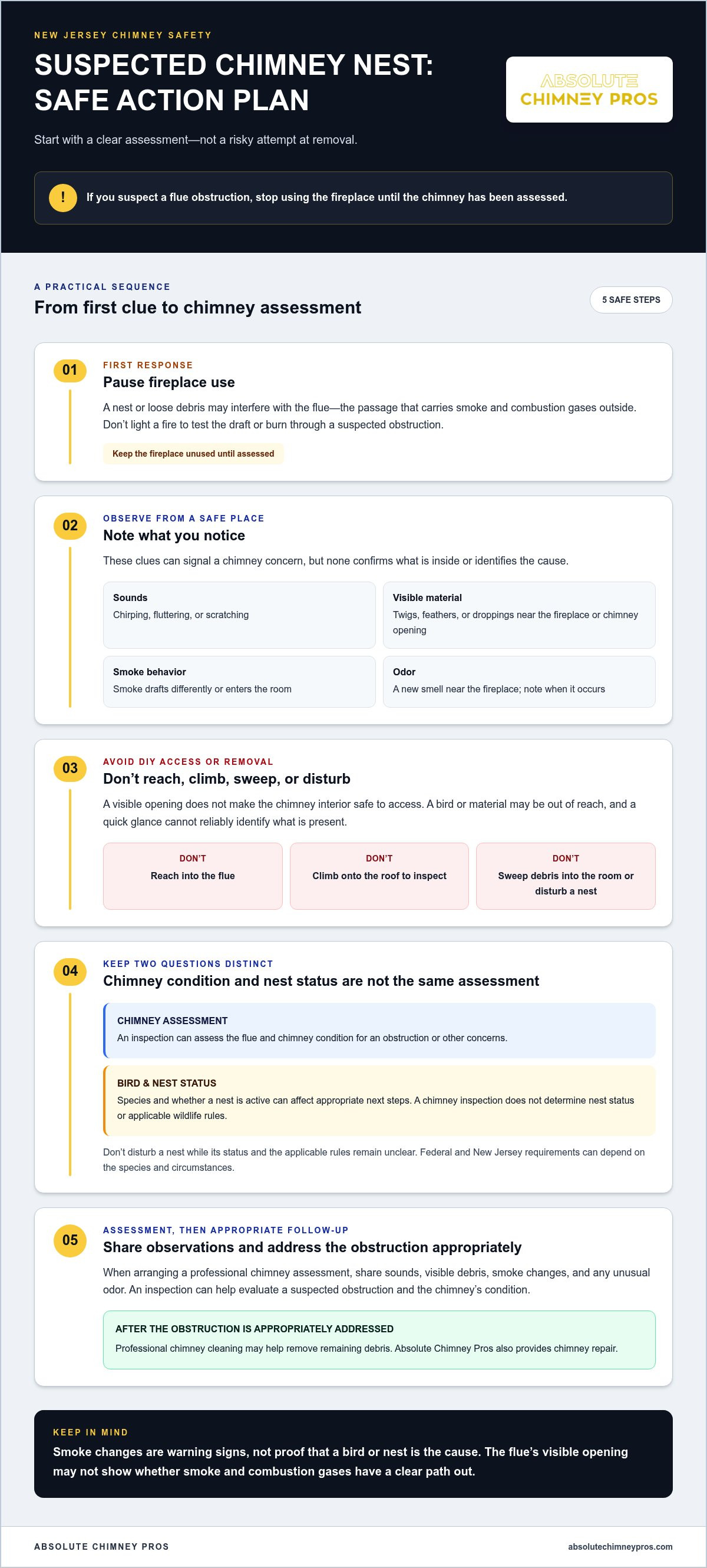
Suspected Chimney Nest: Safe New Jersey Action Plan
A clear sequence helps you protect your household without guessing at what’s inside the chimney. If you suspect an obstruction, don’t use the fireplace while you arrange an assessment. For additional preparation, this New Jersey chimney inspection safety checklist outlines useful points to keep in mind.
- Pause fireplace use if you suspect blockage. Don’t light a fire to check the draft or move a possible bird or nest. Keep the fireplace unused until the chimney condition has been assessed.
- Observe from a safe place. Note sounds, visible twigs or feathers, droppings, unusual odors, or changes in smoke behavior. Don’t climb onto the roof, reach into the flue, or disturb material to get a better look.
- Record what you notice. Write down when the signs began, where you observed them, and whether the fireplace had been used recently. A brief, factual description is more useful than guessing at a bird species or diagnosing the cause.
- Arrange a chimney assessment. Share your observations when scheduling, including any chirping or scratching, smoke entering the room, and visible debris. This gives the technician context for assessing the chimney.
What information helps prepare for a chimney assessment?
Keep your notes simple. Include when the first signs appeared, whether they happen repeatedly, and whether the fireplace was recently in use. Describe what you can see or hear without trying to remove material or identify a nest. Mention smoke that entered the room or any change in fireplace operation. These details help focus the assessment without treating clues as proof.
What happens during a chimney inspection or cleaning assessment?
A technician assesses accessible chimney components and reports relevant findings about the flue and overall chimney condition. The inspection can help establish whether an obstruction or damage is present and inform recommendations for chimney cleaning or repair. It doesn’t, by itself, determine a bird’s species, nest status, or whether disturbing a nest is legally allowed. Keep wildlife decisions separate from the chimney-condition assessment.
If the obstruction is appropriately addressed and cleaning is recommended, professional chimney cleaning can help remove remaining debris. For an overview of what cleaning involves and how to prepare, see this certified chimney sweep and cleaning guide. The order matters: assess first, then follow the recommendations for chimney care.
For birds nest removal from chimney NJ, start with safe observation and a professional chimney assessment rather than attempting removal yourself. Schedule a chimney inspection to have the chimney condition evaluated and receive clear next-step recommendations.
Arrange a New Jersey Chimney Assessment with Absolute Chimney Pros
A suspected nest can leave you unsure whether the fireplace is safe, what the chimney needs, and what should happen next. Absolute Chimney Pros helps homeowners in New Jersey and Philadelphia, Pennsylvania, address chimney concerns with professional inspection, cleaning, and repair. The company’s technicians are CSIA-certified, licensed, and insured.
A chimney assessment focuses on the condition of the chimney and any suspected obstruction. It can clarify whether chimney cleaning or repair should be considered after the situation has been appropriately addressed. It does not identify wildlife permissions or authorize disturbing a nest. Nest handling depends on the species, nest status, and applicable rules, so keep that decision separate from the chimney inspection.
How does a professional chimney assessment reduce uncertainty?
An inspection gives you findings about the chimney condition and practical recommendations for chimney-related next steps. Instead of relying on sounds or visible debris alone, you can understand what the inspection reveals about the flue and chimney. If cleaning or repair is recommended, you can consider that work based on the findings. The assessment is focused on the chimney, not wildlife removal.
Clear expectations matter. Absolute Chimney Pros offers a flat-fee chimney inspection option and on-site estimates with no hidden fees. Same-week appointments are available. You’ll have a defined inspection option and an opportunity to discuss findings and recommended chimney work.
What is the next step for a New Jersey homeowner?
When arranging an inspection, share what you’ve observed. Mention when the sounds or debris first appeared, whether smoke behavior changed, and whether you noticed feathers, twigs, droppings, or an unusual odor. Describe the signs without reaching into the flue or attempting to identify or remove a nest. These details provide useful context for the chimney assessment.
If a nest may be active, don’t disturb it while the species and applicable requirements remain unclear. The inspection can assess the chimney condition, while nest-related decisions must account for the relevant wildlife rules. This distinction is central to birds nest removal from chimney NJ: a chimney assessment can inform chimney care, but it is not a promise of bird or nest removal.
Absolute Chimney Pros can help you move from uncertainty to a clearer understanding of your chimney’s condition. Arrange an inspection to discuss the signs you noticed and receive recommendations focused on chimney inspection, cleaning, or repair. Arrange a chimney inspection.
Take the Next Step with Confidence
Uncertainty can make a suspected chimney nest feel like a problem you need to solve immediately. A safer approach is to make the next decision based on clear information, rather than pressure or guesswork. Keep chimney condition and wildlife decisions distinct. An inspection can inform what the chimney may need; whether a nest can be disturbed depends on the species, its status, and applicable rules.
If you’re considering birds nest removal from chimney NJ, don’t treat a chimney assessment as automatic permission to remove a nest. Use it as a practical starting point for understanding the flue and deciding what chimney-related care is appropriate. This measured approach protects your household while leaving room for responsible decisions about wildlife.
Absolute Chimney Pros can assess your chimney and explain relevant inspection, cleaning, or repair recommendations. You don’t have to resolve every uncertainty on your own. Arrange a professional chimney inspection and take the next step with greater clarity and confidence.
Frequently Asked Questions
Can birds get trapped inside a chimney?
Yes, a bird can enter an accessible chimney and become unable to get out, but chirping or fluttering alone doesn’t confirm that it’s trapped. Don’t reach inside, climb onto the roof, or try to drive it out with a fire. If you’re considering birds nest removal from chimney NJ, start by describing what you’ve noticed and arranging a chimney assessment. Stop fireplace use if you suspect an obstruction.
Do birds nest in chimneys year-round?
Birds may investigate sheltered openings at different times, but nesting varies by species and season. The calendar alone can’t establish that a nest is inactive. If you notice activity, avoid disturbing the area until the situation and any applicable protections are understood. In New Jersey, a chimney inspection can assess the flue, while species-specific wildlife questions require separate consideration under current rules.
Can a chimney cap prevent birds from nesting in a chimney?
A correctly selected, maintained chimney cap can help limit animal entry while allowing the chimney to function as designed. It can’t clear an existing obstruction, and the right fit depends on the chimney configuration. Have the chimney assessed before installing or changing a cap, particularly if you’ve heard activity or noticed debris. A change made without accounting for an existing bird or nest could create another problem.
Will homeowners insurance cover bird nest removal from a chimney?
Coverage depends on your policy, the circumstances, and whether the issue caused damage. Cleanup, damage caused by an animal, and preventive work may be treated differently, so don’t assume one rule applies to every claim. Review your policy language and document visible damage from a safe location. If you suspect the chimney is obstructed, don’t postpone a safety assessment while you sort out insurance questions.
How long does it take to assess a suspected bird nest in a chimney?
Assessment time varies with chimney access, configuration, and what the inspection reveals. A suspected active nest or trapped bird may also raise questions separate from chimney condition. There isn’t one reliable duration for every home. When arranging an inspection, share when the signs began, whether the fireplace was recently used, and any changes you noticed. That context helps the visit be planned around the concern.
Should I use my fireplace if I hear birds in the chimney?
No. If you suspect a bird, nest, or other obstruction may affect the flue, leave the fireplace unused until the chimney has been assessed. Don’t light a small fire as a test or try to force anything out. Smoke entering the room is an added reason to keep the appliance off. If a carbon monoxide alarm sounds, leave the home and follow the alarm’s safety instructions.


