

What if the dust settling on your new furniture isn’t just from moving, but also from construction debris inside your HVAC system? A brand-new home can still have drywall dust, sawdust, and other particles left behind during construction. If dust keeps returning, it’s reasonable to wonder what may be moving through the vents.
A fresh build doesn’t automatically mean clean ductwork, and recurring dust doesn’t prove that a builder was negligent. It does mean the system may need a closer look. A camera-assisted air duct inspection can show whether debris is visible in accessible areas, giving you a clearer basis for deciding what to do next.
This guide explains why construction can leave particles in ductwork, what signs to watch for, and how professional cleaning can remove debris from an HVAC system. If you’re researching air duct cleaning for new construction home NJ, you’ll learn what to look for and how an inspection can help you decide whether cleaning makes sense for your New Jersey or Philadelphia-area home.
Key Takeaways
- Learn why HVAC systems can collect dust during a home’s final construction stages, even when the house looks finished.
- Find out which signs, including recurring dust on ledges, may warrant a closer look at your ductwork.
- Understand why post-construction cleaning may require more than routine maintenance to address heavier debris throughout the system.
- See how a camera-assisted inspection can help document duct conditions before you decide on air duct cleaning for a new construction home in NJ.
- Learn how Absolute Chimney Pros approaches duct inspections and cleaning, with CSIA-certified technicians and transparent estimates.
Why "Brand New" Doesn’t Mean Clean Air Ducts
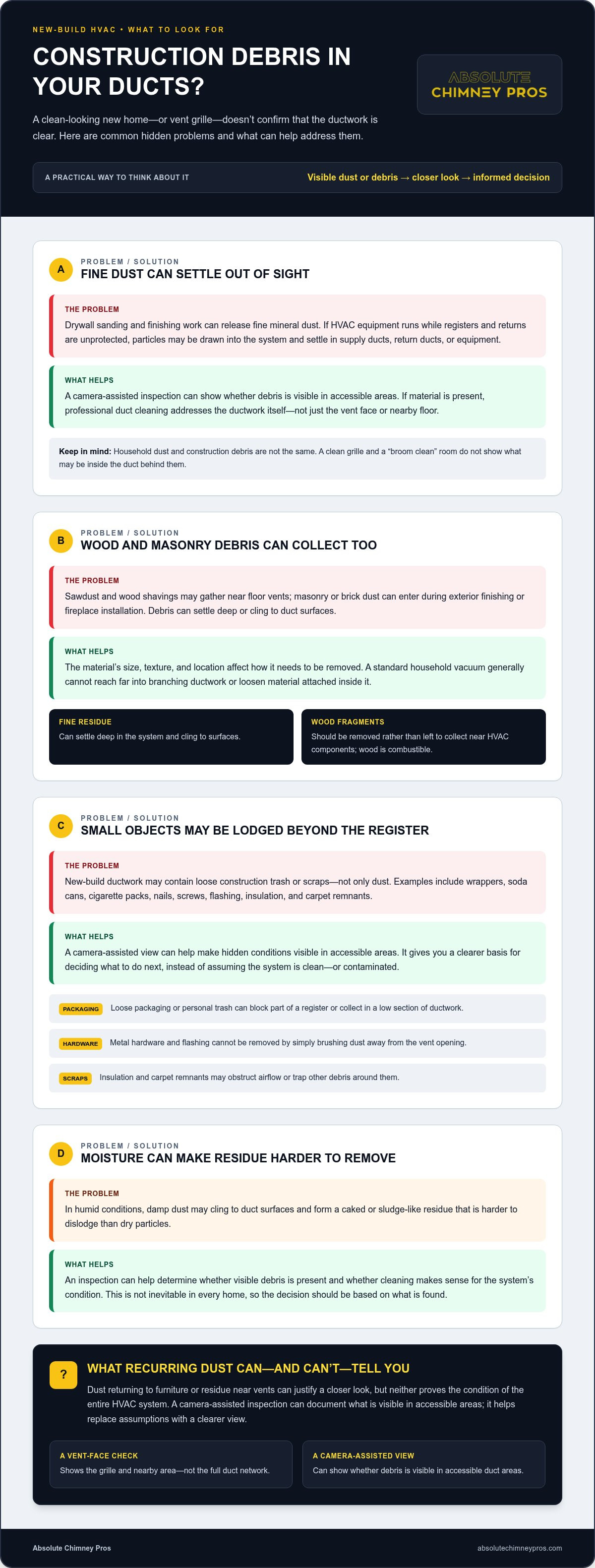
A new home can look spotless and still have construction residue inside its HVAC system. Fresh finishes and unused rooms don’t show what collected in the ductwork while the house was being built. Drywall sanding, cutting, and other finishing work can release fine particles that settle out of sight, including inside supply ducts, return ducts, and equipment.
Construction dust is different from the ordinary dust that accumulates after move-in. Household dust often includes fabric fibers, skin flakes, and outdoor soil. Construction debris may include fine mineral dust and wood fragments. Particles can travel through the system if it operates before duct openings are protected. A clean-looking grille, then, doesn’t tell you whether the duct behind it is clean.
The Problem with Construction-Phase HVAC Usage
HVAC equipment may be run during drywalling and other finishing work to manage indoor temperatures. If returns and registers aren’t protected, the system can draw in airborne dust and carry it into the ductwork. This construction-phase contamination can occur in New Jersey builds, just as it can elsewhere.
A “broom clean” finish usually refers to visible surfaces, not the inside of the HVAC system. Sweeping and wiping rooms won’t reach dust beyond a grille or inside a return. The general process of duct cleaning removes accumulated material from ductwork. For a new build, the practical question is whether construction debris remains where ordinary move-in cleaning can’t reach it.
Recurring dust on furniture or residue near vents can justify a closer look, but neither proves the condition of the entire system. A camera-assisted view can help show whether visible debris is present, rather than relying on the home’s age or appearance as a guide.
Health Risks of Post-Construction Particulates
Drywall materials can contain gypsum, and some construction dust may include respirable silica, depending on the materials and work performed. Fine airborne particles can irritate the respiratory tract, especially for people with sensitivities. Sawdust and wood shavings can also accumulate in the system. Because wood is combustible, debris should be removed rather than left to collect near HVAC components.
Moisture can add another concern. In humid conditions, damp dust may cling to duct surfaces and form a caked or sludge-like residue that is harder to dislodge than dry particles. That isn’t inevitable in every New Jersey home, but it’s a reason not to assume that post-construction debris is harmless household dust. An inspection can help determine whether air duct cleaning for new construction home NJ is appropriate for the system’s condition.
Common Construction Debris Found in NJ HVAC Systems
Construction debris in ductwork can range from powdery residue to solid objects left behind during building or finishing. What’s present varies from home to home, and much of it can remain hidden beyond the registers. A household vacuum can clean the vent opening, but it can’t reach the full duct network or safely remove every kind of material lodged inside it.
The "Big Three" Contaminants: Drywall, Wood, and Masonry
Drywall dust is fine enough to settle deep in the system and cling to surfaces. Sawdust and wood shavings may collect near floor vents, particularly where subflooring was cut or adjusted. Masonry and brick dust can also enter during exterior finishing or fireplace installation. The size, texture, and location of each material affect how it settles and how it must be removed.
Heavier debris presents a different challenge. A standard residential vacuum generally isn’t designed to reach far into branching ductwork or loosen material attached to its interior. Reaching in through a register can disturb debris without capturing it, potentially shifting particles farther into the system. Proper air duct cleaning for a new construction home in NJ addresses the ductwork itself, not just the visible grille and nearby floor.
Surprising Non-Dust Items Left Behind
Not everything in a new-build HVAC system is airborne. Loose construction trash can include soda cans, lunch wrappers, discarded cigarette packs, nails, screws, or small pieces of flashing. Scraps of insulation and carpet remnants may also be pushed or dropped into floor registers. These examples aren’t present in every home, but they show why a quick look at a vent face can’t establish what lies farther inside.
- Loose packaging and personal trash can block part of a register or collect in a low section of ductwork.
- Metal hardware and flashing can’t be removed by simply brushing dust away from the vent opening.
- Insulation and carpet scraps may obstruct airflow or trap other debris around them.
These objects won’t reliably “blow out” over time. Airflow may move lightweight scraps, but larger items can stay lodged in place, while fine dust can resettle elsewhere in the system. Waiting for the HVAC to carry everything away isn’t a removal method; it may simply redistribute particles through the home.
A camera-assisted inspection helps make hidden conditions visible. Rather than assuming the ducts are clean or contaminated, a technician can examine accessible areas and show you what the camera reveals. Absolute Chimney Pros uses camera-assisted inspections to assess duct conditions, giving homeowners clearer information before deciding on next steps. If you’re concerned about visible debris, an air duct inspection can help determine what’s inside your system.
Post-Construction Duct Cleaning vs. Standard Maintenance
Post-construction cleaning addresses a specific event: debris entering the HVAC system while a home is being built or finished. It isn’t simply the first visit in an annual duct-cleaning routine. Construction residue can be denser and more firmly settled than ordinary household dust, so a light surface vacuum or quick pass at the registers may leave material behind. The right approach depends on what an inspection finds and where debris has collected.
For a homeowner considering air duct cleaning for new construction home NJ, the key distinction is scope. A thorough cleaning targets accessible parts of the HVAC system where construction dust has accumulated, rather than treating the visible vent opening as the whole job. Negative pressure helps contain loosened debris during removal, while agitation tools help dislodge material from duct surfaces. Collection equipment with appropriate filtration helps capture debris instead of releasing it into the living space.
High-Volume Extraction Requirements
Ordinary dust is often loose and easy to disturb. Drywall residue and settled gypsum can cling to duct interiors or collect in bends. Agitation loosens that material so extraction can capture it. An assessment can also consider components such as the blower wheel and evaporator coils, where dust may affect operation. Cleaning or servicing those components depends on their condition and the work required.
That’s why a standard maintenance visit may not address a post-build problem. The objective is controlled removal, not simply moving debris around. A camera-assisted inspection can help identify visible buildup and inform the cleaning scope.
Cost vs. Value for NJ New Homeowners
Think of post-construction cleaning as a targeted step for addressing debris in a new home, not a promise that the HVAC system will never need attention again. Abrasive particles can contribute to wear if they reach moving components, while accumulated debris may interfere with airflow. Removing construction residue can help limit continued exposure to that material, but it can’t guarantee longer equipment life or replace manufacturer-recommended HVAC maintenance.
After construction debris is removed, duct cleaning doesn’t automatically need to happen every year. Future service depends on the system’s condition, household circumstances, and visible signs of buildup. Keep routine HVAC maintenance separate from duct cleaning, and use inspection findings rather than a fixed annual schedule to guide the decision.
A flat-fee inspection can offer a clear first step by helping establish whether visible debris is present before you commit to a larger scope of work. Absolute Chimney Pros provides camera-assisted inspections and on-site estimates with no hidden fees. For more context on budgeting and value, see the Air Duct Cleaning Cost NJ: 2026 Homeowner’s Price & Value Guide.
How to Tell if Your New NJ Home Needs Immediate Service
Don’t judge ductwork by fresh paint or a clean-looking register. Look for patterns after the HVAC system runs. If dust returns soon after you wipe surfaces, or particles collect near multiple vents, note where and when they appear. These clues don’t prove that the ducts are contaminated, but they can help you decide whether an inspection is warranted.
Try a simple “white glove test” on an accessible windowsill or ledge: wipe it with a clean, damp white cloth, then note how quickly visible dust returns. Repeat in another room after the system has been running. This isn’t a diagnostic test, but recurring fine residue can be a reason to look more closely at the HVAC system.
Visible Signs of Builder Negligence
Look for visible warning signs, but don’t reach tools deep into the ductwork or disturb unknown debris. A substantial pile just behind a vent cover, a puff of white dust when the AC starts, or dark, soot-like marks around a ceiling supply vent deserve attention. These signs don’t establish negligence. Dark marks can have several causes, so they shouldn’t be treated as proof of dirty ducts on their own.
- Dust that reappears: Note whether it gathers near vents or across rooms after the system runs.
- Visible debris: Photograph material you can see at the register without reaching into the duct.
- Air-quality symptoms: If coughing, irritation, or allergy-like symptoms begin or worsen after moving in, consider possible indoor triggers and consult a healthcare professional for health concerns.
If these signs persist, don’t wait for a routine HVAC service call to document them. A routine equipment tune-up and an air duct inspection have different purposes. A camera-assisted inspection can show accessible sections of ductwork and help establish whether debris is present. That gives you a clearer basis for deciding whether air duct cleaning for new construction home NJ is appropriate.
Builder Warranties and What “Broom Clean” Means
Warranty coverage depends on the specific agreement. Some builder warranties focus on defined defects, and “broom clean” language may describe visible cleanup rather than the condition of internal ductwork. Don’t assume that either phrase guarantees clean ducts or excludes them. Review the written terms, keep dated photos of visible concerns, and record when dust or vent-related symptoms occur.
If you raise the issue with the builder, specific observations are more useful than a general concern: which room, what appeared, and whether it followed HVAC use. An independent inspection can provide additional documentation. Absolute Chimney Pros offers flat-fee inspection options and camera-assisted assessments, so homeowners can base next steps on visible evidence rather than assumptions.
Keep the rest of your home’s safety review organized, too. If your new home has a fireplace, a separate chimney inspection safety checklist can help you understand what to review for that system. For duct concerns, schedule an air duct inspection to get a clearer view of the system’s condition.
Professional New Build Solutions by Absolute Chimney Pros
A new construction home deserves an assessment based on evidence, not assumptions. Absolute Chimney Pros provides air duct cleaning and camera-assisted inspections in New Jersey. CSIA-certified technicians can inspect accessible duct areas, show visible conditions, and explain the findings. If you’re considering air duct cleaning for new construction home NJ, an inspection is a practical starting point for understanding whether cleaning is appropriate and what the work may involve.
Transparency matters, especially when you’ve just invested in a home. Absolute Chimney Pros offers flat-fee inspection options and on-site estimates with no hidden fees. The estimate helps you understand the proposed scope before work begins. You can discuss what the camera inspection shows and how any recommended service relates to your system, rather than assuming every new home needs the same treatment.
Our Precision Cleaning Process
A camera-assisted inspection makes accessible areas easier to assess. A technician can show you visible debris in accessible duct sections and explain the findings. This supports a more informed decision, but it doesn’t mean every part of the system can be seen by camera. Interpret the assessment in that context.
When cleaning is appropriate, professional source removal uses controlled methods to loosen and collect debris. Negative pressure helps contain dislodged particles during the process, while suitable agitation tools can remove material that has settled on duct surfaces. The scope may also consider accessible HVAC components, based on inspection findings. The goal is targeted cleaning, not simply vacuuming around the register.
Work in a newly finished home calls for care. Before work begins, clarify which registers and equipment areas need access and prepare nearby floors and finishes. Absolute Chimney Pros’ CSIA-certified technicians explain what is being inspected and why, with findings guiding the recommended next step.
Schedule Your NJ Air Duct Safety Review
A camera-assisted review can be a practical first step if you’ve found recurring dust or want to understand the condition of your new home’s ductwork. Absolute Chimney Pros offers same-week appointments in New Jersey. After the inspection, an on-site estimate outlines the proposed work, with no hidden fees.
Clean ductwork can be one part of creating a more comfortable home environment, but no inspection or cleaning can guarantee that all indoor air concerns will be resolved. The useful outcome is clarity: a view of accessible duct areas, an explanation of observed debris, and a defined service recommendation. That lets you act on what’s found, not simply the age of the house.
Ready to get a clearer view of your HVAC system? Schedule your professional air duct inspection today.
Make Your New Home’s Next Step an Informed One
Settling into a new home is a good time to understand the systems you rely on every day. If dust keeps returning or you’re unsure what construction left behind, you don’t have to guess. A professional assessment can give you a clearer picture of the ductwork and help you decide what makes sense for your home.
For air duct cleaning for new construction home NJ, focus on evidence and a clearly defined scope. That way, your next step is based on the system’s observed condition, not simply the fact that the house is new. Understanding what’s there is a practical first step toward a more comfortable home.
Take that first step with Absolute Chimney Pros. Request an on-site estimate for air duct cleaning.
Frequently Asked Questions
Is it normal for a new construction home to be dusty?
Some dust after construction and move-in is common, especially while unpacking or completing final touch-ups. The useful distinction is whether it settles once those activities stop or keeps returning in the same areas. Note which rooms collect dust and whether it appears after the HVAC runs. If dust persists even after routine housekeeping or professional residential cleaning from teams like Lifestyle Home Service, an air duct inspection can help identify whether the system is contributing or another indoor source needs attention.
Will the builder pay for my air duct cleaning?
That depends on the terms of your purchase agreement and builder warranty. Coverage can vary, so don’t assume duct cleaning is automatically included or excluded. Review the written warranty and any closing or construction documents, then keep dated photos and notes describing what you’ve observed. If you raise the concern with the builder, specific details, such as which vents show residue, can make the discussion more productive.
How soon after moving in should I clean my air ducts?
There isn’t one move-in date that applies to every home. The decision should reflect the system’s condition, construction history, and signs such as recurring dust near registers. If you see debris at a vent or notice dust appearing whenever heating or cooling starts, consider an inspection rather than waiting for routine maintenance. A camera-assisted review can help determine whether cleaning is warranted for your New Jersey home.
Does air duct cleaning mess up a newly painted house?
Professional duct cleaning involves access through registers and HVAC components, so care around finished surfaces matters. Before the appointment, clear furniture and fragile items from the work area and point out recently painted walls or delicate flooring. Ask for the work area and access points to be explained before cleaning begins. This gives you a chance to prepare the rooms and discuss any concerns about finishes.
What is the difference between air duct cleaning and vent cleaning?
Vent cleaning usually refers to cleaning visible register covers or the area immediately around them. Air duct cleaning addresses the duct passages that carry conditioned air through the home, with the specific scope depending on inspection findings. Wiping a grille can remove surface dust, but it doesn’t show whether material is deeper in the system. For a useful assessment, distinguish the removable cover from the ductwork behind it.
Can construction dust damage my new HVAC system?
Construction dust may contribute to wear if abrasive particles reach moving components, and accumulated debris can affect airflow. That doesn’t mean every new system exposed to dust is damaged. If you notice unusual airflow, persistent dust from registers, or equipment concerns, record what’s happening and arrange an HVAC evaluation. An air duct inspection can also help identify visible debris, while an HVAC professional such as Comfort Boys Air and Heating can assess equipment operation and any needed repairs.
Are your technicians certified to work in New Jersey?
Absolute Chimney Pros’ air duct cleaning is performed by CSIA-certified technicians, and the company is licensed and insured. These credentials describe the business and its technicians; they don’t replace an assessment of what your home’s system needs. Homeowners in New Jersey and Philadelphia can discuss the findings, proposed cleaning scope, and estimate before work proceeds, so the recommendation is tied to the system’s observed condition.
How long does a post-construction duct cleaning take?
The time required depends on the home, system layout, construction debris, and the work identified during inspection. Larger or more complex systems may take longer than a straightforward job. Treat any timing estimate as general rather than a promised appointment length; the scope of your specific home determines the schedule.


