
Does replacing your furnace mean you need a new chimney liner? Not always. A new furnace can change how exhaust leaves your home, so the chimney requirements for new furnace installation depend on the equipment’s venting design and any other appliances still connected to the flue. Start with an assessment of the actual setup, not an assumption.
It’s reasonable to want clarity before approving liner or venting work. Online advice can make every situation sound the same, but the right solution depends on the furnace, the chimney, and the appliances that remain connected. This guide explains what to review when furnace venting changes, when an existing chimney deserves a closer look, and which options may address a sizing or compatibility concern. Local requirements matter too: rules can differ by jurisdiction, so a code example from another state may not apply to your home.
We’ll cover common venting arrangements, shared chimneys, and conditions that may call for a professional chimney inspection. If the flue isn’t suited to the remaining appliance, a liner may be one possible solution. A clear assessment helps you understand the issue before deciding what work is needed.
Key Takeaways
- Learn which factors shape the chimney requirements for new furnace installation, including vent type, flue condition and size, and connected appliances.
- See how replacing a furnace on a shared chimney can affect a water heater that remains connected to the flue.
- Compare a properly sized liner, a revised venting arrangement, and retiring an unused flue as possible options.
- Follow a practical sequence for documenting appliances and vent routes before reviewing chimney work.
- Understand how a chimney inspection can help clarify whether cleaning, repair, a liner, or further evaluation may be appropriate.
Why a New Furnace Installation Can Change the Chimney Requirements
A new furnace doesn’t automatically mean every chimney needs a liner. The right setup depends on the appliance’s vent type, the chimney flue’s condition and size, and whether other appliances still use it. The chimney requirements for new furnace installation are specific to the equipment and venting arrangement, not a one-size-fits-all rule.
A replacement can change what enters the flue. The new furnace may be designed for a different venting path, or it may still use a chimney while the existing flue needs assessment for condition and compatibility. In either case, the installation should follow the furnace manufacturer’s instructions and applicable local requirements.
When does a new furnace use the existing chimney?
Some furnace configurations may vent through a chimney when the flue is suitable for that appliance and the installation meets applicable requirements. Other models use a different venting arrangement. The furnace label and manufacturer’s instructions identify the intended setup. Don’t assume the existing vent is compatible just because an older furnace used it.
For example, replacing a chimney-vented furnace with a unit designed for a separate vent can change which appliances remain connected to the chimney. A chimney inspection can help document the flue’s condition and its relationship to those appliances. While HVAC professionals like Peters Heating & Cooling manage heating equipment selection and setup, furnace installation and chimney assessment remain distinct scopes of work.
What does a chimney liner do?
A liner is the flue passage inside a chimney that carries combustion products outdoors. It defines the passage used by the connected appliance configuration. Its suitability depends on the chimney and the appliances using it, including the flue’s size and condition, not simply on whether an appliance is called a furnace. For a general overview of chimney function, see Chimney.
A liner may be considered if an assessment identifies a sizing or compatibility issue. That is different from saying every furnace change requires new liner work. A recommendation should explain the observed condition or venting concern and how the proposed work addresses it. A chimney inspection provides a basis for that assessment, and chimney liner installation may be appropriate when the findings support it.
Local requirements also matter. New Jersey and Philadelphia may follow different adopted codes, and requirements can depend on the authority having jurisdiction. Verify current fuel-gas and mechanical code provisions with the relevant local authority before relying on a code claim. Online advice from another state is not a substitute for a local determination. Start by identifying the new furnace’s specified venting method, documenting every appliance connected to the flue, and assessing the chimney before deciding what work is needed.
How Furnace Venting Changes Can Affect a Shared Chimney
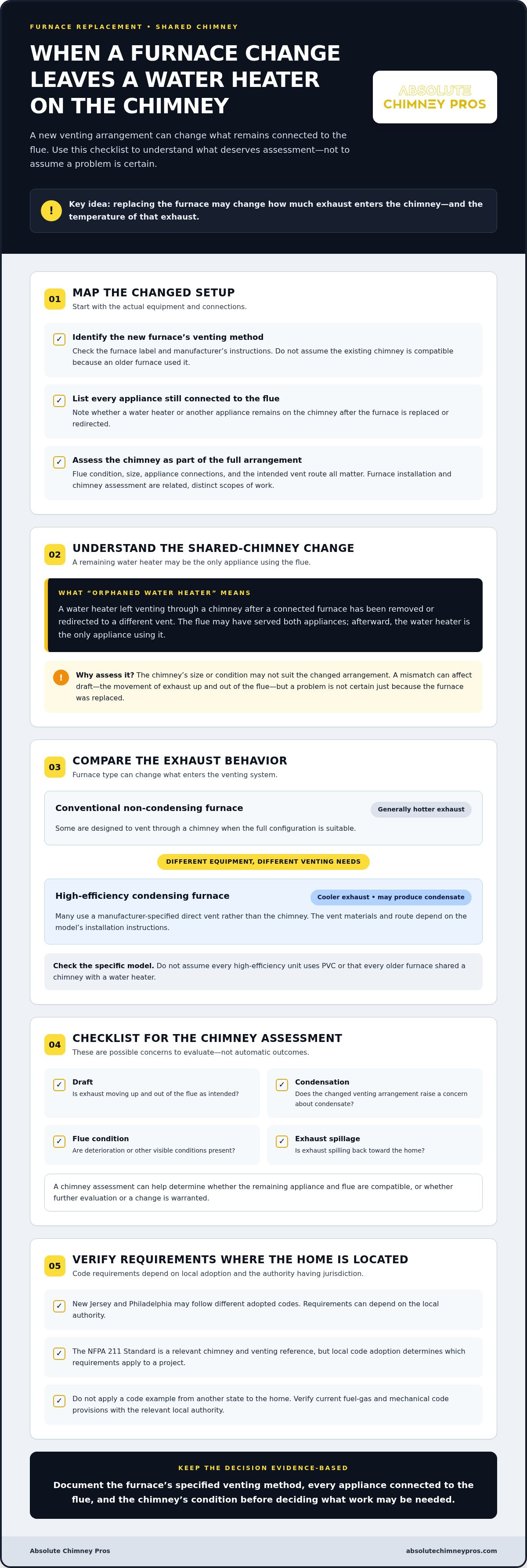
Replacing a furnace can change more than the equipment in the basement. It can change how much exhaust enters a shared chimney and the temperature of that exhaust. If a water heater also uses the flue, the remaining appliance may no longer be well matched to it. That doesn’t mean a problem is certain, but it does mean the full venting arrangement deserves attention as part of the chimney requirements for new furnace installation.
What is an orphaned water heater?
An orphaned water heater is a water heater left venting through a chimney after a connected furnace has been removed or redirected to a different vent. The flue may have served both appliances. Once the furnace is no longer connected, the water heater becomes the only appliance using it, and the chimney’s size or condition may not suit the changed arrangement.
A mismatch can affect draft, the movement of exhaust up and out of the flue. Depending on the equipment and conditions, an assessment may look for signs of weak draft, condensation, deterioration, or exhaust spilling back toward the home. These are possible concerns, not automatic results of replacing a furnace. A chimney assessment can help determine whether the remaining appliance and flue are compatible or whether a change is warranted.
Why does furnace efficiency affect venting?
Conventional non-condensing furnaces generally send hotter exhaust into their venting system. Some are designed to vent through a chimney when the full configuration is suitable. High-efficiency condensing furnaces extract more heat from combustion, so their exhaust is cooler and may produce condensate. Many use a manufacturer-specified direct vent rather than the chimney, but the exact vent materials and route depend on the model’s installation instructions.
Don’t assume every high-efficiency unit uses PVC or that every older furnace shared a chimney with a water heater. The appliance model, vent route, connections, and chimney condition all matter. Check the manufacturer’s instructions for the equipment-specific setup, then assess the chimney and any appliance still connected to it. A chimney inspection can document visible conditions and help clarify whether further evaluation or chimney work may be appropriate.
Draft and venting requirements also depend on locally adopted codes and the authority having jurisdiction. Minnesota provisions or thresholds shouldn’t be applied to a home in New Jersey or Philadelphia. The NFPA 211 Standard is a relevant chimney and venting reference, but local code adoption determines which requirements apply to a specific project.
If a furnace change leaves a water heater connected to the chimney, a professional chimney inspection can assess the flue and its relationship to the remaining appliance. The findings guide the next step without treating a liner or other modification as automatic.
Compare the Main Chimney and Venting Options After Furnace Replacement
There isn’t one correct fix for every home. A properly sized liner, a revised venting arrangement, or retiring an unused flue may each be considered, but none should be selected before the complete setup is assessed. The chimney requirements for new furnace installation depend on the appliance instructions, chimney condition, connected appliances, and local approval.
| Option | When it may fit | What must be assessed |
|---|---|---|
| Install a properly sized liner | An assessment identifies a flue sizing, condition, or compatibility issue, and the chimney remains part of an approved venting arrangement. | The connected appliance specifications, flue dimensions and condition, venting configuration, and applicable local requirements. |
| Revise the appliance venting arrangement | The replacement equipment is designed for a different vent route, or the existing arrangement needs to change to suit the appliances. | Manufacturer instructions, the planned route and materials, any appliances still using the chimney, and local approval. |
| Retire an unused flue | No appliance relies on the flue and local requirements permit it to be taken out of service. | All current and planned appliance connections, the flue’s status, and the method of retirement allowed for the property. |
When might relining the chimney be considered?
A liner may be considered when an inspection identifies a concern with the flue’s size, condition, or compatibility with the appliances using it. Its size and suitability must be determined for the specific appliance and chimney configuration, not chosen from the furnace label alone. A chimney inspection can help document relevant conditions. This New Jersey chimney inspection safety checklist outlines points homeowners can review.
A liner recommendation should be tied to a finding and explain what issue it addresses. It isn’t a default requirement simply because a furnace has been replaced. The same principle applies if the chimney serves another appliance: consider the full arrangement before proposing work.
When might another venting arrangement be considered?
Some replacement appliances use a manufacturer-specified vent route that differs from the existing chimney connection. Depending on the equipment and home, changing the appliance venting arrangement may be an option. The decision needs to account for the instructions for the specific model and locally applicable requirements. Don’t assume a route suitable for one furnace is suitable for another.
Retiring a flue also requires care. First establish that no appliance, including one planned for future use, still depends on it. Capping or abandoning a chimney isn’t a universal fix or a do-it-yourself shortcut. Local approval and a suitable method must be established for the specific property.
Use the table to compare questions, not as a diagnosis. A professional assessment should document the connected appliances, vent routes, and chimney condition before a solution is recommended. That evidence helps distinguish necessary work from a broad recommendation that hasn’t been tied to the actual setup.
What to Check Before Approving Chimney Work With a New Furnace
Follow a clear sequence before approving chimney work. It helps separate what the new appliance needs from what the existing chimney may need, and keeps recommendations tied to the actual setup. The chimney requirements for new furnace installation should be based on equipment instructions, a chimney assessment, and the rules that apply in the project’s location.
- Identify every appliance. Record the furnace type, manufacturer, and model. Keep its installation instructions if available. Note whether a water heater, fireplace, or other appliance also connects to the chimney. Don’t rely on memory alone. Appliance labels, manuals, and visible connections can help build an accurate picture.
- Document the vent routes. Note where each appliance’s exhaust travels and where the routes connect, if visible. Include known past changes, such as a furnace moved to a separate vent. Don’t dismantle venting or try to diagnose draft yourself. A written list or marked-up sketch can help make the assessment more complete.
- Arrange a chimney inspection. Have the chimney and flue assessed in relation to the appliances still using them. Record visible damage or changes you’ve noticed, but leave technical conclusions to the inspection. Cleaning and venting assessment are different tasks: the certified chimney sweeping and safety preparation guide explains cleaning preparation, while an inspection evaluates chimney conditions.
- Compare written options. Review the findings alongside the proposed work. The written scope should identify the observed condition, explain how the recommendation addresses it, and distinguish furnace equipment replacement from chimney inspection, repair, or liner work.
What information helps assess the existing setup?
Bring the furnace’s make, model, and installation instructions when available. Identify any water heater or other appliance that shares the chimney. Add notes about visible damage, past vent changes, or appliances that no longer appear connected. These details help an inspection account for the whole arrangement. They don’t replace an assessment or establish that a particular repair is needed.
What should a clear project scope explain?
A clear scope separates the furnace installer’s appliance work from chimney inspection and liner work. It should describe the finding behind each proposed chimney task and why that work fits the observed setup. It should also state which local permits or inspections apply, as determined for the project jurisdiction. This makes it easier to compare recommendations without treating a general claim as a diagnosis.
Permit and code requirements can vary by jurisdiction. For a home in New Jersey or Philadelphia, verify current requirements with the relevant local authority having jurisdiction rather than applying a rule found for another city or state. Absolute Chimney Pros provides chimney inspections to help homeowners understand the chimney’s condition after a furnace change. Learn about chimney inspections and how they can help assess the flue and connected appliances.
How a Chimney Inspection Helps Resolve New Furnace Venting Questions
A chimney inspection gives homeowners a clearer view of the flue after furnace work changes the venting setup. It assesses accessible chimney conditions and considers how the flue relates to appliances still connected to it. That evidence helps replace guesswork with a practical next step, whether the question is about a visible defect, a shared flue, or a proposed liner.
What can a chimney assessment clarify?
An inspection can identify accessible signs of damage, blockage, or deterioration in the chimney and flue. It can also document which connected appliances need to be considered when assessing the venting path. If the findings show buildup, cleaning may be appropriate. If they point to damage, repair may be considered. A sizing or compatibility concern could make a liner relevant, while an issue beyond the inspection’s scope may call for further evaluation.
Recommendations should connect the observed finding to the proposed work. For example, a report should explain what condition was identified and why cleaning, repair, or a liner may address it. If the inspection doesn’t establish the answer, the next evaluation should be stated clearly. This helps homeowners compare options without treating every furnace replacement as proof that chimney work is required.
An inspection has a defined scope. It can inform the chimney assessment, but it doesn’t by itself certify the entire furnace installation or confirm every aspect of appliance venting. While HVAC specialists such as proservlv.com handle heating and cooling equipment service, furnace installation and chimney liner work remain distinct tasks. The two scopes can inform one another, while each needs to be evaluated on its own terms.
How can New Jersey and Philadelphia homeowners take the next step?
For homeowners considering the chimney requirements for new furnace installation, Absolute Chimney Pros provides chimney inspections and chimney liner installation. Its CSIA-certified, licensed, and insured technicians assess chimney conditions and explain findings relevant to the flue and connected appliances. A flat-fee inspection option is available, and on-site estimates help outline recommended chimney work.
Bring the furnace model and installation instructions if you have them, along with information about any water heater or other appliance that shares the chimney. These details help frame the inspection around the actual setup. The findings can clarify whether cleaning, repair, liner installation, or another evaluation is appropriate. Local code and permit questions should be verified with the authority having jurisdiction for the home.
If a furnace change has raised questions about the chimney or shared flue, learn more about a chimney inspection with Absolute Chimney Pros. A documented assessment is a practical starting point for understanding what chimney work, if any, may be needed.
Make the Next Step a Clear One
A furnace change is a good moment to keep your appliance and chimney records together. Save the furnace model and installation instructions alongside chimney inspection findings and written recommendations. Those records can help clarify the venting setup if equipment changes again or questions arise later.
Keep decisions tied to the specific home. The chimney requirements for new furnace installation depend on the equipment, flue, connected appliances, and local rules. A documented assessment gives you a practical basis for deciding what chimney work may be appropriate, without assuming every replacement calls for the same solution.
Absolute Chimney Pros serves homeowners in New Jersey and Philadelphia, Pennsylvania, with chimney inspections and related chimney work. Schedule a chimney inspection with Absolute Chimney Pros to understand your chimney after a furnace change and discuss the findings for your home.
Frequently Asked Questions
Does every new furnace installation require a chimney liner?
No. A liner isn’t automatic, and there’s no universal yes-or-no answer. The chimney requirements for new furnace installation depend on the appliance type and instructions, the chimney’s condition and flue size, and whether a water heater or another appliance shares it. A replacement that changes which appliances use the flue may affect what needs assessing. Base any liner decision on the specific setup and applicable local code.
Can a high-efficiency furnace vent through an existing chimney?
Some high-efficiency condensing furnaces use a manufacturer-specified direct vent instead of the chimney, but system designs vary. Don’t assume an existing chimney connection can serve a replacement model, or that every model uses the same vent materials or route. Check the equipment instructions and assess the proposed setup in context. If another appliance remains connected to the chimney, include it in the review.
What happens to a water heater when a furnace is removed from a shared chimney?
A water heater left venting through a chimney after a connected furnace is removed is often called an orphaned water heater. With the furnace no longer sharing the flue, the remaining appliance and chimney may not be a suitable match. That possibility calls for assessment, not an assumption that the setup is unsafe or noncompliant. Include the water heater’s model and vent connection in the review.
Can a chimney liner be installed after the new furnace is in place?
It may be possible, but timing depends on access to the chimney and coordination with the completed appliance work. The liner must suit the connected appliances and venting configuration, so its size and compatibility shouldn’t be chosen in isolation. If a liner may be needed, resolve the venting question before the furnace project is considered complete. That gives the relevant work a chance to be coordinated.
Do New Jersey and Philadelphia have the same chimney requirements for furnace replacement?
Don’t assume they do. Adopted codes and local approval can differ, and the requirements for a specific furnace replacement depend on the project jurisdiction. The authority having jurisdiction is the source for current, project-specific permit and code requirements. A rule found online for another municipality or state may not apply in New Jersey or Philadelphia. Verify locally before relying on a code claim or finalizing the work.
Is a chimney cleaning enough to determine whether it can vent a new furnace?
Not by itself. Cleaning removes deposits, but it doesn’t automatically assess flue condition, sizing, or compatibility with a particular appliance. A clean flue may still need evaluation if the replacement furnace changes the venting arrangement or another appliance shares the chimney. Match the service scope to the question: cleaning addresses deposits, while an inspection assesses relevant chimney conditions and the setup under review.


