
Smoke coming into your living room may point to more than a simple airflow issue. A fireplace that smells smoky or pushes fumes indoors may have a cold flue, a closed or damaged damper, a blockage, or a chimney defect. This guide to fixing a fireplace draft problem NJ homeowners face starts with identifying the cause, not covering up the symptom. A quick adjustment shouldn’t mask a problem that needs attention.
Learn how to recognize common draft causes, make safe first checks, and know when to stop using the fireplace and arrange an inspection. We’ll also explain how airflow problems differ from chimney damage, so you can make an informed decision about cleaning or repair. Absolute Chimney Pros’ CSIA-certified technicians inspect chimneys and explain the appropriate next step based on their findings.
Key Takeaways
- Smoke in the room, weak upward airflow, and trouble keeping a fire lit can have several causes. Symptoms alone don’t confirm the problem.
- Flue temperature, household air pressure, damper settings, and chimney condition can all affect draft.
- When fixing a fireplace draft problem NJ homeowners can start with safe observations and basic checks, but a temporary change doesn’t prove the issue is resolved.
- Track when the problem occurs, including during startup, while fans are running, and under different outdoor conditions.
- The right next step depends on whether the fireplace is wood-burning or gas and what an inspection finds. Cleaning, repair, or gas fireplace service may be appropriate.
Fireplace Draft Problems in NJ: What the Symptoms Can Tell You
Smoke drifting into the room, a fire that struggles to stay lit, or air that doesn’t travel up the chimney as expected can all signal a draft problem. The pattern matters. A brief puff of smoke when lighting a cold fireplace is different from smoke that continues spilling into the room after the fire is established. In New Jersey, cold starts and changing outdoor conditions can affect how a chimney draws, but weather alone doesn’t explain every symptom.
Note when the problem begins and whether it continues. This can help distinguish a startup issue from poor draft during normal operation, but it won’t confirm the cause. Chimney condition, airflow inside the home, and outdoor temperature can interact. Don’t treat one symptom as proof of a blockage or defect.
How to recognize weak or reversed fireplace draft
A healthy draft carries smoke up through the flue. With weak draft, smoke may linger above the firebox, move slowly toward the opening, or escape into the living space. A reversed draft pushes air down the chimney and may bring a cold or smoky odor with it. These signs might occur only at startup, in windy conditions, or throughout the fire. If smoke repeatedly enters the room, stop using the fireplace until the cause has been assessed.
Pay attention to how the symptom changes. If smoke appears briefly while lighting a cold fireplace and then clears, record that. If it returns as the fire burns or happens every time you use the fireplace, treat it as a persistent concern. Don’t add more fuel or try to overpower the problem with a larger fire.
Why the same draft symptom can have different causes
Smoke spilling indoors is a clue, not a diagnosis. A blockage or buildup can restrict the path upward. Air pressure in the room can also affect airflow around the firebox, while a cold flue or changing outdoor conditions may alter the draft at startup. This general overview of how a chimney works explains why flue condition and airflow matter, but it can’t identify what’s happening in your home.
Keep a simple record: note whether the issue starts immediately, follows a change in weather, or appears when ventilation or heating equipment is running. Don’t climb onto the roof or reach into the flue to investigate. The New Jersey chimney inspection safety checklist can help you understand what a professional inspection considers.
When fixing a fireplace draft problem NJ homeowners should avoid guessing based on smoke or odor alone. An inspection can help distinguish a chimney concern from an airflow issue and guide the next step, such as cleaning or repair. For a gas fireplace, arrange gas fireplace service rather than applying wood-burning fireplace checks.
What Causes a Fireplace Draft Problem in New Jersey Homes?
A fireplace draft is the upward movement of combustion gases through the chimney flue and out of the home. It carries smoke away from the firebox. Draft depends on the relationship between warmer air inside the chimney and cooler air outside, as well as air pressure and the condition of the fireplace and flue.
This movement is part of the stack effect: warm air tends to rise, while differences in temperature and pressure influence how air moves through a house. At startup, a cold flue may draw poorly because the air inside it is denser than the warmer room air. The draft may improve as the flue warms, but recurring or persistent problems still warrant attention.
Cold flues, outdoor conditions, and chimney airflow
Cold-weather starts can make draft behavior more noticeable in New Jersey homes. Wind and changing outdoor conditions may also affect draft strength or direction. These factors can contribute to an intermittent issue, but they don’t rule out a chimney concern. A blockage, creosote buildup, a damaged or restricted flue, or a chimney that isn’t suited to the fireplace can interfere with airflow. The Fireplace Technician’s overview of draft problems, causes, and solutions also describes how flue sizing and blockages can affect draft.
If the fireplace draws poorly during normal operation or the issue keeps returning, workarounds won’t identify why. A chimney inspection can help determine whether the flue needs cleaning or repair. The cause should guide the fix.
Room pressure, exhaust fans, and fireplace setup
The chimney isn’t the only factor. A kitchen or bathroom exhaust fan removes indoor air. In a tightly sealed home, replacement air may be limited, creating negative pressure that pulls air down the chimney instead of allowing smoke to rise. Closed interior doors can also affect airflow between rooms, especially if replacement air has no easy path to the fireplace.
A brief change, such as turning off an exhaust fan or opening a nearby window, may offer a clue that indoor pressure is involved. It doesn’t prove the fireplace is safe to use or provide a lasting repair. Note what changes, then investigate further if the draft problem continues.
For a wood-burning fireplace, the damper must be open to provide a clear path from the firebox into the flue. A partly closed, damaged, or obstructed damper can restrict that path. Don’t assume the damper is the only cause just because adjusting it changes the smoke flow. Gas fireplace venting is appliance-specific. Don’t apply wood-burning fireplace steps or flue advice to a gas unit. To identify the source, schedule a chimney inspection before choosing a fix.
DIY Draft Fixes vs. Professional Chimney Diagnosis
Safe observations can help you understand when a draft problem occurs, but they can’t confirm that the chimney is clear or the fireplace is safe to use. A temporary airflow change may point to a pressure issue, while recurring smoke or unexplained poor draft calls for a closer assessment. Adjusting a setting isn’t the same as identifying a blockage, damaged component, or other condition inside the chimney.
Safe checks homeowners can make before another fire
For a wood-burning fireplace, confirm the damper is fully open before lighting. Note whether the problem occurs when kitchen or bathroom exhaust fans are running, or when interior doors are closed. Briefly opening a nearby window may help you notice a pressure-related change, but it isn’t a permanent fix or proof that the fireplace is safe. If smoke continues entering the room, stop using the fireplace.
Don’t reach into the flue, climb onto the roof, alter chimney components, or light a fire to test a suspected defect. These steps can expose you to hazards or make the situation harder to assess. Record what you observed instead: when the smoke appeared, whether fans were on, and whether the problem persisted. For gas fireplaces, don’t use wood-burning damper or fire-starting advice. Gas appliances have their own venting and service requirements.
When a temporary adjustment is not enough
Arrange a professional assessment if draft problems recur, worsen, or have no clear explanation. An inspection can help distinguish a cleaning need, such as buildup restricting the flue, from a structural concern or airflow problem inside the home. This certified chimney sweep and cleaning guide explains why cleaning should be based on the chimney’s condition.
A diagnosis-first approach identifies the likely cause before recommending work. Cleaning may be appropriate in one case; repair may be needed in another. If the chimney isn’t the source, changing chimney parts won’t correct an indoor pressure imbalance. Let the findings guide the next step instead of guessing from one symptom.
For homeowners fixing a fireplace draft problem NJ, a window or fan adjustment can offer a useful clue, but it can’t rule out a chimney defect. Stick to checks that don’t involve opening, dismantling, or modifying the system. If smoke repeatedly enters the living space, leave the fireplace off and arrange an inspection. A chimney inspection and cleaning can help establish whether cleaning, repair, or further attention to airflow is appropriate.
How to Troubleshoot a Fireplace Draft Problem Step by Step
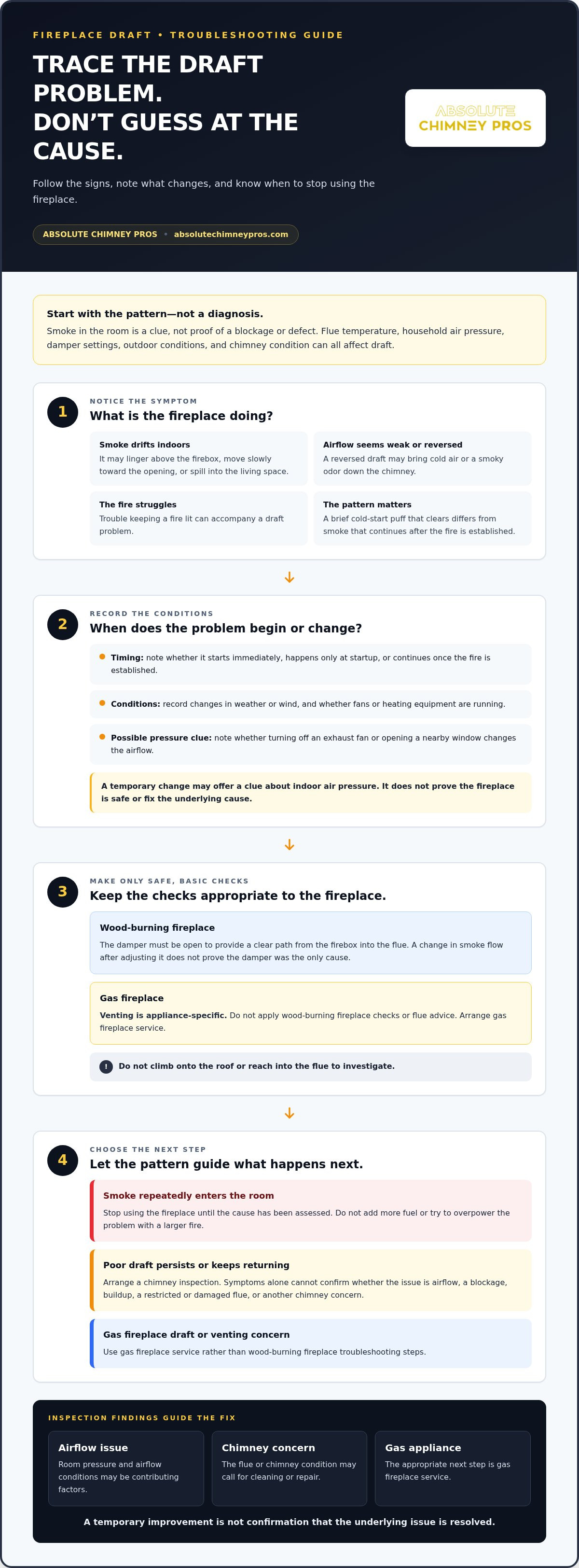
Use these checks to collect useful information, not to prove the fireplace is safe or pinpoint a defect. Keep observations simple. Don’t dismantle the fireplace, reach into the chimney, or change venting components. If smoke repeatedly enters the room, stop using the fireplace and arrange an inspection instead of continuing to troubleshoot.
A practical first-check sequence for wood-burning fireplaces
For a wood-burning unit, stick to what you can safely confirm from the room. Follow the fireplace manufacturer’s instructions, and don’t light another fire if smoke spillage has persisted or anything appears damaged. These steps help you record what’s happening without turning a symptom into a risky test.
- Identify the fireplace type. Note whether it burns wood or uses gas. Don’t apply wood-burning checks to a gas fireplace. For a gas unit, follow its appliance instructions and don’t adjust its venting.
- Check basic settings. For a wood-burning fireplace, confirm the damper is fully open before lighting. Make sure the firebox setup follows the appliance instructions. Don’t remove parts or force a stuck or damaged component.
- Observe the draft. If it’s safe to use, note whether smoke rises normally after startup, lingers, or enters the room. Record whether the issue appears only at startup or continues as the fire burns.
- Note surrounding conditions. Record whether kitchen or bathroom fans were running, interior doors were closed, or windows were open. Also note outdoor conditions, such as wind or a cold start. These details may help describe a pattern, but they don’t establish a diagnosis.
What information helps a technician assess the problem
A clear account helps an inspection focus on what changed and when. Write down the fireplace type, how often the problem occurs, whether it starts immediately or develops later, and whether it happens with fans running. Include changes in performance, such as a new odor or weaker draft. Don’t touch hot, loose, or visibly damaged components to investigate them.
- Note whether smoke enters the room or simply rises more slowly than expected.
- Describe any unusual odor and when you notice it.
- Record visible damage from a safe distance, without removing panels or parts.
- Include weather and room conditions that seem to coincide with the issue.
If symptoms persist, worsen, or leave you uncertain about safe use, stop troubleshooting and arrange a professional assessment. This measured process helps homeowners fixing a fireplace draft problem NJ distinguish a chimney concern from an airflow pattern before repair is recommended. Arrange a chimney inspection with Absolute Chimney Pros to identify the cause and determine the next step.
Get a Fireplace Draft Problem Diagnosed in New Jersey
Recurring poor draft calls for more than another temporary adjustment. The right next step depends on the fireplace type and inspection findings. A wood-burning fireplace may need chimney cleaning or repair, while a gas fireplace requires attention to its appliance and venting system. Identifying the cause first helps avoid guesswork and ties recommendations to the actual condition. In cases where chronic draft issues stem from an obsolete or improperly sized setup, upgrading to a modern unit can resolve persistent airflow problems; for example, those looking to buy fireplace paarl can explore closed-combustion units engineered for optimal draft efficiency.
What an inspection-led solution can clarify
Absolute Chimney Pros performs chimney inspections to assess the fireplace and chimney before recommending work. An inspection can help determine whether buildup calls for cleaning, a chimney component needs repair, or the findings point to another concern. The assessment guides the next step.
Work is performed by CSIA-certified, licensed, and insured technicians. If service is recommended, on-site estimates are provided with no hidden fees, and a flat-fee inspection option is available. This gives homeowners a clear basis for deciding what to do next instead of committing to a repair based only on smoke, odor, or a brief change in airflow.
When to schedule chimney or gas fireplace service
Schedule an assessment if poor draft returns after basic safe checks, continues during normal use, or leaves you unsure whether the fireplace is safe to operate. Stop using a fireplace if smoke repeatedly enters the living space. Share notes about when the problem occurs, including at startup, while fans are running, and under different outdoor conditions. Those details can help the technician understand the pattern, but they don’t replace an inspection.
For a wood-burning fireplace, inspection findings may point to chimney cleaning or repair. For a gas unit, use gas fireplace service rather than wood-burning troubleshooting steps. The New Jersey gas fireplace service checklist offers maintenance context for gas systems, which have different components and venting requirements.
Homeowners fixing a fireplace draft problem NJ can take a sensible next step by having the source assessed before choosing a remedy. Absolute Chimney Pros serves New Jersey homeowners with chimney inspection, cleaning, repair, and gas fireplace service. If your draft problem keeps returning, schedule a chimney inspection to identify what the fireplace needs.
Take the Next Step Toward a Reliable Fireplace
A fireplace should be ready to use with confidence, not leave you wondering whether smoke will drift back into the room. If the draft issue keeps returning, pause use and make an inspection your next step. Fixing a fireplace draft problem NJ homeowners face calls for a cause-based plan, not another temporary workaround. Clear findings can help you decide what to address before lighting another fire.
Absolute Chimney Pros serves New Jersey homeowners, with same-week appointments available. The team can assess the chimney and explain the appropriate next step based on its condition.
Schedule a chimney inspection with Absolute Chimney Pros to identify the cause of the draft problem and plan what to do next.
Frequently Asked Questions
Can cold weather cause a fireplace draft problem?
Yes. A cold chimney can make airflow less reliable when you first light a wood fire, especially after the fireplace has been unused. The draft may improve as the flue warms, but that pattern alone doesn’t confirm the chimney is clear or working properly. If smoke keeps spilling into the room, or poor draft returns after startup, stop using the fireplace and have the cause assessed.
Is it safe to use a fireplace if smoke comes back into the room?
No. If smoke repeatedly enters the living space, stop using the fireplace until the source has been checked. Smoke can irritate people in the home, and it may signal a venting or airflow problem. Don’t try to solve recurring spillage by building a larger fire or leaving a window open. If anyone feels unwell after smoke exposure, move to fresh air and seek appropriate medical advice.
Can opening a window improve a fireplace draft?
It can sometimes change airflow temporarily, particularly if indoor air pressure is contributing to the problem. For example, you might notice a change when a nearby window is open and an exhaust fan is off. That observation is only a clue. It doesn’t establish that the fireplace or chimney is safe, and keeping a window open isn’t a lasting repair.
Can a kitchen or bathroom exhaust fan affect fireplace draft?
Yes. An exhaust fan removes air from the home, and replacement air may be limited in a tightly sealed space. That pressure change can affect airflow near a fireplace. If the draft seems different when a range hood or bathroom fan is running, note the timing and share it during an assessment. Don’t assume turning off the fan resolves a recurring draft problem.
Does a chimney cap cause poor fireplace draft?
A cap can contribute if it’s damaged, obstructed by debris, or otherwise interfering with the flue opening. But a cap is only one possible factor, and poor draft doesn’t prove it’s at fault. Don’t climb onto the roof or remove the cap to test it. A chimney inspection can assess the cap alongside the flue and other components that affect venting.
How can I tell whether my fireplace draft problem needs professional attention?
Arrange an inspection if smoke repeatedly enters the room, draft remains poor during normal use, or the problem returns after basic checks. Keep a record of when it happens and any changes you’ve noticed, such as a new odor or unusual sound. When fixing a fireplace draft problem NJ homeowners should rely on an assessment if the cause is uncertain, rather than repeatedly trying temporary adjustments.
Are draft problems in gas fireplaces fixed the same way as wood-burning fireplaces?
No. Gas fireplaces use appliance-specific venting and controls, so wood-burning steps such as checking a traditional damper or observing a wood fire don’t apply in the same way. Don’t remove panels or adjust venting components yourself. If a gas unit has unusual odors, changes in operation, or a venting concern, stop using it and arrange gas fireplace service to assess the appliance.


