
What if the loose brick you noticed is only a symptom of water getting in elsewhere? With brick chimney repair South Jersey homeowners need more than a patch over visible damage. Cracked mortar, chipped bricks, or a leak near the chimney can point to different problems. Treating the wrong one may leave the source untouched.
It’s understandable to wonder whether a crack is minor or signals a larger repair. Water can enter through damaged mortar or the chimney crown and contribute to masonry deterioration. The next step is to assess the chimney as a whole, connecting visible damage with the components that may be causing it.
This guide covers common signs of brick chimney damage, how professionals assess a chimney, and how repair options can range from localized mortar work to broader masonry repairs. You’ll also learn what to record before an assessment and how an on-site estimate can clarify the proposed scope. Absolute Chimney Pros provides chimney inspections and repairs to New Jersey homeowners, including South Jersey, with work performed by CSIA-certified, licensed, and insured technicians.
Key Takeaways
- Cracked or loose bricks, missing mortar, leaning sections, and fallen masonry are signs to note and have assessed.
- Visible damage can have more than one cause. An assessment helps connect the symptoms to where water may be entering.
- Brick chimney repair South Jersey homeowners need can range from localized masonry work to broader restoration, depending on the findings.
- Record when damage appeared and whether leaks or loose material return. This history can help clarify the repair plan.
- Absolute Chimney Pros’ CSIA-certified, licensed, and insured technicians assess chimney damage and provide an on-site estimate outlining the proposed scope.
Brick Chimney Repair in South Jersey: What Damage Should Homeowners Notice?
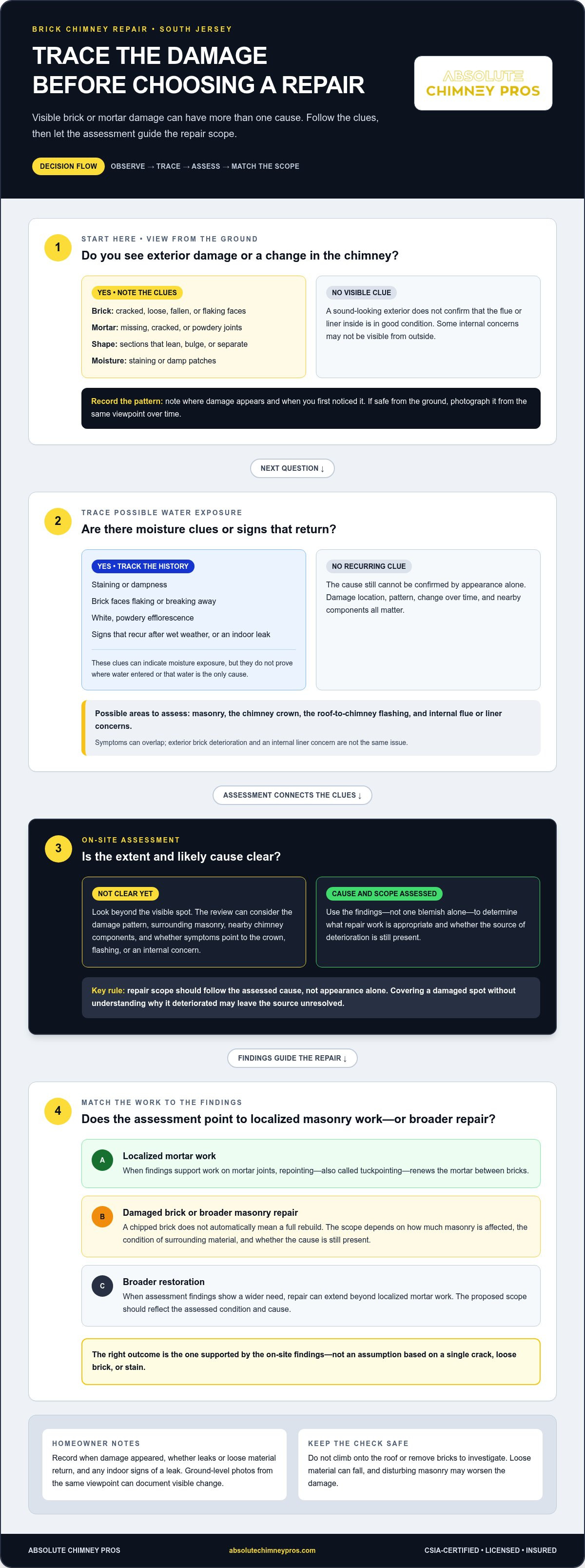
Cracks, loose bricks, or mortar that’s turning to powder can be unsettling. They deserve attention, but they don’t automatically mean the chimney needs a major rebuild. A careful assessment can explain what the visible signs may mean and what should be checked next. For brick chimney repair South Jersey homeowners benefit from identifying the likely cause before choosing a repair.
From the ground, look for these exterior warning signs:
- Cracked or loose bricks, including pieces that have fallen to the ground
- Missing, cracked, or powdery mortar between bricks
- Sections that appear to lean, bulge, or separate from the rest of the chimney
- Staining, damp patches, or brick faces that are flaking or breaking away
These clues help focus an inspection, but no single symptom establishes the full repair scope or structural condition. Exterior masonry is also separate from the flue and liner inside the chimney. A sound-looking brick surface doesn’t confirm that internal components are in good condition, and a liner issue may not be visible from outside. A chimney inspection helps assess what can’t be determined from a ground-level view.
Which brick chimney cracks, gaps, and loose bricks deserve attention?
Crack location, width, pattern, and change over time all help inform an assessment. A small crack and a widening gap across a section raise different questions, but appearance alone can’t confirm the cause. Missing or powdery mortar also warrants professional evaluation. Brick courses, beds, and bonds describe how masonry is arranged; the basics of brickwork help explain why the pattern of damage matters.
Note where cracks appear and when you first noticed them. If you can do so safely from the ground, take photos from the same viewpoint over time to document any visible change. Don’t climb onto the roof or remove bricks to investigate. Loose material can fall, and disturbing masonry may worsen the damage.
Can water damage look like ordinary brick or mortar wear?
Yes. Staining, dampness, spalling, when the brick face flakes or breaks away, and white, powdery efflorescence can all be clues of moisture exposure. They don’t prove where water entered or establish that water is the only cause. Location and history matter. Record when the signs appear, especially if they return after wet weather, and note any indoor signs of a leak.
For more on tracing possible water entry, see the chimney leak repair guide. A professional assessment can connect visible masonry symptoms with likely sources before recommending a repair.
Why Brick Chimneys Deteriorate in South Jersey: Trace the Cause Before Repair
Deterioration means a visible change in brick or mortar, such as cracking, crumbling, or flaking. It’s a reason to investigate, not a diagnosis. The same surface symptom can have different causes, and the repair plan depends on what’s driving the change. For brick chimney repair South Jersey homeowners should look beyond the damaged spot before settling on a fix.
How can moisture and seasonal weather affect brick and mortar?
Brick and mortar can absorb moisture. When absorbed moisture freezes, it expands and can stress the material. Repeated freezing and thawing may contribute to chipped brick faces or weakened joints. Wind-driven rain and recurring wetting may also expose masonry to moisture. These are possible factors, not proof of the cause. Conditions vary from chimney to chimney, so South Jersey weather alone can’t explain a specific area of damage.
Water can enter at different points, including the chimney top or the joint where the chimney meets the roof. Those areas involve different components, such as the crown and flashing. Damage inside the flue or to the liner is a separate concern from exterior brick deterioration. Symptoms can overlap, so an assessment should distinguish which parts need attention rather than assume every issue is a masonry failure.
Why should a repair assessment look beyond the visible spot?
A surface crack doesn’t show whether the problem is limited to one area or connected to a broader source of moisture. An on-site review can consider the damage pattern and location, nearby chimney components, and whether the symptoms point to masonry, the chimney top, flashing, or an internal concern. The NFPA 211 standard addresses chimney-related safety and maintenance, making it a useful reference alongside a professional evaluation.
Repair scope should follow the assessed cause, not appearance alone. Covering a damaged area without understanding why it deteriorated may leave the source unresolved. Absolute Chimney Pros’ CSIA-certified, licensed, and insured technicians assess chimney conditions before recommending repair. An on-site chimney assessment helps connect visible symptoms with an appropriate next step.
Brick Chimney Repair Options: When Is a Localized Fix Enough?
A chipped brick or worn mortar joint doesn’t automatically mean the chimney needs a full rebuild. The repair scope depends on how much masonry is affected, the condition of the surrounding material, and whether the cause is still present. For brick chimney repair South Jersey homeowners should expect recommendations to follow the assessment, not the appearance of one blemish.
What is the difference between repointing and replacing damaged brick?
Repointing, also called tuckpointing, renews mortar in the joints between bricks. It doesn’t replace the bricks themselves. It may be appropriate when mortar joints have deteriorated but the surrounding bricks remain suitable to keep in place. Replacing brick addresses individual units that are damaged or deteriorated. The right approach depends on the affected area and the condition of the adjacent masonry.
The distinction matters. Applying new mortar won’t correct a brick that needs replacement, while replacing sound bricks may be unnecessary. A professional assessment can determine whether the concern is limited to mortar, individual bricks, or a wider area.
When might a repair need to address more than one chimney area?
Damage in several locations, or deterioration that extends beyond the first visible spot, may call for a broader repair scope. The assessment should account for the extent of the affected material and any contributing cause. A clear on-site estimate can explain the proposed work and why the repair covers one area or several.
Some chimney components are related to water entry but aren’t brick repairs. The crown protects the masonry at the top, flashing seals the roof-to-chimney joint, and the liner sits inside the flue. If findings point to concerns in those areas, they should be distinguished from masonry work rather than treated as the same repair. A chimney inspection safety checklist can help homeowners understand what an inspection may consider, while the assessment clarifies which components need attention.
Repair decisions are specific to the chimney. A localized repair may be appropriate when damage is limited and the surrounding masonry is in sound condition. Broader restoration may be considered when deterioration spans multiple areas or the assessment identifies a more extensive problem. No single method suits every chimney.
Absolute Chimney Pros provides chimney inspection and repair with CSIA-certified, licensed, and insured technicians. The Chimney Safety Institute of America offers information about chimney safety and professional certification. An assessment and on-site estimate connect the observed condition to a clearly defined repair scope.
Planning Brick Chimney Repair in South Jersey: Assessment and Homeowner Steps
A few clear notes can make a chimney assessment more useful. Track what you’ve observed, share when it started, and let a professional evaluate the condition before repair work is planned. This context helps connect visible symptoms with an appropriate next step for brick chimney repair South Jersey homeowners may need.
What should homeowners document before an on-site assessment?
Observe from the ground. Note the location of cracks, missing mortar, loose material, or stains, and when you first noticed each change. Record whether leaks or falling debris recur and whether the damage became noticeable after a storm or another weather event. Photos taken from a safe, consistent viewpoint can help you compare what you see over time. Don’t climb onto the roof, remove mortar, or attempt a temporary structural repair. Leave close inspection and repair work to a professional.
What can homeowners expect from an inspection and estimate?
A professional assessment helps clarify the observed condition and likely repair scope. It can also help distinguish exterior masonry concerns from issues involving other chimney components. If you’ve noticed water entry, the chimney leak repair in New Jersey guide provides additional context as you prepare to describe your observations.
Absolute Chimney Pros provides on-site estimates with no hidden fees. The estimate outlines the proposed work based on the assessment, without assuming that every crack needs the same repair. Chimney work is performed by CSIA-certified, licensed, and insured technicians.
Use this sequence to stay organized:
- Note symptoms. Record what you see from the ground, where it appears, and when it began.
- Arrange an assessment. Share your observations, including any recurring leaks or loose material.
- Review the findings. Understand which areas and components are affected and what the assessment indicates.
- Plan the repair. Use the findings and on-site estimate to decide on the appropriate scope.
Clear information supports a more informed repair plan. Learn about a chimney assessment.
Choosing Brick Chimney Repair in South Jersey: A Clear Path to Safer Masonry
Choosing a repair starts with three steps: identify the symptoms, understand their likely cause, and match the repair scope to the assessment findings. A crack, missing mortar, or loose brick is useful evidence, but it doesn’t determine the full condition of the chimney by itself. The goal is a clear explanation of what’s affected and why the recommended work fits.
What makes a repair recommendation clear and useful?
A useful recommendation connects the observed damage to its likely cause, then explains the work proposed to address it. For example, the assessment should make clear whether the concern is limited to mortar joints, involves damaged bricks, or extends to other areas. An on-site estimate with no hidden fees gives homeowners a straightforward way to understand the proposed scope before planning repairs.
Absolute Chimney Pros offers a flat-fee chimney inspection option, so homeowners can begin with an assessment instead of guessing from surface signs. The findings guide the next step. A repair recommendation should be based on the chimney’s condition, not on a promise that one method will suit every structure or prevent all future wear.
How can a local professional help protect your chimney?
South Jersey homeowners can use a professional assessment to clarify whether visible masonry changes point to localized damage or a broader concern. Absolute Chimney Pros’ CSIA-certified, licensed, and insured technicians assess chimney conditions before advising on repair scope. That step matters because exterior brick, mortar joints, the chimney top, and internal components can each raise different questions.
For brick chimney repair South Jersey homeowners should look for a process that makes the reasoning clear: what was observed, what may be causing it, and how the proposed work responds to those findings. An on-site estimate outlines the repair plan, while an inspection provides context before decisions are made. There’s no need to assume the worst from one visible blemish. A timely assessment can clarify the next step without overstating the danger.
If you’ve noticed changes in your chimney’s brick or mortar, review chimney repair and assessment services from Absolute Chimney Pros.
Take the Next Step Toward a Sounder Chimney
Cracked bricks, deteriorating mortar, and signs of moisture deserve attention, but they don’t automatically call for a full rebuild. The right repair depends on an assessment that connects visible damage to its likely cause and clarifies which chimney areas need work. That’s the foundation of a careful plan for brick chimney repair South Jersey homeowners can make with confidence.
Absolute Chimney Pros’ chimney work is performed by CSIA-certified, licensed, and insured technicians. Homeowners can choose a flat-fee inspection option and receive an on-site estimate with no hidden fees, so the proposed scope is clear. Same-week appointments are available.
If you’ve noticed changes in your chimney, schedule an assessment with Absolute Chimney Pros. Book a brick chimney assessment and get a clear evaluation of the next steps.
Frequently Asked Questions
What are the signs that a brick chimney needs repair?
Cracked or loose bricks, missing or powdery mortar, leaning or bulging sections, and pieces on the ground can signal a need for professional evaluation. Staining, damp areas, flaking brick faces, or white deposits may also be clues of moisture exposure. These signs don’t determine the full repair scope on their own. For brick chimney repair South Jersey homeowners should have the damage assessed before deciding whether the issue is localized or more extensive.
Can cracked bricks or missing mortar cause a chimney leak?
Yes, damaged bricks or open mortar joints can allow water to enter the masonry, but they aren’t the only possible source of a leak. Water may also get in around the chimney crown or flashing, where the chimney meets the roof. A damp patch indoors doesn’t reveal the entry point by itself. An assessment can help connect the visible symptoms to the affected chimney component and guide the next step.
How do I know whether my chimney needs repointing or brick replacement?
Repointing renews deteriorated mortar joints while leaving suitable bricks in place. Brick replacement may be considered when individual bricks are cracked, spalling, or otherwise too damaged to remain. The right choice depends on the condition of the bricks, mortar, and surrounding masonry, as well as the likely cause of deterioration. A professional assessment helps distinguish a joint problem from damage to the brick units themselves.
Is a small crack in a brick chimney dangerous?
A small crack doesn’t automatically mean the chimney is unsafe or needs major work, but it shouldn’t be judged by size alone. Its location, pattern, and whether it changes over time all matter. A crack near other signs of movement, loose bricks, or recurring moisture deserves prompt professional attention. Avoid climbing onto the roof to inspect it. A chimney professional can assess the visible masonry and recommend appropriate next steps.
What happens if I leave damaged chimney mortar unrepaired?
Damaged mortar may continue to deteriorate, leaving joints more open to moisture and reducing support between bricks. Repeated wetting and freezing can contribute to further masonry wear, although the effect depends on the chimney’s condition and exposure. Ignoring a small area doesn’t prove that a larger repair will be needed, but it can make the cause harder to address early. An assessment can clarify the condition and appropriate repair scope.
Can a chimney inspection identify the cause of brick damage?
A chimney inspection can help identify the affected areas and determine whether symptoms may relate to masonry, moisture entry, or another component. The inspection may consider exterior brick and mortar alongside the crown, flashing, and internal flue or liner, as appropriate. No photo or single symptom can establish the full cause. Absolute Chimney Pros’ technicians assess chimney conditions and provide an on-site estimate explaining the proposed repair scope.
Should I use my fireplace if bricks or mortar are falling from the chimney?
If bricks or mortar are falling, stop using the fireplace until the chimney has been professionally assessed. Falling material is a clear reason to keep people away from the area below the damage and avoid trying to remove loose pieces yourself. Exterior masonry damage doesn’t reveal the condition of the flue or liner. An inspection can help determine whether the chimney is suitable for use and what repair or follow-up is needed.


