

What if the cleaner that clears your fireplace glass is also the one that scratches it? When soot or a cloudy film blocks your view of the flames, it’s tempting to reach for a quick fix. But gas fireplace glass needs careful handling, and removing it or disturbing its seal can create a safety concern. Knowing how to clean gas fireplace glass starts with identifying the residue and checking your appliance manufacturer’s instructions.
This guide covers a safe cleaning sequence, from shutting off the gas and letting the unit cool completely to choosing compatible cleaning materials. You’ll also learn why white film and dark soot can form, what to avoid, and when to stop. Residue that returns, damaged seals, or unusual fireplace operation may call for professional attention rather than another round of scrubbing.
Key Takeaways
- Identify whether the buildup is soot or cloudy film, but don’t rely on its appearance alone to diagnose the cause.
- For how to clean gas fireplace glass safely, use the appliance manual to guide each step and cleaning-material choice.
- Choose a soft cloth and a cleaner approved for your fireplace model. Abrasive or unapproved products may damage the glass or its coating.
- Stop if the glass is cracked, won’t secure as instructed, or haze and residue keep returning.
- When buildup or fireplace operation seems abnormal, professional gas fireplace service can help assess the appliance and its components.
How to clean gas fireplace glass starts with understanding the residue
Let the fireplace cool completely, then check its manual before cleaning the glass. Gas fireplace glass is part of the appliance, not a generic window. Its material, coating, and mounting affect which cleaners and methods are suitable. If the manual is missing, find the model number on the appliance and use the manufacturer’s instructions for that unit.
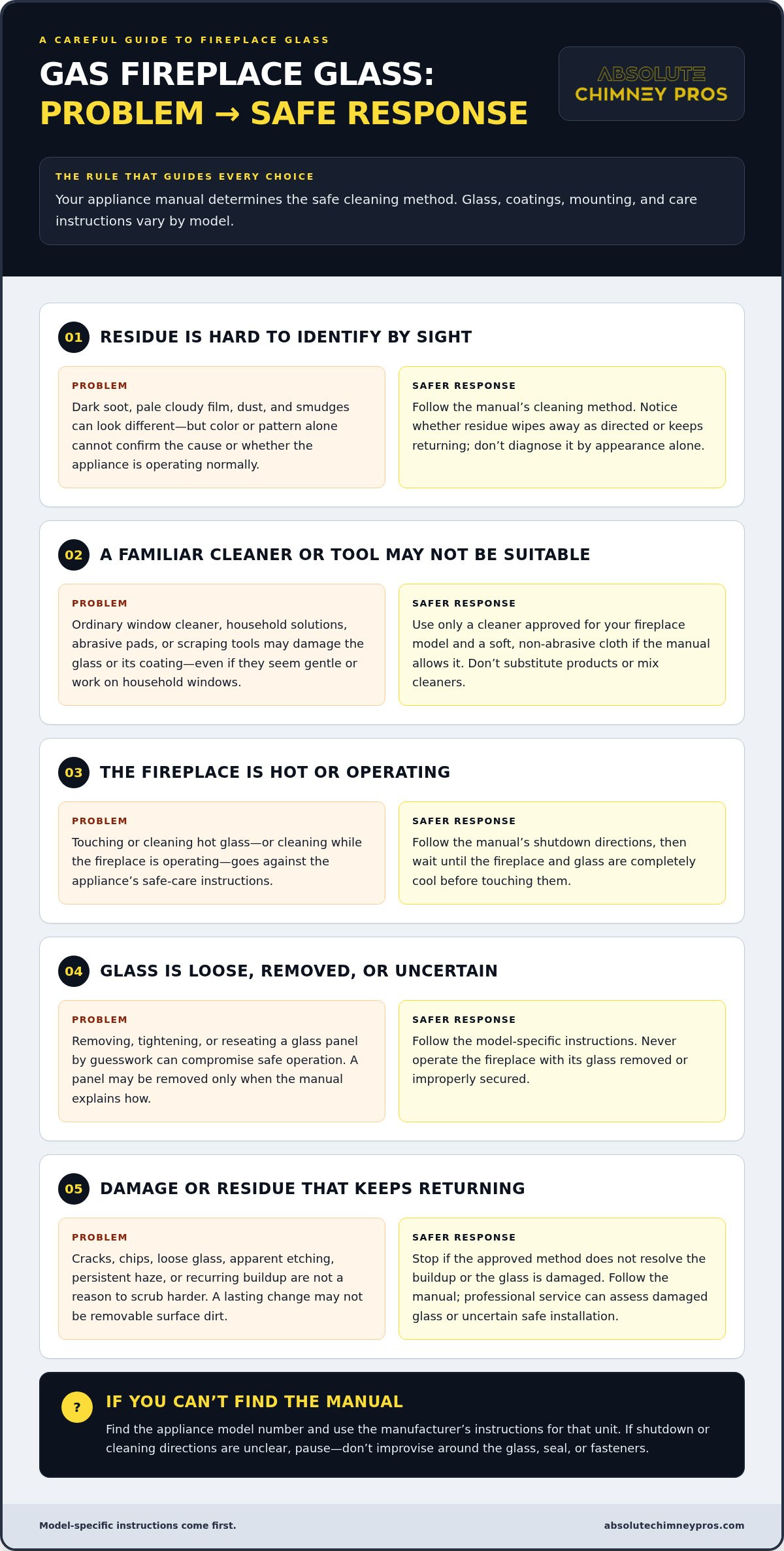
The appliance manual determines the safe cleaning method because glass materials, coatings, and care requirements vary by model.
What causes soot and cloudy film on gas fireplace glass?
Dark soot, pale cloudy film, dust, and smudges can all affect the view, but they don’t necessarily have the same cause. Combustion produces byproducts of combustion, and deposits may collect on the glass. Dust and other airborne particles can settle there too. Color or pattern alone can’t confirm what caused the buildup or whether the appliance is operating normally.
Notice whether the residue wipes away using the method in your manual or keeps returning after cleaning. Recurring buildup deserves attention, not harder scrubbing. Removable surface residue is different from persistent haze, apparent etching, cracks, or another change in the glass itself. Don’t treat damage or a lasting change as dirt.
Why does gas fireplace glass need special care?
Fireplaces can use different glass and coatings, and care instructions vary by model. A cleaner or tool that seems gentle on ordinary glass could still be unsuitable for a fireplace surface. Don’t assume household window cleaner, abrasive pads, or a scraper is safe unless the manual specifically permits it.
Never clean a hot or operating fireplace. Wait until the appliance is completely cool, then follow the manual’s shutdown and glass-care directions before touching the glass. If the instructions call for a specific cleaner or method, don’t substitute a product based on appearance alone.
Stop if you find a crack, damage, or buildup that doesn’t respond to the approved method. Repeated force can make the situation worse without addressing the cause. Follow the manual’s guidance for the appliance rather than continuing to scrub.
Before cleaning gas fireplace glass, check the manual and prepare safely
Before deciding how to clean gas fireplace glass, locate the appliance manual and read its instructions for shutdown, glass care, and removal. Procedures vary by model. Follow the shutdown steps, then wait until the fireplace and glass are completely cool before touching them. Never clean a hot or operating unit.
Use only materials the manufacturer approves for your specific glass. The wrong cleaner or tool may damage a coating or surface, even if it seems gentle. Don’t remove the glass unless the manual specifically explains how to do so. A glass panel that’s removed or improperly secured can compromise the appliance’s safe operation. Never operate the fireplace with its glass removed or improperly secured.
What supplies should you gather?
Keep the setup simple and specific to your model. If the manual permits, gather:
- A soft, non-abrasive cloth approved for the glass surface.
- A cleaner specifically approved by the manufacturer for your fireplace model.
Don’t substitute ordinary window cleaner, abrasive pads, or scraping tools unless the manual explicitly allows them. A product that works on household windows may not be suitable for fireplace glass. Follow the cleaner’s directions, and don’t mix products.
Preparation is also a safety step. The U.S. Environmental Protection Agency lists unvented gas fireplaces among potential sources of combustion products indoors. Don’t bypass appliance instructions or operate the fireplace without its glass properly in place.
When should you stop before starting?
Don’t begin if the glass is cracked, chipped, loose, or otherwise damaged. Don’t try to tighten or reseat a panel unless the manufacturer’s instructions clearly describe that process. The glass and its seal are appliance components, not parts to adjust by guesswork.
Pause if you can’t find the manual or its cleaning and shutdown directions are unclear. Don’t improvise around the glass, seal, or fasteners. Use the manufacturer’s model-specific instructions, or arrange professional gas fireplace service if the glass is damaged or its safe installation is uncertain.
Choose a gas fireplace glass cleaner without risking scratches or damage
The right cleaner depends on your fireplace, not just the residue on the glass. Gas fireplace panels may differ in glass type or surface coating, so a product suitable for one unit may not suit another. Start with the cleaner specified or approved in the appliance manual. The fireplace manual takes priority over generic cleaning advice.
Which cleaner is safe for gas fireplace glass?
Use the cleaner recommended by the manufacturer, or one the manual explicitly approves for your model. A product marketed for windows isn’t automatically safe for fireplace glass. Its ingredients may be incompatible with the panel or coating, even if it leaves ordinary windows clear. Don’t choose a cleaner based only on a “glass cleaner” label.
The same rule applies to homemade solutions. Don’t use vinegar, ammonia, or another household product unless the manual permits it. If the manual names no cleaner, don’t guess. Follow the manufacturer’s instructions for the appliance model before applying anything to the glass.
Which tools can scratch or harm the glass?
A soft, non-abrasive cloth is often the gentlest option, but use one only if the manual allows it. Avoid steel wool, abrasive scouring pads, and scraping tools unless the manufacturer explicitly approves them. Razor blades can seem like a quick fix for stuck-on residue, but don’t use one without clear model-specific instructions.
Coated glass calls for particular care. Forceful rubbing or an unsuitable tool may scratch the surface or affect a coating. Pressing harder can also spread residue rather than remove it. Follow the manual’s directions for applying cleaner and wiping the panel, using light pressure.
- Approved cleaner: Use only the product specified or approved for your fireplace.
- Soft cloth: Choose a non-abrasive cloth only if the manual says it’s suitable.
- Abrasives and scrapers: Avoid them unless the manufacturer expressly permits their use.
If residue resists gentle cleaning, stop. Don’t escalate to stronger chemicals, rougher materials, or more force. Stubborn or recurring buildup may need attention beyond routine glass cleaning. Choosing supplies carefully is a key part of how to clean gas fireplace glass without risking avoidable damage.
How to clean gas fireplace glass: follow these careful steps
Use this sequence only if your appliance manual permits homeowner glass cleaning. Follow its shutdown instructions first, and don’t remove the glass unless the manual specifically explains how. Keep the panel, seal, and hardware undisturbed unless the instructions explicitly direct otherwise.
- Shut down the fireplace as directed. Follow the manual’s procedure, then wait until the appliance and glass are completely cool. Don’t start while any part is hot.
- Inspect the glass before cleaning. Look for cracks, chips, looseness, or other visible damage. Stop if you find any. Don’t clean or operate an appliance with damaged or unsecured glass.
- Prepare the approved cleaner. Use only a cleaner the manual specifies or approves. Apply it as directed, keeping it away from areas or components the instructions say to avoid. Don’t spray indiscriminately around the panel.
- Wipe gently. Use a compatible soft cloth and the motion or method described in the manual. Avoid excess pressure, scraping, and contact with seals or hardware. If residue resists gentle cleaning, stop rather than switching to a harsher tool or product.
- Remove residue and let the glass dry. Follow the manual’s directions for removing any remaining cleaner. Allow the panel to dry as instructed before considering operation.
If buildup won’t come away using the approved method, don’t keep scrubbing. Learn about gas fireplace service for persistent residue or concerns about the appliance.
What should you check before using the fireplace again?
Before restarting, confirm the glass and any fasteners you were permitted to handle are secured exactly as the manufacturer directs. Don’t light the fireplace if the panel, seal, or assembly appears loose, shifted, or disturbed. Never operate the unit with its glass removed or improperly secured.
Use the manual’s restart and operating instructions. There’s no universal restart sequence for every model, so don’t improvise or skip steps. If you’re uncertain whether the glass is properly installed, leave the fireplace off and arrange professional service.
When gas fireplace glass needs service in New Jersey
Some surface residue may come away with the cleaner and cloth approved for your fireplace. That’s different from cracked glass, a damaged seal, loose components, or haze that returns soon after cleaning. These signs call for caution, not stronger chemicals or more forceful scrubbing.
Which glass problems should not be handled with more scrubbing?
Stop DIY cleaning if you notice a crack, chip, damaged seal, or glass that feels loose or won’t stay secured as the manual directs. Don’t use the fireplace if the glass is damaged or its assembly can’t be secured correctly. Keep it off until the appliance has been assessed.
Persistent haze or residue that quickly returns also deserves attention. It may have more than one possible cause, and appearance alone can’t confirm a combustion, venting, or appliance problem. Don’t try to diagnose the fireplace from the glass or switch to harsher products. Note what you see and when the buildup returns, then have the unit assessed if the issue persists.
How can professional service help with recurring glass issues?
Professional service can include an assessment of the gas fireplace and its maintenance needs, rather than focusing only on the visible glass. A technician can examine the appliance and its components to help determine the appropriate next step. This is a sensible option if residue keeps returning, the glass or seal appears abnormal, or fireplace operation seems different.
For additional maintenance context, see this guide to gas fireplace service in New Jersey. Absolute Chimney Pros serves homeowners in New Jersey and Philadelphia-area communities, with gas fireplace service performed by CSIA-certified, licensed, and insured technicians. If the glass is damaged, the seal looks compromised, or recurring buildup has you concerned, professional service can assess the appliance. A careful assessment can help address the concern without guesswork.
Keep your fireplace glass clear and your next step safe
Safe glass care starts with the appliance manual. Let the fireplace cool completely, use only approved cleaning materials, and keep the glass, seal, and hardware intact. Ordinary residue may respond to gentle cleaning, but recurring haze or visible damage calls for more than another round of scrubbing. That’s the key to understanding how to clean gas fireplace glass without guessing about the cause or risking damage.
If the glass is cracked, loose, or difficult to secure as instructed, leave the fireplace off. A professional assessment is also a sensible next step when buildup keeps returning or the unit’s operation seems abnormal. Absolute Chimney Pros provides gas fireplace service for homeowners in New Jersey and Philadelphia-area communities. Service is performed by CSIA-certified, licensed, and insured technicians.
Schedule professional gas fireplace service if you need help assessing a glass or appliance concern. With the right care and support, you can enjoy a clearer view and greater confidence in your fireplace.
Frequently Asked Questions
How do you clean the inside glass of a gas fireplace?
Follow the appliance manual’s shutdown and glass-cleaning instructions, and wait until the fireplace is completely cool. Use only a cleaner and soft cloth approved for your specific model. Clean only areas you can safely reach as directed. Don’t remove the glass unless the manual explains how, and never disturb seals or hardware. If the glass is damaged or residue won’t lift with gentle cleaning, stop and arrange an assessment.
Can you use Windex or vinegar on gas fireplace glass?
Use Windex, vinegar, or any other household cleaner only if the fireplace manufacturer specifically approves it for your model. Products made for ordinary windows may be unsuitable for fireplace glass or its coating. Check the manual for the approved cleaner and wiping method rather than testing a product on the panel. If the instructions don’t clearly permit a cleaner, don’t apply it or mix cleaning products.
How do you remove white film from gas fireplace glass?
Use the cleaner and method specified in the appliance manual, applying it gently with a compatible soft cloth. White film can have different causes, so its appearance alone can’t confirm what left the deposit. Don’t switch to vinegar, abrasive pads, or stronger chemicals unless the manufacturer approves them. If the haze remains or returns soon after approved cleaning, stop scrubbing and have the fireplace assessed.
Why does my gas fireplace glass turn black?
Black residue is often soot, but the glass alone can’t show exactly why it formed or confirm that the fireplace is operating correctly. Possible contributors include dust or incomplete combustion, which can occur if a log set is improperly placed. Don’t move logs or adjust appliance parts based only on the glass. If soot returns after cleaning or operation seems abnormal, stop and arrange professional service.
Should gas fireplace glass be hot or cold before cleaning?
The glass must be completely cool before you touch or clean it. Turn off the fireplace and follow the appliance manual’s shutdown instructions, then allow the unit to cool fully. Don’t judge by appearance or assume the surface is safe because the flame is off. Cleaning hot glass risks injury and may conflict with the manufacturer’s care instructions. Never clean the glass while the fireplace is operating.
Can you run a gas fireplace with the glass removed?
No. Don’t operate a gas fireplace with its glass removed or improperly secured. The glass and its seal are components of the appliance, and the unit must be assembled as the manufacturer directs. Only remove the panel if the manual specifically describes the process, and follow its instructions for securing it afterward. If the glass or seal looks disturbed, leave the fireplace off until it can be assessed.
When should you call a professional about gas fireplace glass?
Arrange professional service if the glass is cracked, chipped, loose, or cannot be secured as directed, or if haze and soot keep returning despite approved cleaning. Don’t try to diagnose a venting or combustion issue from residue alone. Homeowners in New Jersey and Philadelphia-area communities can turn to Absolute Chimney Pros for gas fireplace service. Work is performed by CSIA-certified, licensed, and insured technicians.


