

A fireplace can be off and still hot enough to burn a child. Gas fireplace glass can remain hot after the flames are out, so an annual inspection is an important part of child safety gas fireplace service in Philadelphia. Keep children at least three feet away and use a protective barrier around the fireplace.
It’s natural to focus on the flames, but the glass and venting system also need attention. This guide covers burn and carbon monoxide risks, practical ways to protect children, and when to arrange service. Learn how barriers, safe distances, and adult supervision can reduce exposure, and why an annual inspection helps check that the fireplace is working properly. The goal is to make fireplace use safer for your household, even after the fire is out.
Key Takeaways
- Learn why fireplace glass can cause serious burns, even after the flames are out, and how to create a safer area for young children.
- Place carbon monoxide detectors on every level of your home, especially near sleeping areas, and understand how a venting problem can put indoor air at risk.
- Keep fireplace controls out of children’s reach, supervise them nearby, and turn the fire off before leaving home or going to sleep.
- Find out what an annual gas fireplace inspection can help assess and which warning signs call for service sooner.
Burn risk for toddlers and children under 2
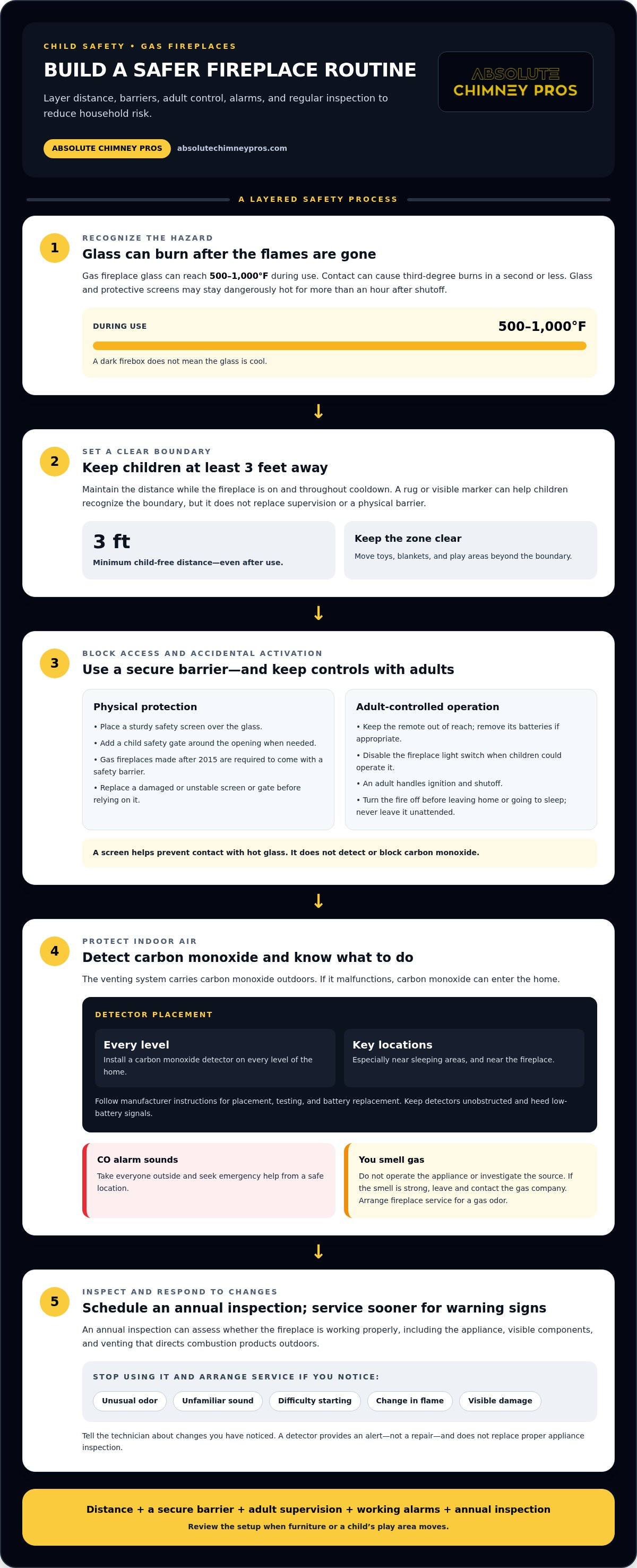
Gas fireplace glass can reach 500-1000 degrees Fahrenheit during use. Contact can cause third-degree burns in a second or less. A toddler may reach toward the glass before an adult can intervene. The flames aren’t the only hazard. The glass and protective screen can remain dangerously hot after the fire is turned off, sometimes for more than an hour.
Keep children at least three feet from the fireplace, including after use. Don’t assume a dark firebox is cool. Glass can still cause serious burns after the flames disappear, so maintain the boundary until the unit has cooled. A rug or another visible marker can help toddlers recognize where to stop, but it does not replace adult supervision or a physical barrier.
Place a safety screen over the glass to prevent direct contact. For a young child who moves quickly, add a sturdy child safety gate around the fireplace opening. Make sure the screen and gate remain secure during use and cooldown. If either is damaged or unstable, keep children away and replace it before relying on it for protection.
- Keep toys, blankets, and play areas beyond the three-foot boundary.
- Keep the fireplace remote out of children’s reach to prevent accidental activation.
- Assign an adult to turn the unit off and maintain the child-free zone afterward.
Children younger than four face the greatest risk of death and injury from home fires. That broader fire risk makes supervision and working household alarms important alongside fireplace barriers. Teach children that fireplace glass is unsafe to touch, even when it looks cool. In Philadelphia homes, these steps help limit access to a serious burn hazard without relying on a child’s judgment.
2. Carbon monoxide risks from gas fireplaces
A gas fireplace’s venting system carries carbon monoxide outdoors. If the system malfunctions, carbon monoxide can enter the home. Since children may not recognize warning signs, adults need working detectors and a clear response plan. A fireplace screen helps limit contact with hot glass, but it cannot detect or block carbon monoxide.
Install a carbon monoxide detector on every level of your Philadelphia home, especially near sleeping areas. Place one near the fireplace, too, to alert occupants to a possible appliance problem. Follow the manufacturer’s instructions for placement, testing, and battery replacement. A dead battery or disabled alarm leaves the household without that warning.
If a carbon monoxide alarm sounds, take everyone outside and seek emergency help from a safe location. If you smell gas near the fireplace, don’t operate the appliance or investigate the source yourself. If the smell is strong, leave the home and contact the gas company. Arrange fireplace service if you notice a gas odor.
- Test alarms according to their instructions, and replace batteries as directed.
- Keep detectors unobstructed and listen for alerts or low-battery signals.
- Have the fireplace’s ventilation system inspected if you notice a problem or suspect malfunction.
Annual inspection can help assess whether the fireplace is operating properly, including its venting. If you’re concerned about the appliance’s ventilation or operation, a professional fireplace safety assessment can help identify issues that need attention. Don’t treat a detector as a substitute for proper appliance inspection; it provides an alert, not a repair.
3. Fireplace safety
Keep children at least three feet from a gas fireplace, including when flames are burning. A rug or visual marker can make that safe distance easier for a child to recognize, but supervision remains essential. Teach children not to approach or operate the fireplace without an adult.
A protective barrier helps prevent direct contact with hot glass. Gas fireplaces made after 2015 are required to come with a safety barrier. For an older unit, use a sturdy safety screen or a multi-panel gate around the fireplace opening. An adjustable playpen can also form a barrier, provided it stays securely positioned and doesn’t obstruct the fireplace.
What child safety screens or barriers are recommended for gas fireplaces? Use a sturdy screen over the glass, or position a child safety gate around the opening to block access. For an older fireplace, the manufacturer may offer a retrofit screen.
What childproofing options prevent children from accessing gas fireplace controls? Keep remotes out of reach, remove their batteries, or disable the fireplace’s light switch when children could operate it. An adult should control ignition and shutoff.
Make safety part of the household routine. Turn the fireplace off before leaving home or going to sleep, and never leave it unattended. Keep pets away as well. When visiting another home or staying at a hotel, check whether children can reach a fireplace or its controls, then supervise them accordingly.
- Keep the area around the fireplace clear of toys and items children may reach for.
- Show children the visible boundary, then reinforce that only an adult operates the unit.
- Make one adult responsible for checking that the fireplace is off before bedtime or departure.
These precautions work together: a barrier limits access, control precautions reduce accidental ignition, and consistent adult supervision accounts for changing situations. Review the setup whenever furniture or a child’s play area moves.
4. Having a gas fireplace serviced
Have a gas fireplace inspected annually to check that it’s working properly. An inspection can assess the appliance, its visible components, and the venting that directs combustion products outdoors. If the fireplace behaves differently during heating, develops an unusual odor, or shows visible damage, stop using it and arrange service. A fault in the appliance or venting can create a dangerous condition.
Child safety gas fireplace service in Philadelphia should address household safety concerns as well as the appliance’s operation. Tell the technician about changes you’ve noticed, such as an unfamiliar sound, difficulty starting the fireplace, or a change in the flame. Keep children away from the work area during the assessment.
Permit and code requirements for Philadelphia installations or repairs can depend on the work involved, including changes to the appliance, gas connections, or venting. Before work begins, clarify the requirements that apply to the specific job through Philadelphia’s permitting process. Don’t assume a repair and a new installation follow identical requirements.
When assessing a technician’s credentials in Pennsylvania, request license information and proof of insurance, then make sure the documents match the technician and business doing the work. Absolute Chimney Pros’ technicians are licensed and insured. Ask for a clear explanation of the inspection findings and any recommended corrective work.
A child safety gas fireplace service Philadelphia families arrange should leave them with a practical understanding of the fireplace’s condition and next steps. For an inspection or service visit, arrange gas fireplace service and describe the issue you’ve noticed.
Absolute Chimney Pros: Chimney Sweep
Absolute Chimney Pros helps homeowners address chimney concerns with chimney inspections, sweeping, repairs, and liner installation. If your home has a chimney, an inspection can assess its condition and identify issues that may need attention. A chimney sweep addresses buildup, while repairs and liner installation address other chimney needs. These services complement fireplace safety practices but do not replace precautions around hot glass, child barriers, carbon monoxide alarms, or gas fireplace service.
Consider a chimney inspection if you notice damage or have concerns about your chimney’s condition. A professional assessment can clarify what chimney work is appropriate. Absolute Chimney Pros provides on-site estimates, and its technicians are licensed and insured.
Contact Absolute Chimney Pros to arrange a chimney inspection or sweeping for your home.
Make the Next Fireplace Decision a Safety Step
Make safety a household routine: control access, maintain working alarms, and act promptly when the fireplace shows a problem. For child safety gas fireplace service in Philadelphia, arrange an inspection or service when due. Barriers alone cannot address an appliance problem.
Absolute Chimney Pros provides chimney sweeping and inspections, as well as chimney liner installation. These services address chimney needs, while gas fireplace service focuses on the fireplace itself. Choose the service that matches your home’s concern, and keep the distinction clear.
Taking a practical next step can make fireplace safety easier to manage. Contact Absolute Chimney Pros today to discuss the service your home needs, and move forward with a clear plan.
Frequently Asked Questions
What does gas fireplace inspection and maintenance cost in Philadelphia?
The cost depends on the fireplace’s condition, the work required, and whether repairs or parts are needed. Inspection, cleaning, and repair are different scopes of service, so describe the issue and appliance when requesting a quote. The price depends on the case and is provided after a quote request; the main factors are the service scope, access, condition, and any corrective work.
How often should a gas fireplace be professionally serviced?
Have a gas fireplace inspected annually to check that it’s working properly. Arrange service sooner if you notice a concern with the fireplace. For example, don’t repeatedly restart a fireplace that has stopped working normally. Tell the technician what changed and when you first noticed it so the assessment can focus on the concern.
What safety checks should a gas fireplace technician perform?
Ask the technician to assess the fireplace’s operation and venting, since a malfunctioning venting system can release carbon monoxide indoors. The technician can also examine visible damage and the glass barrier, then explain any concerns and recommended work. Before the visit ends, request a clear summary of the findings and instructions for using the appliance safely after service.
How hot can a gas fireplace glass front get, and what burn risks does it pose to children?
Gas fireplace glass can reach 500-1000 degrees Fahrenheit, and contact can cause third-degree burns in a second or less. The glass may remain hot after the flames are off, so appearance alone can’t confirm it’s safe to touch. Children younger than four face the greatest risk of death and injury from home fires, making supervision and a barrier important.
What are the warning signs of a gas leak or carbon monoxide problem near a fireplace?
A gas odor near the fireplace is a warning sign. If the smell is strong, leave the home and contact the gas company. Treat a carbon monoxide alarm as urgent: take everyone outside and seek emergency help from a safe location. Since a malfunctioning fireplace vent can release carbon monoxide indoors, stop using the appliance if you suspect a venting problem.


