
A fireplace safety inspection for family peace of mind in NJ checks the firebox, chimney, flue, damper, and ventilation for hazards. For gas fireplaces, it also examines gas lines, burners, and ignition systems. These checks can identify creosote buildup, cracks, faulty components, or ventilation problems that may increase fire or carbon monoxide risk.
A working fireplace offers comfort, but hidden wear and buildup deserve attention before the next fire. A careful inspection clarifies the condition of key components, so you can plan maintenance or repairs based on what the fireplace actually needs.
This guide explains what inspectors examine, how ventilation checks address smoke and carbon monoxide concerns, and which findings may call for cleaning or repair. You’ll also learn practical ways to reduce everyday risks around the hearth and make informed decisions about fireplace care in your New Jersey home.
Key Takeaways
- Learn which fireplace and gas components an inspection examines, from the flue and damper to burners and ignition systems.
- Keep the damper open before lighting a fire and until the fire is out and the embers are cold.
- Understand how creosote, cracks, and ventilation problems can raise fire or carbon monoxide concerns.
- Keep children, pets, and combustible items at least three feet from heat sources, and maintain smoke and carbon monoxide alarms on every level.
- Use inspection findings to understand whether cleaning, maintenance, or repairs may be needed.
Carbon monoxide prevention and ventilation
Ventilation checks assess how combustion gases move through the fireplace and chimney. The damper, airflow path, and household alarms each play a role in safety.
A fireplace safety inspection for family peace of mind in NJ examines connected components, not just the visible hearth. A technician can assess the ventilation route and report concerns that may affect how smoke and gases exit the home.
Carbon Monoxide Alarm Checks
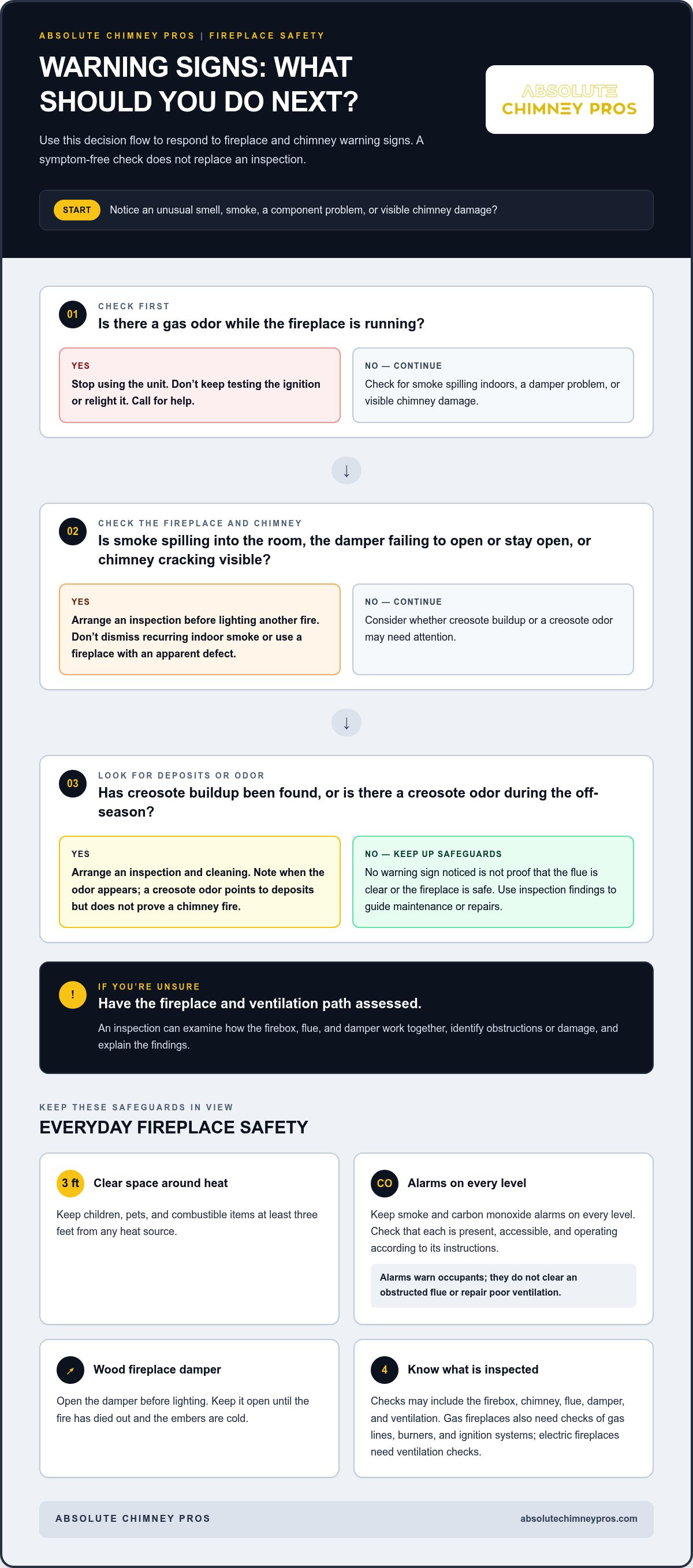
Place and maintain smoke and carbon monoxide alarms on every level of the home. Check that each alarm is present, accessible, and operating according to its instructions. An alarm can alert occupants, but it won’t clear an obstructed flue or repair poor ventilation. Treat alarm checks as one part of fireplace safety, not a replacement for examining the appliance and chimney.
During an inspection, ask how the ventilation path was assessed and whether the technician found an obstruction or damage. A thorough assessment considers how the firebox, flue, and damper work together. It should trace the route combustion gases take out of the home and explain any findings in straightforward terms.
For a fireplace safety inspection for family peace of mind in NJ, treat the alarm system and fireplace as separate safeguards. Alarms provide a warning; an inspection evaluates fireplace components and ventilation. Keeping both in view helps you understand what each measure addresses and what may need maintenance.
Fire and Carbon Monoxide Hazards
For a wood fireplace, ventilation checks assess airflow that helps limit carbon monoxide buildup. Open the damper before lighting a fire. Keep it open until the fire has died out and the embers are cold. Closing it too soon can trap smoke and gases indoors. Check the damper position before lighting, then leave it open through the cooling period.
A gas fireplace inspection examines gas lines, burners, ignition systems, and ventilation. An electric fireplace inspection checks ventilation to support airflow and help prevent overheating. In New Jersey, keep children, pets, and combustible items at least three feet from any heat source. Each step addresses a different risk, from combustion gases to nearby flammable materials.
Warning Signs of an Unsafe Fireplace or Chimney
Smoke spilling into a room, a damper that won’t open or stay open, and visible chimney cracks can signal ventilation or structural problems. Creosote buildup is another fire hazard. Don’t dismiss recurring indoor smoke or keep using a fireplace with an apparent defect. Arrange an inspection before lighting another fire, and describe the specific symptom.
A gas odor while a fireplace is running is a warning sign. Stop using the unit and call for help. Don’t keep testing the ignition or relight it. A faulty ignition system or inadequate ventilation also needs attention. Note when the issue occurs and share those details during the inspection to help focus the assessment on the affected component.
Creosote buildup and fire hazards
As wood smoke cools, it leaves creosote deposits inside the chimney. These deposits can accumulate along the flue and create a fire hazard. A fireplace inspection examines the flue and firebox; a chimney sweep removes creosote through cleaning. Inspections help protect households by identifying buildup and masonry damage before they’re overlooked.
In a masonry fireplace, an inspection also checks bricks, mortar joints, the firebox, and chimney surfaces. Cracks, deterioration, or loose bricks can indicate damage that needs attention. These findings matter alongside creosote: a clear flue doesn’t fix damaged masonry, and intact bricks don’t remove deposits. Seasonal cleaning by a licensed chimney sweep helps remove creosote from fireplaces and chimneys.
Homeowners can’t reliably judge flue conditions from the hearth alone. A sweep examines accessible areas and records the buildup’s location, coverage, and appearance. Deposits may be loose or hardened, and their condition helps guide cleaning recommendations. The report should distinguish creosote from soot and note any masonry cracks, worn mortar, or loose bricks. These details clarify the next maintenance step.
No single homeowner measurement can replace a flue inspection. A visual estimate from the fireplace opening may miss buildup higher in the chimney or around a bend. The inspection should document where deposits appear and whether they cover a limited area or extend along the flue. Ask for the observed condition and recommended action in plain language. This gives you a useful record for future seasonal maintenance.
A creosote odor during the off-season can develop when humid air contacts flue buildup and carries the smell through the damper. The odor points to deposits, but doesn’t prove a chimney fire. A thorough sweep addresses the buildup; a flue deodorizer may help with lingering smells. A top-sealing damper may also reduce air movement through the flue when the fireplace isn’t in use.
Don’t cover a persistent odor with room fragrance or assume an unused fireplace is clean. Note when the smell appears, such as during humid weather, and arrange an inspection and cleaning. A chimney sweep records each buildup location and can identify related masonry concerns. If cracks or loose bricks appear, have the chimney masonry inspected before relying on the fireplace again.
In Morristown, New Jersey, a wood fireplace safety inspection checks chimney flues, fireboxes, hearths, and ventilation for hazards such as creosote buildup and cracked bricks.
Firebox, damper, flue, and liner checks
A thorough fireplace safety inspection examines the firebox, chimney, flue, damper, and ventilation path. Each component affects how the appliance contains heat and directs exhaust.
Hidden Damage and Airflow Checks
Inspectors look for cracks, deterioration, and loose bricks around masonry fireplaces. They also assess the firebox and flue for visible defects that may affect safe operation. A thorough safety inspection checks whether the damper moves and whether the ventilation path appears clear. It can also identify any creosote observed during the examination.
Some damage sits beyond the visible opening. When a Level 2 inspection is appropriate, it includes internal video of the flue and accessible checks of the chimney structure in an attic, basement, or crawlspace. NFPA 211 is the standard followed by a Level 2 chimney inspection. This can help identify hidden concerns that a view from the hearth may miss.
Inspection Differences by Fireplace Type
Wood-burning inspections assess the firebox, chimney flue, damper, and ventilation, including hazards such as creosote and cracked bricks. Gas fireplace inspections examine gas lines, burners, ignition systems, and ventilation. Pellet appliances use a different fuel and setup, so the inspection focuses on the specific unit and its venting components.
Commercial fireplace safety checks may examine gas leaks, faulty ignition systems, and inadequate ventilation. These checks are relevant to gas equipment, but a household inspection should match the appliance installed in the home. A Google search result alone doesn’t establish an inspector’s qualifications. Look for a CSIA-certified chimney inspector and ask for findings on the components actually examined.
There isn’t one inspection interval stated here for every New Jersey home. Have a fireplace and chimney inspected based on use, condition, and changes to the appliance or flue; seasonal cleaning helps remove creosote. A Level 1 inspection is the standard starting point for first use after a long period of disuse. A Level 2 inspection is used for property transfers, after a chimney fire, lightning, or earthquake, or when changing the fuel type or appliance on the flue.
During a thorough fireplace safety inspection, the firebox should be checked for cracks or deterioration, the damper for operation, and the flue for visible buildup or damage. The liner matters too, as part of the route that contains and directs exhaust. If findings point to a damaged liner, repair needs, or persistent airflow concerns, the written report should identify the affected area and recommend a next step. That detail helps protect your home without guesswork.
Repairs and maintenance recommendations
A fireplace inspection can identify issues early and guide maintenance or repair recommendations. The next step is to understand the finding, its location, and how it affects safe use.
Before the appointment, note the fireplace type, recent operating problems, smoke odors, and visible damage. Clear access to the hearth and describe when symptoms occur. Afterward, review the written findings and ask which items need attention before use. Knowing the difference between maintenance and repair helps you plan responsibly.
A detailed inspection identifies observed creosote buildup, cracks, damaged components, or ventilation concerns. Recommendations should link each finding to a practical action. For example, creosote may call for cleaning, while cracked masonry may require repair. If the liner is damaged, ask which section is affected and how its condition changes fireplace operation. The safety inspection covers observed conditions, not assumptions about unseen areas.
Inspection and repair pricing depends on the fireplace type, access, condition, and work required; the price is provided after a quote request. Ask what the estimate covers, including inspection scope, labor, materials, and any follow-up work. An on-site estimate helps tie the proposed work to the fireplace’s actual condition. Clear estimates make it easier to compare the recommended scope with the inspection findings.
If an estimate recommends substantial chimney repair or liner work, ask for the specific defect, its location, and the reason for the proposed repair. A second opinion can clarify a complex finding. Share the original inspection report and compare whether both assessments identify the same damaged component. Different recommendations deserve an explanation, especially when one proposal includes work beyond the documented concern.
Before hiring a chimney professional in New Jersey, ask who will inspect the fireplace, what the inspection includes, and whether you’ll receive a written report. Also ask about technician credentials, insurance, and how recommendations relate to observed conditions. Absolute Chimney Pros’ technicians are CSIA-certified, licensed, and insured. A thorough review should cover creosote, ventilation, and the condition of accessible components.
For a home sale, remember that an inspection report records conditions; it doesn’t itself grant a repair credit. Any credit is a separate agreement between the parties. Use the report’s specific findings to discuss whether repairs or a credit address the identified issue. A documented crack, for example, gives the discussion a concrete basis.
After approved work, keep the inspection report, estimate, and repair records together. These details help track what was repaired and what maintenance remains. If a recommendation concerns ventilation, ask how the work will support exhaust flow and help the fireplace operate as intended.
Gas fireplace components and leak hazards
A gas fireplace inspection examines gas lines, burners, the ignition system, and ventilation. These components work together, so a problem in one area can affect operation elsewhere. A detailed check identifies observed defects and explains which component needs attention. The goal is clear: understand the appliance’s condition before continuing regular use.
Gas lines are checked for visible signs of a leak or damage. Burners and ignition systems are examined for faults that could interfere with operation. Ventilation is assessed because the fireplace needs a suitable route for exhaust. The inspection should identify the components examined and connect each finding to a clear recommendation.
Not every operating issue has the same cause. An ignition problem, for example, calls for attention to the ignition system, while a ventilation concern involves the exhaust path. A thorough inspection distinguishes these findings instead of treating every symptom as one problem. Ask for the affected component, observed condition, and recommended next step in the report.
Smell gas while the fireplace is running? Stop using the unit and call for help. Don’t keep testing the ignition or relight the fireplace. Tell the person responding when the odor started and whether the unit was operating. These details can help focus attention on the gas system and the fireplace’s current condition.
Carbon monoxide prevention also depends on ventilation. During a gas fireplace inspection, the technician examines ventilation and considers how the gas components work together. Keep smoke and carbon monoxide alarms maintained on every level of the home. An alarm isn’t a repair, but it can alert household members when it detects a hazard.
Before the inspection, note recurring symptoms such as ignition failures, unusual operation, or a gas odor. Share examples rather than trying to diagnose the cause yourself. Afterward, review the report and ask how each recommendation relates to the gas lines, burners, ignition system, or ventilation. This makes the findings easier to understand and act on.
A Google Business Profile can identify a business’s service category, but it doesn’t show which fireplace components an inspection covers. Focus on the written scope and findings. A useful report names the components inspected, records concerns, and explains recommended maintenance or repair without vague claims about codes or performance.
For a gas fireplace concern, arrange a professional assessment before relying on the unit again. Schedule gas fireplace service to address component and ventilation concerns with a focused inspection.
Absolute Chimney Pros: Chimney Sweep
Absolute Chimney Pros provides chimney sweeping and inspections for homeowners addressing creosote buildup, visible damage, and other findings. Turn to the team for seasonal cleaning, an inspection, or follow-up work identified in an inspection report.
CSIA-certified, licensed, and insured technicians perform the work and provide on-site estimates with no hidden fees. If an inspection identifies a damaged liner or masonry concern, chimney liner installation or chimney repair may be an appropriate next step. Recommended work should address the observed condition, so you understand what needs attention and why.
For fireplace maintenance, an inspection, or repairs, contact Absolute Chimney Pros to discuss the next step for your home.
Make Fireplace Care Part of Your Home Routine
Turn the inspection findings into a practical plan for the next heating season. Keep the report with your home maintenance records, note recommended work, and review those notes before regular fireplace use resumes. A clear record helps your household make informed decisions instead of relying on memory.
If you’re planning a fireplace safety inspection for family peace of mind in NJ, Absolute Chimney Pros can help with a chimney inspection or sweep. If findings point to a damaged liner, chimney liner installation may also be appropriate. Choose the next step based on the condition documented in your report, and focus on the work your fireplace needs.
Contact Absolute Chimney Pros today to discuss inspection, cleaning, or liner needs for your home. A thoughtful maintenance plan starts with one clear step, and you can take it at a pace that fits your household.
Frequently Asked Questions
What does a professional fireplace safety inspection in New Jersey include?
An inspection assesses the fireplace and connected chimney components, with checks tailored to the appliance’s fuel type. Prepare by noting the fireplace model, recent changes, and operating symptoms, such as smoke entering the room or ignition failure. Share those details during the inspection to help the technician focus on relevant components and explain findings in context.
What are the different chimney inspection levels and when is each required?
Level 1 is the standard inspection for first use after a long period of disuse. A Level 2 inspection follows NFPA 211 and is used for property transfers, after a chimney fire, lightning, or earthquake, and when changing the fuel type or appliance on the flue. It includes internal flue video and accessible checks of the chimney structure in an attic, basement, or crawlspace.
How much does a fireplace or chimney inspection cost in New Jersey?
Inspection pricing depends on the inspection scope, fireplace condition, access, and whether specialized assessment is needed. The price is provided after a quote request. A standard visual inspection and a Level 2 inspection involve different examination steps, which can affect the estimate. Ask for the scope in writing so you understand which components are covered and whether cleaning or repairs are separate work.
What New Jersey building, fire, or local rules apply to fireplace inspections?
Local requirements can vary, so check whether fireplace work requires permits or inspections. Local review addresses the fireplace installation and applicable requirements, while a chimney safety inspection assesses the appliance and venting condition. Keep permit and inspection records with your home documents, especially when planning a sale or fireplace change.
What are common fireplace and chimney hazards, including creosote, carbon monoxide, and chimney fires?
Common hazards include creosote deposits, damaged masonry, blocked ventilation, and faulty gas components. Creosote can ignite inside a chimney, while poor venting can allow smoke or carbon monoxide into the home. Smoke spilling indoors, visible cracks, or a gas odor during operation need prompt attention. If you smell gas, stop using the fireplace and seek help rather than testing or relighting it.


