

A generic roofing patch won't save your chimney from the next New Jersey nor'easter. Most homeowners mistake a chimney leak for a standard roofing issue, but these systems are complex hybrids of metal and masonry. When the seal between your roof and your chimney fails, water doesn't just drip; it destroys. Securing a professional chimney flashing repair NJ is the only way to stop active leaks and prevent thousands of dollars in structural rot.
You're likely tired of temporary fixes that fail after the first heavy rain. It's a valid concern. Water bypasses your shingles and attacks your home's internal framing directly. This article teaches you how to identify flashing failure and explains why professional repair is critical for protecting your New Jersey home from permanent water damage. You'll gain a clear understanding of the repair process and learn how a certified technician ensures your home stays dry through every season. We'll move from identifying the hazard to providing the definitive solution for your roof.
Key Takeaways
- Understand how the unique New Jersey freeze-thaw cycle forces metal flashing to pull away from your chimney's masonry.
- Learn why a professional chimney flashing repair NJ requires a two-part system of step and counter flashing to ensure a watertight seal.
- Identify the critical warning signs of failure, from interior ceiling stains to visible rust on the metal strips at your chimney's base.
- Discover why temporary DIY sealant patches often hide serious structural rot instead of fixing the root cause of the leak.
- See how CSIA-certified technicians provide a permanent solution by integrating metal flashing directly into your chimney's mortar joints.
Why Chimney Flashing Fails in New Jersey Homes
Most homeowners ignore their roof until water hits the living room floor. In New Jersey, that water often starts its journey at the chimney base. What is chimney flashing? It is the critical metal seal bridging the gap between your roof shingles and the masonry stack. This intersection is the most vulnerable point on your home. In the Tri-State area, failed flashing is the number one cause of chimney leaks. If your system was installed poorly, it will likely fail within five to ten years. You need a permanent solution, not a temporary patch. Professional chimney flashing repair NJ ensures your home remains a dry, safe environment.
A chimney isn't a static object. It's a heavy masonry structure that settles at a different rate than your wooden roof deck. Flashing must act as a flexible, waterproof bridge between these two moving parts. When that bridge breaks, gravity does the rest. Water follows the chimney down into your attic, saturating insulation and rotting structural beams. Don't wait for a ceiling stain to take action. Understanding why these seals fail is the first step in protecting your investment.
The Impact of NJ Climate on Metal Seals
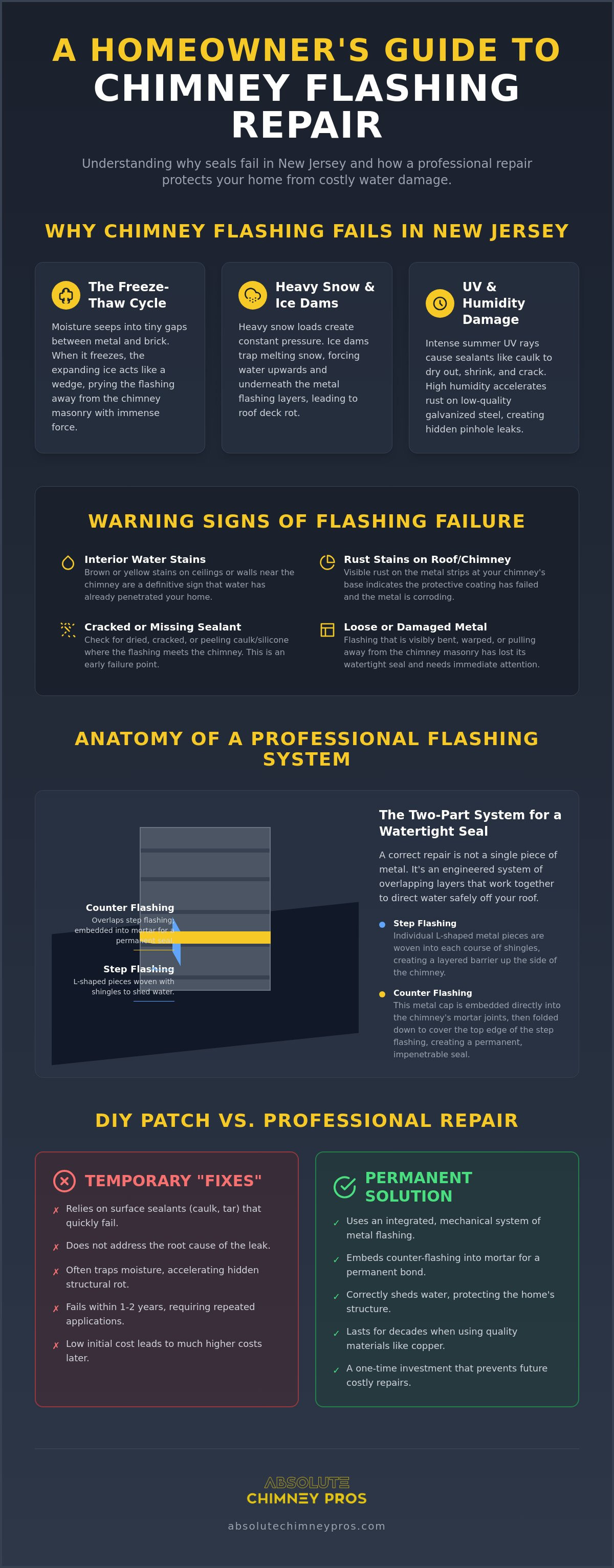
New Jersey's weather creates a relentless cycle of expansion and contraction. This freeze-thaw process is a primary driver of structural damage. During winter, moisture enters microscopic gaps between the metal and the brick. When that water freezes, it expands with immense force. It physically pries the flashing away from the chimney. Heavy snow loads add to this stress. Snow piles up on the upslope side of the chimney, creating constant pressure on the metal joints. Ice dams are equally dangerous. They trap melting snow and force water upward, driving it underneath the metal layers where it rots the roof deck. Our high summer humidity only complicates the issue. It accelerates rust in low-quality galvanized steel, leading to pinhole leaks that are impossible to see from the ground.
Common Failure Points in Modern Flashing
Precision is the only defense against water penetration. Unfortunately, many installations lack the technical mastery required for long-term protection. Several specific components often fail first:
- Degraded Sealants: Many installers rely on silicone or caulk around the chimney shoulders. These materials dry out and crack under New Jersey's intense UV exposure.
- Nail Pops: Thermal expansion causes the roof deck to move. This movement can force nails to "back out" of the wood. A single backed-out nail creates a direct path for water.
- Loose Counter-Flashing: This is the metal piece embedded into the mortar joints. If the mortar crumbles or the metal pulls loose, the entire waterproofing system is compromised.
A failed seal is an invitation for disaster. Water doesn't just damage the ceiling; it rots the structural headers and rafters supporting your roof. Identifying these issues early through a chimney flashing repair NJ specialist is the only way to avoid a full roof replacement.
The Anatomy of a Professional Chimney Flashing System
A leak-proof chimney requires more than a bucket of tar. It demands a sophisticated, two-part metal system. Most generic roofers fail here. They treat the chimney like a flat wall. It isn't. It is a porous masonry stack that breathes and shifts. A professional chimney flashing repair NJ focuses on the mechanical synergy between metal and mortar. This isn't just about covering a gap. It is about engineering a permanent path for water to leave your roof surface.
Material choice dictates the lifespan of the repair. Thin galvanized steel is a budget option that often rusts through within a decade. We recommend heavy-gauge aluminum or copper. Copper is the gold standard for New Jersey's coastal and historic homes. It forms a protective patina and resists corrosion for decades. If you suspect your current seals are failing, a professional chimney inspection can pinpoint the exact material weakness before the next storm arrives.
Step Flashing vs. Counter Flashing
Waterproofing is a game of layers. Step flashing consists of individual L-shaped metal pieces. We weave these into the shingle layers as the roof line climbs the chimney side. This ensures water sheds from one shingle to the next without hitting the wood deck. However, step flashing alone leaves the top edge exposed to the elements. It requires the counter flashing to act as a protective cap. The counter flashing overlaps the step flashing, directing water away from the critical seam. A system missing either component is guaranteed to leak during heavy New Jersey rainstorms.
Why We Embed Flashing into Mortar Joints
Surface-mounted flashing is a common shortcut. Many contractors nail metal to the brick and hide the top edge with a bead of caulk. This is a "caulk-and-walk" method. It inevitably fails when the caulk dries, cracks, and peels away. We use a more disciplined technique. We cut a "reglet," or a precision groove, directly into the masonry mortar joints. We then tuck the counter flashing into this groove. This creates a permanent mechanical seal. Gravity works with the metal. Even if the secondary sealant eventually degrades, the physical overlap prevents water from entering. This level of technical mastery is the only way to ensure a successful chimney flashing repair NJ.
DIY Chimney Flashing Repair vs. Professional NJ Services
A quick trip to the hardware store won't solve a structural failure. Homeowners often reach for a tube of silicone or a bucket of roofing tar when they spot a leak. This is a gamble. It is a "caulk-and-walk" method that merely masks the symptom. It doesn't address the root cause. Proper chimney flashing repair NJ requires technical precision and an understanding of masonry expansion. DIY fixes frequently fail within months, leaving your home vulnerable during the next storm. You aren't just delaying the inevitable; you're inviting deeper damage.
Professional intervention is about more than just applying a new seal. It involves a surgical assessment of the entire system. When we remove old, failing flashing, we often find saturated insulation and softened plywood. A DIYer simply covers this up. We fix it. Ignoring the underlying damage leads to mold growth and compromised roof rafters. This hidden rot can eventually cost ten times more than the initial flashing repair. Our goal is to stop the leak and secure your home's structural integrity simultaneously.
The Danger of Temporary Sealants
Roofing tar is a temporary band-aid, not a permanent solution. It dries out. It cracks. It pulls away from the brick as temperatures fluctuate. These cracks create new, unseen pathways for water to enter. Spray-on leak stoppers are even worse. They are marketing gimmicks that lack the thickness to withstand New Jersey's freeze-thaw cycles. Improperly applied sealants can actually trap moisture against your chimney's masonry. This accelerates spalling and destroys the mortar joints from the inside out. You aren't just wasting money on these products; you're actively shortening the life of your chimney.
What a CSIA-Certified Technician Provides
A certified professional brings a disciplined approach to home safety. We begin every project with a comprehensive chimney inspection New Jersey to identify every entry point. This goes beyond the metal seals. We examine the masonry, the crown, and the internal liner. Our technicians possess dual expertise in masonry repointing and metal fabrication. This ensures the new flashing integrates perfectly with your home's structure. We also ensure every project meets the New Jersey Uniform Construction Code requirements. Unlike a DIY fix, our professional chimney flashing repair NJ comes with the peace of mind that only technical mastery and a long-term warranty can provide.
Signs Your NJ Home Needs Immediate Flashing Repair
Identifying a leak early saves thousands in restoration costs. You don't need to be a technician to spot the warning signs. Start with your ceiling. Brown or yellow water rings around the chimney breast are clear indicators of failure. These stains prove that water has already bypassed your roof and is saturating your drywall. Another red flag is visible rust. If you see orange or brown streaks on the metal strips at the chimney base, the protective coating is gone. This oxidation leads to pinhole leaks that are small but devastating. You might even hear the problem before you see it. A steady dripping sound inside the firebox during a storm means the seal is completely broken. These cues demand a professional chimney flashing repair NJ before the next heavy rain hits.
Don't ignore missing or loose pieces of metal. If you can see gaps from the ground, the wind has likely compromised the attachment points. A single loose piece of counter flashing allows gallons of water to pour directly into your attic. This isn't a problem that fixes itself. It only accelerates as the wood underneath begins to rot and soften. Prompt action is the only way to maintain the safety of your environment.
Indoor Red Flags
Your nose often detects a leak before your eyes do. A persistent musty odor near the hearth suggests trapped moisture within the masonry or attic. This dampness is a breeding ground for mold. Check your wallpaper and paint. If it is bubbling, peeling, or discoloring near the chimney, moisture is migrating through the structure. Look for efflorescence. These are white, powdery salt deposits on your interior bricks. They appear when water travels through the masonry and evaporates, leaving minerals behind. It is a definitive sign of active water penetration that requires an immediate professional chimney repair.
Outdoor Visual Cues
A quick walk-around can reveal hidden hazards. Use binoculars to inspect the intersection where the metal meets the brick. If you see cracked mortar or visible gaps, the mechanical seal is compromised. Look for shingles that appear lifted or buckled specifically around the chimney base. This happens when the wooden roof deck underneath the step flashing becomes saturated and expands. In severe cases, you may see a physical separation between the chimney stack and the roofline. This indicates significant structural shifting or total flashing detachment. If you notice any of these signs, contact us to schedule a flat-fee inspection and stop the damage before it spreads.
Expert Chimney Flashing Repair by Absolute Chimney Pros
Absolute Chimney Pros is your vigilant protector against New Jersey's harshest weather. We specialize in permanent, masonry-integrated flashing solutions. Generic patches fail because they ignore the chimney's thermal expansion and mortar integrity. We don't. Our NJ technicians provide on-site estimates with no hidden fees. You get total transparency from the very first visit. We coordinate with our chimney leak repair NJ specialists to ensure every component of your system is secure. This integrated approach is the only way to achieve long-term safety and structural stability.
Time is your enemy when a leak is active. Water is a patient destroyer. We offer same-week appointments to stop water penetration before it reaches your home's framing. A professional chimney flashing repair NJ shouldn't be a source of stress. It should be a definitive resolution to a hazardous problem. We bring technical mastery to every roofline we service. Our process is methodical and disciplined. We show up. We assess. We provide a clear report. We execute. There is no guesswork involved in our operation.
Our Proven Repair Process
We follow a strict, multi-step protocol to ensure your home stays dry. We don't just cover up the old damage; we eliminate it. Our process includes:
- Step 1: Full Diagnostic. We confirm the leak is flashing-related. Our technicians examine the masonry, crown, and shingles to rule out other entry points.
- Step 2: Removal and Inspection. We strip away old, failed materials. This allows us to inspect the underlying roof deck for rot. If the wood is soft or compromised, we address it before installing new metal.
- Step 3: Custom Fabrication. We install a multi-layered flashing system. We use heavy-gauge materials like aluminum or copper. We cut a precision reglet into your mortar joints for a mechanical seal that lasts.
Schedule Your NJ Flashing Inspection
Don't wait for the next storm to cause more damage. A small drip today becomes a structural crisis tomorrow. Contact us for a professional, flat-fee safety review. Our CSIA-certified technicians provide the disciplined oversight your home deserves. We understand the local climate and the unique challenges of New Jersey masonry. Experience the peace of mind that comes with professional chimney flashing repair NJ. We are your protective partner. Let us secure your home against the elements today.
Secure Your Home Against the Elements
Water is a patient destroyer. A single failed seal at your chimney base invites rot, mold, and structural decay. You've learned how the New Jersey climate forces metal to pull away from masonry. You also know that a "caulk-and-walk" DIY patch only hides the hazard. True safety requires a multi-layered, masonry-integrated approach. Securing a professional chimney flashing repair NJ is the only definitive way to stop active leaks and preserve your home's value.
Our team provides the disciplined expertise needed to seal your roof for the long term. We are CSIA-certified technicians, fully licensed and insured in NJ and PA. We offer transparent, flat-fee inspections with no hidden fees. Don't wait for the next storm to turn a small drip into a major restoration project. Act now to protect your living space and your structural investment.
Schedule Your Same-Week Chimney Flashing Repair in NJ
Your home is your most significant investment. We are here to help you protect it with technical mastery and honest service.
Frequently Asked Questions
How much does chimney flashing repair cost in NJ?
The cost of your repair depends on several technical factors. These include the size of your chimney, the steepness of your roof, and your choice of metal materials. Copper is a premium, long-lasting option, while heavy-gauge aluminum provides a cost-effective alternative. We offer on-site estimates with no hidden fees to ensure you have a clear understanding of the project scope. Every home has unique structural needs that dictate the final investment.
Can a roofer fix my chimney flashing?
Many roofers offer this service, but they often lack masonry expertise. A standard roofer typically uses a surface-mounted "caulk-and-walk" method. This relies on sealant that fails under New Jersey's UV exposure. A professional chimney flashing repair NJ requires cutting a reglet into the mortar joints to tuck the metal inside. This masonry-integrated approach is essential for a permanent, waterproof seal that a general roofer may not provide.
Is a leaking chimney an emergency?
A leak is a high-priority hazard that requires immediate attention. Water doesn't just damage your ceiling; it rots the structural headers and rafters supporting your roof. Damp insulation also becomes a breeding ground for mold within your attic. We offer same-week appointments to stop active leaks before they evolve into expensive structural crises. Prompt action is the only way to protect your home's integrity and your family's health.
How long does professional chimney flashing last?
Durability is determined by material quality and installation precision. High-quality materials like copper or heavy-gauge aluminum can protect your home for 30 to 50 years. In contrast, thin galvanized steel often rusts through in less than a decade. Our technicians ensure the system is properly embedded into the masonry. This allows the metal to withstand the relentless freeze-thaw cycles common in the New Jersey climate.
Does homeowners insurance cover chimney flashing repair?
Insurance coverage typically depends on the cause of the leak. Most policies exclude coverage for general wear and tear or lack of maintenance. However, if a sudden storm or falling limb damages the flashing, your provider might cover the repair. They often pay for secondary damage, such as ruined drywall or rotted beams. You should review your specific policy details. We provide the documentation you need to support your claim.
Can I use silicone caulk to fix a chimney leak myself?
Silicone is a temporary band-aid that often hides deeper problems. It doesn't bond permanently to porous brick and will eventually peel away. This creates a false sense of security while water continues to rot the wooden roof deck underneath. A real chimney flashing repair NJ involves mechanical metalwork and masonry integration. Don't waste money on temporary sealants that fail after the first heavy rain.
What is the difference between flashing and a chimney crown?
These components protect two different vulnerable areas. Flashing is the metal system that seals the junction where the chimney meets the roofline. The chimney crown is the masonry slab at the very top of the stack. It prevents water from entering the brickwork from above. Both must be in perfect condition to ensure a completely dry chimney system. If either fails, your home is at risk for water penetration.
How long does the actual repair process take?
Most professional flashing repairs are completed in four to eight hours. The duration depends on the complexity of the chimney's shape and the condition of the existing masonry. If we discover rotted wood underneath the old metal, the process may take longer to ensure the structure is safe. Our technicians work methodically to complete the task in a single visit. We prioritize efficiency without compromising on technical mastery or safety.


