
That crumbling mortar between your bricks isn't just an eyesore; it's a structural warning sign. Your home's safety is currently compromised. Ignoring the chimney repointing NJ homes require leads to more than just water leaks. It creates a direct path for hidden fire hazards and potential collapse. You've seen the cracks. You've felt the uncertainty of rising repair costs. Your property needs a disciplined expert to step in before the damage becomes irreversible.
Professional repointing is a critical safety intervention, not a cosmetic upgrade. It prevents total structural failure and saves you from a costly chimney rebuild. This guide shows you how to protect your masonry from New Jersey's harsh freeze-thaw cycles. You'll learn to identify failure points and verify contractor credentials under state law. We'll cover everything from mortar composition to NJ Home Improvement Contractor registration requirements. Secure your home. Protect your family. Discover the peace of mind that comes from a stable, waterproof, and code-compliant chimney.
Key Takeaways
- Mortar is a sacrificial element designed to weather away. Learn how its renewal prevents permanent brick damage and total structural failure.
- Recognize red flags like white salt stains and popping brick faces to stop moisture from destroying your chimney's core.
- Discover why proactive chimney repointing NJ is a cost-effective alternative to a total masonry rebuild in 2026.
- Understand the professional standards for repair, including the "Half-Inch Rule" for mortar depth and the importance of matching material hardness.
- Ensure safety and compliance by choosing CSIA-certified technicians who follow New Jersey's specific building codes and registration laws.
What is Chimney Repointing and Why is it Critical for NJ Homes?
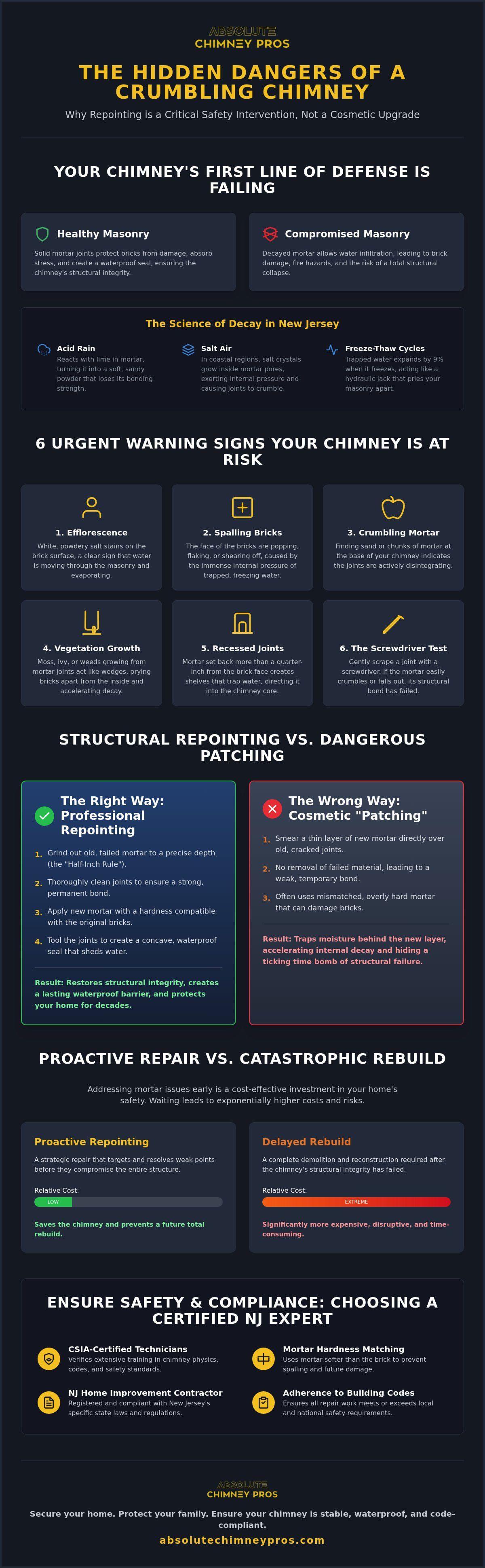
Your chimney is a complex structural system. While the bricks provide the shape, the mortar joints provide the integrity. What is repointing? It is the disciplined process of grinding out damaged, weathered mortar and replacing it with fresh, compatible material. This is not a cosmetic upgrade. It is a vital restoration of your home's primary defense against the elements. In the context of chimney repointing NJ, this service is the difference between a minor repair and a total structural collapse.
Mortar is designed to be the sacrificial element of your masonry. It is intentionally softer than the surrounding brick. This allows it to absorb the stress of thermal expansion and minor building shifts. It is meant to wear out over time. By eroding first, it protects your expensive bricks from cracking. However, once that mortar reaches its limit, the system fails. Bricks begin to rub against each other. Moisture finds a permanent home in the gaps. At this stage, your chimney is no longer a safety feature; it is a liability.
There is a massive difference between structural repointing and cosmetic "patching." Many unreliable contractors simply smear a thin layer of new mortar over the old cracks. This is a dangerous shortcut. It traps moisture behind the new layer, accelerating the decay of the original joints. True structural repair requires precision. We remove the old mortar to a specific depth to ensure the new material bonds permanently. This process restores the waterproof seal and the load-bearing capacity of the stack.
The Science of Mortar Decay
Moisture is the catalyst for masonry failure. When water enters a compromised joint, it initiates a process called "spalling." The brick faces begin to flake and pop off. This happens because the internal pressure of trapped water has nowhere to go. Standard mortar has a lifespan of approximately 25 years. However, the chemical breakdown in the Northeast is faster. Acid rain reacts with the lime in older mortar, turning it into a soft, sandy powder. Modern high-performance mixes offer better resistance, but they must be matched to the hardness of your existing brick to prevent further damage.
New Jersey Weather and Your Masonry
New Jersey's 2026 climate presents unique challenges for homeowners. Our region experiences extreme freeze-thaw cycles. Moisture seeps into microscopic mortar cracks during a rainy afternoon. By nightfall, the temperature drops below freezing. That water expands by 9% in volume. This expansion force is relentless. It acts like a hydraulic jack, slowly prying your bricks apart. If you live in coastal NJ regions, salt air adds another layer of risk. Salt crystals grow inside the mortar pores, exerting internal pressure that causes the joints to crumble prematurely. Vigilance is your only protection against these environmental stressors.
Signs Your Chimney Needs Urgent Repointing
Your chimney communicates its condition through visible distress signals. Ignoring these signs is a gamble with your home's structural integrity. One of the most common red flags is efflorescence. These white, powdery salt stains appear when water moves through the masonry and evaporates on the surface. It is a clear indicator of moisture infiltration. If you see sand piles at the base of your stack, your mortar is literally disintegrating. This is a primary reason to prioritize chimney repointing NJ before the next season of heavy rain.
Perform a simple diagnostic called the screwdriver test. Take a flat-head screwdriver and gently scrape a mortar joint. Healthy mortar should resist the metal. If the material crumbles like dry crackers or falls out in chunks, the bond is dead. You're past the point of simple maintenance. At this stage, the mortar can no longer support the weight of the bricks above it. This leads to shifting, leaning, and eventual masonry failure.
Look for spalling. This occurs when the brick face shears off, exposing the porous interior. It's the result of the internal pressure we discussed previously. Also, watch for vegetation. Ivy and moss might look charming, but their roots act as hydraulic wedges. They find microscopic cracks and pry the masonry apart from the inside out. Once roots take hold, the rate of decay triples. A professional chimney inspection is the only way to map the extent of this internal damage.
Visual Red Flags and Surface Erosion
Recessed joints are a critical warning. When the mortar is set back more than a quarter-inch from the brick face, it creates shelves. These shelves catch rainwater and snow, directing moisture straight into the chimney's core. You might also notice structural staining. Unlike simple dirt, these dark streaks often indicate that water is leaching minerals out of the mortar itself. If you can see the "ghost" of the bricks through the joints, the weatherproofing is gone.
Hidden Hazards: Why Crumbling Mortar is Dangerous
Crumbling mortar creates invisible paths for disaster. Gaps in the masonry allow toxic gases to bypass the flue. This increases the carbon monoxide chimney risk within your living spaces. Beyond gas leaks, these voids allow intense heat to transfer directly to your home's wooden framing. Following chimney fire safety guidelines is impossible if your external structure is full of holes. In high NJ wind storms, a compromised chimney lacks the lateral strength to stand. It becomes a falling hazard for your roof and your family.
Repointing vs. Rebuilding: Understanding the Scope of Repair
Every chimney has a "Point of No Return." This is the critical threshold where the masonry is too far gone for simple maintenance. Identifying this point requires technical precision. If you catch mortar decay early, chimney repointing NJ is a highly effective, cost-saving restoration. If you wait, you face a full rebuild. The financial difference is staggering. A professional intervention in 2026 prevents the need for a total demolition. Proactive homeowners save thousands by acting while the bricks are still sound. Delaying only leads to structural instability and increased liability.
Industry terminology often confuses homeowners. You might hear the terms "tuckpointing" and "repointing" used interchangeably. They are not the same. Repointing is the structural process of replacing failed mortar to restore the chimney's integrity. Tuckpointing is a cosmetic technique. It uses two different mortar colors to create the illusion of perfect, thin joints. While tuckpointing looks sharp, it does not provide the same structural reinforcement. For a chimney facing New Jersey's harsh climate, you need the depth and durability of a true repointing job. A chimney inspection New Jersey professionals provide is the only way to determine which path your masonry requires.
When Repointing is the Right Solution
Repointing is the ideal path when your bricks remain sound but the mortar is soft, missing, or crumbling. The goal is to restore the waterproof seal. By removing the dead material and injecting fresh, high-performance mortar, we re-establish the structural bond. A professional repointing job, executed with the correct material hardness, can last 20 to 30 years. It stops the clock on decay. It keeps moisture out of your home's interior. It is a definitive solution for a aging but stable structure.
When a Full Rebuild is Unavoidable
Total failure looks different. If your chimney stack is leaning, repointing cannot save it. Large vertical cracks that cut through both bricks and mortar indicate a foundation or settlement issue. Another warning sign is "shaling." This is when the internal clay liner tiles begin to flake off and collect at the bottom of the flue. If the exterior masonry is loose enough that you can move bricks by hand, the structure is a hazard. Falling masonry is a massive insurance risk. Most providers will not cover damage caused by a chimney that was clearly neglected. At this stage, safety demands a full rebuild from the roofline up.
The Professional Repointing Process: What to Expect
A professional restoration is a disciplined sequence of technical steps. It is not a quick fix. The process begins with rigorous site preparation. We utilize industrial scaffolding to provide a stable, safe platform for our technicians. Your roof is a major investment, so we use heavy-duty protection to prevent damage from falling debris. For chimney repointing NJ projects, the setup phase defines the quality of the final result. We respect your property and prioritize safety at every height.
Cleanliness is a hallmark of professional masonry. We use advanced dust collection systems integrated directly into our grinding tools. These HEPA-filtered vacuums capture silica dust at the source. This protects your air quality and keeps your landscaping pristine. We also prioritize exact color-matching. We sample your existing mortar and mix custom batches to ensure the new joints blend seamlessly with the original masonry. Your chimney should look restored, not patched. No guesswork is involved in our matching process.
Step 1: Precision Mortar Removal
We adhere strictly to the "Half-Inch Rule." Mortar must be removed to a depth of at least 1/2 to 3/4 of an inch to ensure a permanent bond. Simply scratching the surface leads to premature failure. We utilize diamond-blade saws for the long runs and hand chisels for delicate work near corners. Precision is vital. Amateurs often over-cut into the bricks, causing permanent structural damage. We create clean, square surfaces that provide the perfect mechanical "key" for the new mortar to lock into place. This ensures the repair is structural, not just cosmetic.
Step 2: Custom Mortar Application and Tooling
Strength matching is a science. Using a mortar that is too hard, like Type S, on older residential bricks causes the bricks to shatter during thermal expansion. We typically specify Type N mortar for its flexibility and durability. After injection, we perform the "striking" process. We tool the joints into a concave profile designed specifically to shed water. This shape prevents moisture from pooling on the brick edges. During the 2026 season, we carefully manage curing times. We protect fresh joints from direct sun or frost to prevent shrinkage cracks. A disciplined approach ensures your chimney stands for decades. Schedule your professional masonry assessment today.
Choosing a Certified Masonry Expert in NJ/PA
Hiring a general mason for your chimney is a risk you cannot afford. Chimney structures require specialized knowledge of thermal expansion and venting physics. CSIA certification is the gold standard in this industry. It proves the technician has mastered the technical requirements for safety and structural longevity. When you invest in chimney repointing NJ, you deserve a partner who understands the unique stresses placed on a flue system. Don't settle for a contractor who lacks this specific technical mastery.
Local expertise is mandatory. New Jersey has strict regulations for home improvements. Any contractor performing masonry work must be registered as a Home Improvement Contractor (HIC) with the Division of Consumer Affairs. They are required by law to carry at least $500,000 in general liability insurance. We meet these standards and follow the 2021 International Residential Code for all repairs. A local expert understands the "10-3-2 rule" for chimney height and the impact of regional freeze-thaw cycles. This knowledge prevents code violations and future safety hazards.
Structural integrity and water resistance are inseparable. Crumbling mortar is often the entry point for destructive moisture. For this reason, professional repointing is frequently the first step in comprehensive chimney leak repair NJ. We provide on-site estimates with no hidden fees. You receive a transparent report that identifies the exact hazards before we begin work. This clarity builds trust and ensures your repair budget is used effectively.
The Absolute Chimney Pros Difference
We operate with a "no-nonsense" approach to home safety. Our technicians are disciplined experts who value your time and property. We offer same-week appointments for urgent masonry assessments. You don't have to wait months to secure your home's exterior. Our reporting process is thorough and evidence-based. We show you the failure points through detailed visual documentation. We act as your protective partner, simplifying complex maintenance tasks with professional oversight and ethical transparency.
Next Steps for Your Home Safety
Your first step is a flat-fee structural inspection. This assessment provides a definitive diagnosis of your masonry health. To prepare for our visit, ensure the area around your fireplace is clear and provide access to the chimney exterior. We handle the rest, from scaffolding setup to HEPA-filtered dust collection. Don't wait for a total collapse or a hidden fire hazard to force your hand. Protect your investment now. Schedule your chimney repointing estimate with Absolute Chimney Pros today!
Secure Your Masonry Before the Next Storm
Ignoring crumbling mortar is a gamble with your home's foundation. You now understand that mortar is the sacrificial shield for your bricks. You know the red flags of failure, from white salt stains to flaking brick faces. Most importantly, you recognize that proactive chimney repointing NJ is a disciplined investment in structural safety. It prevents the "Point of No Return" and shields your property from water damage, gas leaks, and fire hazards. Acting now preserves your masonry and avoids the massive expense of a total rebuild.
Our CSIA-certified technicians provide technical mastery with a commitment to transparency. We are fully licensed and insured in NJ and PA, offering on-site estimates with no hidden fees. We identify the specific hazards facing your stack and provide a definitive, code-compliant solution. Don't wait for a structural emergency to compromise your family's safety. Protect your home—schedule a professional NJ chimney repointing estimate now!
Take control of your home's health today. A stable, waterproof, and reliable chimney is within reach with the right professional oversight.
Frequently Asked Questions
How much does chimney repointing cost in New Jersey?
Costs for masonry restoration vary based on the height of the chimney, its accessibility, and the total area of mortar decay. A professional on-site assessment is the only way to determine an accurate investment for your property. Factors such as the complexity of the brickwork and the depth of the grinding required will influence the final project scope.
How long does a typical chimney repointing job take?
Most residential projects are completed within one to three days. This timeframe includes the critical phases of site preparation, precision mortar removal, and custom application. Large stacks or chimneys with significant structural damage may require additional time to ensure the new joints cure correctly under professional oversight.
Can I repoint my own chimney as a DIY project?
DIY repointing is a high-risk endeavor that often leads to permanent masonry damage. Amateurs frequently use the wrong mortar hardness, which causes bricks to shatter during thermal expansion. Professional technicians utilize specialized scaffolding and dust collection systems to maintain safety and precision at heights that are dangerous for homeowners.
What is the best time of year to repoint a chimney in NJ?
Spring and autumn provide the ideal climate for chimney repointing NJ projects. These seasons offer moderate temperatures that allow the new mortar to cure slowly and develop a strong bond. We avoid extreme summer heat and winter freezes, as these conditions cause the material to dry too fast or fail to set, leading to premature cracking.
Will repointing stop water from leaking into my fireplace?
Repointing seals the gaps in your masonry joints where water often enters, but it's one part of a larger waterproofing system. If your leak originates from a cracked chimney crown or failed metal flashing, those components must also be addressed. A disciplined inspection identifies every entry point to ensure your fireplace remains dry and safe.
Does chimney repointing require a building permit in NJ?
Standard masonry maintenance and repointing usually don't require a building permit in New Jersey. Permits are typically reserved for structural alterations or total rebuilds that change the chimney's footprint. You must ensure your contractor is a registered Home Improvement Contractor (HIC) to comply with state law and consumer protection requirements.
What is the difference between tuckpointing and repointing?
Repointing is the essential structural repair of replacing decayed mortar to restore the chimney's integrity. Tuckpointing is a cosmetic technique that uses two mortar colors to create the visual illusion of thin, perfectly straight joints. While tuckpointing improves aesthetics, repointing is the primary service needed to stop water infiltration and structural failure.
How long will professional repointing last?
Quality repointing executed with the correct material hardness typically lasts 20 to 30 years. The exact lifespan depends on your chimney's exposure to New Jersey's harsh freeze-thaw cycles and coastal salt air. Regular professional oversight ensures that minor erosion is addressed before it compromises the 25-year bond of the new masonry joints.


