

Over 25,000 chimney fires ignite across the country every year, causing more than $125 million in property damage. In New Jersey, these risks are amplified by extreme freeze-thaw cycles that constantly stress your masonry. Identifying chimney flue damage signs NJ homeowners often miss is the only way to stop a structural disaster before it starts.
You want to enjoy a warm fire without the fear of carbon monoxide leaks or a sudden house fire. It is frustrating to navigate complex building codes or worry about hidden hazards behind your walls. We believe every homeowner deserves total peace of mind. This article will teach you how to spot critical warning signs specific to our local climate. We will walk through a clear checklist of flue damage, explain the dangers of a cracked liner, and help you understand when a CSIA-certified professional is required for a safety inspection. Your safety is non-negotiable. Let's ensure your home remains a protected environment.
Key Takeaways
- Understand how the chimney flue acts as the "lung" of your home and why NJ weather accelerates its decay.
- Spot critical chimney flue damage signs NJ residents often overlook, such as clay fragments or dust in the firebox.
- Recognize the hidden warnings of lingering odors and poor drafting that signal a compromised ventilation system.
- Learn about the "Silent Killer" risks, including carbon monoxide leaks and the structural threat of pyrolysis.
- Discover why a Level 2 camera inspection is the only way to verify 100% of your flue's condition.
Understanding the Chimney Flue and NJ-Specific Weather Damage
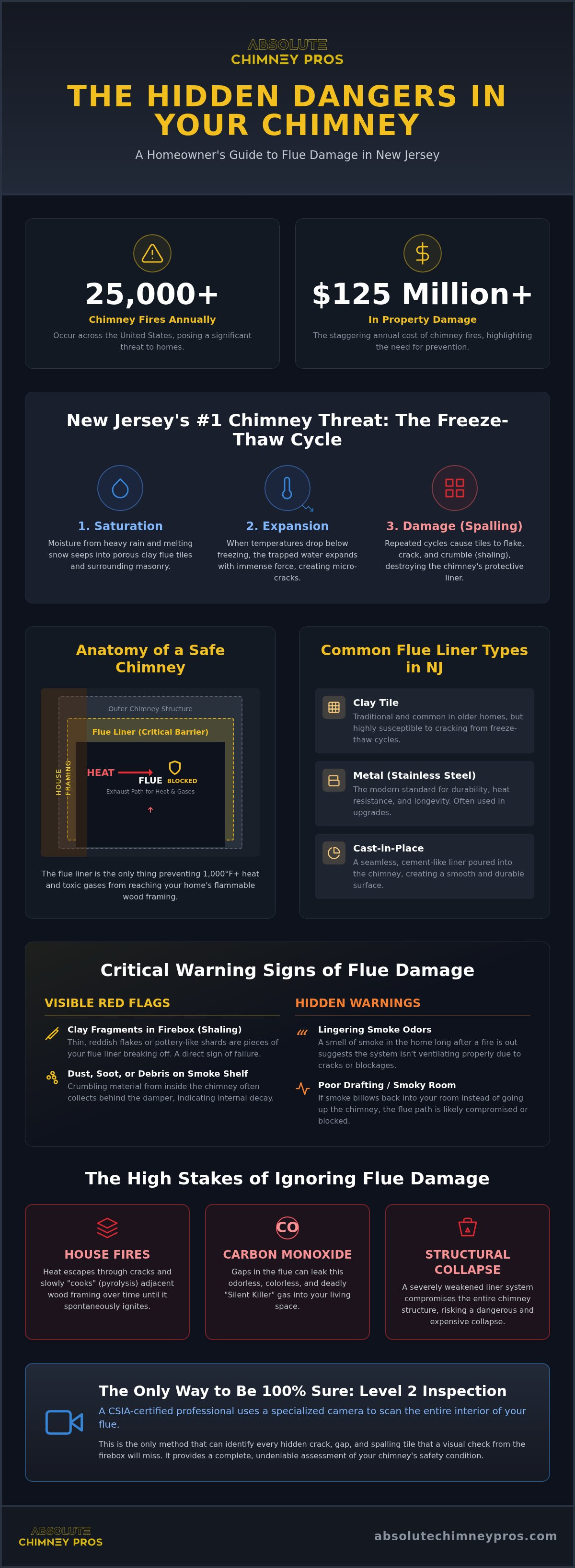
Think of your chimney flue as the "lung" of your home's heating system. It's responsible for inhaling oxygen for combustion and exhaling toxic gases safely out of your living space. Without a functional flue, your home cannot breathe. This vertical passage acts as a critical shield. It protects combustible house framing from extreme heat that can exceed 1,000 degrees Fahrenheit during a fire. In New Jersey, the local climate creates a "perfect storm" for masonry decay. High humidity and dramatic temperature swings accelerate the breakdown of internal components. Homeowners must stay vigilant for chimney flue damage signs NJ winters often leave behind.
The Role of Your Flue Liner in Home Safety
A flue liner is the internal safety barrier between fire and your home's structure. Its primary job is to prevent heat transfer to flammable walls, wooden studs, and attic insulation. It also contains hazardous byproducts like creosote and soot. These substances must be contained so they don't seep into your masonry or leak into your home. In New Jersey, you'll typically find three types of liners:
- Clay Tile: The traditional standard. Common in older Garden State homes.
- Cast-in-Place: A seamless, cement-like product poured directly into the chimney.
- Metal: Usually stainless steel. These are the gold standard for modern upgrades or oil-to-gas conversions.
How New Jersey’s Freeze-Thaw Cycles Destroy Flue Tiles
NJ winters are brutal on masonry. The expansion-contraction cycle is a constant threat. Moisture from heavy coastal rains or melting snow seeps into the porous clay tiles. When temperatures drop, this water freezes and expands. It forces the tiles to crack or flake. This process is called spalling. Urban pollution and salt air from the Jersey Shore add another layer of damage. These elements react chemically with creosote and moisture. This creates an acidic environment that eats away at clay and mortar. It's a silent, chemical erosion that weakens your chimney from the inside out.
Neglecting these environmental stressors leads to structural failure. When a flue liner cracks, it allows heat to reach the wood framing of your house. This can lead to a house fire even if there is no direct flame contact. Regular inspections are the only way to detect these chimney flue damage signs NJ weather causes behind the scenes. Don't wait for a disaster to verify your home's safety.
Visible Red Flags: Spotting Flue Deterioration from the Firebox
Your firebox floor tells a story. Look closely at the surface where you build your fires. Unusual dust or ceramic fragments aren't just a mess. They are evidence. These are primary chimney flue damage signs NJ homeowners must recognize immediately. If you see thin, reddish flakes or what looks like shards of pottery, your chimney is shedding its protective skin. This isn't a cosmetic issue. It is a structural warning that your safety barrier is dissolving from the inside out.
Shaling: Why You See Clay Pieces in Your Fireplace
Shaling is the physical breakdown of clay tile layers. It happens when moisture penetrates the porous tile and freezes. The face of the tile simply peels off in layers. This is a non-negotiable sign of liner failure. These fallen pieces don't just sit there. They collect on the smoke shelf behind your damper. This creates dangerous blockages. A blocked smoke shelf can force toxic smoke and carbon monoxide back into your living room. If you find these flakes, the liner's thickness is compromised. It can no longer reliably contain the heat of a standard fire.
Cracks and Gaps in the Mortar Joints
Heat and acidic gases are relentless. Over time, they eat away at the mortar between your flue tiles. This creates gaps. You can't see these gaps from the hearth with a standard flashlight. That's why the EPA recommends annual inspections by qualified professionals. Missing mortar is a gateway for disaster. It allows sparks and intense heat to reach the chimney's exterior brickwork. This can ignite the wooden framing of your house. Once the mortar is gone, the tiles can shift. This leads to total flue collapse.
Don't ignore the damper area during your visual check. Inspect the metal plate for fallen mortar or brick bits. If the internal structure is crumbling, it often drops debris right onto the damper. External masonry cracks are another critical warning. If you see "stair-step" cracks in your exterior brick, it often indicates internal flue stress. The chimney is shifting or expanding unevenly due to heat escaping through a damaged liner. If you've noticed any debris in your hearth, it's time for a professional chimney inspection to rule out structural failure before your next fire.
Vigilance is your best defense. A quick look at the floor of your fireplace takes seconds. It could save your home from a devastating fire. If the debris is there, the damage is already done. Professional intervention is the only way to ensure your flue is still a safe exit for heat and gases. Never assume a small pile of dust is harmless. In the world of chimney safety, debris is a call to action.
Hidden Signs of a Damaged Chimney Flue
Not all hazards leave a pile of debris in your hearth. Some of the most dangerous chimney flue damage signs NJ homeowners encounter are invisible to the eye. You must rely on your senses of smell and touch to identify these subtle warnings. If your home has developed a persistent, "sooty" odor that lingers long after the fire is out, your liner is likely breached. These acrid smells are creosote vapors escaping through cracks in the flue. They seep into your walls and floors, indicating that the safety barrier has failed.
Unusual Odors and Backdrafting Issues
A damaged liner ruins the natural physics of your chimney. For a fire to burn safely, the flue must maintain a consistent upward draft. Cracks, gaps, or shifted tiles create turbulence that slows down rising gases. This often results in smoke backing up into house chimney vents and living spaces. If you find yourself opening windows every time you light a fire, the draft is compromised.
This isn't just a ventilation problem; it's a structural emergency. According to a U.S. Consumer Product Safety Commission safety alert, liner collapse and internal corrosion are primary triggers for catastrophic house fires. When the flue cannot exhaust heat properly, that energy is transferred directly into your home's framing. Do not ignore a poor draft. It is a definitive sign that your chimney's internal health is failing.
White Staining (Efflorescence) and Moisture Problems
Look for a white, chalky powder on your chimney's brickwork. This is efflorescence. It occurs when moisture moves through the masonry and evaporates, leaving salt deposits behind. While the powder itself is harmless, its presence is a red flag. It proves that water is saturating your chimney structure. In New Jersey, this moisture often stems from a cracked flue liner that allows condensation to build up inside the masonry.
Excessive moisture leads to internal rot and rust. You might notice a damp, musty smell in your basement near the clean-out door. This is often caused by water collecting at the base of a damaged flue. This moisture can corrode the metal connectors of your furnace or water heater, leading to expensive mechanical failures. If you see white staining or smell basement dampness, your flue is no longer watertight. Immediate professional diagnosis is the only way to prevent total structural decay.
The Risks of Ignoring Flue Damage in New Jersey Homes
Ignoring the physical evidence of decay is a dangerous gamble. The chimney flue damage signs NJ homeowners spot are often just the tip of the iceberg. Below the surface, a compromised liner creates life-threatening conditions that no family should ignore. When the internal safety barrier fails, your home is no longer protected from the intense heat and toxic byproducts of combustion. This isn't just about a drafty fireplace. It is about preventing a catastrophic event that can destroy your property and harm your household.
Carbon Monoxide Leaks and Respiratory Hazards
Carbon monoxide is the "Silent Killer." It is colorless. It is odorless. It is impossible to detect without specialized equipment. Even hairline fractures in a clay liner allow this toxic gas to bypass the chimney exit. Instead of venting safely outside, CO seeps through the masonry and into your bedrooms or living areas. You must watch for symptoms like unexplained headaches, dizziness, or nausea. Every New Jersey home with a fireplace must have a functional carbon monoxide detector on every floor. This is a non-negotiable safety layer. A cracked flue turns your heating system into a delivery mechanism for poison. Do not rely on luck when it comes to your family's breathing air.
Structural Failure and Pyrolysis Risks
Structural failure often begins with a hidden process called pyrolysis. This is a chemical change in the wood framing of your house. When wooden studs or floor joists are repeatedly exposed to high heat from an unlined or damaged chimney, their ignition point lowers. Over years of exposure, the wood becomes "charred" at a molecular level. Eventually, the framing can catch fire at temperatures that were once considered safe. A chimney fire can reach 2,000 degrees in minutes. Without a solid liner to contain that energy, the heat melts nearby structures and ignites the attic or roof. This is why a professional chimney inspection New Jersey is critical for older homes. It identifies these "pre-fire" conditions before they become disasters.
Since a chimney fire can quickly spread to your roofing system, companies like Advanced Roofing recommend regular exterior inspections to ensure your home's primary defenses are always prepared for the unexpected.
In the New Jersey real estate market, a damaged flue is a deal-breaker. State inspectors and savvy buyers look for the Chimney Verification form (F-370) during any appliance replacement or home sale. If your flue fails a mandated Level 2 inspection, the sale stops immediately. You face unexpectedly high repair bills and lost equity at the closing table. Protecting your flue is an investment in your home's market value. Don't let a hidden crack become a catastrophe. Schedule your professional chimney inspection today to ensure your home is truly safe and compliant with NJ building codes.
Professional Diagnosis and Flue Repair Solutions in NJ
You have identified the warnings. You have seen the debris or smelled the acrid smoke. Now you need a definitive resolution. Relying on visual checks from the hearth is a gamble you cannot afford to take. Professional diagnosis is the only way to verify the chimney flue damage signs NJ homeowners have observed. We eliminate the guesswork through advanced technology and disciplined expertise. Your safety depends on an accurate assessment of what is happening inside your walls.
Level 2 Camera Inspections: Seeing the Unseen
Flashlight and mirror inspections are obsolete. They are insufficient for modern safety requirements. Our technicians utilize high-resolution cameras to find hairline fractures hidden deep within the stack. We see what the naked eye cannot. This process produces a comprehensive video report. It is vital documentation for insurance claims and NJ real estate transactions. When lives are on the line, "good enough" is not an option. A video scan provides the transparency you need to make informed decisions about your home's structural integrity.
Stainless Steel Liner Installation: The Permanent Fix
You may hear about "parging" as a quick fix. This involves smoothing mortar over damaged areas. It is often a temporary solution that fails to address the underlying decay. For a permanent fix, stainless steel relining is the superior choice for the New Jersey climate. It is UL-listed and compatible with gas, oil, and wood-burning systems. A new liner creates a seamless, airtight path for toxic gases. It improves heating efficiency and drastically reduces creosote accumulation.
In New Jersey, the Uniform Construction Code (NJUCC) requires a chimney verification whenever you replace fuel-fired equipment. If you are converting from oil to gas, a damaged flue will stop the project in its tracks. A stainless steel liner ensures your system meets these strict legal mandates. It is a one-time investment in long-term reliability. Our team offers same-week appointment availability for chimney liner installation NJ residents can trust to secure their property.
Absolute Chimney Pros operates with total transparency. We offer flat-fee inspection options to ensure you know the cost upfront. There are no hidden fees. Our CSIA-certified technicians bring technical mastery to every job site. We show up. We assess. We provide a clear report. We execute the task. This methodical approach ensures your home remains a protected environment. Don't wait for a minor crack to become a total structural failure. Take the final step toward peace of mind today.
Secure Your Home Against Hidden Chimney Hazards
Your chimney is a critical safety system that requires constant vigilance. New Jersey's unique climate makes your flue vulnerable to structural decay that often remains hidden until a disaster occurs. Recognizing the chimney flue damage signs NJ homeowners face, such as falling clay fragments or lingering acrid smells, is the first step toward protecting your family from carbon monoxide and fire risks. These indicators are not just maintenance issues; they are urgent warnings that your home's safety barrier has been breached.
Don't leave your safety to chance or guesswork. Our CSIA-certified technicians utilize advanced camera technology to provide a definitive, transparent report on your chimney's health. We offer flat-fee inspections with no hidden costs and same-week appointments to ensure your home remains a protected environment. Taking action now prevents a minor crack from becoming a major structural failure. Secure your property and regain your peace of mind with a professional assessment.
Schedule your flat-fee chimney inspection with Absolute Chimney Pros today!
Your family's safety is our primary mission. We look forward to helping you keep your home warm and secure for years to come.
Frequently Asked Questions
Is a cracked chimney flue dangerous to use?
Yes, a cracked flue is extremely dangerous. It compromises the structural barrier that protects your home from fire and toxic gases. Heat can escape through fractures and ignite nearby wooden studs or insulation. Additionally, it allows carbon monoxide to seep into your living areas instead of venting outside. You should stop using the fireplace immediately until a professional inspection confirms it is safe.
How much does it cost to fix a damaged chimney flue in New Jersey?
Repair costs vary based on the extent of the damage and the required solution. Factors include the height of the chimney, the fuel type of your heating appliance, and whether you need a partial repair or a full stainless steel relining. While minor tile repairs are less intensive, a complete liner replacement is a major structural upgrade. You should request a professional assessment to receive an accurate quote for your specific situation.
Can I use my fireplace if I see pieces of clay tile on the floor?
No, you should not use your fireplace if you find clay fragments in the hearth. This debris is a definitive sign of shaling, which indicates your clay liner is physically disintegrating. These pieces can create dangerous blockages on the smoke shelf and signal that the remaining liner is too thin to safely contain heat. Continued use increases the risk of a chimney fire or carbon monoxide backup.
What causes a chimney flue to crack or deteriorate?
Several factors contribute to flue deterioration in the Garden State. New Jersey's freeze-thaw cycles force moisture into clay tiles, causing them to expand and crack when temperatures drop. Past chimney fires can also cause sudden, catastrophic fractures due to thermal shock. Additionally, acidic condensation from high-efficiency furnaces or water heaters can eat away at the liner material over time.
How do I know if my chimney liner needs to be replaced?
You can identify the need for replacement by watching for key chimney flue damage signs NJ homeowners often report. Look for clay shards in the firebox, white salt deposits on the exterior masonry, or acrid odors in your home. However, many fractures are invisible from the hearth. A Level 2 video inspection is the only reliable way to confirm if a liner is breached and requires a full replacement.
Will a standard chimney cleaning find flue damage?
A standard chimney cleaning is designed to remove soot and creosote, not to diagnose structural integrity. While a sweep might notice obvious debris, they cannot see hairline cracks or gaps between tiles without specialized equipment. You need a Level 2 inspection involving a high-resolution camera to thoroughly evaluate the flue's condition. Cleaning is a maintenance task; inspection is a diagnostic safety requirement.
Does insurance cover chimney flue liner replacement in NJ?
Coverage depends entirely on the cause of the damage and your specific policy. Most New Jersey homeowners' insurance policies cover repairs caused by sudden, accidental events like a chimney fire or lightning strike. However, damage resulting from age, neglect, or standard wear and tear is typically excluded. You should provide your insurance adjuster with a professional video inspection report to document the nature of the damage.
How long does it take to install a new chimney liner?
Most professional chimney liner installations are completed in a single day. The process involves preparing the chimney, sliding the new stainless steel liner into place, and securing the connections to your fireplace or heating appliance. More complex chimneys or those requiring the removal of old, collapsed tiles may take longer. A certified technician can provide a specific timeline after assessing the height and condition of your stack.


