
A single hairline crack in your chimney flue is more than a maintenance headache. It is a direct path for carbon monoxide to enter your home. In New Jersey, a damaged liner is a legal liability and a significant health hazard. You deserve to know what is happening inside your stack without any guesswork. If you are worried about the cost of a full liner replacement or confused by state certification laws, you aren't alone. Every homeowner wants a safe fireplace and a system that meets the standards for chimney flue repair NJ.
This guide provides a clear path to professional chimney flue repair NJ. We will help you identify invisible damage and explain the specific mandates for fuel-fired equipment. You will discover the most reliable repair methods available to restore your home's safety. We also explain how modern video inspections ensure your home stays compliant with national standards. From identifying hazards to finding a certified technician for chimney flue repair NJ, we cover everything you need to know to protect your environment. We focus on transparency and exactness to ensure your home remains a safe haven.
Key Takeaways
- Spot invisible hazards like clay tile fragments before they become life-threatening risks.
- Discover why camera-assisted Level 2 inspections are mandatory for chimney flue repair NJ during property transfers.
- Compare stainless steel relining and ceramic resurfacing to choose the most durable solution for your fireplace.
- Protect your home's structural integrity and resale value by addressing minor flue cracks immediately.
- Guarantee code compliance with CSIA-certified technicians who prioritize transparent diagnostics and household safety.
Signs Your NJ Chimney Flue Needs Urgent Repair
Internal flue damage is a silent threat. It hides behind layers of brick and mortar. You cannot see it from your living room. You cannot see it from your roof. By the time symptoms appear, the risk is already high. Identifying the need for chimney flue repair NJ starts with vigilance. You must look for physical debris and monitor how your home feels. No guesswork is allowed when your family's safety is at stake.
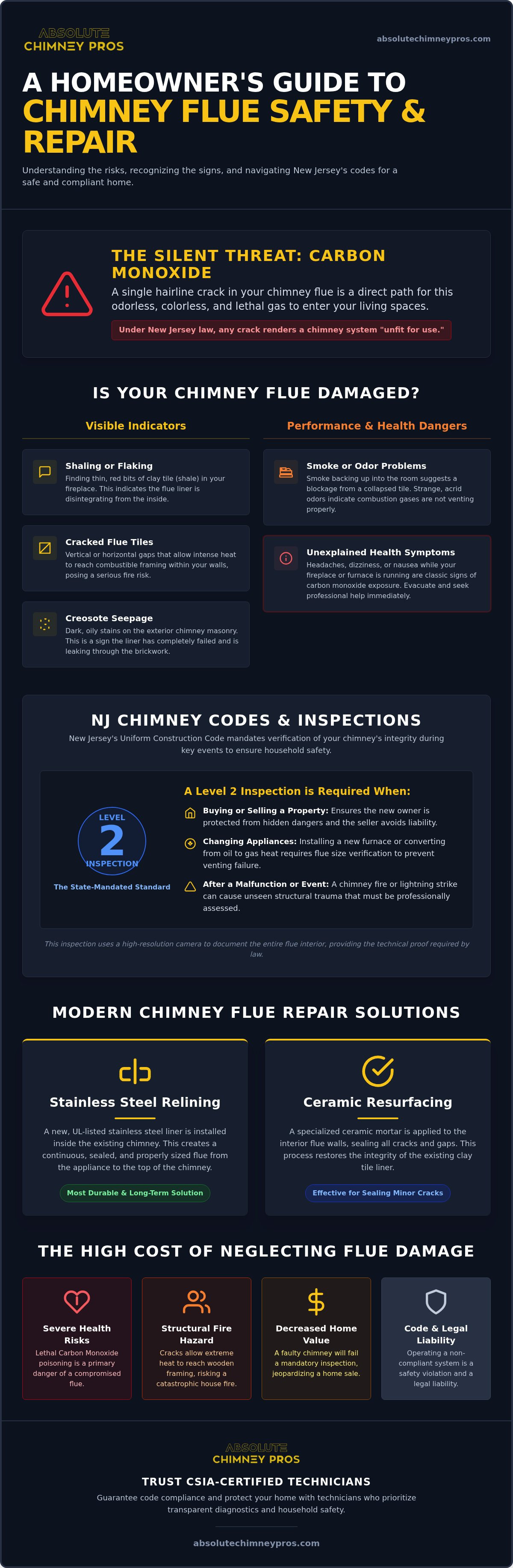
Before diagnosing problems, you should understand the basics. What is a Chimney Flue? This structure serves as the inner lining that channels toxic combustion byproducts out of your home. When this lining fails, those gases linger. One of the most urgent signals is "shaling." If you find thin, red bits of clay tile in your fireplace or at the base of your furnace, your flue is disintegrating. This is not a minor cosmetic issue. It is a structural failure.
Performance issues are also red flags. Smoke backing up into the room suggests a blockage or a collapsed tile. Strange, acrid odors are equally concerning. Pay close attention to your physical health. Unexplained headaches, dizziness, or nausea while the heating system is running are signs of carbon monoxide exposure. Do not ignore these symptoms. A compromised flue requires immediate professional intervention.
Visible Indicators of Flue Deterioration
Visible signs often appear only after significant damage has occurred. Look for spalling. This is the flaking or peeling of the clay liner walls. It often looks like salt-like powder or larger chunks of masonry. Heat stress causes these tiles to expand and contract. Over time, this creates vertical or horizontal gaps. These openings are dangerous. They allow heat to bypass the flue and reach your home's internal structure.
Cracked flue tiles are a major safety violation. These gaps allow heat to reach combustible wooden framing. You might also notice creosote seepage. This appears as dark, oily staining on the exterior masonry of the chimney stack. It means the flue is no longer contained. It is "bleeding" through the brickwork. This indicates a total failure of the liner system and requires expert chimney flue repair NJ to restore safety.
Hidden Dangers: The Carbon Monoxide Risk
A compromised flue is a broken exhaust system. Small cracks act like vents, allowing toxic gases to seep into your bedrooms and living spaces. Carbon monoxide is odorless. It is colorless. It is lethal. Under New Jersey law, even "small" cracks are significant safety violations. They render the system "unfit for use." There is no such thing as a "safe" crack in a chimney liner.
State regulations, specifically N.J.A.C. 5:23-2.20(d), emphasize the need for a verified, intact venting system. If your flue is breached, your home is not compliant. Every NJ home must have working carbon monoxide detectors on every level. However, a detector is a secondary defense. Your primary defense is a sound, professionally repaired flue. Safety is non-negotiable. We take responsibility for the well-being of your environment by ensuring your exhaust system is airtight.
NJ Chimney Codes and the Role of Level 2 Inspections
NJ law doesn't leave chimney safety to chance. The Uniform Construction Code is strict. It requires verification of your venting system during major home changes. A Level 2 inspection is the industry standard for this verification. It involves a specialized, high-resolution camera. This camera travels the entire length of the flue interior. It reveals what the naked eye cannot see. This detailed review is an essential step before starting any chimney flue repair NJ. It provides the technical proof required by state law.
Code compliance isn't just about finding cracks. It's about physics and precision. Your flue size must match the BTU output of your heating system. If you install a new furnace, the venting requirements change. An oversized flue causes venting failure. It leads to acidic condensation that eats through masonry. We ensure your system is properly sized. We provide the specific paperwork local NJ township inspectors demand. The "Chimney Verification for Replacement of Fuel-Fired Equipment" form is a legal necessity. Without it, your appliance installation won't pass inspection. We take the lead on this documentation to ensure your project stays on track.
When is a Chimney Certification Required in NJ?
Selling or buying a home in New Jersey or the Philadelphia area triggers a mandatory inspection. It protects the buyer from hidden hazards. It protects the seller from liability. Converting from oil to gas heat is another critical trigger. High-efficiency furnaces have unique venting needs that old flues often can't handle. You also need certification after a chimney fire or a lightning strike. These events cause structural trauma that isn't always visible from the outside. A professional chimney inspection ensures your system is still sound and legally compliant.
What Happens During a Camera-Assisted Flue Review?
We scan every inch of the flue. We look for hairline cracks and joint failures. These are the weak points where toxic gas escapes into your walls. A camera-assisted review also identifies blockages. Animal nests, soot buildup, or fallen masonry can choke your system. Chimney inspection New Jersey services provide the precise data needed for accurate quotes. By following Certified Chimney Flue Repair in NJ standards, we remove the guesswork. You get a clear report. You see the damage for yourself on the monitor. This transparency ensures your chimney flue repair NJ meets every state mandate and restores your home's safety.
Comparing Flue Repair Solutions: Relining vs. Resurfacing
Choosing the right method for chimney flue repair NJ isn't just about the price tag. It's about the structural reality of your chimney. If your clay tiles are crumbled or missing, you replace the system. If the tiles are sound but the joints are eroded, you repair them. This is the "Repair vs. Replace" framework. We use it to ensure every home meets the safety standards defined by NJ Chimney Codes. Both paths have a specific purpose. Neither allows for shortcuts.
Stainless steel liners are the gold standard for durability. They are compatible with all fuel types. They create a seamless, airtight path for exhaust. Ceramic resurfacing is the alternative. It involves coating the existing clay tiles with a heat-resistant material. This restores the flue without a full replacement. We also address the chimney crown and throat. A cracked crown allows water to seep into the flue, causing tiles to crack. Fixing the exterior masonry is often the first step in protecting the interior flue.
Stainless Steel Chimney Liner Installation
Stainless steel is the best option for older NJ homes. Many historic properties have unlined chimneys or flues with severe structural trauma. We install high-grade, UL-listed steel that resists the corrosive acids produced by modern furnaces. These systems often come with lifetime warranties. They provide a permanent solution to venting failures. For a deeper look at how this process works, read about chimney liner installation NJ. It is the most reliable way to bring an old chimney up to modern code.
Flue Tile Joint Repair and Resurfacing
If your flue tiles are physically stable but the mortar between them is gone, resurfacing is the answer. We use a specialized applicator to pump a ceramic-based mortar into the flue. This material fills every hairline crack and open joint. It creates a smooth, glass-like surface that improves draft and prevents gas leaks. This is a cost-effective choice for chimneys with minor joint failure. However, professional application is mandatory. The material must withstand temperatures exceeding 2,000 degrees Fahrenheit. If it's not applied correctly, it won't hold. We ensure the bond is perfect before we clear the job.
Code compliance is the final word. Whether we reline or resurface, the goal remains the same. The system must be airtight. It must be sized correctly for your boiler or fireplace. We follow NFPA 211 standards to the letter. This isn't just a repair. It's a restoration of your home's primary safety barrier against fire and toxic gas.
The Real Cost of Neglecting Flue Damage in New Jersey
Neglecting a cracked flue is a gamble with your home's equity. It is a gamble with your family's lives. A damaged flue does not fix itself. It only gets worse. The primary cause of chimney-related fires is heat transfer through a compromised liner. When the barrier fails, heat reaches the wooden framing of your house. This is a catastrophic failure waiting to happen. Beyond fire, there is the silent threat of carbon monoxide. As we established in previous sections, even hairline cracks allow toxic gas to bypass the exhaust system and enter your bedrooms.
Property value is another casualty of neglect. New Jersey real estate transactions require a Level 2 inspection. If the camera reveals a damaged flue, the sale stops. You either pay for the chimney flue repair NJ at the last minute or lose the buyer. It is a legal liability that stalls closings and lowers your asking price. Efficiency also suffers. A cracked flue ruins the draft. Your heating system works harder. It burns more fuel. You pay for neglect every month in your utility bills. Precision in repair is the only way to stop this financial drain.
Water Damage and the Freeze-Thaw Cycle
New Jersey winters are brutal on masonry. Water enters through the smallest cracks in your flue. It freezes. It expands. It shatters the clay tiles from the inside out. This cycle leads to total flue collapse. Addressing a chimney leak repair NJ early is vital. It prevents the moisture intrusion that destroys your liner. A functional chimney cap is your first line of defense. It protects the new repair from the elements. Without it, your investment is at risk. We ensure your cap is secure to prevent recurring damage.
Liability and Insurance Implications
Insurance companies look for reasons to deny claims. If a fire or leak occurs, they will check your maintenance records. If you haven't had an annual inspection, they may claim negligence. You lose your coverage. You pay for the damage out of pocket. Maintaining records of your CSIA-certified inspections is essential for liability protection. It proves you took the necessary steps to keep your home safe. This documentation is your shield against insurance disputes. Don't wait for a disaster to find out you aren't covered. Schedule a professional chimney repair assessment today to secure your home and your insurance standing.
Certified Chimney Flue Repair in NJ with Absolute Chimney Pros
Safety is not a byproduct. It is the goal. At Absolute Chimney Pros, we provide the technical mastery required for every chimney flue repair NJ project. Our technicians are CSIA-certified. This means they have passed rigorous testing on national fire codes and venting standards. We don't guess about the state of your liner. We verify it with precision. You receive a serious, professional assessment of your home's exhaust system every time we step onto your property.
Transparency is our standard. We provide detailed, on-site estimates. There are no hidden fees. There are no surprise costs. Some competitors use "free" offers to get in the door, only to inflate the final bill with unexpected charges. We don't operate that way. We offer flat-fee inspection options so you know the cost of the diagnostic work upfront. This honesty builds the trust necessary for a protective partnership. We act as your guide through the complex world of chimney maintenance and NJ code compliance.
Time is often critical for homeowners. A failed home inspection or a broken furnace requires immediate action to keep a sale moving or a home warm. We offer same-week appointments to accommodate these urgent needs. Our local expertise covers New Jersey and the Philadelphia area. We understand the specific masonry challenges of our region's historic and modern homes. Our technicians show up on time. They are disciplined experts who value your schedule and your safety.
Our Precision Repair Process
The process begins with a flat-fee inspection. We diagnose the root cause of your flue failure. We don't just treat the symptom; we identify why the damage occurred. We use camera-assisted diagnostics to provide detailed reporting. You see the footage for yourself on our monitors. You understand the risk because we show it to you. Once the problem is identified, we execute the repair using high-grade, code-compliant materials. Every liner installation and joint repair meets the highest industry standards for durability. We ensure your system is airtight and ready for use.
Precision matters in every chimney flue repair NJ. We ensure the materials we use are perfectly compatible with your specific heating appliance. We don't cut corners with sub-par materials. We provide the documentation required for local NJ township compliance. This methodical approach mirrors our operational style. We assess, we report, and we execute. No fluff. No filler. Just reliable results that restore your peace of mind.
Schedule Your NJ Flue Inspection Today
Don't wait for a safety crisis. Don't let a failed home inspection kill your property sale. A compromised flue is a silent threat that requires a disciplined expert to resolve. Contact our team for a vigilant review of your chimney. We take responsibility for the well-being of your environment. Book your inspection with Absolute Chimney Pros and secure your home's safety today.
Secure Your Home’s Safety and Compliance
A damaged chimney flue is a liability you cannot afford to ignore. We have detailed the invisible hazards of clay tile failure and the strict mandates of New Jersey safety codes. You now have the facts needed to choose between relining and resurfacing for your chimney flue repair NJ. Precision is the only way to eliminate the risk of carbon monoxide exposure and structural fire. Don't let a hidden breach compromise your family's well-being or your property value.
Absolute Chimney Pros provides the professional oversight your home requires. Our CSIA-certified technicians are licensed and insured in NJ and PA. We offer same-week appointments to ensure your system meets every legal standard without delay. We remove the guesswork with transparent, camera-assisted diagnostics and high-grade, code-compliant materials. Our team takes responsibility for the integrity of your exhaust system so you can enjoy your home with total confidence.
Schedule Your CSIA-Certified Flue Inspection Today
Take control of your home's safety and legal standing. We are ready to serve as your vigilant protector and trusted technical expert. Your peace of mind is just one inspection away.
Frequently Asked Questions
How do I know if my chimney flue is cracked without a camera?
You can check for "shaling," which is the presence of thin clay tile flakes in your fireplace or furnace base. Look for white, salt-like deposits or dark, oily staining on your exterior brickwork. These signs indicate the internal structure is failing. However, most cracks remain hidden from view. A professional camera scan is the only reliable way to confirm the condition of your flue before starting any repairs.
Is a cracked chimney flue a fire hazard?
A cracked flue is a severe fire hazard. It allows extreme heat to reach the wooden framing of your house. This process, known as pyrolysis, lowers the ignition temperature of wood over time. Eventually, the framing can catch fire even without direct flame contact. Fixing these breaches is a critical step in any chimney flue repair NJ project to prevent a catastrophic structure fire.
What is the most common chimney flue repair method in New Jersey?
Stainless steel relining is the most frequent solution for NJ homeowners. It provides a permanent, airtight exhaust path that resists corrosive gases. It is ideal for older homes with unlined or crumbling masonry. Ceramic resurfacing is another option for chimneys with sound tiles but failing mortar joints. Both methods restore your system to national safety standards and ensure long-term protection for your family.
Can I use my fireplace if the flue liner is damaged?
You must stop using your fireplace immediately if damage is suspected. A breached liner cannot contain toxic gases or intense heat. This creates an immediate risk of carbon monoxide poisoning and structure fires. Using a damaged system is also a violation of NJ safety codes. Wait for a certified technician to perform a professional repair before lighting another fire in your home.
How much does it cost to repair a chimney flue in NJ?
Total costs depend on the height of your chimney and the specific repair method chosen. Relining a tall chimney with stainless steel requires more materials than a ceramic resurfacing job. Every home is unique. We provide transparent, on-site estimates after our initial flat-fee inspection. This ensures you receive an accurate quote without hidden fees or guesswork involved in the process.
Do I need a permit for chimney flue repair or relining in NJ?
Most New Jersey municipalities require a permit for chimney relining or significant flue repairs. This ensures the work complies with the NJ Uniform Construction Code. Local inspectors often require a "Chimney Verification" form after the work is finished. We manage this technical documentation to ensure your chimney flue repair NJ is legally recognized and fully compliant with state law.
How long does a typical chimney flue repair take to complete?
Most flue repairs are completed within four to eight hours. A standard relining project is usually a one-day job. More complex masonry restorations or multi-flue systems might require additional time to ensure precision. We prioritize efficiency and offer same-week appointments to help you resolve safety issues or clear home inspection hurdles quickly without sacrificing technical mastery.
What is the difference between a chimney flue and a chimney liner?
The flue is the physical void or tunnel that carries smoke and gases out of your home. The liner is the protective layer, often made of clay tile or metal, that shields the chimney's masonry from heat and acids. If the liner fails, the flue becomes a dangerous path for fire and toxins. Professional repair involves restoring or replacing this liner to keep the exhaust path airtight and secure.


