
If you think a chimney sweep is just a guy with a wire brush and a top hat, you're gambling with your home's safety. Modern fire prevention isn't about folklore; it's about precision engineering and high-resolution diagnostics. You want to heat your home without the constant fear of a chimney fire or toxic fumes leaking into your living room. You deserve a clean house, not a floor covered in soot. So, exactly what does a chimney sweep do in the 21st century?
We understand the confusion surrounding inspection levels and the anxiety of inviting a service technician into your home. This article reveals the high-tech reality of modern chimney sweeping and how it protects your New Jersey or Philadelphia property. You'll learn how to identify a qualified CSIA-certified pro who uses camera-assisted tools to find hidden hazards. We'll walk through the entire process, from soot-free cleaning techniques to the critical safety standards required by local regulations. Get the facts you need to keep your family safe and your hearth reliable.
Key Takeaways
- Modern service is a technical safety diagnostic. Discover what does a chimney sweep do to eliminate creosote hazards and prevent house fires.
- Professional sweeping uses rotary tools and high-resolution cameras. These tools identify structural flaws that a simple visual check will miss.
- Trust only CSIA-certified technicians. Certification ensures your home meets NFPA standards and protects you from liability risks.
- Schedule inspections annually. This protects your masonry from the humidity and freeze-thaw cycles common in New Jersey and Philadelphia.
- Demand a zero-dust process. Modern pros seal the fireplace to keep your living room spotless while they work.
Defining the Modern Chimney Sweep's Role in Home Safety
The image of a soot-covered worker with a top hat belongs in the past. Today, a professional technician acts as a vigilant protector of your household. While the history of chimney sweeping is rooted in manual labor, the modern reality is a high-tech safety audit. You aren't just paying for a clean flue. You're investing in a certified diagnostic process that prevents catastrophic fires and toxic gas leaks. Precision matters. Guesswork is unacceptable.
Exactly what does a chimney sweep do during a standard visit? They identify hazards that the average homeowner cannot see. This includes removing volatile chemical deposits and scanning for structural failures. The goal is simple. We ensure your heating system operates at peak efficiency without endangering your family. We don't just clean; we verify that your home is safe to heat.
Identifying and Removing Creosote Buildup
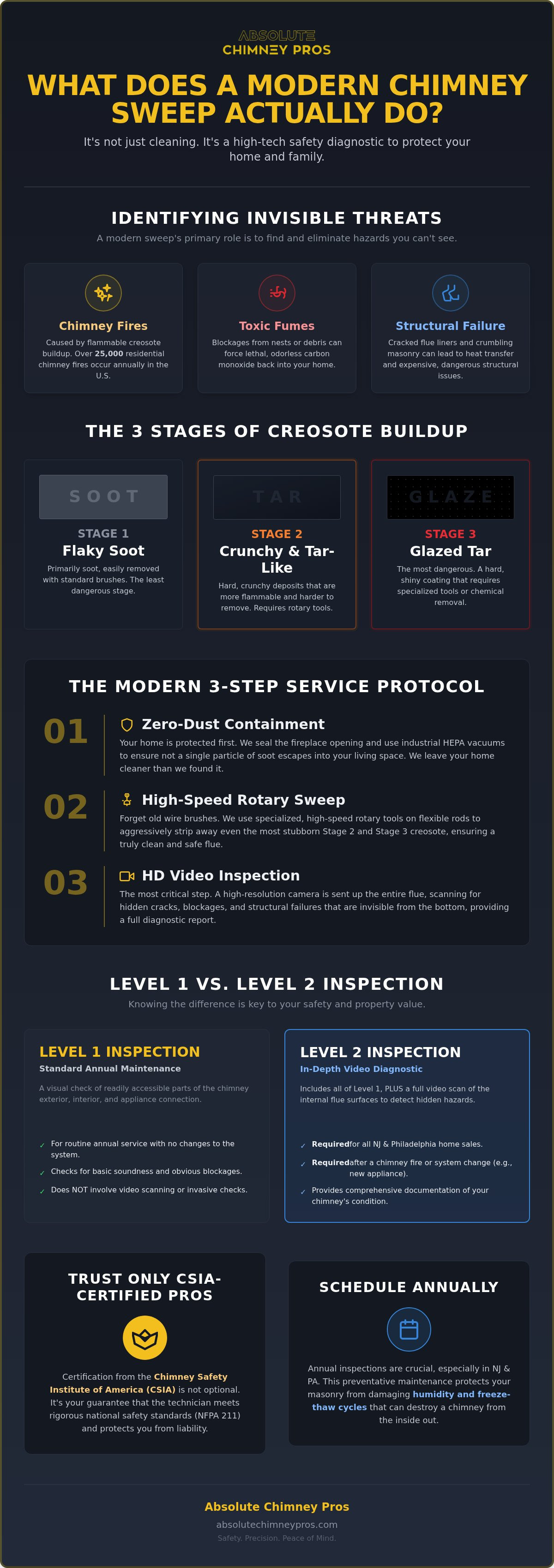
Creosote is a highly flammable byproduct of wood combustion. It accumulates inside your chimney every time you light a fire. It isn't all the same. There are three distinct stages of buildup. Stage 1 is flaky soot. Stage 2 is crunchy, tar-like deposits. Stage 3 is the most dangerous. It looks like a hard, glazed coating of tar. This stage is extremely difficult to remove. It often requires specialized mechanical tools or chemical treatments to strip it away.
Ignoring this buildup is a major risk. There are more than 25,000 residential chimney fires every year in the United States. Most of these are caused by creosote ignition. A professional sweep removes these fuel sources before they can spark a disaster. We don't just brush the surface. We eliminate the threat at its source.
Inspecting for Blockages and Structural Integrity
Cleaning is only half the job. A modern sweep also functions as a structural inspector. Chimneys face constant stress from extreme heat and external weather. We look for silent threats. This includes bird nests, fallen bricks, or leaves that block the exhaust. A blocked chimney forces smoke and carbon monoxide back into your home. You can't see carbon monoxide. You can't smell it. But it's lethal. We ensure your ventilation path is clear and secure.
- Flue Liner Cracks: We check for tiny fractures in the liner. These cracks allow heat to transfer directly to the wooden framing of your house.
- Damper Operation: We ensure the damper opens and closes fully. A stuck damper ruins airflow and wastes energy.
- Masonry Health: We look for crumbling mortar. Water penetration during NJ and PA winters can destroy a chimney from the inside out.
Safety is the priority. A qualified technician provides more than a service. They provide peace of mind. Every inspection acts as a shield against the unexpected, keeping your environment controlled and your family protected.
The Step-by-Step Modern Sweeping and Inspection Process
So, what does a chimney sweep do once they enter your home? The process is a surgical operation. It begins with total containment. We don't touch the flue until your living room is shielded. Technicians use industrial-grade drop cloths and high-velocity HEPA vacuums. This ensures that microscopic soot particles stay out of your air. We seal the fireplace opening completely. There is no mess. There is no lingering smell. This disciplined approach is the hallmark of a professional service.
Next comes the mechanical sweep. We use specialized rotary brushes attached to flexible rods. Unlike old manual brushes, these tools spin at high speeds to strip away stubborn creosote. We often perform this from the bottom up. This maintains the seal and prevents dust from escaping. Every movement follows the rigorous standards set by the Chimney Safety Institute of America (CSIA). Every step is deliberate. Every action is documented for your final report.
Advanced Video Inspections (Level 1 vs. Level 2)
A visual check from the hearth isn't enough. A Level 1 inspection covers readily accessible areas. It's the standard for annual maintenance. However, many situations require a Level 2 Chimney Inspection. This involves a high-resolution camera scan of the entire flue interior. It's mandatory during home sales in New Jersey and Philadelphia. It's also required after a chimney fire or a change in fuel type. We see the cracks you can't. We find the hazards before they find you.
Dust Containment and Professional Cleanliness
We treat your home with absolute respect. Our no-nonsense promise means leaving your living space cleaner than we found it. We use soot guards and high-velocity filtration to capture 99.97% of particles. This isn't just about aesthetics. It's about your respiratory health. If you're ready for a transparent diagnostic, consider a flat-fee inspection from a local expert who values your time and property.
Understanding what does a chimney sweep do helps you see the value in the final diagnostic report. The job ends with a clear roadmap for any necessary repairs. There is no guesswork involved. You receive photos and a technical breakdown of your chimney's health. You know exactly where you stand before you light the next fire. This transparency builds the trust you need to heat your home with confidence.
Why Certification and Specialized Training are Mandatory
Hiring a general handyman for chimney maintenance is a massive liability. It's like asking a carpenter to rewire your electrical panel. They might have the tools, but they lack the diagnostic eye. Precision is not optional when fire safety is on the line. When people ask what does a chimney sweep do, they often overlook the rigorous education required to handle high-heat systems. A certified technician is a trained specialist who understands the complex relationship between airflow, heat transfer, and structural integrity. Guesswork is dangerous.
The industry gold standard is certification from the Chimney Safety Institute of America (CSIA). This isn't just a piece of paper. To earn this credential, technicians must pass exams based on the National Fire Protection Association (NFPA) 211 standards and the International Residential Code. They must renew this certification every three years to stay current with evolving safety protocols. Adherence to NFPA 211 is critical. It defines the three levels of inspection and ensures every vent and flue meets national safety benchmarks. Professional certification protects your home, your family, and your insurance coverage.
The Technical Mastery of a Certified Sweep
A certified pro masters combustion physics. They understand how draft mechanics work and why a chimney might backdraft smoke into your living room. This knowledge is essential for identifying why a fireplace is failing. They also stay educated on local building codes specific to the New Jersey and Philadelphia areas. Whether you have a traditional masonry hearth or a modern gas insert, a certified sweep knows the exact clearance requirements and liner specifications needed to prevent a disaster. They don't just clean. They analyze.
Risks of the DIY Approach
The DIY route is a gamble that rarely pays off. Homeowners often miss the most dangerous areas, such as the smoke shelf, where heavy creosote deposits hide. Without professional rotary brushes and high-resolution cameras, you can't see the internal fractures that lead to house fires. The physical risks are also significant. Roof work is hazardous without professional-grade safety gear and fall protection.
- Incomplete Cleaning: Missing glazed creosote that acts as fuel for a chimney fire.
- Lack of Diagnostics: Overlooking hairline cracks in the flue liner that leak carbon monoxide.
- Liability Issues: Unlicensed work can lead to denied insurance claims if a fire occurs.
A professional sweep carries comprehensive liability insurance. This protects you if an accident occurs on your property. It provides the peace of mind that comes from knowing a vigilant expert has verified your system is safe to operate. Don't leave your safety to chance. Trust the experts who have dedicated years to mastering the science of fire prevention.
When to Schedule Your Chimney Service
Timing is everything. Safety is not a seasonal trend. The National Fire Protection Association (NFPA) recommends an inspection at least once per year. This is the absolute minimum. Frequent use requires more frequent service. Most homeowners wait until the first cold snap in New Jersey or Philadelphia to call. This is a mistake. The fall rush leads to long wait times. Full schedules. Unnecessary stress. Vigilant homeowners schedule their service in the spring.
Exactly what does a chimney sweep do during a scheduled visit? They clear out the chemical remnants of the previous winter to prevent structural decay. Why spring? Post-winter cleanup is more than just tidying up. Soot and creosote are acidic. If left in your flue all summer, they react with humidity to corrode your liner and masonry. Removing these deposits in April or May extends the life of your chimney. It also ensures you're ready for the first frost without the stress of a last-minute appointment.
Buying a new home? Don't light a fire until you get a professional evaluation. You don't know the previous owner's burning habits. You don't know if they ignored hidden structural damage. A sweep provides the diagnostic clarity you need before that first fire. It's a safety essential for any real estate transaction in the NJ and PA area.
Critical Warning Signs You Need an Immediate Sweep
Don't ignore the red flags. Smoke backing up into the room is a clear sign of a blockage or a major draft issue. If your living room smells like a campfire or asphalt during a humid summer day, your chimney is telling you it's dirty. Look for visible oily, black gunk on the walls of your fireplace. This is Stage 2 creosote. It's a fuse waiting to be lit. If you see it, stop using the fireplace immediately. You need a professional intervention.
The Impact of Fuel Choice on Cleaning Frequency
What you burn dictates how often you clean. Unseasoned 'green' wood contains high moisture. This moisture cools the smoke, causing it to condense into creosote faster. Hardwoods like oak burn cleaner than softwoods like pine. Even gas fireplaces require annual attention. They don't produce creosote, but they can develop blockages from bird nests or debris. These blockages cause carbon monoxide to back up into your home. Safety requires a professional eye regardless of fuel choice.
Protect your home before the cold hits. If you notice any of these signs, schedule your chimney sweep today to secure your environment.
Securing Your New Jersey or Philadelphia Home
Homeowners in New Jersey and Philadelphia face a unique set of challenges. Our region is famous for its historic architecture. However, those beautiful brick chimneys require specific expertise to remain safe. When you ask what does a chimney sweep do in the Northeast, the answer must include masonry preservation. Our local climate is relentless. High humidity and rapid freeze-thaw cycles create a "pressure cooker" effect on your chimney. Water enters small cracks in the mortar or the chimney crown. It freezes. It expands. This cycle eventually destroys the structural integrity of your flue. Absolute Chimney Pros takes a no-nonsense approach to these local threats. We provide flat-fee inspections and same-week service to catch this damage before it becomes a catastrophe.
We act as a protective partner for your property. We don't just look for soot. We look for the subtle signs of water penetration that lead to expensive repairs. Our technicians are local experts who understand the specific municipal codes and building materials used across NJ and PA. There is no guesswork. We provide a transparent report so you know exactly how your chimney is holding up against the elements. Reliability is our standard.
Local Masonry Expertise
Crumbling mortar isn't just an eyesore. It's a safety hazard. We perform repointing to replace failing joints before they lead to a structural collapse. This keeps your chimney stable and prevents toxic gases from leaking into your attic. Waterproofing is another essential shield we use to help chimneys survive harsh winters. For aging flues, we often recommend Chimney Sweep NJ services that include installing stainless steel liners. These liners modernize old flues and provide a seamless, fireproof path for exhaust. They are the ultimate defense against heat transfer to your home’s wooden frame.
The Total Ventilation Safety Audit
Safety doesn't stop at the hearth. A vigilant protector looks at the entire home's ventilation system. This is why we often coordinate Dryer Vent Cleaning NJ alongside our chimney services. Lint buildup is just as flammable as creosote. It causes thousands of house fires every year. We also identify disconnected ductwork that wastes your energy and leaks moisture into your walls. We ensure every vent in your home is clear and functional.
Don't leave your home's safety to chance. A professional sweep provides the technical mastery and ethical transparency you deserve. Take the first step toward a safer environment. Book your flat-fee inspection today and get the peace of mind that comes from a professional safety audit.
Secure Your Hearth for the Seasons Ahead
Modern fire prevention leaves no room for myths. You now know that what does a chimney sweep do involves high-resolution camera diagnostics, specialized rotary cleaning, and a total commitment to NFPA safety standards. It's about identifying structural fractures and removing flammable creosote before they threaten your family. This technical approach transforms your chimney from a potential hazard into a reliable heating source.
Absolute Chimney Pros has served the New Jersey and Philadelphia area for over 20 years. Our CSIA-certified technicians provide the technical mastery required to navigate our region's unique masonry challenges. We offer transparent, flat-fee safety inspections to ensure there is never any guesswork in your home maintenance. Whether you need a routine sweep or a complex masonry repair, we act as your vigilant protector.
Schedule Your Certified Chimney Sweep with Absolute Chimney Pros Today
Take control of your home's safety and enjoy the warmth of your fireplace with absolute confidence. Your peace of mind is our priority.
Common Questions About Professional Chimney Care
How long does a professional chimney sweep take?
A standard service typically takes between 45 and 90 minutes. This timeframe includes the containment setup, the mechanical sweeping, and the safety inspection. If your system has heavy Stage 3 creosote or complex blockages, the process might take longer. We value your time. We work efficiently without compromising on rigorous safety protocols.
Will a chimney sweep make a mess in my house?
No. Modern professionals prioritize dust containment. We seal the fireplace opening and use industrial HEPA vacuums to capture microscopic particles. We also use drop cloths and soot guards to protect your flooring. When people ask what does a chimney sweep do to protect their home, the answer is a zero-dust environment. We leave your living room spotless.
How much does a chimney sweep cost in New Jersey?
Costs for chimney services in the New Jersey and Philadelphia area depend on several factors. The level of inspection, the amount of creosote buildup, and the type of fuel you burn all influence the final price. We recommend a flat-fee inspection as a transparent starting point. This provides a clear assessment of your system's health before any cleaning begins.
Do I need a chimney sweep if I have a gas fireplace?
Yes. Gas fireplaces do not produce creosote, but they still require annual inspections. Debris, bird nests, or crumbling masonry can block the vent. This creates a risk of carbon monoxide poisoning. We also check the pilot light, burner, and thermocouple to ensure the system operates safely and efficiently. Safety is non-negotiable regardless of fuel type.
What is the difference between a chimney sweep and a chimney inspection?
A chimney sweep is the physical cleaning of the flue to remove soot and creosote. A chimney inspection is a technical diagnostic. It involves checking for cracks, blockages, and structural failures. Most professional visits combine both. This ensures your chimney is clean and structurally sound. Understanding what does a chimney sweep do helps you see the value in both the cleaning and the diagnostic report.
Can a chimney sweep fix a leaky chimney?
Yes. Many professional sweeps are also masonry experts. We can repair crumbling mortar, fix cracked chimney crowns, and install waterproof sealants. If the leak is internal, we can install stainless steel liners to restore the flue's integrity. We identify the source of the moisture and provide a definitive solution to prevent structural rot.
Is it okay to use my fireplace if I haven't had it swept this year?
It is not recommended. Using an uninspected chimney is a gamble. Creosote buildup from the previous season is highly flammable. Even a small amount can ignite a chimney fire. National safety standards recommend an annual inspection for a reason. Don't risk your home's safety. Get a professional clearance before you light the first fire of the season.
What happens if I don't clean my chimney?
Neglect leads to disaster. Creosote continues to thicken into a glazed, volatile fuel source. This eventually causes a chimney fire that can spread to your home's framing. Additionally, blockages force toxic gases like carbon monoxide back into your living space. Acidic soot also eats away at your masonry. Regular maintenance is the only way to prevent these life-threatening issues.


