

What if two Philadelphia homes need chimney liners but receive very different estimates? The cost to install chimney liner Philadelphia homeowners see online may not reflect their own flue, appliance, chimney condition, or access. A single number cannot account for those details.
It is reasonable to want a clear price before work begins. But a useful estimate starts with the chimney itself. The liner must suit the appliance and flue, and the proposed work should reflect what an inspection finds. Without that context, it is hard to know what an estimate includes or why one project may differ from another.
This guide explains the main factors that shape a project-specific estimate, what an assessment and installation generally involve, and what a clear scope should spell out. An on-site assessment grounds the estimate in your chimney and appliance, rather than assumptions. Absolute Chimney Pros provides chimney inspections and liner installation through CSIA-certified, licensed, and insured technicians, with on-site estimates and no hidden fees. You will have a clearer picture of the proposed work and a practical next step.
Key Takeaways
- A chimney liner carries combustion byproducts outdoors, and the right replacement depends on the appliance and existing flue.
- The cost to install chimney liner Philadelphia homeowners receive an estimate for depends on project-specific conditions, not liner material alone.
- A clear estimate should distinguish liner components, preparation, labor, and any site-specific work.
- An assessment and installation generally progress from inspection and measurement to fitting the liner and reviewing the completed work.
- Absolute Chimney Pros provides on-site estimates with no hidden fees, helping you understand the proposed scope before work begins.
Why chimney liner installation costs vary from one Philadelphia home to another
A chimney liner is the flue passage that carries combustion byproducts safely outdoors. It contains exhaust as it travels from an appliance through the chimney and out of the home. The liner must suit both the appliance and the flue it serves. Choosing a product alone does not establish the installation estimate: the work depends on the chimney’s existing layout and condition.
That is why an online figure can be a poor guide to a particular property. The cost to install chimney liner Philadelphia homeowners are quoted can reflect the required liner dimensions, the condition of the existing flue, the appliance connection, and access to the work area. A site-specific estimate accounts for those details instead of treating every chimney as the same project.
What a chimney liner does for the flue and appliance
A correctly matched liner creates a suitable passage for exhaust from a fireplace, furnace, or other connected appliance. The appliance’s fuel and manufacturer requirements help determine which liner approach is appropriate. For an overview of the types of chimney liners and their purpose, see Wikipedia’s chimney liner reference.
A liner is not the chimney masonry itself. Masonry repairs address the structure, while waterproofing addresses moisture protection. Those tasks are separate from lining the flue and may need consideration if an assessment identifies related issues.
Why a Philadelphia property needs an individual assessment
Chimneys vary in height, route, flue dimensions, condition, and access. An appliance change can also affect the venting system’s requirements. A property’s location does not reveal its chimney’s construction or condition, so an estimate based on assumptions may leave important work out of scope.
An on-site review lets a technician consider the actual chimney and connected appliance before describing the work. This gives the estimate a practical basis and helps clarify what is included. The same factors matter for homes across Philadelphia and nearby New Jersey communities, even when properties appear similar from the outside.
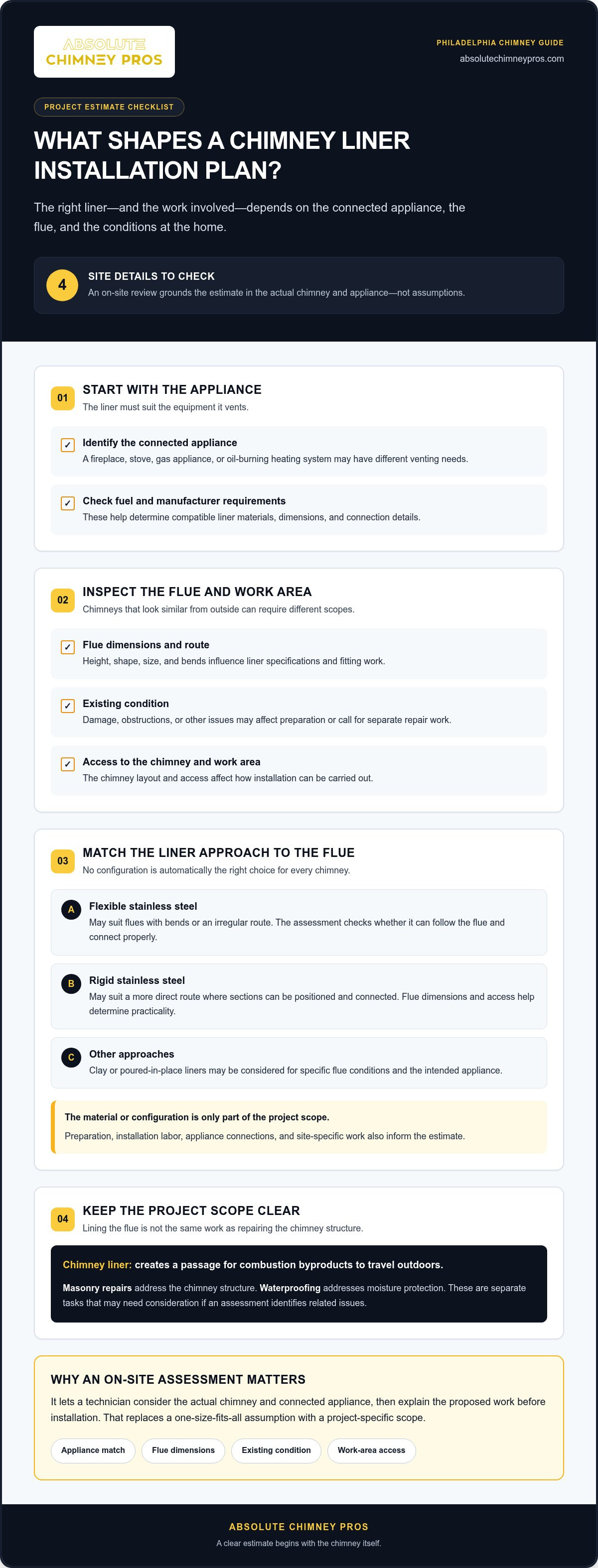
Several site details can change the installation plan:
- Appliance: The fuel and equipment requirements guide liner compatibility and connection details.
- Flue dimensions: Height, shape, and size influence the liner specifications and fitting work.
- Existing condition: Damage, obstructions, or other issues may affect preparation or require separate repair work.
- Access: The chimney’s layout and access to the work area can affect how installation is carried out.
For example, two homes with similar appliances may still need different scopes if one flue is straight and accessible while the other has a different layout or needs preparation. These differences need an assessment; they cannot be resolved by selecting a liner type from a list.
Absolute Chimney Pros provides on-site estimates grounded in the chimney and appliance, with the proposed scope explained before work begins. A project-specific review replaces guesswork with a clear account of the installation planned for your home.
Which chimney liner type fits your appliance and existing flue?
The right liner is the one that suits both the appliance and the chimney it vents. Flexible and rigid stainless-steel liners are common approaches, but their suitability depends on the flue’s shape, dimensions, condition, and installation access. Other approaches, such as clay or poured-in-place liners, may also be relevant in some situations. A material or configuration should not be selected from a product description alone.
Material and configuration influence the project scope, but they are only part of the cost to install chimney liner Philadelphia homeowners may be quoted. The estimate also reflects preparation, installation labor, connections, and site-specific work identified during assessment.
Flexible and rigid stainless-steel liners compared
Flexible liners can adapt to some flue routes that are not straight, while rigid sections suit installations where the flue layout allows them to be positioned. Neither is automatically the better choice. A technician needs to assess the chimney’s route, dimensions, condition, and access before determining a suitable configuration.
- Flexible stainless steel: May suit a flue with bends or an irregular route. An assessment establishes whether the liner can follow the flue and connect properly.
- Rigid stainless steel: May suit a more direct route where sections can be installed and connected. Flue dimensions and access help determine whether this configuration is practical.
- Other liner approaches: Clay or poured-in-place options may be considered for specific flue conditions. Their suitability depends on the existing chimney and intended appliance.
Matching the liner to the fireplace, stove, or heating appliance
Start with the appliance, not the liner. A fireplace, stove, gas appliance, or oil-burning heating system may have different venting needs. Fuel type and the appliance manufacturer’s requirements inform which liner materials and dimensions are compatible. A liner cannot be treated as a suitable fit just because it is available in the right general category.
The Chimney Safety Institute of America offers chimney and venting safety resources. A professional assessment applies that safety focus to the details of your appliance and flue, rather than relying on a broad product claim.
Before an assessment, gather the appliance make and model if available, and note whether the system uses wood, gas, or oil. Mention any appliance replacement or fuel conversion. These details give the technician useful context, but they do not replace an inspection of the chimney itself.
The same liner type will not suit every Philadelphia chimney. Absolute Chimney Pros evaluates the appliance and existing flue as part of its chimney liner installation estimates. An on-site chimney liner assessment helps establish the appropriate scope before a configuration is specified.
What goes into a chimney liner installation estimate?
A chimney liner estimate should describe more than the liner material. It should show how the proposed liner, compatible components, preparation, labor, and conditions at the property fit together. That detail helps you understand what work is included and why the project scope reflects your chimney rather than a generic online figure.
The cost to install chimney liner Philadelphia homeowners are quoted depends on the work identified during assessment. A longer or less direct flue, difficult access, or an existing liner in poor condition can affect the installation plan. These are project factors, not automatic add-ons or fixed surcharges.
Project conditions that can change the installation scope
Flue dimensions and route affect the liner configuration and how it can be fitted. Chimney height influences the amount of liner needed, while access affects how technicians reach the work area. The existing liner’s condition also matters. If the assessment reveals a concern, it may need closer evaluation before the full scope is clear.
- Liner and components: The estimate should identify the proposed liner configuration and compatible parts needed to connect it to the appliance.
- Preparation: The scope can specify any cleaning or other preparation planned before installation.
- Installation labor: The work involved depends on the flue route, chimney height, access, and fitting requirements.
- Separate findings: If an assessment identifies a masonry or flue concern, the estimate should distinguish its evaluation or repair from the liner installation itself.
For example, a straightforward flue and an obstructed or damaged one may call for different preparation. That does not mean every installation requires masonry repair. It means the estimate should connect additional work to an observed condition, rather than leave you guessing whether it is included.
Professional standards and ongoing education matter in chimney work. The National Chimney Sweep Guild provides resources for chimney professionals, while an on-site assessment establishes the actual needs of your installation.
What a clear estimate should make understandable
Look for a written scope that names the proposed liner and explains the installation work, including preparation and the appliance connection. It should make clear what the estimate covers and separate confirmed work from additional findings that may need evaluation. This makes it easier to compare the proposed work with the conditions observed, rather than comparing bottom-line figures alone.
- Proposed work: The liner type or configuration and the installation steps included.
- Project conditions: Relevant access, flue, or existing-liner findings that shape the scope.
- Additional concerns: Any observed issue that needs separate assessment or repair, clearly distinguished from the liner work.
Absolute Chimney Pros provides on-site estimates with no hidden fees, grounding the proposed scope in the chimney and appliance. For a project-specific review, request an on-site chimney liner estimate.
How chimney liner installation proceeds in Philadelphia
A chimney liner installation should follow a clear path from assessment to final review. The exact work depends on the appliance, flue, and findings at the property, so the sequence can vary. For homeowners in Philadelphia and nearby New Jersey communities, a documented assessment connects the proposed work to the chimney’s actual condition and records what was considered.
From assessment to a project-specific work plan
The technician reviews the appliance and its venting needs, the flue’s dimensions and route, access to the work area, and visible chimney conditions. Measurements and inspection findings inform the liner configuration and installation scope. A documented chimney assessment also gives the homeowner a clearer basis for understanding the work, much like the points covered in this chimney inspection safety checklist.
Before work begins, identify which permits, applicable codes, or inspection requirements apply to the specific property and project. Requirements can depend on the work being performed, so a rule for one project or location may not apply to another. The estimate and work plan should make the proposed scope understandable before installation proceeds.
Installation, verification, and related chimney findings
Once the scope is established, the flue may be prepared, and the selected liner is fitted and connected to the appliance. The technician then reviews the completed installation and communicates relevant findings. The sequence depends on the chimney and liner configuration, so the work plan should reflect the property rather than promise one process for every home.
A liner installation and chimney repair are related only when an inspection identifies a condition that needs attention. If the technician observes a separate masonry issue, that finding should be explained separately from the liner work. Moisture-related concerns, for example, may involve the masonry rather than the liner itself. This chimney leak repair diagnostic guide discusses how leak concerns can be evaluated.
In general, homeowners can expect the work to move through these stages:
- Assess: Review the appliance, flue, access, and visible chimney condition.
- Plan: Use the findings to define the liner configuration, preparation, and installation scope.
- Install: Prepare the flue as needed, fit the liner, and connect it to the appliance.
- Review: Check the completed work and explain any separate findings or next steps.
Absolute Chimney Pros provides chimney liner installation and on-site estimates for Philadelphia-area homeowners. Its CSIA-certified, licensed, and insured technicians ground the proposed work in the chimney and appliance. To discuss your project and request an on-site estimate, contact Absolute Chimney Pros.
Get a clear Philadelphia chimney liner estimate from Absolute Chimney Pros
A dependable liner estimate starts with the facts of your system: identify the appliance, assess the flue, define the work, then review the written estimate. That sequence connects the proposed liner to the chimney it will serve. It also helps you understand what is included, what the technician observed, and whether a separate finding needs attention.
Online figures can offer general context, but they cannot account for your chimney’s dimensions, condition, or access. The cost to install chimney liner Philadelphia homeowners need to plan for is best understood through an on-site assessment, not a universal number. A clear estimate reflects the actual property and describes the proposed scope plainly.
What homeowners can expect from a professional assessment
A technician reviews the appliance, flue, access, and visible chimney conditions. Those findings help determine liner suitability and define the installation work. Bring the appliance make and model if available, and mention any recent equipment changes or venting concerns. This context supports the review, while the chimney assessment establishes what the project requires.
Absolute Chimney Pros provides on-site estimates with no hidden fees. Work is performed by CSIA-certified, licensed, and insured technicians. Their assessment grounds recommendations in observed conditions, rather than assumptions based on a product choice or a brief description of the home.
- Identify the appliance: Note its type, fuel, and available make or model information.
- Review the flue: Have its route, dimensions, condition, and connection needs assessed.
- Understand the scope: Review which liner and installation work are included.
- Separate additional findings: Clarify whether an observed chimney or masonry concern is outside the liner installation scope.
Take the next step toward a safer, clearly scoped installation
Your estimate should make the proposed work understandable before installation begins. It should connect the liner choice to the appliance and flue, describe the installation scope, and distinguish additional findings from confirmed work. If a separate issue is observed, the estimate should explain how it relates to the proposed liner work.
Absolute Chimney Pros also offers a flat-fee chimney inspection option. An inspection is a distinct service, and its findings can help homeowners understand chimney conditions. The appropriate next step depends on your project and the information needed to assess it.
Start with the property, not a guess. Arrange an on-site assessment to review your appliance and chimney and receive an estimate grounded in the actual conditions. Schedule a chimney liner assessment with Absolute Chimney Pros.
Move forward with a clearer plan for your chimney
Use your estimate as a practical decision tool. It should help you understand the work proposed for your home, see how the appliance and flue shape the installation, and decide on the next step without relying on a generic online figure. That is a more useful way to approach the cost to install chimney liner Philadelphia homeowners may face: start with the actual chimney, then make decisions from clear findings.
Absolute Chimney Pros installs chimney liners with CSIA-certified, licensed, and insured technicians. Its on-site estimates come with no hidden fees, so you can review the proposed work with greater clarity before moving ahead.
Your home’s venting system deserves careful attention. Take the next step toward a project-specific assessment and a clearly scoped installation. Schedule a chimney liner assessment with Absolute Chimney Pros.
With the right information in hand, you can move forward with a clearer plan for your chimney and its venting system.
Frequently Asked Questions
How much does it cost to install a chimney liner in Philadelphia?
There is not one reliable price for every home. The cost to install chimney liner Philadelphia homeowners receive in an estimate depends on the liner and components required, the appliance connection, chimney condition, and installation access. An on-site assessment identifies the actual work, followed by a written estimate that describes its scope. Absolute Chimney Pros provides on-site estimates with no hidden fees.
How long does chimney liner installation take?
Installation time depends on the chimney’s layout, access, preparation needs, and any conditions found during the work. A straightforward project may proceed differently from one where the flue needs additional preparation or a separate issue needs attention. The work sequence and timing depend on the specific conditions, so a project plan is more useful than a fixed duration for every Philadelphia home.
Can a chimney liner be installed if the chimney already has one?
Yes, a new liner may be installed when a chimney already has one, but the existing liner’s condition and the appliance’s venting needs must be evaluated first. Cracked or deteriorated flue material, for example, may affect the recommended approach. Flue relining and diagnostic specialists like PSP & Gas Engineering frequently use thorough video inspections to determine whether an existing liner can remain or if replacement is needed. An inspection helps determine the appropriate scope for that chimney.
Will installing a chimney liner stop a chimney leak?
Not necessarily. A liner serves the flue, but water may enter through other parts of the chimney, such as damaged masonry or the crown. The source needs to be identified before selecting a repair. If you see dampness, staining, or water near the fireplace, note where and when it appears for the inspection. Liner installation alone should not be treated as a solution to every moisture problem.
Can I use my fireplace while a chimney liner is being installed?
No. Do not use the fireplace or connected appliance while technicians are working on its venting system. Operation could interfere with the work and may expose the home to smoke or combustion byproducts if the system is disconnected or incomplete. Keep the appliance off until installation is finished and the technician confirms it is ready for use. This applies whether the liner serves a fireplace or another heating appliance.
Does a new chimney liner improve fireplace draft?
It can help if poor draft is related to a damaged, unsuitable, or improperly sized flue, but a new liner does not guarantee better draft in every case. Appliance condition, chimney configuration, and other venting factors can also affect performance. If smoke spills into the room or the fire struggles to stay lit, describe those symptoms during an inspection. The technician can assess whether the liner is a contributing factor.
Does homeowner’s insurance cover chimney liner installation?
Coverage depends on your specific policy and why the liner needs installation. A policy may treat sudden damage differently from deterioration or maintenance, so do not assume the work is covered or excluded. Review your policy language and speak with your insurance representative about the cause and documentation they require. A chimney inspection and written findings can help you understand the observed condition when discussing the issue with your insurer.


