

What if the carbon monoxide risk in your home isn’t coming from the appliance you suspect? Fuel-burning equipment, an attached garage, a fireplace, or a venting problem can all make it important to take a closer look. If you’re searching for “ensuring home is safe from carbon monoxide NJ,” start with possible sources, then check that alarms are in place and working.
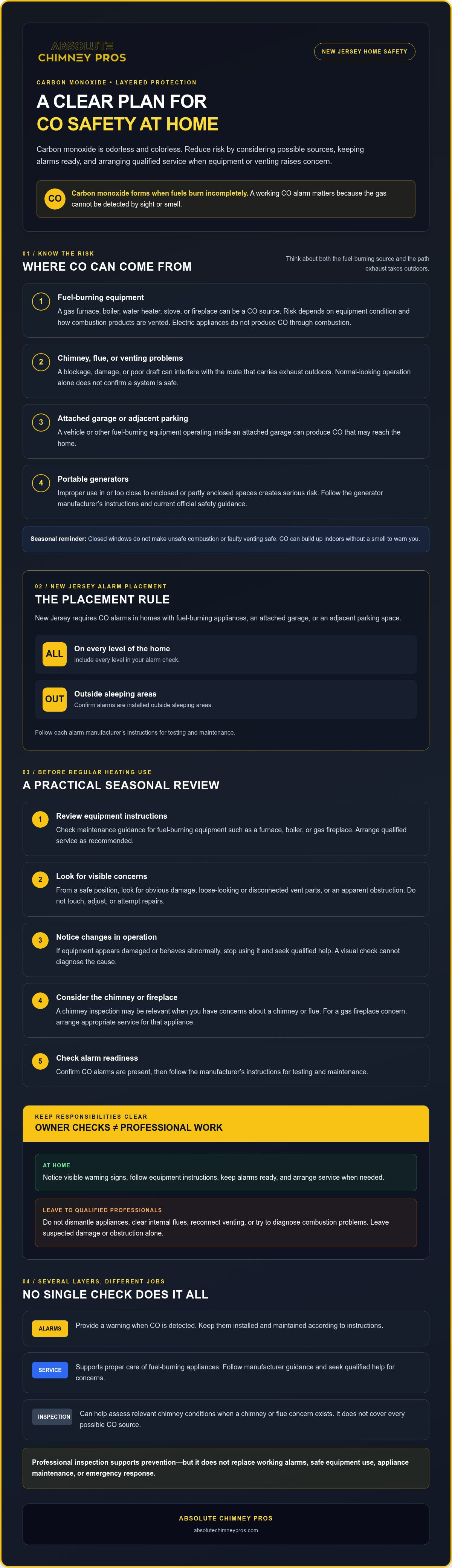
It’s understandable to feel unsure about alarm placement, testing, and replacement, especially when a chimney or gas fireplace may not be venting properly. New Jersey requires carbon monoxide alarms in homes with fuel-burning appliances, an attached garage, or an adjacent parking space. They must be installed outside sleeping areas and on every level of the home.
This guide lays out a practical, layered safety routine. You’ll learn where CO risks can arise, how to use alarms and respond to warning signs, and when a chimney or gas fireplace inspection may help assess a venting concern. Professional inspection supports prevention, but it doesn’t replace alarms or emergency response.
Key Takeaways
- Learn how common household activities and fuel-burning equipment can create carbon monoxide risks, including when generators are used improperly.
- Use a repeatable pre-heating-season routine to spot visible concerns and know which checks require a qualified professional.
- Understand what CO alarms, appliance maintenance, and inspections each contribute, and why none can replace the others.
- For ensuring home is safe from carbon monoxide NJ, build a practical checklist around alarms, safe equipment use, and seasonal review.
- Know the first steps to take if an alarm sounds or someone feels unwell, and where to verify applicable local requirements.
Carbon Monoxide in New Jersey Homes: Where the Risk Can Begin
Carbon monoxide (CO) is an odorless, colorless gas produced when fuels burn incompletely. Because you can’t see or smell it, you may not know it’s building up without a working CO alarm. For a plain-language overview of carbon monoxide poisoning, including common causes and effects, see this reference.
Which household systems can produce or vent carbon monoxide?
CO can come from fuel-burning equipment, such as a gas furnace, boiler, water heater, stove, or fireplace. The risk depends on the equipment, its condition, and how combustion products are vented. Electric appliances don’t produce CO through combustion, but that doesn’t rule out other sources elsewhere in the home.
A fireplace or fuel-burning appliance relies on a vent, flue, or chimney to carry exhaust outdoors. A blockage, damage, or poor draft can interfere with that path and allow combustion products to enter the living space. Don’t assume a system is safe just because it appears to operate normally. If you notice damage or suspect a venting problem, arrange for a qualified professional to assess the relevant appliance or chimney.
An attached garage is another potential source. A vehicle or other fuel-burning equipment operating inside can produce CO that may reach the home. Portable generators create a serious risk if used in or too close to enclosed or partly enclosed spaces. Follow the manufacturer’s instructions and current official safety guidance for generator placement and operation.
Why New Jersey homeowners should consider seasonal conditions
Heating season is a practical reminder to review fireplaces and fuel-burning equipment before regular use increases. Check visible areas for signs of damage or obstruction, and pay attention to changes in how an appliance operates. These observations aren’t a substitute for professional assessment. A chimney inspection may be relevant if you’re concerned about a chimney or flue, while gas fireplace service may help address concerns with that appliance.
Closed windows don’t make unsafe combustion or faulty venting safe. CO can build up indoors even when the weather keeps doors and windows shut, and the gas has no smell to warn you. That’s why ensuring a home is safe from carbon monoxide in NJ means considering the source, the venting path, and reliable alarms as separate layers of protection.
How to Prevent Carbon Monoxide Problems Before Heating Season
Before regular heating use begins, take practical steps to check your home’s fuel-burning equipment and plan any needed professional service. This routine supports ensuring home is safe from carbon monoxide NJ, but it can’t confirm that an appliance or vent is safe on its own.
- Review appliance instructions. Check the manufacturer’s maintenance guidance for fuel-burning equipment, such as a furnace, boiler, or gas fireplace. Arrange qualified service as recommended.
- Look for visible concerns. From a safe position, check for obvious damage, disconnected or loose-looking vent parts, or an apparent obstruction. Don’t touch, adjust, or attempt to repair gas lines, appliances, chimneys, or vents.
- Notice changes in operation. If equipment appears damaged or behaves abnormally, stop using it and seek qualified help. Don’t rely on a visual check to diagnose the cause.
- Include chimneys and fireplaces. Consider a chimney inspection if you have concerns about the chimney or flue serving a fireplace or appliance. A professional can assess relevant visible or accessible chimney conditions. If you have a gas fireplace, arrange appropriate service for that appliance.
- Check alarm readiness. Confirm your CO alarms are present and follow their manufacturer’s instructions for testing and maintenance. For broader prevention advice, review the EPA carbon monoxide safety tips.
Keep owner checks separate from professional work
Your role is to notice visible warning signs, follow equipment instructions, and arrange service. Don’t dismantle appliances, clear internal flues, reconnect venting, or try to diagnose combustion problems yourself. If something looks damaged or obstructed, leave it alone and contact a qualified professional.
A chimney inspection can help assess chimney conditions, but chimney maintenance addresses the chimney, not every possible source of CO in a home. It doesn’t replace appliance service, safe generator use, or working alarms. For a chimney concern, review chimney inspection options. Homeowners with a gas fireplace should also seek service appropriate to that appliance.
Source control reduces the chance of CO entering your home, while working alarms provide a warning if CO is detected. Both matter. Use them together as part of a layered routine, not as substitutes for each other.
CO Alarms, Maintenance, and Inspections: What Each Can Do
Alarms, equipment maintenance, and professional inspections serve different purposes. A layered plan for ensuring a home is safe from carbon monoxide in NJ works best when you understand what each measure can tell you and where its limits are.
| Measure | What it can do | What it cannot replace |
|---|---|---|
| CO alarm | Alerts occupants when it detects carbon monoxide. | It doesn’t identify the source, repair equipment, or confirm that a system is safe when no alarm is sounding. |
| Appliance maintenance | Helps keep fuel-burning equipment maintained according to its manufacturer’s instructions. | It doesn’t monitor CO in the home or assess every chimney, flue, or other possible source. |
| Chimney or fireplace inspection | Can assess relevant conditions within the inspection’s scope, such as visible or accessible parts of a chimney serving a fireplace or vented appliance. | It isn’t continuous CO monitoring, a guarantee against future problems, or a substitute for alarms and appliance maintenance. |
What does a carbon monoxide alarm tell you?
An alarm provides a warning, not a diagnosis. Follow the manufacturer’s instructions for placement, testing, maintenance, and replacement. Requirements may depend on your home and circumstances, so check current New Jersey guidance and your municipal fire or building office for applicable rules. Don’t ignore an alarm because you feel well or see no visible problem. Treat it as a warning and follow emergency guidance.
When can a chimney or fireplace inspection add useful information?
If your home uses a chimney, fireplace, or vented gas appliance, an inspection may help assess relevant conditions that a CO alarm cannot show. Findings depend on the system and the inspection’s scope. An inspection is a point-in-time assessment, not ongoing monitoring, and it can’t establish that every possible CO source in the home is safe. A chimney inspection may help clarify concerns about a chimney-related CO risk.
Keep the roles clear: alarms alert, maintenance supports equipment upkeep, and inspections assess specific systems. Together, they provide more useful information than any one measure alone. That distinction helps you act on an alarm promptly while still addressing routine prevention and concerns about a chimney or fireplace.
What to Do If a CO Alarm Sounds or Someone Feels Unwell
Leave the home immediately and get everyone outside, including pets. Do this if a carbon monoxide alarm sounds or you suspect exposure, even if nobody feels sick. Don’t stop to find the source, open windows, or collect belongings. Once outside and away from the home, call 911 or the appropriate emergency service. Tell the dispatcher that a CO alarm sounded or that you suspect exposure, and describe any symptoms.
What steps should you take when an alarm activates?
- Get outside promptly. Alert everyone in the home as you leave. Don’t delay to silence or reset the alarm.
- Call from outdoors. Contact 911 or the appropriate emergency service and follow the dispatcher’s instructions.
- Stay out. Don’t re-enter to troubleshoot an appliance, retrieve belongings, or check whether the alarm stops. Wait until emergency responders say it’s safe to return.
An alarm is a warning, not a diagnosis. You don’t need to see smoke, smell gas, or feel unwell for the situation to require action. Silencing or resetting the device doesn’t establish that the air is safe. Let responders assess the situation and tell you what to do next.
What if there is no alarm but symptoms raise concern?
Possible CO exposure can’t be ruled out because an alarm hasn’t sounded. If anyone feels unwell and exposure is a concern, move everyone outdoors immediately and call emergency services from outside. Headache, dizziness, nausea, weakness, or confusion can have many causes. Don’t try to diagnose the problem at home. Tell responders what people are experiencing and whether fuel-burning equipment, a fireplace, or a vehicle may be involved.
Seek emergency medical advice for concerning symptoms and follow the guidance you receive. Don’t return indoors until responders or the appropriate authorities advise that it’s safe. Keep others from entering too, including anyone arriving after you’ve left.
Once the immediate danger has been addressed and responders have cleared the home, a qualified professional may help assess a relevant chimney or gas fireplace concern. That follow-up is separate from emergency response. For homeowners working on ensuring home is safe from carbon monoxide NJ, routine prevention matters, but it never replaces leaving the home and calling for help when exposure is suspected.
After responders say it’s safe, consider a professional chimney inspection if a chimney or fireplace may be relevant to the concern. An inspection can assess the chimney within its scope, but it isn’t a substitute for alarms or emergency action.
Build a New Jersey Home CO Safety Plan and Know When to Call
A dependable CO safety plan is simple enough to repeat. Use this checklist before heating season, then revisit it as your household’s equipment or needs change. For ensuring a home is safe from carbon monoxide in NJ, combine working alarms, careful equipment upkeep, safe generator practices, and qualified help when something raises concern.
Create a simple household prevention checklist
- Keep an alarm record. Test and maintain each CO alarm according to its manufacturer’s instructions. Record test and replacement dates, and replace alarms as directed.
- Follow appliance maintenance guidance. Check the manufacturer’s instructions for fuel-burning equipment and arrange qualified servicing as recommended. Don’t attempt repairs or adjustments yourself.
- Use generators safely. Follow the manufacturer’s instructions and current official guidance for where and how to operate a portable generator. Never use one in an enclosed or partly enclosed space.
- Review fireplaces and chimneys seasonally. Before regular use, look for visible concerns without dismantling or reaching into equipment. If you notice damage or suspect a venting issue, stop using the affected system and seek qualified assessment.
- Check local requirements. Verify current New Jersey rules and any applicable municipal requirements with your local fire department or municipal office. Confirm alarm placement and other obligations for your specific home rather than relying on assumptions.
Choose the right professional next step in New Jersey
For an appliance-specific concern, contact a qualified professional who services that equipment. If an alarm sounds or someone may have been exposed to CO, leave the home and call emergency services from outside. Don’t wait for a routine appointment or try to troubleshoot indoors.
A chimney inspection may be relevant if your home uses a chimney or fireplace and you’re concerned about its condition or venting. Gas fireplace service may be appropriate for concerns involving that appliance. These services assess or address the system within their scope. They don’t provide continuous CO monitoring, guarantee a home is free from CO hazards, or replace alarms and emergency response.
Absolute Chimney Pros serves homeowners in New Jersey and Philadelphia, Pennsylvania, with chimney inspection and gas fireplace service. If you have a chimney or gas fireplace concern that needs a professional assessment, contact Absolute Chimney Pros to discuss the appropriate service. For immediate danger, call emergency responders instead.
Ensuring Home Is Safe from Carbon Monoxide NJ: A Practical Plan
Protecting your household takes more than one step. Keep CO alarms maintained according to their manufacturers’ instructions, arrange qualified service for fuel-burning appliances, and use generators safely. If an alarm sounds or exposure is suspected, leave immediately and call emergency services from outside. For ensuring home is safe from carbon monoxide NJ, also verify current state and municipal requirements for your home.
A chimney or gas fireplace inspection can help assess relevant system conditions, but it isn’t continuous CO monitoring or a replacement for alarms and emergency response. Absolute Chimney Pros serves homeowners in New Jersey and Philadelphia, Pennsylvania, with chimney inspections. Its technicians are CSIA-certified, licensed, and insured. Ask about the flat-fee inspection option and on-site estimates when arranging service.
If a chimney or fireplace concern needs professional attention, schedule a chimney inspection with Absolute Chimney Pros. With a clear routine and the right support, you can take practical steps toward a safer, more prepared home.
Frequently Asked Questions
What are the most common sources of carbon monoxide in a New Jersey home?
Common sources include fuel-burning appliances such as furnaces, boilers, water heaters, and gas stoves, along with fireplaces and attached garages where a vehicle or fuel-burning equipment may be running. A portable generator used in or too close to an enclosed space can also create a serious risk. Electric appliances don’t produce CO through combustion. The risks in your home depend on its equipment, how it’s used, and whether exhaust vents safely outdoors.
Where should carbon monoxide alarms be placed in a New Jersey home?
New Jersey requirements call for CO alarms outside sleeping areas and on every level of a home when it has a fuel-burning appliance, an attached garage, or is adjacent to a parking space. Follow the alarm manufacturer’s installation instructions, and verify current requirements for your home with your local fire department or municipal office. Placement matters, but it doesn’t replace testing and maintenance according to the manufacturer’s directions.
Can a chimney problem cause carbon monoxide to enter a house?
Yes. A blocked, damaged, or poorly venting chimney or flue can interfere with the safe movement of combustion products outdoors. If you notice visible damage or suspect a venting problem, stop using the affected fireplace or appliance and seek qualified help. A chimney inspection can assess relevant chimney conditions within its scope, but it doesn’t identify every possible CO source or replace working alarms.
How often should carbon monoxide alarms be tested or replaced?
Follow the alarm manufacturer’s instructions for how often to test the unit, how to maintain it, and when to replace it. Alarm models differ, so check the label or manual rather than assuming every device has the same schedule. Keep a record of test and replacement dates. If an alarm reaches its stated end of life, replace it as directed, even if it hasn’t sounded.
What should I do if my carbon monoxide alarm goes off?
Leave the home immediately with everyone, including pets, and call 911 or the appropriate emergency service from outside. Tell the dispatcher that the CO alarm sounded and report any symptoms. Don’t stop to locate the source, silence or reset the alarm, or re-enter to retrieve belongings. Stay outside until emergency responders say it’s safe to return, then follow their instructions.
Can you have carbon monoxide symptoms even if an alarm does not sound?
Yes. Don’t use a quiet alarm as proof that a home is safe if you suspect CO exposure or someone feels unwell. Headache, dizziness, nausea, weakness, and confusion can have different causes, so don’t try to diagnose the problem yourself. Get everyone outdoors and call emergency services from outside. Seek emergency medical advice for concerning symptoms, and don’t return until responders or appropriate authorities say it’s safe.
Does a chimney inspection check for carbon monoxide?
A chimney inspection assesses chimney conditions within the inspection’s scope. It isn’t continuous CO monitoring and shouldn’t be treated as a CO test or a guarantee that the home is hazard-free. If you’re concerned about a chimney or fireplace venting issue, an inspection may provide useful information about that system. Keep CO alarms in place and maintained, and contact emergency services immediately if an alarm sounds or exposure is suspected.


