
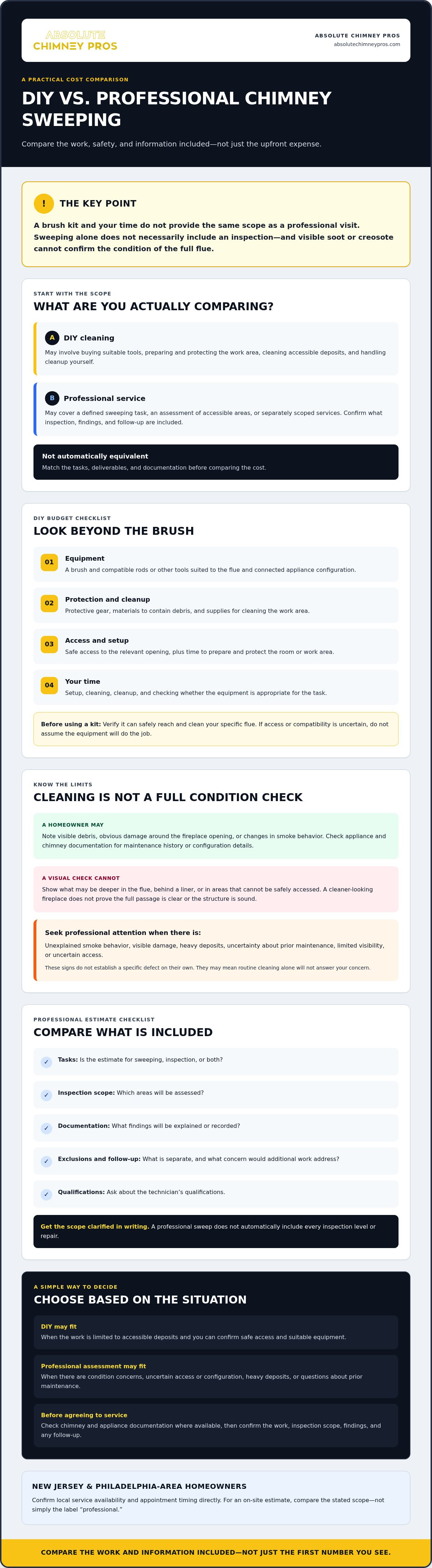
The cheaper option can cost more if it leaves a hazard undiscovered. That’s the key to comparing DIY vs professional chimney sweep cost: a brush kit and your time don’t provide the same scope as a professional visit, and sweeping alone doesn’t necessarily include an inspection.
It’s reasonable to look for ways to reduce upkeep costs. But a useful comparison includes more than the upfront expense. DIY work may require suitable equipment, careful preparation, and safe access to the areas you plan to clean. A professional may assess accessible areas and explain findings, but confirm the inspection scope and any follow-up work before agreeing to service.
This guide breaks down the cost factors behind each option without relying on broad price averages. You’ll learn what a homeowner may handle, when buildup or visible damage calls for professional attention, and how to compare estimates by scope, documentation, and technician qualifications. That way, you can weigh the work and information included, not just the first number you see.
Key Takeaways
- Compare DIY vs professional chimney sweep cost by looking beyond the upfront expense to the equipment, preparation, and work each option includes.
- Homeowner cleaning can address accessible buildup, but visible soot or creosote alone can’t confirm the condition of the full flue.
- Before choosing, consider access, chimney configuration, and any condition concerns. Check appliance and chimney documentation where available.
- Compare professional estimates by the tasks included, inspection scope, documentation, follow-up options, and technician qualifications.
- New Jersey and Philadelphia-area homeowners should confirm local service availability and appointment timing directly.
DIY vs. professional chimney sweep cost: what are you actually comparing?
Will sweeping the chimney yourself really cost less than hiring a professional? It depends on what each option includes. A homeowner may be budgeting for tools and cleaning, while a professional estimate may cover a defined sweeping task, an inspection, or separately scoped services. Those options aren’t automatically equivalent.
Visible soot removal is only one part of the comparison. Cleaning can address accessible deposits, but it doesn’t confirm the condition of the entire chimney. For background on the trade’s traditional role, see this overview of the history of chimney sweeping. For a fair cost comparison, match the work, deliverables, and documentation.
Which expenses belong in a DIY chimney-sweeping budget?
Look beyond the brush. A realistic DIY budget may include:
- Equipment: A brush and compatible rods or other tools suited to the flue.
- Protection and cleanup: Protective gear, materials to contain debris, and supplies to clean the work area.
- Access and setup: Safe access to the relevant opening, plus time to prepare and protect the room or work area.
- Your time: Setup, cleaning, cleanup, and checking that the equipment is appropriate for the task.
Tool suitability depends on the chimney’s dimensions and the connected appliance configuration. Before buying or using equipment, verify that it can safely reach and clean your specific flue. If you can’t confirm access or compatibility, don’t assume a kit will do the job.
What does a professional chimney sweep estimate cover?
Ask what the estimate includes: sweeping, an inspection, or services priced and scheduled separately. A professional sweep doesn’t automatically include every inspection level or repair. Chimney condition, access, configuration, and concerns found during the visit can affect what work is appropriate.
Request written clarification of the included tasks, exclusions, and recommended follow-up. Confirm whether the estimate covers cleaning only or also identifies the areas to be assessed and the findings to be documented. If additional work is proposed, ask what concern it addresses and whether it requires a separate estimate.
For homeowners in New Jersey or Philadelphia, an on-site estimate can help clarify the work before it begins. Absolute Chimney Pros offers on-site estimates with no hidden fees. Confirm that service is available for your location, then compare the stated scope rather than relying on the label “professional.”
What DIY chimney sweeping can do, and what it cannot verify
DIY chimney sweeping means cleaning performed by the homeowner. With suitable equipment and access, it may remove some deposits from reachable parts of a flue. But a cleaner-looking fireplace or chimney doesn’t prove that the full passage is clear or the structure is sound. Cleaning and assessing chimney condition are different tasks.
Removing debris can improve cleanliness; it cannot replace a professional evaluation of the chimney’s condition. Soot or creosote you can see offers only a limited view. It doesn’t show what may be hidden deeper in the flue, behind a liner, or in areas you can’t safely access. That distinction matters when comparing DIY vs professional chimney sweep cost: cleaning and condition assessment aren’t interchangeable deliverables.
What can a homeowner reasonably assess before cleaning?
You can note what’s visible from accessible areas, such as loose debris, obvious damage around the fireplace opening, or changes in how smoke behaves. You can also check appliance and chimney documentation for maintenance history or configuration details. These observations can help you describe a concern, but they don’t certify the flue as safe.
If visibility is limited, access is uncertain, or you’re unsure whether the equipment suits your chimney, stop and seek professional guidance. Don’t try to reach difficult areas or treat a visual check as a complete inspection.
When does chimney condition call for professional attention?
Unexplained smoke behavior, visible damage, heavy deposits, or uncertainty about prior maintenance are reasons to seek an assessment rather than assume routine cleaning is enough. These signs don’t establish a specific defect on their own. They do mean that a basic sweep may not answer the question you need answered: what is the chimney’s condition?
Ask what an inspection will cover and what findings will be documented. The Chimney Safety Institute of America (CSIA) provides information about chimney-sweep training and certification, which can help you understand a technician’s qualifications. If you’re looking into a chimney inspection in New Jersey, confirm the inspection scope directly and ask what follow-up may be recommended if concerns are found.
If you’d like a professional assessment, review chimney inspection services and confirm coverage for your location. Cleaning may address deposits. Inspection evaluates concerns about the chimney itself.
DIY vs. professional chimney sweeping: compare scope, safety, and value
DIY may reduce an immediate service expense, but it may not answer questions about the chimney’s condition. Compare the tasks, not just the price or the word “professional.” Professional visits can also vary in scope, so ask exactly what the estimate includes before deciding which option offers the value you need.
| Comparison point | DIY cleaning | Professional service |
|---|---|---|
| Task scope | Homeowner cleaning of areas reachable with suitable tools. | Tasks should be defined in the estimate; sweeping and inspection may be separate. |
| Equipment | You select and provide tools suited to your chimney and appliance. | Ask what equipment the planned work requires and covers. |
| Access | Depends on safe, practical access to the areas being cleaned. | Confirm which areas the technician can access and assess. |
| Cleanup | You handle setup, debris control, and cleanup. | Ask what cleanup is included in the service. |
| Documentation | Your observations may not establish the full flue’s condition. | Ask whether findings and work completed will be explained or documented. |
| Follow-up | You decide whether to seek assessment if concerns remain. | Ask what next steps may be recommended and whether they’re separately scoped. |
How do professional qualifications and documentation affect value?
Ask who will perform the work and what relevant credentials they hold. Absolute Chimney Pros’ technicians are CSIA-certified, licensed, and insured. Also ask how observations, completed work, and recommended next steps will be explained. Clear findings help you understand what was addressed and what may need separate attention. The NFPA 211 standard provides a reference for chimney and venting safety. A cleaning alone shouldn’t be treated as confirmation that every condition has been evaluated.
Does professional sweeping include a chimney inspection?
Cleaning and inspection are related, but distinct. Don’t assume a sweep includes a particular inspection level. Check the estimate for the scope, areas assessed, deliverables, exclusions, and follow-up recommendations. Before booking, consult a chimney sweep guide for general cleaning scope and preparation, then confirm the provider’s process. For the DIY vs professional chimney sweep cost comparison, the useful question is whether each option covers the same work and gives you the information you need.
How to decide whether DIY or a professional sweep fits your situation
Choose based on access, chimney configuration, and what you need to learn, not just the first estimate you see. Use this decision process before committing to DIY cleaning or professional service:
- Check your documentation. Review appliance and chimney records for the system type, prior maintenance, and any earlier concerns. If key details are missing, don’t guess at the cleaning method.
- Consider access. Can you reach the areas that need cleaning without uncertain or difficult access? If not, pause and ask a professional to assess the situation.
- Understand the configuration. Make sure you know how your appliance connects to the chimney and whether your tools suit that setup. If you’re unsure, don’t assume a generic approach will fit.
- Account for condition concerns. Visible damage, unusual smoke behavior, heavy deposits, or unclear maintenance history call for assessment, not just a cleaning decision.
- Be honest about preparation. Consider safe access, suitable protective equipment, debris control, and cleanup. If you can’t manage these confidently, seek professional guidance.
Questions to answer before attempting any DIY cleaning
Is the flue accessible, and do you understand the chimney configuration? Can you protect the surrounding area and handle cleanup? Do you know whether your tools are appropriate for this specific system? If access, condition, or method is uncertain, stop before starting. A homeowner’s cleaning effort can’t certify that the chimney is safe.
Questions to ask when comparing professional estimates
Request a written scope. Confirm which cleaning tasks are included, whether an inspection is included or separate, and what areas will be assessed. Ask who will perform the work, whether they’re insured and appropriately qualified, and what credentials they hold. Before approving additional work, get a clear explanation of the findings, exclusions, and recommended follow-up.
Compare estimates by what they promise and document, not by headline wording alone. DIY vs professional chimney sweep cost depends on the work being compared. A lower initial expense may not resolve concerns about chimney condition, while a professional estimate may exclude inspection or follow-up unless stated.
For homeowners who want the scope clarified on-site, request an on-site chimney estimate. Confirm service coverage for your location and ask what the estimate includes before work begins.
Choosing a professional chimney sweep in New Jersey or Philadelphia
Choose a provider based on the work your chimney needs, practical access, condition concerns, technician qualifications, and the clarity of the written findings. A low estimate isn’t a useful comparison if it excludes tasks another estimate includes. For a fair DIY vs professional chimney sweep cost decision, compare scope and documentation, not just the headline amount.
Absolute Chimney Pros serves homeowners in New Jersey and Philadelphia, Pennsylvania. Its technicians are CSIA-certified, licensed, and insured. The company offers on-site estimates with no hidden fees and a flat-fee inspection option. Ask what the inspection covers, and confirm service coverage and appointment availability for your specific location.
What should a transparent chimney service estimate explain?
Before approving work, check that the estimate identifies the proposed sweeping or inspection tasks, what’s excluded, and whether any inspection scope is separate. Ask how the technician will explain findings and get your approval before performing additional work. An estimate is comparable only if its deliverables match the alternatives. Clear terms help you understand what you’re paying for and what may still need attention.
When should you book a chimney sweep?
Plan service before you expect to use the fireplace regularly, so there’s time to clarify the work and address concerns. If you notice visible damage or changes in fireplace performance, request professional guidance rather than assuming routine cleaning will resolve the issue. Absolute Chimney Pros offers same-week appointments, but availability can vary. Confirm current options directly.
To clarify the scope for your chimney, schedule a chimney service estimate and ask what’s included, what requires separate approval, and whether service is available in your area.
Make your next chimney decision with clarity
The right choice depends on more than the upfront expense. DIY cleaning may remove accessible deposits, but it can’t confirm the condition of the entire chimney. A professional service should clearly state what it covers, what it documents, and whether inspection or follow-up work is separate. That’s the fairest way to assess the DIY vs professional chimney sweep cost for your home.
For homeowners in New Jersey and Philadelphia, Absolute Chimney Pros offers on-site estimates with no hidden fees and a flat-fee inspection option. Its technicians are CSIA-certified, licensed, and insured. Same-week appointments may be available, so confirm current scheduling and service coverage for your location.
Ready to clarify the scope for your chimney? Request an on-site chimney estimate and ask what’s included before work begins. With clear information, you can choose the next step with confidence.
Frequently Asked Questions
Is it cheaper to sweep a chimney yourself or hire a professional?
DIY may avoid a professional service expense, but it still requires suitable tools, protective gear, preparation, cleanup, and your time. A professional estimate may cover a different scope, such as sweeping, inspection, or separately defined work. The DIY vs professional chimney sweep cost depends on what each option includes. Compare equivalent tasks and documented findings, not just the upfront expense or the cost of a brush kit.
Can I safely clean my chimney without hiring a chimney sweep?
Some homeowners may clean accessible areas if they understand their chimney configuration and can manage suitable equipment, access, and cleanup. That doesn’t mean every task is appropriate for DIY, or that cleaning confirms the chimney is safe. Don’t proceed if you’re uncertain about the flue, the right tools, or safe access. A professional can assess questions that basic homeowner cleaning can’t resolve, including concerns about areas you can’t see.
What does a professional chimney sweep include?
A professional chimney sweep includes the tasks specified in the estimate, so ask whether it covers cleaning only or other services. Clarify what areas will be addressed, what cleanup is included, and whether findings or follow-up recommendations will be provided. Additional work may be separately scoped. For homeowners in New Jersey and Philadelphia, request a written explanation of deliverables and exclusions before booking rather than assuming every provider uses the same service scope.
Does a chimney sweep also inspect the chimney?
Not necessarily. Sweeping and inspection are related but distinct tasks, and an estimate should state whether an inspection is included or offered separately. Don’t assume a particular inspection level is part of a cleaning appointment. Ask what areas will be assessed and how findings will be communicated. Absolute Chimney Pros offers a flat-fee inspection option. Confirm its scope and whether it fits your needs before scheduling service in New Jersey or Philadelphia.
How do I compare chimney-sweeping estimates?
Compare written scopes line by line. Check which cleaning tasks are included, whether inspection is separate, what’s excluded, and how findings or recommended follow-up will be explained. Ask who will perform the work and about relevant qualifications and insurance. A lower estimate isn’t equivalent if it covers less or provides different documentation. Absolute Chimney Pros offers on-site estimates with no hidden fees, so homeowners can clarify the proposed work before it begins.
When should I hire a professional chimney sweep?
Arrange service before you expect to use your fireplace regularly, allowing time to clarify the work and address concerns. Seek professional guidance if you notice visible damage, unexplained smoke behavior, heavy deposits, or don’t know the chimney’s maintenance history. These signs don’t identify a specific defect, but they warrant assessment rather than assumptions based on a basic cleaning. New Jersey and Philadelphia homeowners should confirm local coverage and appointment availability directly.
Can DIY chimney sweeping identify creosote or chimney damage?
DIY cleaning may reveal deposits in areas you can access, but it can’t establish the condition of the entire flue. Seeing soot or creosote doesn’t show what may be hidden beyond view, and removing deposits doesn’t verify structural condition. If you notice heavy buildup or visible damage, or can’t see the relevant areas, seek a professional assessment. Treat homeowner observations as useful information to share, not as confirmation that the chimney is sound.


