
Could a clean chimney still become a negotiation problem? A chimney sweep before selling house preparations can improve the fireplace’s condition and presentation, but cleaning alone doesn’t prove the chimney is sound. That distinction matters when buyers want information about a system they can’t fully assess at a glance.
It’s reasonable to wonder whether sweeping is enough, whether you need a separate inspection, or whether scheduling both makes sense. A sweep removes soot and creosote buildup. An inspection assesses the chimney’s visible and accessible condition and can help identify concerns before sale discussions begin. One service doesn’t replace the other.
This guide explains when a sweep, an inspection, or both may make sense for a New Jersey or Philadelphia-area home sale. You’ll learn what each service can and can’t tell you, how to organize useful records for prospective buyers, and how to address relevant findings before they become a closing surprise. With clear information from the start, you can make a practical plan instead of guessing about the chimney’s condition.
Key Takeaways
- Decide whether a chimney sweep before selling house preparations make sense by considering fireplace use, visible residue, odors, and known damage.
- Understand what sweeping can clean and what a separate inspection can document before buyer questions arise.
- Keep relevant chimney service records organized so you can respond to prospective buyers with clear information.
- Use a simple pre-listing sequence: review fireplace use and existing records, then note visible concerns before scheduling service.
- Match the next step to your needs: sweeping, an inspection, or both when appropriate.
Should You Get a Chimney Sweep Before Selling Your House?
A chimney sweep can help prepare a home for sale, but whether it’s needed depends on fireplace use and the chimney’s condition. If you’ve used the fireplace recently, see soot buildup, notice an unusual odor, or know of damage, cleaning may be worth considering before buyer visits. If the fireplace hasn’t been used, a sweep may be less urgent, but that alone doesn’t establish the chimney’s condition.
When a pre-sale chimney sweep may make sense
Fireplace use can leave soot and creosote deposits in the firebox and other chimney areas. A professional chimney sweep removes deposits from relevant areas. A cleaner firebox may look better during showings and gives you a record of maintenance to share if asked. Cleaning does not promise a higher sale price, and a receipt does not certify that the chimney is safe or free of defects.
A sweep may also bring an obvious concern to your attention, such as visible deterioration or a blockage. That observation can help you decide whether to arrange a separate assessment. Cleaning itself is not a diagnosis, and it doesn’t establish the condition of every chimney component.
When cleaning alone may not answer the seller’s question
Cleaning removes deposits; it doesn’t assess the full condition of the chimney. Known leaks, visible damage, smoke problems, or a long stretch without maintenance are reasons to consider an inspection as well. An inspection can help you understand visible and accessible conditions before buyers raise questions, while sweeping addresses cleaning needs.
If you’re unsure what an inspection can cover, review this New Jersey chimney inspection safety checklist. It can help you distinguish a condition assessment from cleaning before deciding what to schedule.
The phrase chimney sweep before selling house shouldn’t be treated as a one-size-fits-all rule. Sale requirements and contract requests can differ, so don’t assume a sweep substitutes for an inspection or that every New Jersey seller must obtain one. Consider the fireplace’s history, what you can see, and any known issues. When both cleaning and condition questions matter, scheduling a sweep and a separate inspection can give you clearer records for sale discussions.
Chimney Sweep vs. Chimney Inspection: What Does Each Tell a Home Seller?
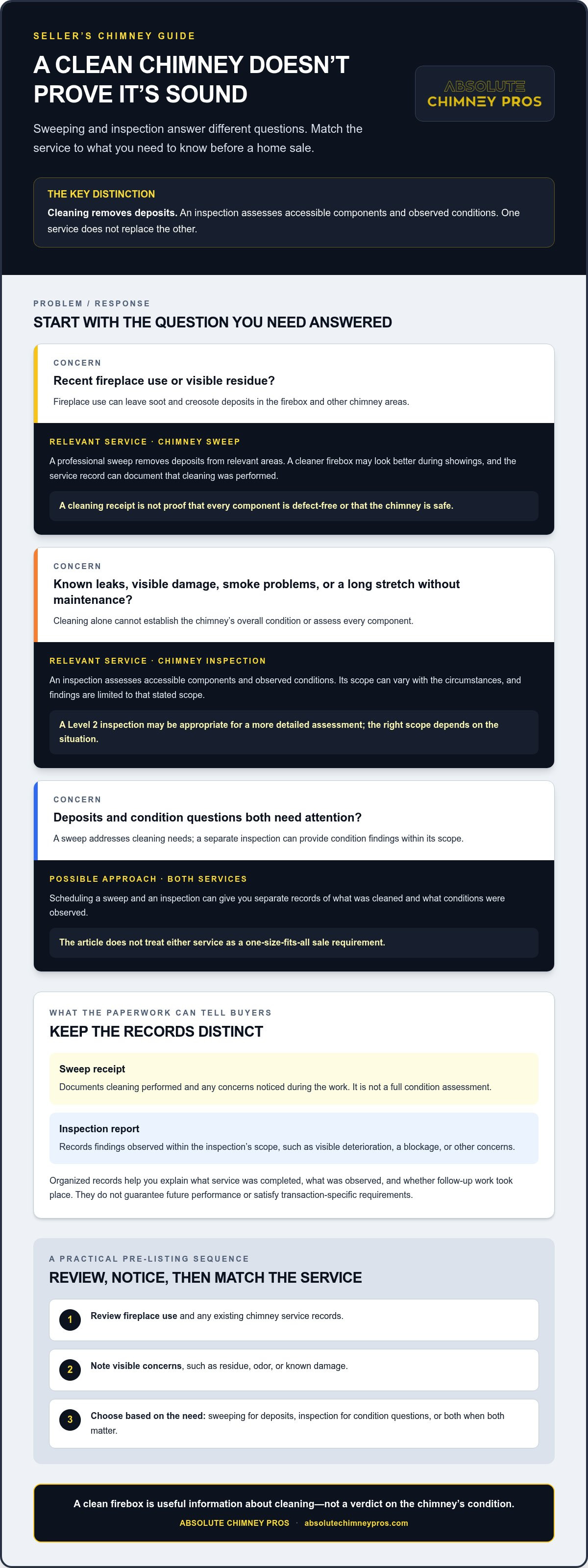
A sweep and an inspection answer different questions. Sweeping addresses deposits that need cleaning. An inspection assesses accessible components and observed conditions. Knowing the difference helps you provide buyers with accurate records instead of treating a cleaning receipt as proof of the chimney’s overall condition.
| Service | Purpose and typical work | What it can document |
|---|---|---|
| Chimney sweep | Removes soot and creosote deposits, where present, from relevant chimney and fireplace areas. | Cleaning performed and any concerns noticed during the work. It is not a full condition assessment. |
| Chimney inspection | Assesses accessible chimney components and observed conditions. The scope can vary with the circumstances. | Findings observed within the inspection’s scope, such as visible deterioration, a blockage, or other concerns. |
What a chimney sweep does, and what it does not prove
Sweeping removes deposits from areas such as the firebox and flue. The certified chimney sweeping and safety guide offers more context on cleaning and preparation. Keep a sweep record with your home maintenance paperwork. It documents that cleaning was performed, but it doesn’t confirm that every component is defect-free or guarantee how the chimney will perform in the future.
When a chimney inspection adds a different kind of information
An inspection can help identify observed deterioration, blockages, or other conditions that cleaning alone can’t establish. Depending on the situation, a Level 2 inspection may be an appropriate scope for a more detailed assessment. The right scope depends on the circumstances. Don’t assume every sale calls for the same inspection or that a report replaces transaction-specific requirements. For more context, see this Level 2 chimney inspection guide.
For background on professional training and chimney safety education, the Chimney Safety Institute of America (CSIA) is a useful resource. Absolute Chimney Pros’ CSIA-certified technicians provide chimney sweeping and flat-fee inspections for homeowners preparing sale records. Review chimney sweeping and inspection services to choose the service that fits your needs.
Keep the distinction clear in buyer discussions: a receipt describes cleaning work, while an inspection report records findings within its stated scope. Neither guarantees future performance or replaces requirements specific to a transaction. If both deposits and condition questions need attention, separate sweeping and inspection records can show what work was completed and what conditions were observed.
How Chimney Findings Can Affect a Home Sale
Chimney records can help you answer buyer questions with specifics: what service was completed, what was observed, and whether follow-up work took place. They don’t guarantee a smoother transaction, prevent negotiation, or satisfy a buyer’s inspection. Their value is clarity. A dated report or receipt gives both sides a more accurate starting point than a vague claim that the chimney was “checked.”
Findings may lead to follow-up questions. Visible deterioration could prompt a buyer to ask about its extent. Signs of moisture may raise questions about the source or whether repairs were completed. A reported blockage may lead to requests for additional assessment. These observations aren’t automatically a confirmed diagnosis, so avoid drawing technical conclusions beyond what the service record says.
What to do if a sweep or inspection finds a concern
Read the written findings carefully. Separate what the technician observed from any possible explanation or recommended next step. If repair work is suggested, a written scope or estimate can clarify what work is proposed and which concern it addresses. Absolute Chimney Pros provides chimney repair as well as sweeping and inspections, helping homeowners understand possible next steps based on documented findings.
If work is completed, keep the repair record with the original report or estimate. It can show what was addressed and when. It isn’t a guarantee against future problems, and it doesn’t establish that unrelated chimney components were repaired or assessed.
Records to gather before listing
Collect the chimney paperwork you already have before preparing listing materials. Useful records may include maintenance receipts, inspection reports, and documentation of completed repairs. Organize them by date, and use plain-language labels such as “chimney cleaning,” “inspection,” or “chimney repair.” Note which document describes a recommendation and which records work that was actually completed.
- Cleaning receipt: Keep it as a record of cleaning performed, not as a safety certificate or inspection report.
- Inspection report: Preserve the stated scope and findings so readers can understand what was assessed.
- Repair documentation: Pair it with the related finding when possible, making the work easier to follow.
Share relevant records accurately during sale discussions, and don’t conceal known defects. If a concern remains unresolved, be clear about that rather than presenting an old cleaning receipt as proof that the issue is fixed. A chimney sweep before selling house plan may help create useful maintenance documentation, but only an appropriately scoped inspection provides condition findings. Clear records let buyers and their representatives ask informed questions without overstating what any one service proves.
How to Prepare Your New Jersey or Philadelphia-Area Chimney Before Listing
Prepare in order: note how the fireplace is used, gather service records, look for visible concerns, then schedule cleaning or an inspection based on what you find. This gives you a clearer picture before listing photos, showings, or buyer questions. It also helps you avoid assumptions about what a sweep or inspection can establish.
A practical pre-listing chimney checklist
- Record fireplace use. Note whether it’s wood-burning or gas, when it was last used, and when it was last serviced, if known.
- Review visible areas. Look for residue in the firebox, water staining, damaged masonry, or a history of smoke problems. Record what you notice, but don’t try to diagnose the cause yourself.
- Gather existing records. Collect maintenance receipts, inspection reports, and repair documents so a technician can understand the chimney’s service history.
- Choose the next step. Consider a sweep for cleaning needs, an inspection for condition questions, or both if you have concerns about deposits and the chimney’s condition.
If the maintenance history is unclear or you’ve noticed a concern, arrange a professional assessment before relying on appearance alone. A clean firebox may look presentable, but it doesn’t tell you whether other components have been assessed.
Planning service across New Jersey and Philadelphia
Don’t apply guidance written for the UK or Georgia to a New Jersey or Pennsylvania home sale. Requirements can depend on the specific transaction. Review your sale documents and confirm any inspection or documentation requests through the local process handling your transaction. Don’t assume every seller must obtain the same inspection, or that a general article establishes a legal requirement.
Build in time before listing or buyer visits. The schedule depends on the home, what a service finds, and appointment availability. If follow-up assessment or chimney repair is recommended, allow time to understand the scope and decide how to proceed. Absolute Chimney Pros offers same-week appointments for homeowners planning chimney service in New Jersey and Philadelphia. For condition questions, see this New Jersey chimney inspection guide.
Use your notes to decide whether a chimney sweep before selling house plan should focus on cleaning, assessing condition, or both. For help planning the appropriate chimney service before listing, schedule a chimney sweep or inspection.
Book a Chimney Sweep or Inspection Before Your House Goes on the Market
Choose the service based on the question you need answered. If the firebox or chimney needs cleaning, a sweep can remove accumulated deposits before use or listing. If you want information about the chimney’s observed condition, schedule an inspection. If both cleaning and condition questions matter, both services may be appropriate. A sweep doesn’t replace an inspection, and neither service guarantees a sale outcome.
Choose the service that matches your chimney concern
Tell the technician what you’ve noticed and what records you have. Recent fireplace use or visible deposits may point to a cleaning need. A history of leaks, smoke problems, or visible damage may call for an inspection to assess accessible components and observed conditions. The findings help determine whether chimney repair or additional evaluation is appropriate. Cleaning alone shouldn’t be treated as proof that a concern has been resolved.
Absolute Chimney Pros provides chimney sweeping and flat-fee inspections for homeowners in New Jersey and Philadelphia. Its technicians are CSIA-certified, licensed, and insured. Clear service records can help you explain what work was performed and what the inspection observed, without overstating what either service proves.
Make the next step straightforward
Before booking, note your fireplace type, recent use, visible concerns, and any previous service. Share that information when arranging service so the appointment can address your pre-listing needs. If an inspection identifies a concern, you’ll have a clearer basis for deciding on follow-up work. Absolute Chimney Pros also provides on-site estimates with no hidden fees, and same-week appointments are available.
A chimney sweep before selling house plan should match the chimney’s needs, not rely on a one-size-fits-all promise. Arrange cleaning for deposits, an inspection for condition questions, or both when appropriate. Schedule a chimney service with Absolute Chimney Pros before your home goes on the market.
Prepare Your Chimney With Confidence Before Listing
A chimney sweep can remove accumulated deposits and help prepare a fireplace for showings, while an inspection addresses questions about observed condition. They serve different purposes. Choose one or both based on fireplace use, maintenance history, and any concerns you’ve noticed. Keep service records clear, and don’t present a cleaning receipt as proof that the chimney is defect-free.
A thoughtful chimney sweep before selling house plan can help you answer buyer questions with accurate information, though no service guarantees a sale outcome or prevents negotiation. If cleaning, inspection, or follow-up repair makes sense, Absolute Chimney Pros serves New Jersey and Philadelphia homeowners with CSIA-certified, licensed, and insured technicians. The company offers a flat-fee inspection option, on-site estimates with no hidden fees, and same-week appointments.
Get the chimney information you need before listing day. Schedule a chimney service with Absolute Chimney Pros to prepare for your home sale.
Frequently Asked Questions
Should I have my chimney swept before selling my house?
A chimney sweep may make sense if you’ve used the fireplace, see soot or creosote deposits, notice an odor, or want to clean the firebox before showings. It can improve presentation and document cleaning performed, but it doesn’t assess the full chimney or guarantee safe, defect-free operation. If you also have condition concerns, consider a separate inspection. Your fireplace’s use and maintenance history can help guide the decision.
Is a chimney inspection required before selling a house in New Jersey?
New Jersey does not have a blanket state requirement that every seller obtain a chimney inspection before a sale. However, a buyer, contract, or other transaction-specific condition may call for one. Check your sale documents and confirm requirements through the professionals handling your transaction. Keep in mind that any known chimney issue should be addressed accurately in sale discussions, and an inspection can help clarify observed conditions.
What is the difference between a chimney sweep and a chimney inspection?
A chimney sweep cleans soot and creosote deposits from relevant fireplace and chimney areas. An inspection assesses accessible components and documents observed conditions within its scope. A sweep may note an apparent concern, but cleaning isn’t a full condition assessment. An inspection may identify visible deterioration, a blockage, or other issues, but its findings depend on the level and access. Choose based on whether you need cleaning, condition information, or both.
Can a chimney sweep certificate prove that my chimney is safe?
No. A cleaning receipt or certificate documents the service performed, not that every chimney component is defect-free or will perform safely in the future. Keep it with your home records, but don’t present it as an inspection report. If buyers ask about the chimney’s condition, an appropriately scoped inspection provides different information. Sellers should describe what each document actually covers and avoid making claims beyond the technician’s findings.
Should I get a Level 2 chimney inspection before selling?
A Level 2 inspection may be appropriate when transaction circumstances, a buyer’s request, or a change in use calls for a more detailed assessment. It can include a video scan of the flue, but it isn’t automatically required for every New Jersey or Philadelphia-area sale. Review your transaction documents and clarify the requested inspection scope with the professionals handling the sale. Don’t assume a sweep or basic visual check meets a specific request.
What happens if a chimney inspection finds damage before closing?
Read the report and distinguish observed conditions from confirmed diagnoses or recommended next steps. You may need additional evaluation or a written repair scope to understand the work involved. Share relevant findings and repair records accurately during sale discussions. Whether repairs are completed, negotiated, or otherwise handled depends on the transaction and its terms. A repair record documents work performed; it doesn’t guarantee against future issues or establish that unrelated components were assessed.
How far in advance should I schedule a chimney sweep before listing?
Schedule early enough to receive service, review any findings, and allow time for follow-up assessment or repairs before listing or buyer visits. The timing depends on the home, the work needed, and appointment availability. Absolute Chimney Pros offers same-week appointments for homeowners in New Jersey and Philadelphia. If you have questions about condition as well as cleaning, arrange an inspection early enough to review its findings before sale discussions.


