

What if the extra drying cycle isn’t a problem with your clothes or your dryer, but a warning from the vent? The most important dryer vent clog signs can be easy to miss at first: loads take longer, the laundry room feels unusually warm, or your energy bills start climbing. These symptoms may point to restricted airflow, not just an inefficient appliance.
It’s frustrating to run the dryer again and wonder what it’s costing. It’s also reasonable to ask whether lint buildup could put your household at risk. A clogged vent can trap heat and flammable lint, so spotting the problem early matters. Cleaning the lint trap after every load helps, but it doesn’t remove buildup deeper in the vent.
This guide explains how to recognize common warning signs, check whether a clog is likely, and tell when cleaning may not be enough because the duct is damaged or disconnected. You’ll also learn what a professional inspection can reveal. Camera-assisted inspections can help identify hidden duct problems so you can understand what needs attention and choose a practical next step for your home.
Key Takeaways
- Use the dryer vent clog signs in this guide to assess whether restricted airflow may be affecting your dryer.
- Check the exterior vent hood while the dryer runs, and note whether the flap opens freely or lint is visible.
- Clues around the appliance can point to a vent blockage or a possible duct leak.
- Vent cleaning may address lint buildup, while damaged or disconnected ductwork may need repair.
- A professional inspection can reveal issues beyond the lint trap.
The Most Common Dryer Vent Clog Signs: Why Your Dryer Takes Two Cycles
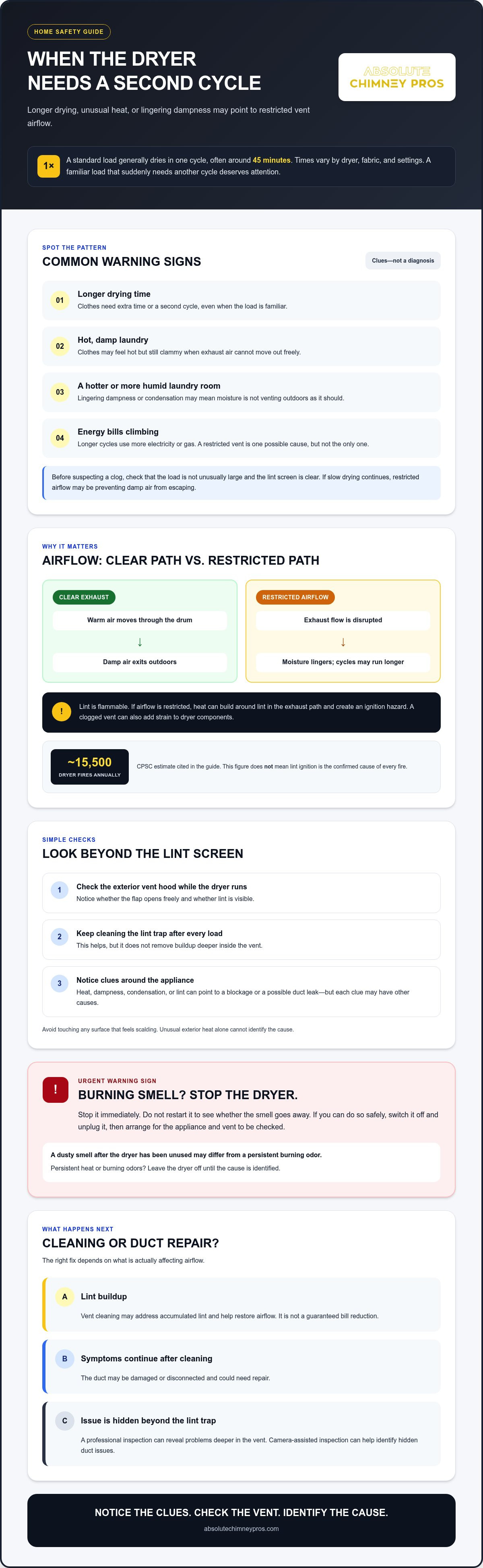
A standard load should generally dry in one cycle, often around 45 minutes. Exact times vary by dryer, fabric, and settings, but a familiar load that suddenly needs a second cycle deserves attention. Longer drying time is one of the clearest dryer vent clog signs. Before assuming the vent is blocked, check that the load isn’t unusually large and the lint screen is clear. If slow drying continues, restricted airflow may be preventing moist air from escaping.
Drying depends on moving warm air through the drum and exhausting damp air outdoors. A clogged vent disrupts that flow. The dryer can keep heating, but moisture leaves the clothes more slowly. Repeated long cycles waste energy and add strain to dryer components. If overheating continues, the thermal fuse may open to interrupt power and protect the appliance, leaving the dryer unable to run until it’s serviced. For a general overview of lint-related fire hazards, see this guide to clothes dryer safety.
The Moisture Trap Effect
When exhaust air can’t move freely, damp air lingers in the drum instead of venting outside. Clothes may come out hot but still feel clammy, or a load may need extra time even after the cycle finishes. Persistent moisture can also raise humidity in the laundry area. If the room stays damp, that environment may encourage mold growth. Don’t dismiss hot, damp laundry as a quirk if it keeps happening.
Energy Efficiency and Energy Bills
A restricted vent makes the dryer work longer to remove the same moisture. The heating system may run through extended cycles, using more electricity or gas, depending on the appliance. That extra runtime can also increase wear on the motor and belt. If your New Jersey utility bill rises alongside longer drying times, the vent is one possible cause to investigate, though other appliance or household changes can affect energy use too.
Professional dryer vent cleaning NJ homeowners arrange can address lint buildup and help restore airflow, but don’t count on a guaranteed bill reduction. Confirm the cause first. If cleaning doesn’t resolve the symptoms, the duct may be disconnected or damaged and need repair. A dryer vent is a critical ventilation path, much like a chimney: it needs clear airflow to move exhaust safely outside.
Sensory Warning Signs: Heat and Burning Smells
A laundry room that feels hotter or more humid than usual can point to poor dryer exhaust. If the vent is blocked, warm, moisture-laden air can’t leave the system efficiently. The room may feel like a sauna during a cycle, especially if the door is closed. A hot, damp environment is a reason to investigate, not proof on its own that the vent is clogged.
Pay attention to odors, too. A brief dusty smell when using a dryer that hasn’t run for a while may differ from a persistent burning odor. If you smell burning, stop the dryer immediately. Don’t restart it to see whether the smell goes away. If you can do so safely, switch it off and unplug it, then arrange for the appliance and vent to be checked.
Use caution around the appliance. Don’t touch a surface that feels scalding to test it. A dryer that becomes unusually hot on the outside may indicate restricted airflow or another problem, but the sensation alone can’t identify the cause. Taken together, strong heat, a burning smell, and longer drying times are significant dryer vent clog signs. Mass.gov offers more dryer fire prevention tips for homeowners.
The Combustibility of Lint
Lint is a flammable byproduct of fabric wear. It can collect in the exhaust path, including the transition duct that connects the dryer to the wall vent. If airflow is restricted, heat can build around that debris and create a serious ignition hazard. The CPSC estimates roughly 15,500 dryer fires annually, but that figure doesn’t mean lint ignition is the confirmed cause of every fire. Treat lint buildup as a preventable risk, not a reason to panic.
Humidity and Condensation
Check the laundry room during and after a cycle. Water droplets on windows or walls, or lingering dampness, may mean moisture isn’t venting outdoors as it should. A blocked exhaust path can contribute to warm, humid air escaping around the dryer or vent connections, but condensation can have other causes as well. Don’t assume that air duct cleaning will clear a dryer vent. If high indoor humidity continues after the dryer exhaust issue is addressed, consider whether a separate evaluation of your indoor air system is needed, including whether air duct cleaning NJ is appropriate.
If heat or burning odors persist, leave the dryer off until the cause is identified. A technician can inspect the vent and help determine whether it needs cleaning or repair. Absolute Chimney Pros provides dryer vent cleaning and repair.
Visible Clues: Lint Accumulation and Debris
Lint on the lint screen is expected. Lint collecting elsewhere is different. Check the dryer’s front, the floor around it, and the clothes themselves. A light layer of fuzz can come from normal use, but recurring lint on surfaces or garments may mean lint is escaping the appliance or airflow is carrying it back into the room. These clues don’t confirm a clogged vent by themselves. They do tell you to look beyond the lint screen.
With the dryer off and cool, look behind it for lint piles. Buildup near the exhaust connection may point to a loose or damaged joint, while lint farther along the path can suggest a backup. Don’t pull or force the appliance if access is difficult. A musty, damp-laundry odor is another clue to investigate. Wet lint can smell stale, but odor alone can’t locate a clog or prove one is present.
The Transition Duct Inspection
The transition duct connects the dryer to the wall vent. If it’s visible, check for sharp bends, crushing, or sagging that could restrict airflow and give lint a place to collect. Flexible plastic and foil hoses can kink or trap debris more readily than smooth, rigid metal ducting. Permanent runs concealed in walls or ceilings should use rigid metal ducting. Don’t assume an exposed hose is safe just because it looks intact. Ask a qualified technician to assess questionable material or routing rather than attempting a difficult repair yourself.
Internal Drum Debris
After a cycle, inspect the door opening and rubber seals. Lint stuck around the seal or on the dryer’s front may mean debris is escaping the drum area, but it doesn’t prove exhaust pressure is pushing backward. Compare it with other evidence, such as lint behind the dryer, slow drying, or weak exterior exhaust. Together, these dryer vent clog signs make a professional check more useful than guessing from one clue.
A dryer vent and chimney are separate systems, but both carry exhaust and deserve attention as part of home safety. A chimney inspection in New Jersey checks the chimney, not the dryer vent. For lint buildup or suspected duct damage, arrange the appropriate dryer vent cleaning or repair. Camera-assisted inspections can help identify hidden disconnections or damage, distinguishing surface lint from problems deeper in the duct.
Exterior Diagnostics: The Vent Hood and Flaps
The exterior vent is a useful place to check for airflow problems. With the dryer running, look from a safe, ground-level position to see whether the hood’s damper flap opens and warm air is moving out. A flap that stays shut, barely moves, or has lint caught around it may indicate a blockage, a stuck damper, or another vent problem. Little or no airflow is a clue, not a diagnosis. Don’t climb a ladder or reach into the duct to investigate.
Look for lint poking through the hood openings, debris packed around the outlet, or a cracked cover that can no longer move freely. A bird nest or signs of rodent activity can also obstruct the path. If you spot nesting material, don’t pull it out yourself. There may be live animals inside, and disturbing a nest can create additional risks. Keep the dryer off if the outlet appears completely blocked, and arrange an appropriate inspection.
Local Pest Problems in NJ and PA
A sheltered vent opening can attract birds such as starlings or sparrows, especially if it offers warmth and cover. Nesting material can restrict exhaust even when the damper seems intact. Don’t add a mesh screen as a fix. Screens can catch lint and block airflow; dryer vent termination guidance prohibits screens. If you suspect an active nest, avoid disturbing it and seek appropriate help before the vent is cleared.
The Vent Hood Condition
Inspect the hood for damage, stuck flaps, or visible obstructions. Sun exposure can make some plastic covers brittle, while snow or ice in winter can temporarily block an outlet. Clear only accessible snow or debris from the outside without pushing anything into the duct. If the flap still won’t open during operation, or airflow remains weak after an exterior obstruction is removed, the problem may be deeper in the vent.
A gas fireplace and a clothes dryer have separate exhaust systems, but both rely on clear venting. Gas fireplace service in NJ concerns the fireplace’s own system, not the dryer vent. Exterior airflow checks can help you spot warning signs, but they can’t confirm the condition of a concealed duct. For persistent blockage clues, Absolute Chimney Pros offers dryer vent cleaning or repair.
Professional Resolution: Beyond the Lint Trap
Cleaning the lint screen after each load is essential, but it only catches lint collected there. It can’t remove buildup farther inside the exhaust duct. If the dryer still runs hot, dries slowly, or shows other dryer vent clog signs after you clear the screen, the rest of the ventilation path needs attention.
A professional assessment can help distinguish a simple lint blockage from a vent that’s disconnected, crushed, or otherwise damaged. Cleaning addresses debris. Repair addresses a physical problem with the duct. Cleaning a damaged or disconnected run alone may not restore safe, effective exhaust, so identifying the cause matters before deciding what work is needed.
CSIA-Certified Technicians and Camera-Assisted Inspections
Absolute Chimney Pros uses CSIA-certified technicians for dryer vent services. CSIA certification should not be confused with the separate C-DET credential, so ask which qualifications a technician holds rather than assuming one includes the other. Camera-assisted inspections can help reveal hidden disconnections or damage inside a duct that can’t be confirmed by looking at the lint screen or exterior hood. For long or hard-to-reach runs, ask how the entire exhaust path will be assessed.
Before booking, ask whether the inspection includes airflow checks, how the transition duct will be handled, and what findings would make repair necessary. You can also confirm any credentials or insurance requirements that matter to you. Clear answers help you understand the scope before work begins.
What to Expect During Service
The process should start with an assessment, not an assumption that every problem needs the same fix. A technician can inspect accessible connections and the exhaust route, then explain whether the evidence points to lint buildup, duct damage, or another issue. Ask whether airflow will be evaluated before and after cleaning and whether the transition duct needs to be disconnected for access. The exact steps depend on the vent layout and its condition.
For New Jersey homeowners, Absolute Chimney Pros states a no-hidden-fees policy. Ask for a clear explanation of any recommended cleaning or repair before authorizing additional work. A camera-assisted inspection can provide useful evidence when a repair is suggested, especially if the suspected damage is concealed. That way, you can understand what needs attention and why, instead of treating every symptom as a routine cleaning issue.
Take the Next Step Toward a Safer Dryer
Long drying times, unusual heat, burning odors, lint beyond the screen, and weak airflow at the exterior hood can all point to a vent problem. These dryer vent clog signs don’t always call for the same fix. Lint buildup may call for cleaning; a crushed or disconnected duct may need repair. If you smell burning, stop using the dryer until the cause is checked.
Don’t rely on the lint screen alone to protect your home. Absolute Chimney Pros offers dryer vent cleaning, inspection, and repair in New Jersey and Philadelphia, Pennsylvania. Same-week appointments are available, and the company provides on-site estimates with no hidden fees.
Schedule a dryer vent inspection with Absolute Chimney Pros to get a clear assessment and understand the practical next step for your home.
Frequently Asked Questions
How do I know if my dryer vent is clogged or if the dryer is broken?
A clogged vent is more likely if clothes need repeated cycles, the dryer or laundry room feels unusually hot, or airflow at the exterior hood is weak. Check that the lint screen is clean and the load isn’t too large. If those clues persist, the vent may be restricted. A dryer that won’t start or has other operating problems may need appliance service. In New Jersey or Philadelphia, a vent inspection can help distinguish duct issues from appliance symptoms.
Is a clogged dryer vent really a fire hazard?
Yes. A clogged vent can restrict airflow, allowing heat and flammable lint to accumulate in the exhaust path. That creates a preventable fire risk, though a clog doesn’t mean a fire will occur. If you notice a burning smell, stop using the dryer and don’t restart it until the cause is checked. Keep the lint screen clear, but remember that lint can build up beyond it in the vent.
How often should I have my dryer vent professionally cleaned in New Jersey?
Have the vent inspected at least once a year, then clean it as needed based on lint buildup and the system’s condition. A long or complex duct run, frequent laundry use, or recurring slow drying may warrant attention sooner. Clear the lint screen after every load, but don’t treat that as a substitute for checking the full exhaust path. A CSIA-certified technician serving New Jersey can assess whether cleaning or repair is appropriate.
Can I clean my own dryer vent with a DIY kit?
You can remove lint from accessible areas if you follow the dryer manufacturer’s instructions and use a kit suited to your vent. Stop if the duct is difficult to reach, runs vertically, or the brush becomes stuck. Avoid damaging or disconnecting the duct, and don’t push debris deeper into it. DIY cleaning may not reveal hidden damage or a disconnection. A professional inspection can help assess the full vent path when symptoms continue.
What are the signs that birds have nested in my dryer vent?
Look for nesting material, twigs, feathers, or unusual activity around the exterior vent hood. The damper may fail to open, and airflow can be weak or absent while the dryer runs. Don’t reach into the vent or disturb a nest, since it may contain live birds. Also, don’t install mesh screening as a fix; screens can catch lint and restrict airflow. Have a suspected blockage assessed safely.
Why does my laundry room feel so humid when the dryer is on?
Humid air may be escaping into the room instead of venting outdoors. A blocked vent, loose connection, or damaged duct can interfere with exhaust flow. Check for dampness on windows or walls, and note whether clothes remain hot but damp after a cycle. These clues don’t confirm the cause, but persistent humidity alongside longer drying times warrants an inspection. The dryer vent is separate from the home’s air ducts.
Does a shorter vent path mean fewer clogs?
A shorter, straighter route can reduce places where airflow is restricted, but it doesn’t prevent lint buildup. Kinks, crushed sections, loose connections, or an obstructed exterior hood can still cause problems. A shorter vent may also be poorly installed or damaged. Keep the lint screen clean and check that the exterior damper opens during operation. If drying performance declines, have the entire route assessed rather than relying on its length alone.
What is the standard cost for dryer vent cleaning in the Philadelphia area?
There isn’t one standard price that applies to every Philadelphia home. The work required can depend on the vent’s length, access, debris, and whether inspection reveals damage that needs repair. Absolute Chimney Pros provides on-site estimates and states that there are no hidden fees. Ask what the estimate includes and whether any recommended repair is separate from cleaning before approving work. Don’t assume a cleaning quote covers damaged or disconnected ductwork.


