

Dirty air ducts can circulate dust, pollen, pet dander, and mold spores through your home, potentially aggravating allergies and asthma. The health risks of dirty air ducts are most concerning when symptoms worsen indoors or dust quickly returns after cleaning. Leaky ductwork can add to the problem by drawing contaminants from attics or crawl spaces into the system.
If you’ve noticed sneezing, irritated sinuses, coughing, or more frequent asthma symptoms at home, indoor air may be a factor. These signs can have other causes, so they don’t prove that your ducts are dirty. But patterns in when symptoms appear, visible buildup, and musty odors can help you decide whether an inspection makes sense.
This article explains which allergy and respiratory symptoms may be associated with contaminated ducts, what causes dust and debris to collect, and how leaks can affect household dust levels. You’ll also learn when inspection or cleaning may help, and how routine filter care supports cleaner indoor air.
Key Takeaways
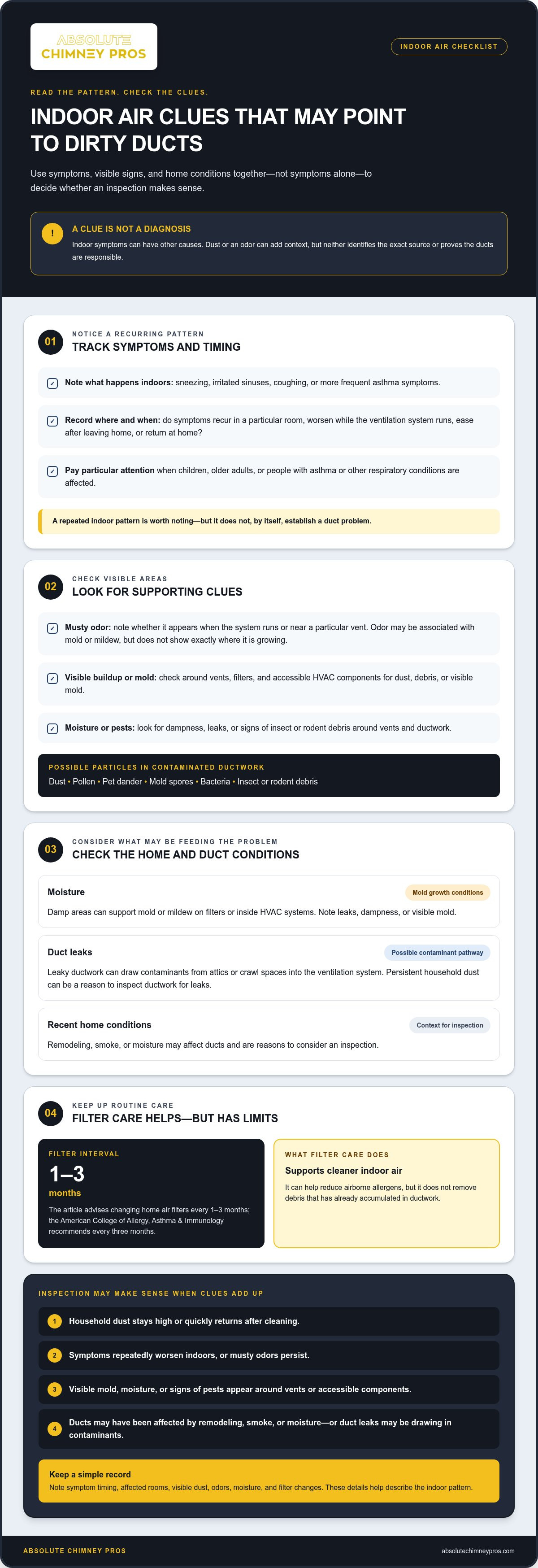
- Notice whether allergy or asthma symptoms worsen indoors, but remember that symptoms alone don’t establish the cause.
- Change home air filters every 1-3 months to help reduce airborne allergens.
- Look for clues such as musty odors, visible mold, moisture, or signs of pests around vents and ductwork.
- Consider an inspection when household dust stays high, symptoms worsen, or ducts may have been affected by remodeling, smoke, or moisture.
- Persistent dust can point to duct leaks, so inspect the ductwork and seal openings that may draw contaminants from attics or crawl spaces.
Allergy symptoms linked to airborne dust, pollen, pet dander, and mold spores
Dust, pollen, pet dander, and mold spores can circulate through indoor air when a ventilation system moves air through contaminated ducts. Children, older adults, and people with asthma or other respiratory issues may be especially affected.
Indoor Allergen Exposure
Indoor allergen exposure occurs when particles enter the air and move through rooms. Dust and pet dander can come from everyday household activity, while pollen may enter from outdoors. Mold spores can become airborne where moisture supports mold growth. If these particles collect in ducts or filters, airflow can redistribute them through living spaces.
That circulation matters when indoor allergies are already difficult to manage. For example, someone may notice symptoms while spending time in rooms served by the same ventilation system. Duct debris can also contain a mixture of particles, rather than one obvious allergen. Dust alone doesn’t identify what is affecting someone, but recurring indoor exposure is a reason to pay attention to the home environment.
Allergy and Asthma Flare-Ups
Allergy and asthma flare-ups are increases in symptoms that can occur when a person encounters a trigger. Airborne dust, pollen, pet dander, or mold spores may trigger or prolong allergy and asthma problems in susceptible people. This link is worth considering when symptoms repeatedly worsen indoors, especially while the ventilation system is operating.
Watch for a pattern rather than treating one uncomfortable day as proof of a duct problem. Note whether symptoms ease after leaving home and return in a particular room. People with asthma or pulmonary conditions should also pay attention to changes in breathing. These observations can help distinguish a recurring indoor pattern from a brief exposure elsewhere.
Indoor allergy symptoms can affect daily comfort, while asthma involves respiratory symptoms. A dusty surface near a vent, a musty smell, or visible debris can provide useful context, but none identifies the exact cause on its own. Mold and pollen are different triggers, so the material present and the home’s moisture conditions both matter. Keep track of where and when symptoms occur.
Filter care is one practical way to reduce allergens. The American College of Allergy, Asthma & Immunology recommends changing home air filters every three months. An overdue filter can collect dust and allergens, so include it in routine household maintenance. This supports cleaner indoor air, but it doesn’t remove debris that has accumulated in ductwork.
Children, older adults, and people with existing respiratory issues deserve particular attention when indoor air concerns arise. A child’s recurring symptoms in a bedroom, or an older adult’s worsening asthma indoors, are examples worth documenting. Note room conditions, visible dust, odors, and filter changes. Those details help clarify whether an indoor allergen pattern may be contributing to discomfort.
Can Dirty Air Ducts Make You Sick?
Contaminated ducts can circulate particles through indoor air and aggravate existing allergies or respiratory problems. The effect depends on what has accumulated and whether moisture or other contamination is present.
Contaminants Inside Ductwork
Contaminants inside ductwork include dust, pollen, pet dander, mold spores, bacteria, and insect or rodent debris. They matter because airflow can carry loose particles from ducts or filters into rooms. For example, debris near a supply vent may be distributed when the system runs. Leaky ducts can also draw dirt from attics or crawl spaces into the ventilation system.
These materials don’t all have the same source or effect. Dust and pet hair can collect through ordinary household activity, while pollen can enter from outdoors. Mold spores may be present where moisture supports growth. Contaminated indoor air can aggravate allergies or asthma, but finding dust alone doesn’t identify a specific health cause.
Musty Odors and Possible Mold
A musty odor may be associated with mold or mildew in ductwork or HVAC components. Moisture can support mold growth, so an odor may signal an area that deserves inspection. Note whether the smell appears when the system runs or near a particular vent.
Odor alone doesn’t show exactly where mold is growing. Check visible areas around vents and accessible HVAC components for signs of mold or moisture buildup. Mold and mildew can also create persistent indoor odors. If household members have respiratory concerns alongside a musty smell, an inspection can help identify visible contamination in the system.
Moisture and Mold Growth
Moisture buildup creates conditions where mold and mildew may develop on filters or inside HVAC systems. Damp areas near leaks or moist air can support mold growth, which may release spores into the surrounding air. Airflow can then move particles beyond the original damp area.
Fungi, mold, mildew, and their spores are forms of biological contamination, not simply ordinary dust. The U.S. Environmental Protection Agency identifies mold in an HVAC system as a reason to have air ducts cleaned. Look for visible mold on accessible vents, filters, or HVAC components, and note leaks or dampness that could be sustaining growth.
Dirty ducts don’t automatically mean every household member will become sick. Still, dust and mold spores can spread through a building and potentially worsen allergy problems. Children, older adults, and people with respiratory conditions may be more affected by contaminated indoor air. Coughing or worsening asthma symptoms deserve attention, especially alongside visible mold, dampness, or recurring odors.
Bacteria and viruses may be present in ventilation systems, but their presence alone does not establish that they are growing or spreading there. That doesn’t establish that a duct system caused a particular infection. Consider the full picture: visible contamination, moisture, odors, and household symptoms. Inspect ducts, vents, filters, and HVAC components for mold or debris when respiratory concerns coincide with those signs.
Respiratory symptoms associated with poor indoor air quality
Dirt and debris in an air duct can affect indoor air quality when airflow carries particles into occupied rooms. Symptoms and visible conditions around vents can help identify when the home environment deserves attention.
Headaches, Dizziness, and Fatigue
Headaches, dizziness, and fatigue are symptoms people may notice alongside indoor air quality concerns. They don’t identify dirty ducts as the cause. Track when each symptom appears, which rooms are involved, and whether it changes when the HVAC system runs. A household log, for example, can reveal whether discomfort repeatedly follows time indoors or occurs in different settings.
Fatigue or feeling generally unwell can also occur while breathing air containing bacteria and allergens. That still doesn’t establish a specific cause. People managing an autoimmune disorder can record symptom changes, room conditions, and ventilation patterns in their health notes. A pattern provides useful context, while a single episode reveals little about indoor air.
Dirt, Debris, and Indoor Air Pollution
Indoor air pollution includes airborne particles that circulate through the home, including dirt and debris carried from ducts or filters. Each breath brings air into contact with the nasal passages. For someone with sensitive sinuses, airborne particles can irritate them and contribute to complications, especially when exposure continues indoors.
A dirty air duct can release accumulated particles into airflow, while a leaking duct may pull contaminants from an attic or crawl space. That can add to dust already entering through everyday household activity. Notice whether dust returns quickly after cleaning or appears near vents. These clues point to an air-quality concern worth investigating, though dust alone doesn’t identify its source.
Respiratory symptoms linked with poor indoor air quality can include irritated sinuses, coughing, and worsening asthma or allergy problems. Dust and debris can contact nasal passages with each breath. Bacteria and viruses can also travel through air without direct person-to-person or hand-to-hand contact. The American Lung Association warns that poor indoor air quality can contribute to the spread of bacteria, infections, and lung disease in extreme cases.
These effects can matter more for people with existing pulmonary conditions. Symptoms may worsen when indoor air repeatedly carries irritants through rooms they use. Watch for changes in coughing, breathing, or sinus irritation that coincide with visible dust, musty odors, or airflow from a vent. A recurring pattern gives more useful information than an isolated symptom.
Air duct cleaning removes accumulated dirt and debris inside ductwork, but it doesn’t explain every symptom or remove every indoor pollutant. Filters, moisture, leaks, and other household sources also affect air quality. If symptoms occur alongside visible contamination or persistent dust, an inspection can help determine whether duct buildup is part of the problem. The findings help establish whether cleaning is appropriate.
Air duct inspection and cleaning
Inspection helps identify visible mold, moisture, pests, and heavy debris before deciding whether cleaning is appropriate. The right timing depends on what the system shows and what has happened in the home.
What are the health risks of professional air duct cleaning, including chemical treatments? Cleaning can disturb dust during the work, while chemical treatments may expose occupants to products or residues. Removing debris and applying a treatment are separate steps, so any treatment should address a specific contamination concern.
How can you choose a reputable air duct cleaning service and avoid scams? Look for a clear inspection and explanation of findings, along with a written estimate and transparent scope. Absolute Chimney Pros provides air duct inspection and cleaning with CSIA-certified, licensed, and insured technicians, plus on-site estimates with no hidden fees.
Consider inspection every few years, or sooner after remodeling, smoke exposure, pet buildup, or moisture problems. If there are no symptoms, the research guidance recommends air duct service every three years. These are practical intervals, not a substitute for responding to visible contamination or changes in household conditions.
Specific signs can make inspection more pressing. The U.S. Environmental Protection Agency identifies mold in an HVAC system, rodents or insects living in vents, and large amounts of dust or debris in ducts as reasons to have ducts cleaned. A rodent infestation, extreme household dust, or worsening allergy and asthma symptoms also support considering cleaning.
Inspection and cleaning serve different purposes. An inspection looks for visible conditions, such as mold, moisture, or accumulated material; cleaning removes debris from ductwork. If bacterial contamination is suspected, cleaning and any sanitizing should be considered based on the findings. Cleaning can reduce accumulated material, but it won’t resolve an active leak or moisture source that continues introducing contaminants.
Cleaning can help when buildup is substantial. Removing accumulated dust and debris addresses material that can affect indoor air quality, while inspection can reveal conditions needing attention. Heavy buildup can eventually stop an HVAC system from functioning. Cleaning should follow observed conditions, rather than an assumption that every dusty home needs the same work.
Household signs can guide the decision. Recurring dust near vents, visible debris inside a register, or a musty odor alongside moisture each gives a specific reason to inspect. Sneezing, throat irritation, or coughing may coincide with indoor air concerns, but symptoms alone don’t establish that duct cleaning will help. Consider visible evidence and system condition together.
Regular filter care supports cleaner indoor air. The American College of Allergy, Asthma & Immunology recommends changing home air filters every three months. A clean filter helps limit allergen buildup, while a professional inspection from established HVAC specialists like Ray Brown Air and Heat can assess duct conditions beyond the filter. Together, these steps address different parts of the HVAC system without treating cleaning as a cure for respiratory infections.
Excessive household dust and duct leaks
Dust that returns soon after cleaning can signal more than ordinary household activity. A leaking return duct may pull particles from an attic or crawl space into the HVAC system, then distribute them through rooms. The health risks of dirty air ducts become more relevant when this route repeatedly carries dust, pollen, or other irritants into occupied spaces. The source and path matter, not just dust on furniture.
Look for patterns before deciding what the dust means. Note whether it gathers near supply vents, returns quickly after wiping, or increases when heating or cooling runs. Pet dander, outdoor pollen, fibers, and dirt brought inside can also settle on surfaces. These sources may overlap, so visible dust alone cannot confirm a duct leak or explain respiratory irritation.
A leak can create a pathway between the HVAC system and unconditioned spaces. If an opening connects ductwork to a dusty attic or crawl space, the system may draw in debris and carry it indoors. That circulating material can add to household dust. A visible gap, disconnected duct, or dust buildup around a joint gives a specific reason to inspect the ductwork.
Start with practical checks. Look at accessible duct connections and around vents for visible openings or accumulated debris. Check the air filter and replace it as needed; the American College of Allergy, Asthma & Immunology recommends changing home air filters every three months. Keep supply and return vents clear of furniture, rugs, and curtains so airflow isn’t obstructed.
If dust remains unusually high, have the ductwork inspected for leaks and seal any openings found. Sealing a leak addresses the route that may draw contaminants in; cleaning removes debris already collected inside ducts. These steps address different parts of the problem. Cleaning alone won’t close an opening that continues pulling dusty air from an attic or crawl space.
Pay attention to related signs. A musty odor, moisture near a duct, or dust concentrated around one register can help direct an inspection. Sneezing or worsening allergy symptoms may occur alongside poor indoor air, but they don’t identify the dust source. Record which rooms are affected and whether dust changes when the HVAC system operates. This can help clarify whether further inspection is warranted.
Understanding the health risks of dirty air ducts also means identifying whether dust is entering through a leak or accumulating inside the system. When recurring dust points to buildup or a possible leak, schedule a professional air duct inspection to assess the ductwork and determine whether cleaning or leak repair is appropriate. A focused inspection can help address the cause instead of repeatedly wiping the same surfaces.
Absolute Chimney Pros: Chimney Sweep
Absolute Chimney Pros provides chimney sweeping and inspection for homeowners who need attention to their chimney, not their air ducts. A chimney sweep addresses chimney maintenance; it does not remove dust or allergens from HVAC ductwork. Keeping these systems distinct helps match the service to the concern.
For persistent household dust or respiratory symptoms, duct inspection and cleaning are the relevant services. If you also use a fireplace, a chimney inspection can assess the chimney, while chimney repair or liner installation addresses related chimney needs. These services support chimney care, while air duct inspection and cleaning address the ventilation system.
For duct concerns, contact Absolute Chimney Pros to arrange an air duct inspection or cleaning.
Choose a Clear Next Step for Your Home
The health risks of dirty air ducts are worth addressing with evidence, not guesswork. If dust keeps returning or you’ve noticed a musty odor, consider whether an inspection is the right next step. Track where the problem appears and what changes when your heating or cooling system runs. That gives you a clearer starting point for addressing the issue.
For duct-related concerns, an inspection or cleaning may be a practical next step. Chimney care is a separate need: the company also provides chimney sweeping, chimney inspections, and chimney liner installation. Matching the service to the system keeps the next step focused on the problem you’re trying to solve.
Contact Absolute Chimney Pros to discuss the right service for your home. A practical assessment can help you move forward with greater clarity and confidence.
Frequently Asked Questions
What health symptoms can dirty air ducts cause?
Contaminated ducts may circulate particles that aggravate allergies or asthma, with symptoms such as sneezing, coughing, irritated sinuses, or more difficult breathing. Some people may also feel tired or generally unwell in poor indoor air. These symptoms have other possible causes, so note whether they repeatedly occur in specific rooms or alongside visible dust, musty odors, or HVAC use.
Is there scientific evidence that dirty air ducts cause illness?
Evidence supports a possible exposure pathway: dust, allergens, and mold spores can circulate indoors and may worsen existing allergy or asthma problems. That doesn’t prove dirty ducts cause every illness or infection. Respiratory symptoms can have multiple causes, so consider both the home’s conditions and the timing of symptoms. Visible contamination or moisture provides useful context, but it isn’t a diagnosis.
Can mold in HVAC ducts cause respiratory or allergy symptoms?
Mold spores from a damp HVAC system can circulate and may aggravate allergies or respiratory symptoms in susceptible people. Pay attention to a musty smell that appears when heating or cooling runs, visible mold near vents, or moisture around HVAC components. Those signs warrant an inspection for mold and the damp condition supporting it. Addressing moisture matters alongside cleaning contaminated areas.
How can you tell whether air ducts need cleaning?
Look for specific evidence: visible mold inside the HVAC system, rodents or insects in vents, or substantial dust and debris within ducts. A recent remodeling project, smoke exposure, moisture problem, or rodent infestation can also justify inspection. Homeowners in New Jersey and Philadelphia can use these conditions, rather than symptoms alone, to decide whether an air duct inspection is a sensible next step.
How can dirty air ducts affect indoor air quality and dust levels?
Airflow can carry accumulated duct particles into rooms, adding dust and allergens to indoor air. Leaky ductwork may also draw dirt from an attic or crawl space, then circulate it through the home. If dust quickly returns near vents after cleaning, check the filter and look for possible duct openings. Persistent dust can have other household sources, so its location and pattern matter.
How often should residential air ducts be cleaned, according to EPA guidance?
The U.S. Environmental Protection Agency identifies mold in an HVAC system as a reason to have air ducts cleaned; this recommendation is condition-based, not a stated routine interval. Rodents or insects in vents and large amounts of duct dust or debris are also reasons to consider cleaning. Separately, general guidance recommends service every three years when no symptoms are present.


