

A clean-looking room can still have pet dander inside its HVAC system. Pet dander air duct cleaning in South Jersey removes accumulated dust and debris from ductwork, including settled dander. It addresses buildup in the system, but not allergens on furniture, bedding, or other surfaces.
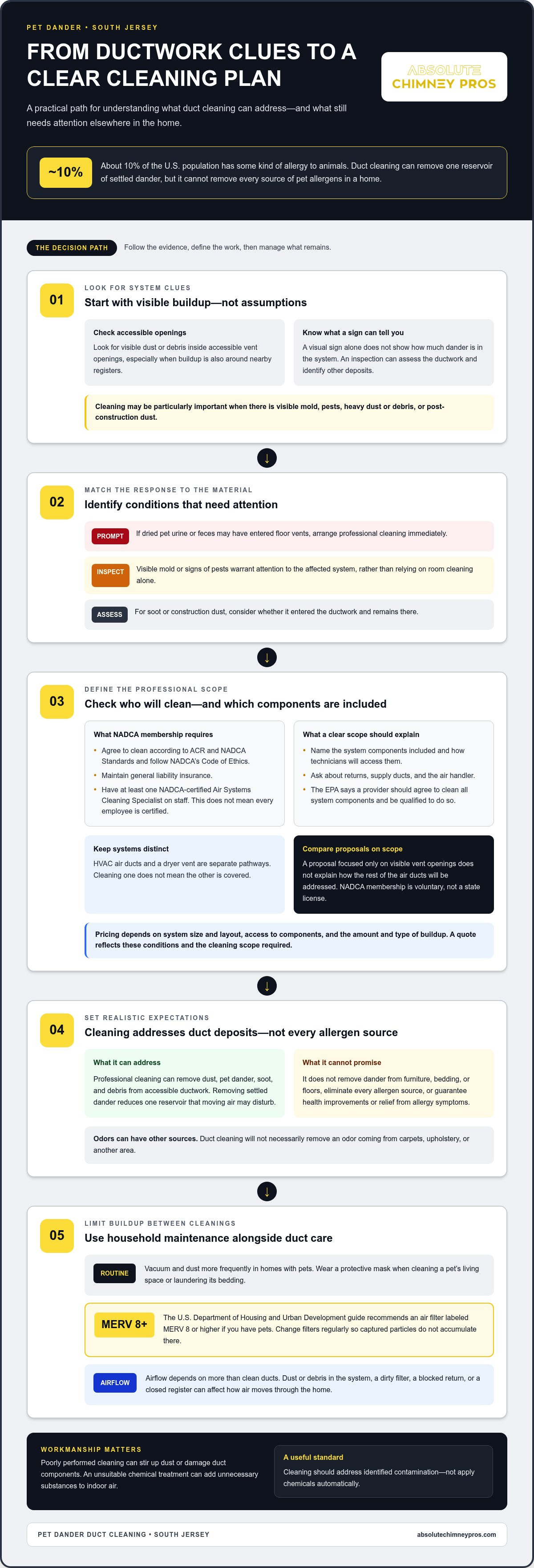
If you share your home with pets, it makes sense to look for ways to reduce the dander that circulates indoors. About 10% of the U.S. population has some kind of allergy to animals, so understanding what duct cleaning can and cannot address matters.
This guide explains when whole-home duct cleaning may help, why it cannot eliminate every source of pet allergens or allergy symptoms, and how airflow and professional cleaning standards factor into the decision. You’ll also learn which maintenance steps can help limit dust and dander buildup between cleanings.
Key Takeaways
- Learn which signs, from heavy dust to post-construction debris, can make duct cleaning worth considering.
- Understand why removing buildup from ductwork is different from removing pet allergens throughout the home.
- See what NADCA membership requires and why cleaning all system components matters.
- Find out how filters, housekeeping, and airflow factor into managing pet-related buildup between cleanings.
- Explore why homes with multiple pets may benefit from a regular duct-cleaning schedule.
Is duct cleaning guaranteed to improve health or eliminate allergy symptoms?
No. Duct cleaning can remove some material from ductwork, but it cannot eliminate every source of allergens or guarantee health improvements. Its value depends on what has collected inside the system and what continues to enter the home.
Allergen and Contaminant Removal
Professional air duct cleaning can remove dust, pet dander, soot, and debris from accessible ductwork. Visible mold, pests, heavy dust or debris, and post-construction dust are situations where cleaning may be particularly important. Odors can have other sources, so removing duct deposits won’t necessarily eliminate an odor coming from carpets, upholstery, or another area.
How can air duct cleaning reduce pet dander in a home? It removes dander settled inside the ductwork, reducing one reservoir that moving air may disturb. It doesn’t remove dander from pet bedding, furniture, or floors, so frequent vacuuming and dusting remain useful.
How can I tell whether pet dander is accumulating in my air ducts? Look for visible dust or debris inside accessible vent openings, especially if buildup is also present around nearby registers. A visual sign alone doesn’t show how much dander is in the system; an inspection can assess the ductwork and identify other deposits.
What factors affect air duct cleaning prices in South Jersey? Pricing depends on the system’s size and layout, access to components, and the amount and type of buildup. A quote reflects these conditions and the scope of cleaning required.
What are the risks of improper air duct cleaning or chemical treatments? Poorly performed work can stir up dust or damage duct components, while an unsuitable chemical treatment can add unnecessary substances to indoor air. Cleaning should address identified contamination, not apply chemicals automatically.
Air Quality and Sensitivity Considerations
Duct cleaning may support indoor air quality when contaminants inside the system are being disturbed or circulated. It isn’t a complete allergy-control plan: about 10% of the United States population has some kind of allergy to animals, and pet allergens can remain on household surfaces after ductwork is cleaned. Keep those separate sources in view.
For people sensitive to allergens, routine steps matter between cleanings. Vacuum and dust more frequently in homes with pets, and wear a protective mask when cleaning a pet’s living space or laundering its bedding. The U.S. The U.S. Department of Housing and Urban Development guide recommends using an air filter labeled MERV 8 or higher if you have pets. Change filters regularly so captured particles don’t accumulate there.
Some contamination calls for prompt action. If dried pet urine or feces may have entered floor vents, arrange professional cleaning immediately. Visible mold or signs of pests also warrant attention to the affected system, rather than relying on room cleaning alone. For soot or construction dust, consider whether the material entered the ductwork and remains there.
NADCA membership and professional standards
Professional standards can help you assess how residential air duct cleaning will be handled. NADCA membership offers specific criteria to consider, including staff credentials, insurance, and cleaning practices.
NADCA Cleaning Guidelines and Standards
NADCA member companies must agree to clean according to ACR and NADCA Standards and follow NADCA’s Code of Ethics. They must also maintain general liability insurance. These requirements offer concrete points to consider, but membership alone doesn’t describe the cleaning plan for a particular home. Ask which system components the work covers.
How do I choose an air duct cleaning company in South Jersey? Compare the stated cleaning scope with the components in your home’s HVAC system, and consider NADCA membership, which has defined requirements. A clear explanation of the work helps you understand what the service addresses.
NADCA-Certified Technicians
NADCA membership requires a company to have at least one NADCA-certified Air Systems Cleaning Specialist on staff. This is a company membership requirement, not a claim that every employee is individually certified. Ask who will perform the work and how the team will address system components, including returns, supply ducts, and the air handler.
What certifications or consumer protection rules apply to air duct cleaners in New Jersey? NADCA membership is a voluntary industry credential with defined company requirements; it is not a state license. Use the membership criteria and a clear written scope to assess a residential cleaning proposal.
Scope matters as much as credentials. The U.S. Environmental Protection Agency says a cleaning provider should agree to clean all system components and be qualified to do so. For example, a proposal focused only on visible vent openings doesn’t explain how the rest of the air ducts will be addressed. A complete scope should name the included components and explain how technicians will access them.
Keep related services distinct. Dryer vent cleaning addresses a separate exhaust pathway, not the home’s HVAC ductwork. When a provider discusses both, the work descriptions should identify each system separately. This helps prevent the assumption that cleaning one pathway also covers the other.
- Look for NADCA membership and its stated requirements.
- Confirm the work scope names the system components included.
- Distinguish HVAC air ducts from a dryer vent.
These checks help you compare the work itself, not just a company’s label. For a clearly defined whole-home air duct cleaning service, review the system components covered in the proposed scope.
Potential HVAC efficiency and airflow benefits
Airflow depends on more than clean ducts. Dust or debris inside an HVAC system can obstruct air movement, while a dirty filter, blocked return, or closed register can also affect how air reaches rooms. Consider the entire system rather than treating duct cleaning as a stand-alone efficiency fix.
According to NADCA, a clean HVAC system runs 60% more efficiently. That figure describes the potential efficiency benefit of a clean system, not a guaranteed reduction in a household’s energy use. Actual operation also depends on equipment condition, filter maintenance, system design, and airflow restrictions elsewhere.
How buildup can affect airflow
Contaminants inside ducts can narrow the path air travels through. For example, debris in a return duct can hinder air moving back toward the equipment. Restricted airflow can affect how consistently rooms receive heated or cooled air. Cleaning removes contamination from ductwork, but doesn’t repair a damaged duct or correct an equipment problem.
Start with simple observations. Compare airflow at several supply registers while the system runs. Check that furniture isn’t blocking a return grille, and replace a dirty filter with one suited to the system. If airflow remains uneven, an inspection can help distinguish duct buildup from a closed damper, damaged duct, or blower issue.
Blower and coil condition
The blower moves air through the HVAC system, while the coil transfers heat. Dust and debris on these components can interfere with their operation. A thorough assessment should consider these parts alongside connected air ducts, rather than focusing only on visible register openings. Cleaning removes accessible buildup; it doesn’t replace repairs to worn or damaged equipment.
Ask for the scope to identify which components will be cleaned. This makes it easier to understand whether the work covers the blower, coils, return side, and supply side. A system with deposits in several places needs a different scope from one with debris limited to a short duct section.
Keep related systems separate. Dryer vent cleaning addresses the exhaust path from the clothes dryer, not the home’s HVAC airflow. A dryer that takes longer to dry clothes needs attention to its vent, while weak airflow from room registers points to the heating and cooling system. Identifying the pathway prevents one service from being mistaken for the other.
After cleaning, maintain filters and keep registers unobstructed. These routine steps help limit new contaminants and preserve airflow through the system. If rooms still receive uneven airflow, identify whether the cause lies in duct condition, equipment, or system design.
Service coverage in Monmouth and Ocean counties
For homeowners in Monmouth and Ocean counties, the number of pets and the HVAC system’s condition shape cleaning needs. A practical schedule starts with the number of pets, visible debris, and how the system is used.
Cleaning Frequency for Homes With Pets
Homes with multiple pets may need air duct cleaning more often, depending on household conditions. This is a useful planning interval, not a substitute for addressing contamination between cleanings. A heavy-shedding pet, recent renovation, or visible debris at registers can mean a home needs attention sooner.
Keep a simple HVAC maintenance record. Note cleaning dates, filter changes, new pets, and renovation work. For example, a household that adds another shedding pet can reassess its schedule instead of waiting for dust to become visible throughout the home. Regular vacuuming and filter changes also help limit material entering the system.
Service Duration and Scope
Cleaning duration depends on home size, duct layout, buildup, and access to system components. A compact home with accessible ducts differs from a larger home with multiple branches or heavy debris. The scope matters, too: cleaning only registers differs from addressing connected ductwork and other system components.
Before work begins, identify the HVAC system’s supply and return paths, air handler, and access points. These details help define what cleaning includes and how technicians will reach deposits. A clear scope also helps homeowners understand the difference between removing visible dust near a register and cleaning components throughout the system.
What Customer Reviews Can Tell You
Reviews are most useful when they describe specific parts of the experience. Look for details about whether workers explained the scope, protected the home, and showed what debris they removed. A comment noting dust returning near a particular vent offers more context than a general statement that the home felt healthier.
Compare review details with the work being considered. For example, a review about a dryer vent describes a different system from one about HVAC ducts. This distinction helps readers interpret customer experiences accurately, without assuming one cleaning service covers every air pathway in a home.
For households in Monmouth and Ocean counties, match the cleaning schedule to current conditions. Multiple pets, visible buildup, renovation debris, or household changes can be reasons to assess whether cleaning is needed. Maintenance records make those decisions easier and help track the system’s condition over time.
Whole-home duct cleaning for pet dander
Pet dander can settle beyond visible vent openings. Whole-home cleaning addresses connected ductwork and HVAC components, helping remove buildup from the system’s air pathways. For homeowners searching “pet dander air duct cleaning South Jersey,” the key is finding a cleaning scope that covers the whole system, not just the grille.
For a home previously occupied by pets, ask whether ductwork and related HVAC components should be included in the cleaning plan. Consider including filter replacement and air-handler coil cleaning in a broader cleaning plan. Cleaning only a few registers leaves other parts of the air path untouched.
Which South Jersey air duct cleaning companies serve homes with pets? Look for providers that handle residential whole-home ductwork and include relevant HVAC components in the planned scope. The phrase “pet dander air duct cleaning South Jersey” is most useful when it leads to a service plan that addresses system buildup, not just vent covers.
What steps can reduce pet dander besides cleaning air ducts? Vacuum and dust more frequently, wash pet bedding, and change filters regularly. If you’re especially sensitive, wear a protective mask while cleaning a pet’s living area or laundering its bedding.
Use a practical sequence to prepare for cleaning services:
- Note rooms where pets sleep or spend substantial time.
- Identify registers with visible dust or debris nearby.
- Tell the technician about past pets, recent construction, or odors.
- Ask which duct sections, filters, and air-handler components the work covers.
These details help focus an inspection on likely accumulation points. Dander can travel from pet bedding into room air, then settle in return pathways as the HVAC system circulates air. Dust may also collect around nearby registers. Visible deposits offer a clue, but they don’t show the condition of every hidden duct section.
For a home previously occupied by animals, cleaning should address the ductwork, filters, and air-handler coils. Ask for a scope that identifies which components will be cleaned and sanitized. This clarifies what the work covers and distinguishes system cleaning from surface cleaning around vents.
Whole-home duct cleaning targets dander and other buildup inside the HVAC system. It won’t remove allergens from carpets, upholstery, pet bedding, or other household surfaces. Continue regular housekeeping after service, and maintain filters to help limit new particles entering the system.
For pet-focused cleaning, request whole-home duct cleaning that addresses ductwork and relevant HVAC components.
Absolute Chimney Pros: Chimney Sweep
Absolute Chimney Pros provides chimney sweeping for homeowners who need soot and creosote removed from a fireplace chimney. Air duct cleaning addresses HVAC buildup, while chimney sweeping addresses deposits in the flue. These are separate systems that require separate maintenance.
Choose a chimney inspection when you need the chimney’s condition assessed, such as before using a fireplace or after noticing damage. Chimney repair and liner installation address components that need corrective work. Keeping these services distinct helps homeowners match the concern to the right next step.
For pet dander, continue with the whole-home cleaning and housekeeping steps discussed above. For chimney maintenance, contact Absolute Chimney Pros or visit absolutechimneypros.com to discuss chimney sweeping, inspection, repair, or liner installation.
Make your next home-care step count
Set a practical follow-through plan after addressing pet-related buildup. Schedule filter changes and household cleaning, and note any ongoing concerns by room. That record can help clarify whether dust returns near particular vents or whether another source needs attention.
A plan for pet dander air duct cleaning in South Jersey should fit the home’s actual conditions, not rely on a single cleaning to manage every allergen. Pair system maintenance with regular care of pet bedding and living areas. If symptoms continue, discuss them with a qualified health professional; duct cleaning is not a substitute for medical guidance.
Home maintenance can involve separate systems, too. Absolute Chimney Pros also provides chimney sweeping, chimney inspections, and chimney liner installation. Keep those needs distinct from HVAC care, and choose the service that matches the issue in your home.
Contact Absolute Chimney Pros today to discuss your home’s service needs. A clear next step can help you maintain a cleaner, better-managed home environment.
Frequently Asked Questions
Why should I have my air ducts cleaned?
Have ducts cleaned when there’s a clear buildup or contamination concern, not simply because time has passed. Professional cleaning removes dust or debris inside the system and may help address material carried through the HVAC pathways. For example, after dusty renovation work, cleaning can target particles that entered return or supply ducts. It won’t clean carpets, pet bedding, or other surfaces elsewhere in the home.
Are there specific situations when air duct cleaning becomes particularly important?
Yes. Cleaning may be particularly important when ducts contain visible mold, pests, heavy dust or debris, or post-construction dust. If dried pet urine or feces may have entered floor vents, arrange professional cleaning immediately. These situations involve identifiable contamination, not routine dust around an uncovered register. An inspection can help locate the affected area and define which system components need attention.
How does air duct cleaning help reduce odors inside a building?
Cleaning can remove odor-carrying dust or debris inside ductwork, but it won’t address every odor source. For example, a smell that remains near a pet bed or carpet may come from that material, not the HVAC system. Note where and when the odor appears, such as only when heating or cooling runs. That pattern helps distinguish a duct-related concern from an odor elsewhere in the building.
Is it messy or disruptive?
Professional cleaning requires access to vents and HVAC components, so move furniture or stored items away from registers and the air handler beforehand. The work may involve equipment operating inside the home and technicians moving between access points. Ask about the planned work area and preparation steps before the appointment. In a home office, for example, moving a desk away from a floor register can provide access.
What exactly does air duct cleaning involve for residential, commercial, or industrial properties?
For a residence, cleaning addresses the connected HVAC ductwork and the components included in the agreed scope. A commercial or industrial system can have different layouts and operating needs, so its scope must reflect that system. The U.S. Environmental Protection Agency says a provider should agree to clean all system components and be qualified to do so. Confirm which areas the work covers before service begins.
Will air duct cleaning reduce energy costs?
Cleaning can remove buildup that restricts airflow, but an energy bill also reflects equipment condition, system design, filter condition, and household settings. If a dirty duct contributes to restricted airflow, removing that obstruction addresses one possible cause. A poorly maintained filter or equipment issue may still affect operation. Consider airflow and equipment condition as well as duct cleanliness when assessing system performance.
How often should ducts be cleaned in homes with pets?
For homes with multiple pets, the recommended cleaning interval is every other year. Household conditions can also indicate when to assess the system: new pets, renovation dust, or visible debris near registers may warrant earlier attention. Keep a simple record of pet changes, filter replacements, and cleaning dates. That history helps you set a practical schedule rather than relying on a calendar alone.
What does professional air duct cleaning include, and how long does it take?
Professional cleaning should address the components named in the job scope, not just visible vent covers. For a home previously occupied by pets, the recommended approach includes cleaning and sanitizing ductwork, replacing all filters, and cleaning and sanitizing air-handler coils. Timing depends on home size, system layout, access, and buildup. These factors shape the work more than a single standard duration.


