Is your gas fireplace a source of comfort or a hidden household liability? You likely assume a steady pilot light means your system is safe. It isn't that simple. Dust, debris, and internal wear can compromise your air quality without warning. Neglect leads to carbon monoxide risks and heavy repair bills. Scheduling a professional gas fireplace service NJ is the only way to verify your system's integrity. Safety isn't a suggestion. It is a requirement for your home. Our approach focuses on technical precision and transparent reporting.
You deserve a warm living room without the anxiety of potential leaks or unqualified technicians. We agree that home maintenance must be transparent and effective. This guide provides our professional safety framework to keep your fireplace functional all winter. We will preview the critical checkpoints; including burner inspections, venting clearance, and the legal necessity of NFI certified oversight. Stop guessing about your family's safety. Learn how to maintain a high-efficiency system that protects your budget and your peace of mind.
Key Takeaways
- Maintain your manufacturer warranty and home safety by understanding why annual professional inspections are non-negotiable.
- Recognize the specific warning signs, such as hazy glass or unusual whistling, that signal an immediate need for gas fireplace service NJ.
- Discover the 10-point safety protocol our experts use to calibrate your burner and verify voltage accuracy.
- Learn how to distinguish between routine maintenance needs and emergency "evacuate and call" situations.
- Access professional, CSIA-certified verification of your system’s integrity with our transparent, flat-fee framework.
Why Gas Fireplace Service NJ is Mandatory for Home Safety
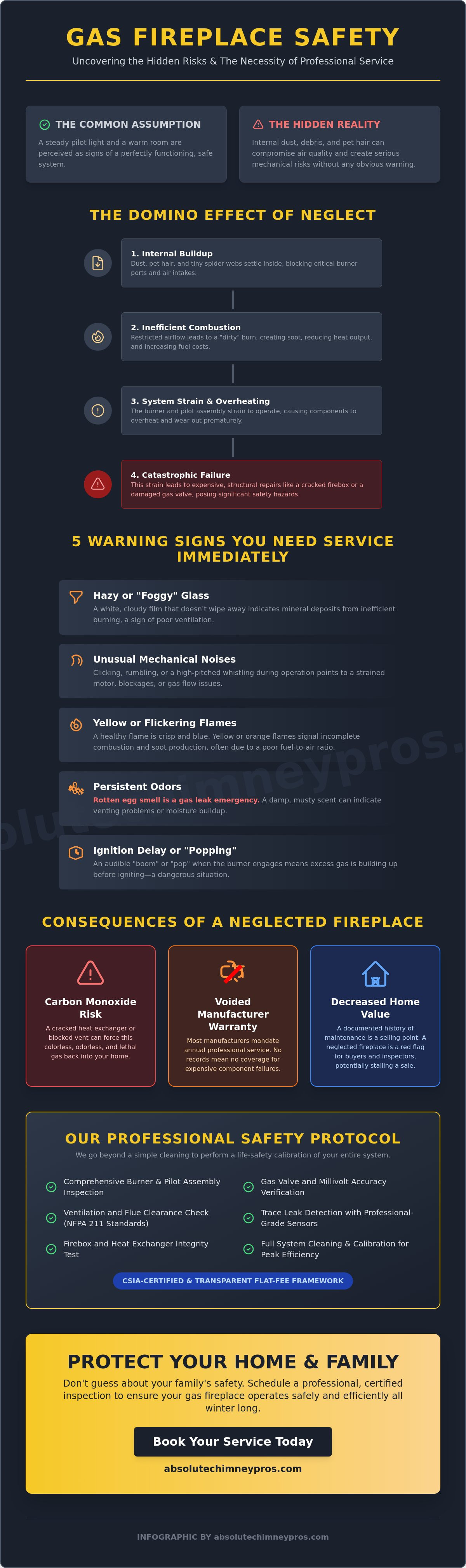
Clean gas doesn't mean a clean system. It's a common misconception. Combustion is a chemical reaction. It requires precision. Dust settles. Pet hair drifts into the intake. Even tiny spider webs can block burner ports. These aren't just nuisances. They are fuel for mechanical failure. They disrupt the pilot assembly. When airflow is restricted, the burn becomes "dirty." This leads to soot buildup and inefficient heating. You pay more for less warmth. Worse, you risk your family's health. Professional gas fireplace service NJ is the only way to ensure your system operates at peak safety. It isn't just a cleaning. It is a life-safety calibration.
Neglect creates a domino effect. A clogged port causes the burner to strain. This strain leads to overheating. Overheating can crack the firebox or damage the gas valve. These aren't minor fixes. They are expensive, structural repairs. Routine oversight prevents these issues before they start. We look for the invisible wear that homeowners miss. We check the seals. We verify the ventilation. We ensure the system is ready for the heavy demands of a New Jersey winter. Efficiency is a byproduct of safety. You cannot have one without the other.
The Silent Risk of Carbon Monoxide
Carbon monoxide (CO) is a phantom threat. It has no smell. It has no color. You cannot see it. A cracked heat exchanger or a blocked vent pipe forces CO back into your living space. While home detectors are helpful, they often only trigger when levels are already dangerous. Our technicians use professional-grade sensors to identify trace leaks early. Understanding fireplace safety means recognizing that even a small mechanical failure can have lethal consequences. We don't just clean glass. We verify the integrity of the entire combustion loop. We follow NFPA 211 standards to ensure every vent and flue is clear. Safety isn't a guess. It is a measurement.
Maintaining Your Warranty and Home Value
Your gas fireplace is a complex appliance. It's an investment. Most major manufacturers mandate annual professional inspections to keep warranties active. If a gas valve fails or a control module burns out, the manufacturer will ask for service records. No records often means no coverage. You'll be stuck with a repair bill that could have been avoided. Regular gas fireplace service NJ keeps your paperwork in order. It protects your wallet from component failure. It keeps the manufacturer's promise intact.
In New Jersey, these records matter for more than just parts. When you sell your home, inspectors look for proof of maintenance. A neglected fireplace is a red flag for buyers. It suggests broader home neglect. It can even stall a closing. Documented service proves you've cared for the property. It ensures your system remains a selling point, not a liability. We provide the documentation you need to prove your home is safe, efficient, and well-maintained.
Homeowner Checklist: 5 Signs You Need Gas Fireplace Service
Your fireplace communicates its health through visual and auditory cues. Ignoring these signals invites danger. You don't need a technician’s license to spot the early warning signs of system decay. Vigilance is your first line of defense. If you notice any of these five red flags, your system requires immediate professional intervention. Do not wait for a total mechanical failure to take action.
- Hazy or "Foggy" Glass: A white, cloudy film that doesn't wipe away with standard cleaners.
- Mechanical Noises: Unusual clicking, rumbling, or high-pitched whistling during operation.
- Flame Discoloration: A pilot light or burner flame that appears yellow, orange, or flickering.
- Persistent Odors: The smell of rotten eggs (gas) or a damp, musty scent near the unit.
- Ignition Issues: Audible "popping" or a noticeable delay when the burner engages.
Operating a compromised unit increases the risk of carbon monoxide exposure and structural damage. If your fireplace is showing these symptoms, it is time to schedule a professional inspection to restore safety and efficiency. Early detection saves lives and reduces long-term repair costs.
Evaluating the Pilot Light and Burner
The flame is your fireplace’s heartbeat. A healthy pilot light is a steady, crisp blue cone. If the flame is yellow or dances excessively, the oxygen-to-fuel ratio is incorrect. This imbalance causes incomplete combustion. You will see soot accumulating on the ceramic logs or the firebox walls. This soot is unburnt fuel. It is messy and hazardous. Delayed ignition is even more critical. If you hear a "boom" or "pop" when the fireplace starts, gas is pooling before it ignites. This creates a pressure spike that can shatter glass or damage the venting system. Professional gas fireplace service NJ ensures your burner ports are clear and your ignition timing is precise.
Glass and Aesthetic Red Flags
The glass door is more than a viewing window. It is a safety barrier. Over time, sulfur and minerals in the gas create a white film on the interior surface. If left untreated, these chemicals cause permanent etching. The glass becomes structurally weak and visually ruined. Inside the firebox, look at the paint. Peeling or bubbling paint suggests the unit is running too hot. This usually points to a venting obstruction or an over-fired burner. These aesthetic issues are symptoms of deeper mechanical stress. Addressing them through regular gas fireplace service NJ prevents a full system replacement. Precision maintenance protects the look of your home and the safety of your family.
The Absolute 10-Point Professional Safety Protocol
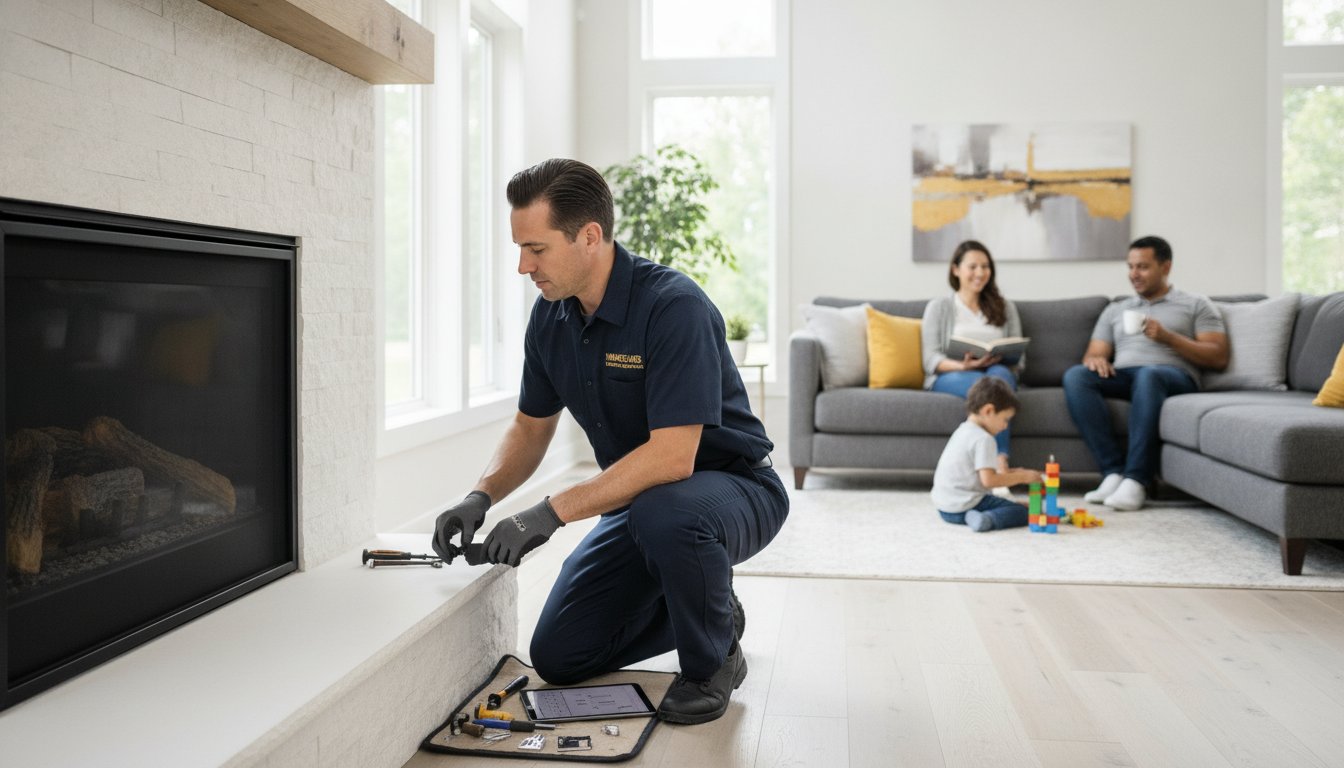
A professional gas fireplace service NJ is a technical audit, not a superficial cleaning. We follow a disciplined 10-point framework designed to identify failures before they become emergencies. Our process begins with a deep cleaning of the burner, pilot assembly, and firebox interior. We remove every trace of carbon, dust, and debris that interferes with your flame pattern. This isn't about aesthetics. It is about preventing the mechanical strain that leads to component failure. We leave nothing to chance.
We move from cleaning to critical testing. Our technicians inspect the gas valve and all internal connections using high-sensitivity electronic sniffers. These tools detect micro-leaks that a human nose cannot perceive. We also verify the structural integrity of the heat exchanger and firebox seams. Metal fatigue is real. Years of heat cycles can cause seams to separate. If the firebox isn't airtight, your living space is at risk. We ensure the containment system is absolute. Our goal is a system that operates with total precision.
Technical Component Calibration
Precision calibration is the core of our safety protocol. We test the thermocouple and thermopile for exact millivolt output. The thermocouple acts as a safety sentry. It cuts the gas supply if the pilot light disappears. Low voltage leads to system instability. Main burner orifice cleaning is next. It restores the correct flame pattern and stops soot production. We also replace remote receiver batteries. It’s a small detail that prevents a cold house during a New Jersey freeze. Every component must meet factory specifications to pass our inspection.
Venting and Chimney Integrity
The exterior vent is your system's exhaust. We check the vent cap for obstructions. Birds and debris often block these exits. A blocked vent forces lethal gases back into your living room. We test the draft to ensure your air stays clean. NFPA 211 is the industry standard governing the safe construction, installation, and inspection of chimneys and venting systems to ensure proper exhaust of combustion products. We verify every inch of the path. Safety is a matter of technical certainty. Your home's air quality depends on a clear and secure ventilation route.
When to Call for Emergency Gas Fireplace Repair
Safety is binary. Your system is either safe or it is a hazard. There is no middle ground. If you detect the sharp smell of rotten eggs, stop. This is an immediate emergency. Evacuate everyone. Call for emergency assistance from a safe distance. Do not wait for a regular gas fireplace service NJ appointment if you suspect a live leak. Prompt action prevents catastrophe. We treat every gas odor with the highest level of technical urgency.
A fireplace that shuts off unexpectedly is not a minor glitch. It is a safety failure. The system's internal sensors are likely detecting a lack of oxygen or a venting backup. This is a protective lockout. Do not attempt to bypass it. Visible soot on the exterior of the unit or the wall above it is another critical warning. Gas is a clean-burning fuel. Soot means the combustion loop is broken. It indicates a serious venting failure that could lead to a house fire. You need an expert gas fireplace service NJ to diagnose the root cause immediately. We look for blocked flues and cracked heat exchangers that compromise your home's air quality.
Gas Leak Response Protocol
Speed is essential during a suspected leak. Do not turn on lights. Do not use your phone inside. Static electricity can ignite gas. If you know the location of your main gas shut-off valve, close it immediately. Only do this if it is safe to reach. Open windows to dilute the gas concentration while you exit. Your priority is life safety, not property preservation. Once you are safe, we can assess the damage. We utilize precision sniffers to locate the exact source of the failure. There is no guesswork in gas safety, and for those in the South Florida area, Miami 305 Plumbing provides similarly specialized 24/7 emergency support for residential gas and plumbing systems.
Venting Failures and House Fire Risks
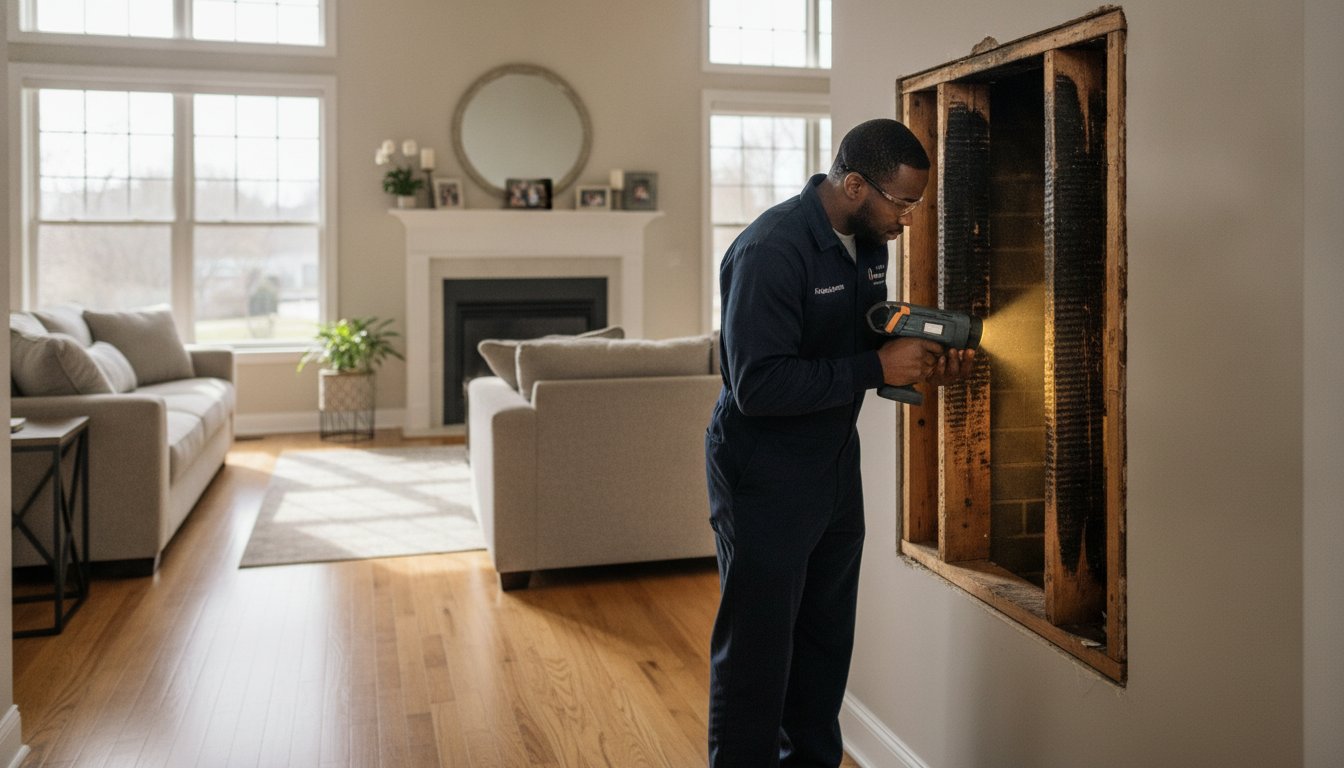
Obstructions in the chimney are dangerous. They cause heat to build up behind your walls. This can ignite wooden studs without a direct flame. We often see issues where damaged chimney flashing allows moisture to corrode internal gas lines or venting pipes. This moisture leads to rust and eventual holes. Professional camera inspections are the only way to see these internal cracks. We use high-resolution equipment to verify every inch of the flue. Transparency is our standard. We show you exactly what our cameras find.
If your carbon monoxide detector sounds, treat it as a life-threatening event. Turn off the gas fireplace. Move to fresh air. CO poisoning is cumulative and often irreversible. Do not restart the unit until a professional has cleared it. If you have experienced any of these red flags, contact us for an immediate safety evaluation. We prioritize emergency diagnostics to keep your home secure.
Booking Your Gas Fireplace Service in New Jersey & Philly
Winter doesn't wait for your schedule. Neither do we. Absolute Chimney Pros offers same-week appointments for NJ residents. We understand the urgency of home safety. A cold house is a vulnerable house. Our team prioritizes efficiency and technical mastery. We serve South Jersey, Central Jersey, and the Philadelphia area with a no-nonsense approach. You get a protective partner for your home. We arrive on time. We assess the situation. We execute the task. It is that simple.
Transparency is our operational standard. We provide flat-fee inspections with zero hidden costs. You won't face surprise surcharges or vague "administrative fees." Our gas fireplace service NJ is performed by professional, licensed, and insured experts. We value your time and your environment. After every visit, we provide a clear, direct report of our findings. There is no guesswork involved in our process. You receive technical certainty and ethical service. We build trust through clarity and reliability.
The Advantage of CSIA Certification
Certification is the line between an amateur and an expert. Certified Chimney Professionals undergo rigorous safety testing. They are trained to identify gas-specific hazards that others miss. We don't just look at the logs. We utilize modern diagnostic tools. High-resolution internal cameras reveal hidden cracks in the firebox and venting flues. These tools allow us to see what is invisible to the naked eye. Trust your home to specialists who understand the mechanics of combustion. We blend traditional craftsmanship with contemporary efficiency. Safety is a discipline. We practice it daily.
Schedule Your Safety Review Today
Proactive maintenance is the only way to prevent mid-winter lockouts. Don't wait for the first cold snap to discover a mechanical failure. A neglected system is a liability. You can combine your service with a chimney sweep NJ for total home safety. This comprehensive approach ensures your entire venting network is secure and efficient. We are ready to verify your system's integrity. Take responsibility for your home's environment today. Book your flat-fee inspection now. Our technicians are standing by to ensure your home remains warm and safe.
Secure Your Home for the Winter Season
A functional fireplace is an asset. A neglected one is a liability. You now have the framework to identify warning signs like hazy glass or delayed ignition. You understand that professional calibration is the only way to verify your system's safety against carbon monoxide leaks. Don't leave your family's protection to chance. Proactive oversight is the most effective way to lower energy bills and avoid the high costs of emergency mechanical failure. Choosing a professional gas fireplace service NJ is a requirement for a secure household.
Our team provides the technical mastery you need to rest easy. We utilize CSIA-certified technicians who are fully licensed and insured in NJ and PA. We offer transparent, flat-fee inspection options with no hidden costs. Trust the vigilant protectors who prioritize your environment's integrity. It is time to move from uncertainty to technical certainty. Schedule Your Professional Gas Fireplace Service Today and ensure your system is ready for the first freeze. Your peace of mind is our standard. We look forward to verifying your home's safety.
Frequently Asked Questions
How often should a gas fireplace be serviced in New Jersey?
You should schedule a professional gas fireplace service NJ at least once per year. Annual inspections are a requirement for most manufacturer warranties and ensure your system is prepared for the heavy demands of winter. Dust, pet hair, and debris accumulate during the off-season. Neglect leads to mechanical failure and increased safety risks. Regular maintenance is a life-safety calibration, not just a cleaning.
Is it normal for a gas fireplace to smell like it is burning?
A faint "dusty" odor is normal during the first burn of the season as dust on the logs burns off. However, a persistent chemical or smoky smell is a red flag. It often indicates a venting failure or a cracked heat exchanger. If the odor continues past the first hour of use, shut down the unit immediately. You need a professional to verify the system's integrity and air quality.
Can I clean my own gas fireplace or do I need a pro?
Homeowners can perform surface cleaning like wiping the glass and dusting the exterior. However, internal maintenance requires a professional. Technical tasks like cleaning burner ports and testing gas valves involve gas line safety. CSIA-certified technicians have specialized tools to detect micro-leaks and verify millivolt output. DIY attempts on gas components risk explosions or carbon monoxide exposure. Leave the technical work to experts.
Why does my gas fireplace pilot light keep going out?
A pilot light that won't stay lit usually points to a failing thermocouple or a clogged pilot orifice. The thermocouple is a safety sensor that shuts off the gas if it doesn't detect heat. If it is dirty or worn out, it can't send the correct signal to the gas valve. Other causes include improper venting or a weak thermopile. We use precision meters to test the voltage output of these sensors during a service call.
How much does a typical gas fireplace service cost in NJ?
The cost of a gas fireplace service NJ depends on the unit's condition and the depth of the diagnostic required. We provide transparent, flat-fee inspection options to ensure there is no guesswork in your maintenance budget. A standard service call includes our comprehensive 10-point safety protocol. Any necessary repairs or component replacements are quoted separately after a thorough technical assessment of your system.
Does a gas fireplace need a chimney inspection too?
Yes. Every vented gas fireplace requires a chimney inspection to ensure the exhaust path is clear. Obstructions like bird nests, debris, or crumbling liners can block the flue. This forces lethal carbon monoxide back into your living space. We follow NFPA 211 standards to verify that your chimney is structurally sound and drafting correctly. Even vent-free units require a professional check of their internal oxygen depletion sensors.
What is the difference between a thermocouple and a thermopile?
A thermocouple is a small safety sensor that detects the pilot flame to keep the gas valve open. A thermopile is a larger probe that generates enough millivolts to power the main burner's ignition. Both components are critical for system operation. If either fails, your fireplace will not ignite or will shut off unexpectedly. We test the voltage of both parts to ensure they meet factory specifications.
What should I do if I smell gas near my fireplace?
Stop what you are doing and evacuate the home immediately. Do not turn on lights, use a phone, or operate any electrical devices inside. Even a small spark can trigger an explosion. If it is safe to reach, turn off the main gas supply valve. Call for emergency assistance from a safe distance outside. Do not return to the property until a licensed professional has repaired the leak and cleared the area.