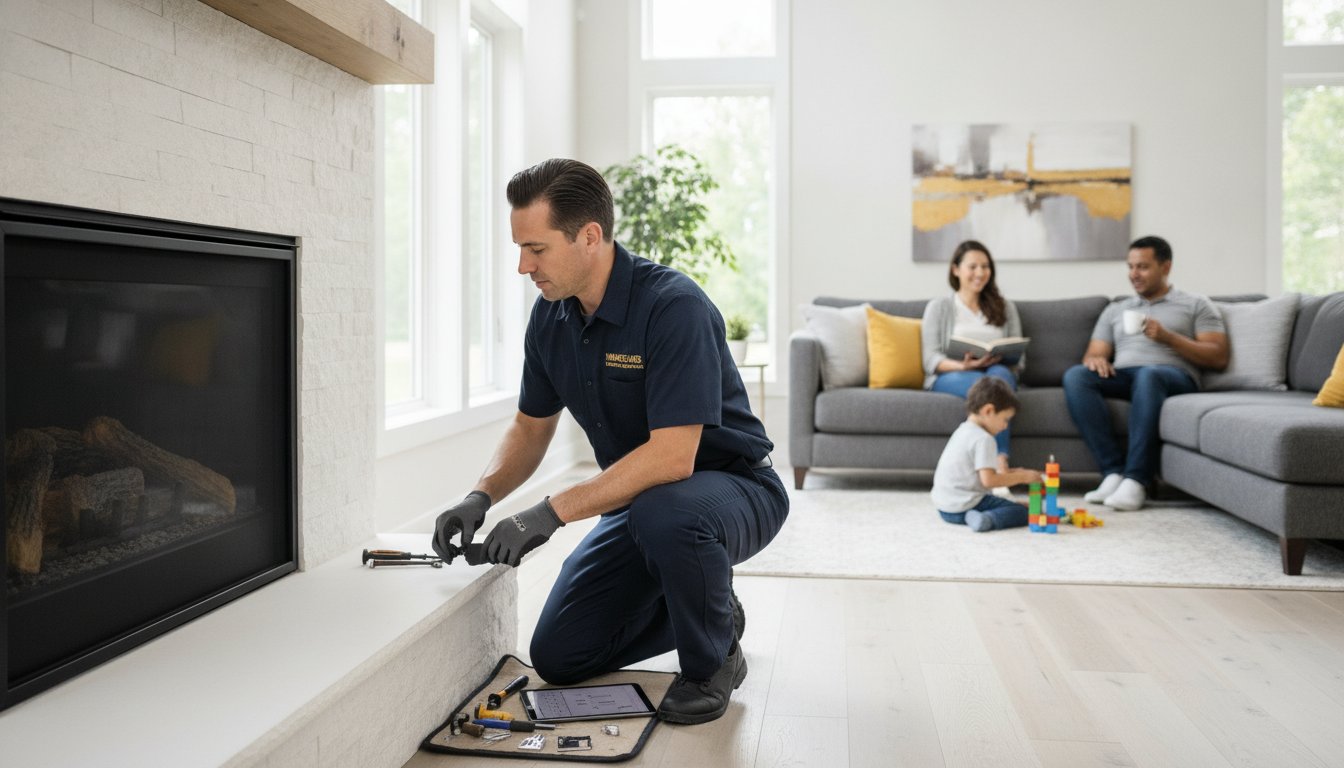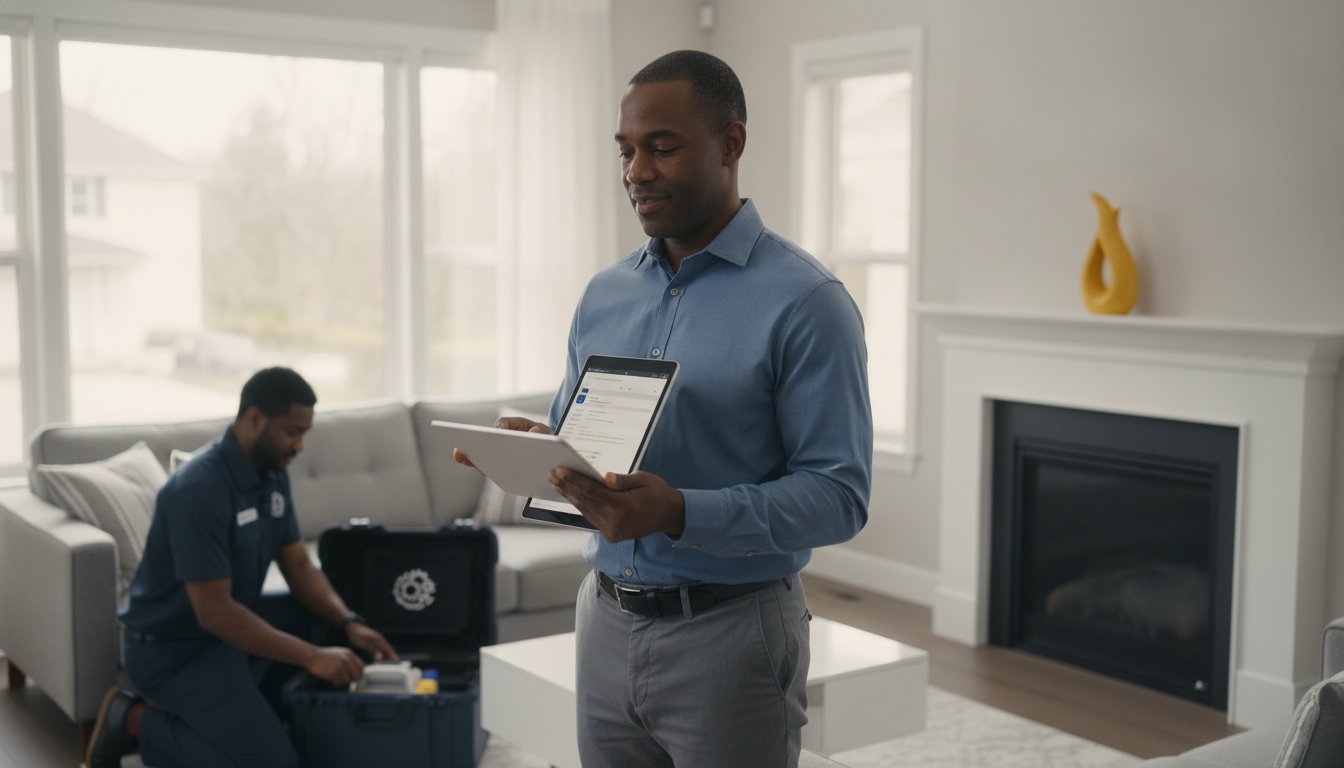
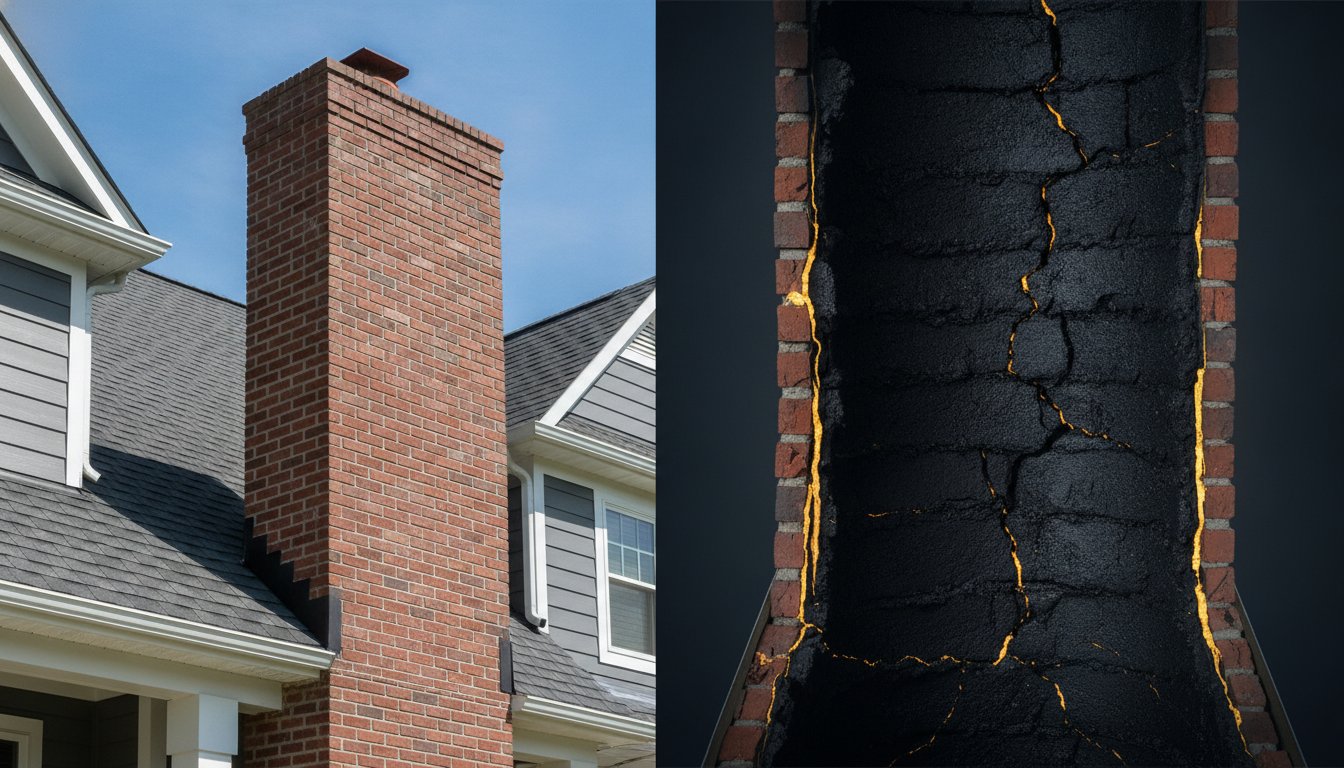
A clear blue sky above your roof doesn't guarantee your family's safety downstairs. You want to light a fire tonight, but that nagging doubt remains: is my chimney safe to use? Most homeowners rely on visual cues from the hearth. They look for soot. They check for cracks. However, the most dangerous hazards often hide behind the masonry where your eyes cannot reach. Visible symptoms are just the tip of the iceberg. Real safety is verified only through internal flue imaging.
You shouldn't have to guess when it comes to fire safety. The fear of a hidden chimney fire or carbon monoxide leak is a heavy burden. It is a weight no homeowner should carry. This guide provides the definitive warning signs of an unsafe system and shows you how to protect your home from invisible risks. We will break down the "3-2-10" rule, the impact of the 2026 California Residential Code, and the five critical indicators that tell you exactly when to keep the damper closed. You will gain the clarity needed to enjoy your fireplace with absolute peace of mind.
Key Takeaways
- Identify immediate visual and olfactory warning signs. Smoke in the living space or metallic odors signal a failing system that requires attention.
- Understand the three stages of creosote. This flammable byproduct is the leading cause of chimney fires and requires professional removal to prevent disaster.
- Discover why a flashlight check is insufficient to determine if my chimney is safe to use. Internal camera scans are the only way to see every inch of the flue.
- Recognize critical triggers for an immediate inspection. Severe storm damage and property transfers require a professional safety review to ensure structural integrity.
- Prioritize CSIA-certified oversight. Professional maintenance is your primary defense against hidden household hazards and carbon monoxide risks.
Visual Red Flags: 5 Signs Your Chimney is Currently Unsafe
Safety is never a guessing game. If you find yourself asking, "is my chimney safe to use," you have likely already spotted a problem. Your fireplace should provide warmth, not worry. Ignoring early warning signs leads to expensive repairs or, worse, house fires. Start your safety check by looking for these five immediate red flags:
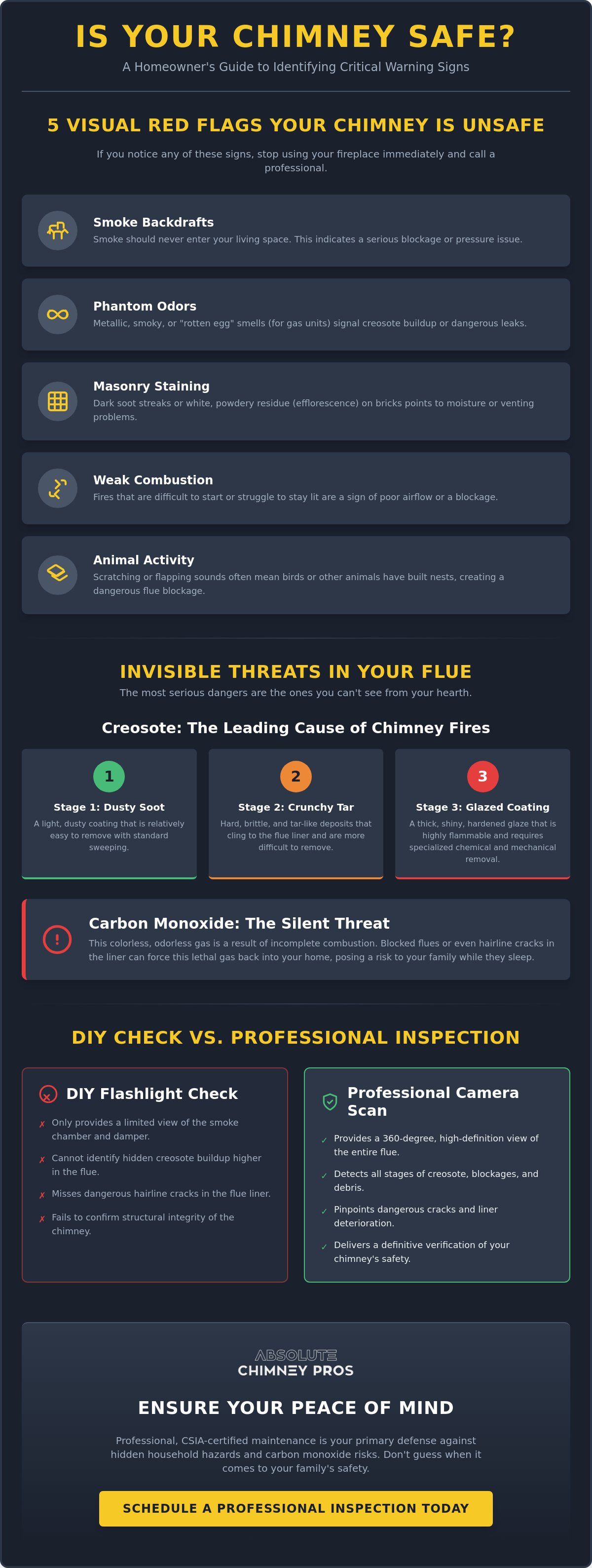
- Smoke backdrafts: Smoke should never enter your living room while a fire is burning.
- Phantom odors: Metallic, smoky, or sulfurous smells when the hearth is cold indicate a problem.
- Masonry staining: Dark soot or white powdery residue on the hearth suggests moisture or venting issues.
- Weak combustion: Fires that struggle to start or stay lit often suffer from poor airflow.
- Animal activity: Scratching or flapping sounds often mean birds or raccoons have blocked the flue.
The Smoke Test: Why Your Flue Might Be Failing
Smoke entering your home is a critical failure. This often happens because of a cold flue or negative air pressure. Understanding how chimneys work is vital here; they rely on the "stack effect" to pull hot air up and out. If the air inside the chimney is too cold, it acts like a heavy plug, pushing smoke back down into your home. This is sometimes a simple damper issue. However, it can also signal a dangerous blockage from creosote or fallen debris. If smoke spills into your home, stop using the fireplace immediately. Open a window to equalize pressure and clear the air. Do not relight it until a professional verifies the airway is clear.
Smells and Stains: The Telltale Signs of Neglect
Your nose often detects danger before your eyes do. Creosote is a byproduct of wood burning that smells like asphalt or a stale campfire. In high-humidity New Jersey summers, this odor becomes intense and deeply unpleasant. It is a sign of significant buildup that needs removal. For those with gas units, a "rotten egg" smell is an absolute emergency. This indicates a gas leak. Leave the house and call your utility provider. Finally, look at your walls. Ashy residue or dark staining on the surrounding drywall isn't just a cleaning problem. It's a sign of inefficient combustion and escaping flue gases. When you wonder, "is my chimney safe to use," these visual and olfactory cues provide the first definitive "no."
Creosote and Carbon Monoxide: The Hidden Dangers in Your Flue
Invisible threats are the most dangerous. While smoke and smells are obvious, the real killers hide in plain sight. Creosote and Carbon Monoxide (CO) represent the primary risks to your home's safety. Understanding these hazards is essential when determining is my chimney safe to use. You cannot rely on a visual check from the hearth to identify these silent intruders.
What is Creosote and Why is it Dangerous?
Creosote is the leading cause of chimney fires in the United States. It is a highly flammable, gummy byproduct of wood combustion. This substance develops in three distinct stages. Stage one is a dusty, soot-like coating that is relatively easy to sweep. Stage two transforms into a crunchy, tar-like deposit that clings to masonry. Stage three is the most lethal. It appears as a thick, shiny, glazed coating that resembles poured wax. This stage is essentially solid, explosive fuel. DIY cleaning brushes often bounce right off this hardened glaze. Removing stage three creosote requires industrial-strength chemicals and specialized mechanical tools used during a CSIA-certified inspection. Without professional removal, a single spark can ignite the entire flue.
Carbon Monoxide: The Silent Threat
Carbon Monoxide is a colorless, odorless, and tasteless gas. It is the result of incomplete combustion. A blocked flue or a compromised liner forces this lethal gas back into your living areas. Even hairline fractures in a clay liner can leak CO into upstairs bedrooms while your family sleeps. This is not just a wood-burning issue. Gas units also produce Carbon Monoxide. A regular gas fireplace service NJ ensures your venting system is airtight and functional. Never assume a gas log set is maintenance-free. Blockages from bird nests or fallen masonry can turn a clean-burning fireplace into a deadly hazard.
Home safety is a holistic system. Your chimney's health is directly linked to your home's overall ventilation. When a flue is blocked, air pressure within the house changes. This can lead to "backdrafting," where various exhaust systems compete for air. This competition can even pull contaminants from other sources, like dryer vents, back into your breathing space. A house that cannot "breathe" becomes a trap for pollutants. Vigilance is your best tool for protection. If you haven't had a professional look at your system this year, consider a comprehensive chimney inspection to verify your home's air quality and structural integrity.
DIY Visual Check vs. Professional Camera Inspection: A Comparison
Don't trust a flashlight to tell you if my chimney is safe to use. Most homeowners peer upward and see black soot. They assume everything is fine. This is a mistake. A flashlight only reaches the firebox and the very bottom of the flue. It misses the critical zones where fires actually start. Professional oversight replaces this guesswork with precision. You need to see the entire system to ensure your home is protected.
The "Flashlight Test" Myth
The "flashlight test" is a dangerous myth. Industry data suggests that 90% of critical chimney damage occurs in the unseen mid-section of the flue. Mortar decay between flue tiles is a primary hazard. These gaps allow heat and sparks to reach your home’s wooden framing. You cannot see this from the hearth. A clean-looking firebox is often a mask for a deteriorating interior. Relying on your eyes alone is a gamble with your property. If you can't see the mortar joints 15 feet up, you don't know the state of your chimney.
How Camera Inspections Reveal Hidden Hazards
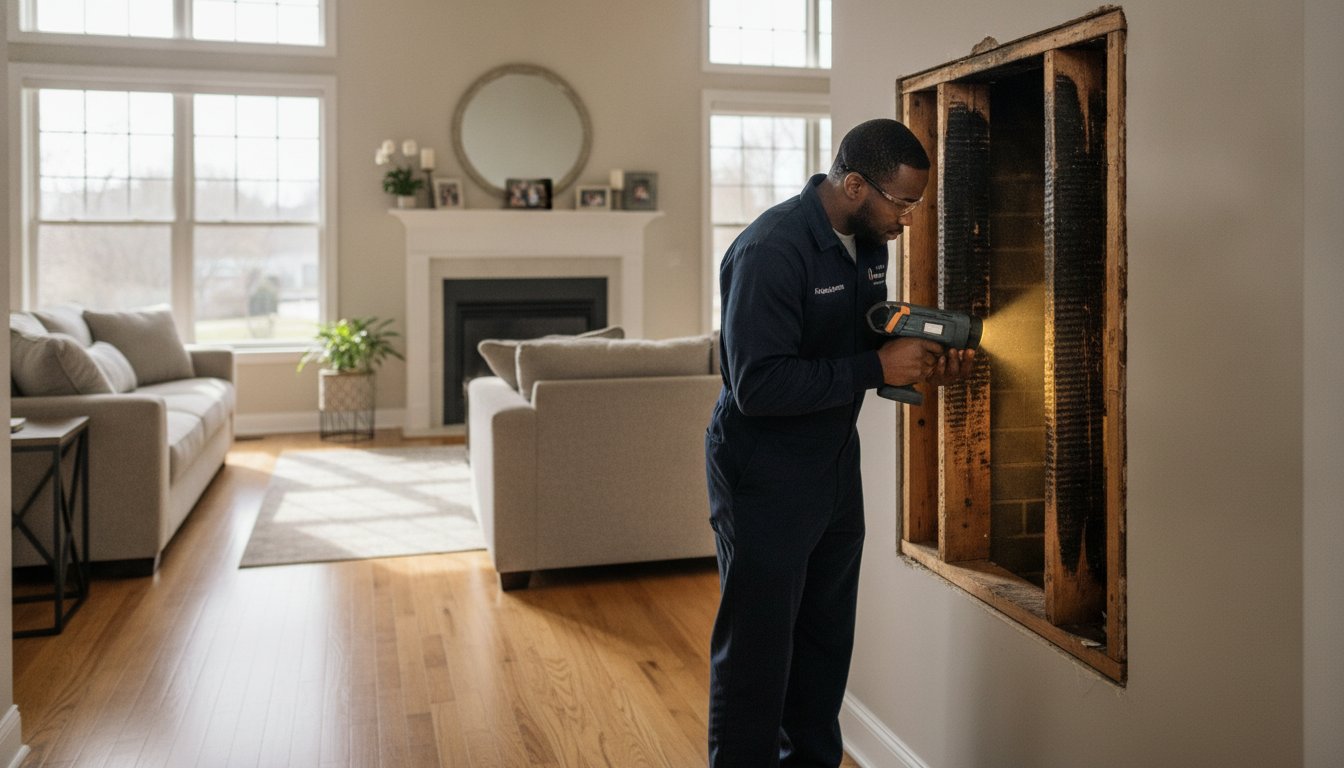
A professional chimney inspection New Jersey utilizes high-definition internal imaging. We deploy specialized cameras that scan every inch of the flue liner. These devices provide a 360-degree view of the interior walls. They reveal hairline fractures that a flashlight would never catch. They also identify "spalling," where the masonry begins to flake and fall. This Level 2 process includes a full digital report. You receive clear images of your system's health. This documentation is vital for insurance claims and home resale value. It transforms an invisible risk into a visible, solvable problem.
CSIA-certified technicians are the gold standard. They undergo rigorous testing on building codes and fire physics. This is vital because an estimated 90% of chimney companies in the United States do not have formal certification. Don't trust your safety to the untrained. The EPA emphasizes that an annual professional inspection is the only reliable way to maintain a wood-burning system. A flat-fee inspection delivers a comprehensive safety audit. It provides the "go/no-go" signal you need for the season. You deserve the confidence that comes from expert verification. It is the only way to truly know if my chimney is safe to use.
Critical Scenarios That Require an Immediate Chimney Safety Review
Routine maintenance is the baseline. However, specific events in the life of a home demand an immediate response. You cannot rely on last year's report if your circumstances have changed. Sudden environmental shifts or structural modifications alter the answer to the question: is my chimney safe to use? Recognizing these triggers is the difference between a cozy evening and a household emergency. Vigilance is your best defense.
Storm Damage in the NJ/Philadelphia Region
New Jersey weather is punishing for masonry. Nor'easters bring heavy rain and high-velocity winds that batter chimney crowns. These storms often compromise the flashing, which is the seal between your chimney and roof. Once that seal breaks, water enters your home's framing. Philadelphia winters introduce the destructive freeze-thaw cycle. Water seeps into the porous brickwork during a storm. It then freezes and expands. This process causes "spalling," where the faces of the bricks literally pop off. Look at your lawn or gutters after a severe weather event. If you find shards of red clay or bits of mortar, your chimney has sustained structural damage. Water is now reaching the interior of your flue, and your system is no longer safe.
Buying a Home? Don’t Skip the Flue
Standard home inspectors are generalists. They evaluate the roof, the plumbing, and the electrical system. They rarely have the specialized cameras or the CSIA training required to see inside a chimney. Buying a home without a dedicated chimney review is a massive financial and safety risk. You are inheriting years of potential neglect. You are taking on the liability of every hidden crack and every millimeter of creosote left by the previous owner. A Level 2 inspection is a vital part of the closing process. It provides a definitive report on the flue's internal condition. It ensures you aren't moving your family into a fire hazard. Never strike a match in a "new to you" home until an expert gives the green light.
Dormancy is also a major red flag. If you haven't used your fireplace in several years, it is likely less safe than a frequently maintained one. Animals like swifts and raccoons love the quiet of an unused flue. Their nests create total blockages that lead to immediate smoke-back and carbon monoxide buildup. Furthermore, switching fuel types requires a safety reset. Upgrading from wood to a gas insert changes the exhaust temperature and chemistry. Your existing liner might be too large or too degraded to vent gas safely. Before you make a change or relight an old flame, ensure your home is protected. Schedule a professional chimney inspection to verify your system is ready for operation.
Ensuring Peace of Mind with a CSIA-Certified NJ Inspection
Safety is a definitive state, not a guess. When you ask, "is my chimney safe to use," the answer must be a clear "yes" supported by expert evidence. If you have spotted smoke, smelled metallic odors, or found masonry debris on your lawn, the answer is "no." Keep the damper closed until a professional arrives. A fireplace is a controlled fire inside your home. Without a functional flue, that control is lost. Professional oversight is the only way to restore it and protect your property from hidden fire hazards.
Your first line of defense is a professional chimney sweep NJ. Cleaning removes the combustible creosote that leads to flue fires. It also allows the technician to see the underlying structure clearly. Maintenance is an investment in your home's longevity and your family's health. It prevents the buildup of carbon monoxide and ensures your system vents efficiently. Never skip this step. It is the foundation of a safe wood-burning season.
Your Annual Safety Schedule
Timing matters. Don't wait for the first frost to think about your chimney. The best time for an inspection is during the Spring or Summer. This off-season approach ensures you get same-week service without the stress of the autumn rush. A flat-fee inspection acts as a low-cost safety insurance policy for your home. It identifies small issues like hairline cracks or minor masonry decay before they become structural failures. Proactive care is always more affordable than reactive repairs. It gives you the freedom to light that first fire of the year without any anxiety.
Contact Absolute Chimney Pros Today
Expertise is non-negotiable. Absolute Chimney Pros provides CSIA-certified, licensed, and insured technicians for every job. We value your time and your safety. Our team offers transparent, on-site estimates with no hidden fees. We utilize modern imaging tools to provide traditional reliability. You receive a clear, honest report on your system's condition. There is no guesswork involved in our process. Schedule your professional chimney safety inspection now and gain the peace of mind you deserve. Trust the disciplined experts to protect your environment and verify if my chimney is safe to use. Regarding fire safety, there is no room for error.
Take Control of Your Home Safety Today
Your chimney is a complex ventilation system. It requires more than a casual glance to verify its integrity. Visual red flags like soot staining or strange odors are your first indicators of trouble. However, internal hazards like glazed creosote and hairline liner fractures remain invisible without professional imaging. Don't leave your family's safety to chance. Uncertainty is a risk you don't need to take.
If you are still wondering, is my chimney safe to use, it's time for a definitive answer. Professional verification eliminates the guesswork. It provides the peace of mind you deserve. Absolute Chimney Pros offers the expertise needed to secure your home. Our CSIA-certified technicians are licensed and insured in NJ and PA. We provide transparent reports and have same-week appointments available to fit your schedule. We are your protective partner in home maintenance.
Book Your Flat-Fee Chimney Safety Inspection Today. Protect your environment. Ensure your hearth is a source of comfort, not a hidden hazard. We are ready to help you enjoy a worry-free season.
Frequently Asked Questions
Is it safe to use my fireplace if it hasn’t been cleaned in a year?
No, it is not recommended to use a fireplace without an annual cleaning. Creosote builds up every time you burn wood. Even a thin layer can ignite under the right conditions. An annual cleaning removes this combustible fuel and allows for a structural safety check. Skipping this maintenance increases your risk of a chimney fire. It also risks carbon monoxide backup into your home.
Can I inspect my own chimney for safety?
You can perform a basic visual check, but you cannot perform a complete safety audit. A flashlight only reveals the firebox and the first few feet of the flue. Most dangerous defects, such as cracked liners or mortar decay, occur in the unseen mid-section. Professional tools like high-definition cameras are required to see every inch. You should never rely on a DIY check to determine if my chimney is safe to use.
What does a professional chimney inspection include?
A standard Level 2 inspection includes a visual check of all accessible interior and exterior components. Technicians use specialized camera equipment to scan the internal flue lining for hidden hazards. They check for blockages, creosote levels, and structural fractures. They also evaluate the chimney crown, flashing, and damper functionality. This ensures the entire system is airtight and venting correctly for your family’s protection.
How much creosote is dangerous in a chimney?
Any amount of creosote presents a fire hazard, but 1/8th of an inch is the industry threshold for immediate cleaning. Once buildup reaches this thickness, the risk of a chimney fire escalates. If you see shiny, glazed creosote, stop use immediately. This Stage 3 buildup is highly explosive and requires specialized mechanical removal. It cannot be cleared with a standard chimney brush or DIY methods.
Why is my fireplace smoking even when the damper is open?
Smoking is usually caused by a blockage or a draft issue. Common culprits include bird nests, fallen masonry, or heavy creosote deposits. It can also result from negative air pressure within the home. If smoke enters your living space, the system is failing to vent properly. This failure makes the answer to is my chimney safe to use a definitive no. You must clear the obstruction before relighting.
Does a gas fireplace really need an annual safety inspection?
Yes, gas fireplaces require regular maintenance to prevent carbon monoxide leaks. While they don't produce creosote, they can suffer from debris blockages or burner malfunctions. Technicians check the venting system, gas connections, and pilot assembly. This ensures the unit remains airtight and that safety sensors are functioning correctly. Regular service prevents expensive repairs and protects your indoor air quality from silent, toxic gas leaks.
What happens if a chimney inspection finds damage?
If damage is found, the technician provides a detailed report and a repair estimate. Common solutions include chimney liner installation or masonry repair. You should not use the fireplace until these repairs are complete. Addressing issues early prevents further structural decay and keeps your home safe from fire and toxic gas exposure. We prioritize transparent communication so you understand exactly what is needed to restore your system's safety.