

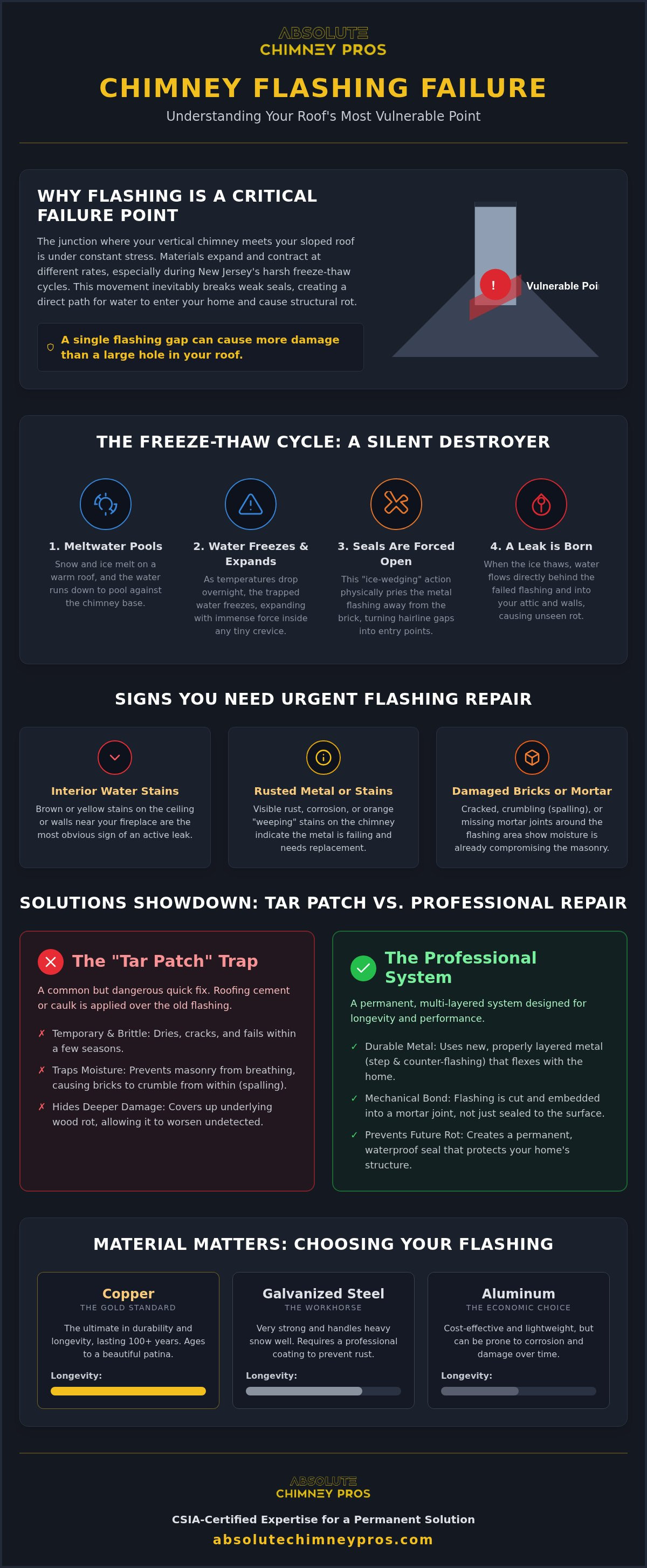
A single gap in your chimney flashing can cause more structural damage than a large hole in your shingles. If you've noticed brown water stains creeping across your ceiling after a storm, you're likely facing a failure at the most vulnerable point of your home. New Jersey's harsh freeze-thaw cycles constantly expand and contract your masonry, eventually tearing at the metal seals. You need a specialist for chimney flashing repair NJ because general contractors often miss the complex masonry-to-metal bond required for a permanent, waterproof fix.
It's frustrating to receive conflicting advice from different contractors while you worry about hidden wood rot. You deserve a clear, honest assessment of your chimney's health. We'll show you how to identify flashing failures early to secure your home with professional, CSIA-certified techniques. This article breaks down why traditional tar is just a temporary patch, the benefits of durable materials like copper, and how professional inspections provide the transparency you need. Stop the leaks before they compromise your home's integrity.
Key Takeaways
- Understand why the metal transition between masonry and shingles is your roof's most vulnerable point.
- Learn how NJ freeze-thaw cycles damage seals and why expert chimney flashing repair NJ is essential to stop structural rot.
- Recognize specific signs of failure, from rusted metal strips to interior ceiling stains, before water damage spreads.
- See why professional step flashing provides a permanent, waterproof bond that temporary tar applications cannot match.
- Access CSIA-certified expertise with same-week appointments to secure your chimney against the next storm.
Why Chimney Flashing is Your Roof's Weakest Point
Chimney flashing serves as the primary defense against water intrusion at the roofline. It acts as the critical metal transition between your vertical chimney stack and the horizontal slope of your roof. This junction is inherently unstable. Your home is a living structure. It settles. It shifts. During New Jersey's volatile temperature swings, your roof and chimney expand and contract at different rates. This constant movement creates immense stress on the seals. Standard roofing materials cannot bond directly to porous chimney brick. Without a flexible, durable bridge, water finds a path straight into your attic. This is why chimney flashing repair NJ is a specialized task that goes beyond basic roofing skills.
The Critical Role of the Masonry Bond
Shingles alone cannot waterproof a chimney. They are designed to shed water downward on a flat surface, not to seal against a vertical wall. A proper installation requires a two-part system. Surface-mounted metal is a frequent point of failure. It relies on a bead of caulk that dries and cracks within a few seasons. True protection comes from recessed counter-flashing. Absolute Chimney Pros technicians cut a precise groove into the mortar joint to embed the metal. This ensures gravity works with you, not against you. Water flows over the metal and back onto the shingles instead of slipping behind the barrier. It's a precision-based masonry bond that prevents structural wood rot.
Common Flashing Materials in NJ Homes
Material choice dictates how long your repair will last. Flashing (weatherproofing) requires resilience against the elements. We typically see three materials in New Jersey residential projects:
- Aluminum: It's cost-effective and lightweight. However, it's prone to corrosion over time. It can react poorly to certain masonry cleaners if not handled correctly.
- Copper: This is the gold standard for longevity. It's incredibly durable and ages into a beautiful patina. It creates a permanent seal that can outlast the roof itself.
- Galvanized Steel: This material is very strong. It handles the weight of heavy snow well. However, it requires a professional coating to prevent rust from compromising the seal.
A failed bond is an invitation for rot. When the seal breaks, moisture seeps into the structural wood of your home. You won't see it until the stains appear on your ceiling. By then, the damage is often extensive. We focus on the masonry-to-metal connection. It's the only way to guarantee a dry interior. Our CSIA-certified technicians understand the specific demands of New Jersey weather. We don't just patch. We secure the integrity of your home.
Anatomy of a Leak: How Flashing Fails in NJ Weather
New Jersey winters are a punishing test for your home's exterior. The state's unique freeze-thaw cycle is the primary driver of flashing failure. During a typical January, temperatures swing above and below freezing dozens of times. Snow melts on your warm roof. The runoff pools against the chimney base. As the sun sets, that water freezes. It expands. If your flashing is even slightly loose, the ice acts as a wedge. It physically pries the metal away from the masonry. This constant mechanical stress turns a hairline gap into a significant leak path within a single season. You need a specialist for chimney flashing repair NJ who understands these specific regional stressors.
The Philadelphia region faces another threat: high-velocity winds. Improperly nailed step flashing is easily lifted by heavy gusts. Once the metal pulls away, the underlying wood deck is exposed to driving rain. Meanwhile, intense UV exposure during the summer months degrades the rubberized sealants used by non-specialists. These materials become brittle. They crack. They fail. A professional installation avoids these pitfalls by using mechanical bonds rather than relying on temporary adhesives.
The Danger of 'Tar-Patch' Repairs
Many homeowners turn to roofing cement as a quick fix. This "goop" is a trap. It's a temporary patch that often hides deeper structural rot. Roofing cement is non-breathable. It traps moisture inside the brickwork. When that trapped moisture cannot evaporate, it leads to spalling. Bricks begin to flake and crumble from the inside out. Delaying a permanent metal-based repair only increases your eventual costs. A structural fix is always cheaper than a full chimney rebuild. Our team at Absolute Chimney Pros provides detailed inspections to identify these hidden hazards before they escalate.
Rust and Corrosion Indicators
Look for "weeping" rust stains on your chimney's exterior. These orange or brown streaks are a clear sign of metal degradation. Acidic rain in the Northeast accelerates this process, eating through galvanized coatings. When water breaches the flashing, it doesn't just stay on the surface. It reaches the internal framing of your home. This moisture creates an environment for mold and structural decay. Beyond just water damage, there are significant dangers of damaged chimneys, including the potential for harmful combustion gases to enter your living space. Vigilance is your best defense. If you spot rust or loose metal, act immediately to protect your family and your investment.
Signs You Need Urgent Chimney Flashing Repair
Water damage rarely announces itself with a flood. It starts as a whisper. You might notice a faint brown ring on the ceiling near your hearth. Perhaps the drywall in your attic feels soft to the touch or shows visible bubbling. These aren't cosmetic issues. They are structural alarms. If you see rusted metal strips where the chimney meets the roof, the protective coating has failed. This is a primary indicator that you need chimney flashing repair NJ before the next storm hits. Missing or loose shingles clustered specifically around the chimney base further prove that the masonry-to-roof transition is compromised. Don't wait for the ceiling to sag. Vigilance today prevents a costly emergency tomorrow.
Physical deterioration is often visible from the ground if you know where to look. Peeling paint or wallpaper on the walls adjacent to the chimney stack is a common red flag. This happens because moisture seeps behind the wallboard, breaking down the adhesive bond. In many cases, the metal flashing itself might look warped or pulled away from the brick. New Jersey's wind and ice are relentless. They exploit every tiny gap. Once the seal is broken, the structural integrity of your roof deck is at risk. We provide the technical mastery needed to diagnose these failures with precision and transparency.
The Attic Inspection: Finding Hidden Leaks
The attic is your early warning system. Grab a flashlight and head upstairs during or immediately after a rainstorm. Look for damp rafters or dark, discolored roof decking surrounding the chimney stack. If the insulation is matted, damp, or shows signs of mold growth, water is bypassing your flashing. These hidden leaks often go unnoticed for years until the wood begins to rot. This is exactly why a thorough attic check is a non-negotiable part of a professional chimney inspection NJ. We identify these moisture entry points before they destroy your home's skeleton.
Fireplace Symptoms of Flashing Failure
Your fireplace tells a story of what's happening on the roof. A musty, damp smell rising from the firebox after a heavy rain is a definitive sign of moisture intrusion. You might also see efflorescence on the interior chimney brick. These are white, powdery salt deposits left behind as water evaporates through the masonry. It looks like chalk, but it's a symptom of a serious seal failure. It's vital to recognize that water intrusion from the roofline can easily mimic a broader chimney leak repair NJ issue. Our CSIA-certified technicians use chimney flashing repair NJ techniques to isolate the problem and restore your home's safety. We stop the water at the source.
The Professional Repair Process: Beyond Tar and Hope
Slathering roofing cement over a leak is not a repair. It is a delay tactic. At Absolute Chimney Pros, we reject the "patch and pray" mentality. A permanent chimney flashing repair NJ requires a disciplined, multi-step structural approach. We focus on mechanical bonds that redirect water, not just chemical adhesives that eventually fail. Our process ensures that your masonry and roof deck remain bone-dry through the most aggressive Atlantic storms. Precision is our baseline.
The execution must be methodical. We follow a strict five-step protocol to restore your home's integrity:
- Step 1: Removal. We strip away old, corroded metal and failing sealants. We need to see the raw intersection of the roof and brick to identify hidden rot.
- Step 2: Step Flashing. We install individual L-shaped metal pieces. Each one is integrated directly with the shingle layers. This ensures water shedding at the roof surface level.
- Step 3: The Reglet. We use specialized tools to cut a precise groove, or reglet, into the mortar joints. This is the only way to create a permanent, recessed bond.
- Step 4: Counter-Flashing. We embed the counter-flashing into the reglet. This metal "lid" overlaps the step flashing. We then seal the joint with high-grade masonry caulk.
- Step 5: Final Water Test. We don't assume the job is done. We perform a final water test to verify the system is 100% watertight.
If you suspect your current flashing is failing, don't wait for the next heavy downpour to find out. You can schedule your structural repair assessment today with our CSIA-certified team.
Step Flashing vs. Counter Flashing
True protection requires two systems working in tandem. Step flashing handles the roof surface water. It prevents moisture from reaching the roof deck. Counter flashing sheds water from the masonry stack. It covers the top of the step flashing like an umbrella. Without both, the system is incomplete. Many general contractors only install one layer. We install both because your safety depends on a redundant defense.
The Role of the Chimney Cricket
A chimney cricket is a small, peaked roof structure. It sits on the high side of the chimney stack. For chimneys wider than 30 inches, this component is a structural requirement. It diverts water away from the "back" of the chimney where it would otherwise pool and cause rot. Many NJ roofers skip this vital component because it requires extra labor. We don't cut corners. If your chimney is wide, a cricket is the only way to prevent long-term structural failure.
Expert Chimney Flashing Solutions in NJ and Philadelphia
Absolute Chimney Pros combines roofing precision with CSIA-certified masonry skill. Most contractors are either roofers or masons. We are both. This dual expertise is essential for a permanent chimney flashing repair NJ. We serve the entire New Jersey and Philadelphia region with deep local expertise. We understand the specific weather patterns that destroy standard seals in our area. Our team provides transparent, on-site estimates. You will never face hidden fees or "tar-patch" shortcuts. We offer same-week appointments for urgent leak assessments. Your home's safety cannot wait for a "maybe" next month. We show up. We assess. We resolve.
Efficiency is our operational standard. When water is entering your home, every hour matters. We've organized our service model to prioritize speed without sacrificing technical mastery. Our technicians arrive equipped with modern diagnostic tools to find the exact point of failure. We don't guess. We verify. This disciplined approach reflects our commitment to ethical transparency. We act as your protective partner. We simplify complex maintenance tasks so you can have peace of mind. Our reputation is built on reliability and technical precision. We value your home as much as you do. For property owners or condo boards in the tri-state area overseeing larger capital improvements beyond chimney maintenance, you can discover Vertex Project Advisors LLC for independent representation and construction consulting.
Certified Technicians You Can Trust
Hiring CSIA-certified professionals is critical for structural work. General roofers often view flashing as a simple metal strip. We see it as a structural bridge. Our technicians evaluate the "whole system." This includes assessing your chimney sweep NJ needs and the internal health of your flue. We ensure every repair meets or exceeds local New Jersey building codes. We don't just fix the leak. We secure the entire environment. Our certification is your guarantee of professional oversight. We value your time and your property's integrity. There is no room for guesswork in home safety.
Schedule Your Flat-Fee Inspection Today
Our flat-fee diagnostic prevents expensive future repairs. We identify the root cause immediately. During your first visit, expect a thorough assessment of your roofline, masonry, and attic. We provide a clear report of our findings. No guesswork. No fluff. We show you exactly where the failure occurred and how we will secure it. This process removes the mystery from chimney maintenance. You get a definitive solution from a disciplined expert. Protect your home and schedule your repair today. We are your vigilant protectors against water damage. Secure your roofline now before the next storm arrives.
Secure Your Home Against the Elements
Your home's integrity depends on a watertight seal at the roofline. You now understand that temporary tar patches only hide deeper rot and that New Jersey's freeze-thaw cycles are relentless. A structural failure at the flashing doesn't just damage shingles; it threatens your rafters, insulation, and interior ceilings. You need a solution that combines masonry precision with roofing expertise to create a permanent barrier against moisture intrusion.
Don't let a minor leak turn into a major structural rebuild. Absolute Chimney Pros provides the technical mastery required for permanent chimney flashing repair NJ. Our CSIA-certified technicians are licensed and insured in both NJ and PA, offering the peace of mind that comes from professional oversight. We offer same-week appointments to address urgent hazards before the next storm hits your neighborhood. Our transparent process ensures there's no guesswork involved in protecting your investment.
Schedule Your Professional Chimney Flashing Repair in NJ and restore your home's safety today. You can rest easy knowing your chimney is secured by experts who value technical precision and ethical transparency. We are ready to act as your vigilant protectors.
Frequently Asked Questions
How much does chimney flashing repair cost in NJ?
The cost varies based on the extent of the damage, the height of your chimney, and the materials selected. Minor resealing is less intensive than a full replacement involving copper or custom-fabricated steel. Factors like accessibility and the current condition of your mortar joints also influence the final investment. We provide transparent, on-site estimates to ensure you understand the structural requirements of your specific project.
Can a roofer fix my chimney flashing, or do I need a chimney sweep?
A CSIA-certified chimney specialist is the correct choice for this structural task. While general roofers handle shingles well, they often lack the masonry expertise to cut a precise reglet into mortar joints. A permanent seal requires a masonry-to-metal bond that only a technician trained in chimney anatomy can provide. We bridge the gap between roofing precision and masonry durability.
How long does professional chimney flashing last?
High-quality flashing typically lasts between 20 and 40 years. Longevity depends heavily on the material selected and the environment. Copper is the most durable option and often outlasts the roof itself. Regular inspections help identify minor seal failures early, extending the life of the entire system and preventing premature replacement.
Does homeowners insurance cover chimney flashing repair?
Coverage depends on the specific cause of the damage. Sudden, accidental events like a severe storm or a fallen tree limb are often covered by standard policies. However, leaks caused by normal wear and tear, age, or lack of maintenance are typically viewed as the homeowner's responsibility. Check your policy details to see if your situation qualifies for a claim.
What is the best material for chimney flashing in the Northeast?
Copper is the gold standard for homes in the Northeast. It is the only material that completely resists the corrosion caused by our region's acidic rain and punishing freeze-thaw cycles. While galvanized steel and aluminum are common, copper provides a permanent, lifetime solution that handles thermal expansion without cracking or pulling away from the brick.
How do I know if my leak is from the flashing or the chimney crown?
The location of the water stain is your primary indicator. Flashing leaks usually appear as brown spots on the ceiling or damp rafters in the attic near the chimney base. Crown leaks typically cause moisture to appear inside the firebox or result in white, salty deposits on the interior bricks. A professional diagnostic is the only way to verify the source with 100% accuracy.
Can you repair chimney flashing in the winter?
Yes, chimney flashing repair NJ can be successfully completed during the winter. Our technicians use specialized, cold-weather sealants that cure properly even in freezing temperatures. It is actually safer to repair the leak immediately rather than waiting for spring, as winter ice will only expand existing gaps and accelerate structural rot.
What happens if I ignore a small flashing leak?
A small leak will eventually lead to a total structural failure. Moisture trapped behind the flashing rots the wooden roof deck and ceiling joists, creating a breeding ground for toxic mold. Over time, this water intrusion compromises the masonry itself, leading to expensive brick spalling or a full chimney collapse. Addressing the issue now is the only way to avoid a five-figure rebuild later.


