
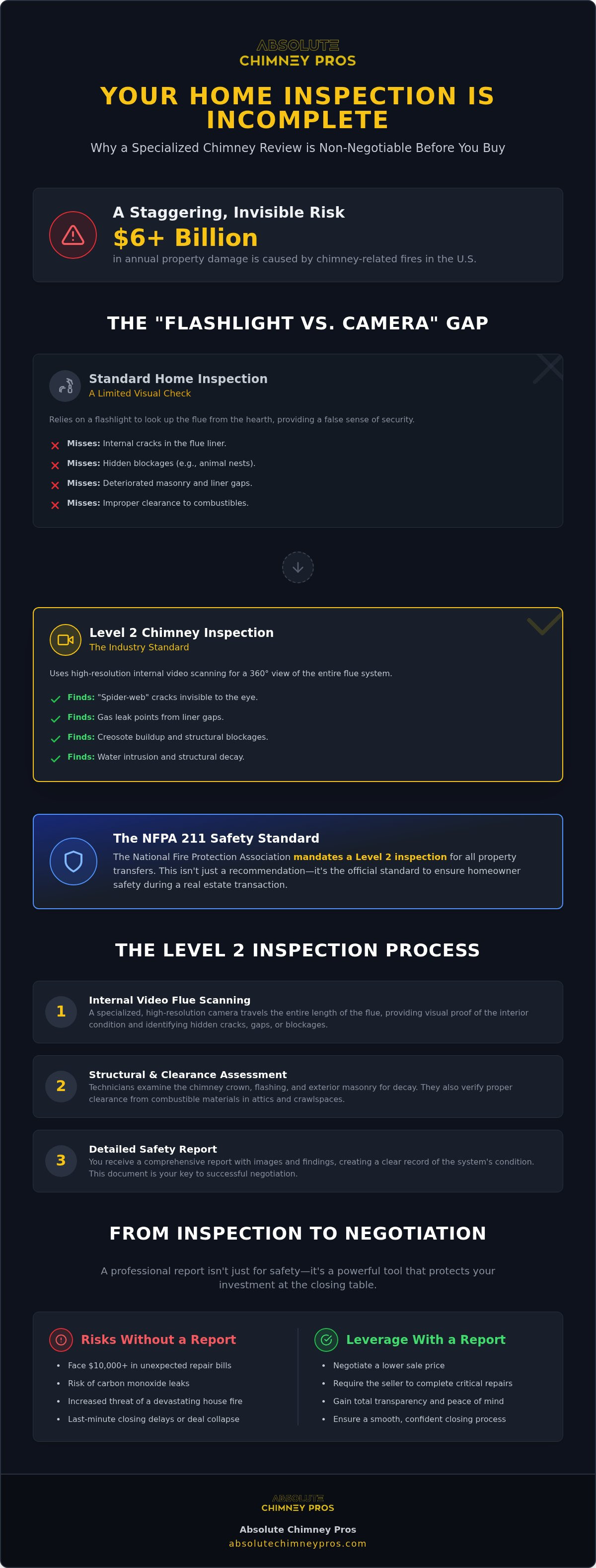
Every year, chimney-related fires cause over $6 billion in property damage across the United States. It's a staggering figure that most homeowners ignore until they're facing a crisis. You're likely focused on the roof, the HVAC, and the foundation during your closing process. It's natural to assume a general home inspector has already checked the fireplace for safety. Most buyers believe a standard walkthrough is enough to clear a home for move-in day.
That assumption is a dangerous liability. A general home inspection rarely goes beyond a basic visual check. It misses internal cracks and blockages that only a specialized chimney inspection for home sale can uncover. You need more than a "looks fine" assessment to protect your family and your bank account. This article explains why a Level 2 review is the industry standard for 2026 and how it prevents unexpected repair bills after closing. We'll explore the NFPA 211 safety requirements, the power of video scanning technology, and how a professional report provides the leverage you need for a successful real estate negotiation.
Key Takeaways
- Standard home inspections often overlook deep structural flaws. Learn why a basic visual check isn't enough to guarantee your home's safety.
- A specialized chimney inspection for home sale uses internal camera scans to find hidden cracks. This Level 2 review is the industry standard for 2026 property transfers.
- Discover how a detailed safety report acts as a powerful negotiation tool. Use it to secure price adjustments or require critical repairs before you sign.
- Safety standards like NFPA 211 mandate Level 2 inspections for a reason. Protect your investment from the risk of chimney fires and carbon monoxide leaks.
- Fast, professional oversight prevents closing delays. See how certified technicians provide the transparency needed for a smooth real estate transaction.
Why Standard Home Inspections Fail to Detect Chimney Hazards
A general home inspection is a standard part of any real estate transaction. Most buyers assume this covers every corner of the property. However, regarding the venting system, a generalist only performs a Level 1 visual check. They stand on the hearth, look up with a flashlight, and check for obvious exterior damage. This surface-level approach misses nearly everything that actually matters for fire safety. It provides a false sense of security while leaving major hazards untouched.
Chimneys are not just simple brick columns. They are complex exhaust systems designed to channel toxic gases and extreme heat out of the living space. Understanding Chimney basics reveals that the internal flue is the most critical component. If the flue is compromised, the entire home is at risk. Standard inspectors lack the specialized tools and training to see beyond the surface. They cannot identify thin cracks in clay liners or gaps in masonry that allow heat to transfer to wooden framing. These defects often lurk behind walls, invisible to the untrained eye.
The 'Flashlight vs. Camera' Gap
A general inspector relies on a high-powered flashlight. This tool only illuminates the first few feet of the chimney. It cannot reveal a detached liner halfway up the stack or a bird's nest hidden around a bend. Professional technicians use specialized internal video scanning technology to inspect the entire length of the flue. High-resolution cameras provide a 360-degree view of every joint and surface. Internal video scanning is the only definitive method to verify flue integrity and ensure there are no hidden breaches in the system.
Liability Risks for Buyers and Sellers
What Happens During a Level 2 Chimney Inspection for a Home Sale?
A Level 2 review is the industry standard for property transfers. The NFPA 211 standard mandates this specific chimney inspection for home sale whenever a property changes hands. It's far more rigorous than a basic maintenance check. This process ensures every accessible portion of the chimney is scrutinized, from the basement to the roofline. Absolute Chimney Pros technicians use this methodical approach to eliminate guesswork for both buyers and sellers.
The goal is total transparency. We don't just look at what's visible; we investigate the hidden structural components that actually keep a fire contained. This level of detail is necessary because most chimney damage occurs where you can't see it. By the time we finish, you'll have a clear, documented understanding of the system's safety and functionality. It's the only way to move toward a closing date with complete peace of mind.
Step 1: Internal Video Flue Scanning
The core of a chimney inspection for home sale is the video scan. We deploy specialized, high-resolution cameras that travel the entire length of the flue. This technology reveals "spider-web" cracks in clay tiles that are invisible from the hearth. It identifies gaps in metal liners where toxic gases might leak into the home. We also look for heavy creosote buildup, animal nests, or structural blockages. You get visual proof of the interior condition, not just a verbal opinion.
Step 2: Structural and Clearance Assessment
Safety extends beyond the flue. We examine the chimney crown, flashing, and exterior masonry for water intrusion or structural decay. Our technicians also verify proper clearance from combustible materials in the attic and crawlspaces. A chimney that sits too close to wooden framing is a fire waiting to happen. We check the damper functionality and the smoke chamber parging to ensure the entire system is optimized for safe exhaust. This thoroughness identifies hidden hazards before they become your problem.
Step 3: The Ventilation Bonus: Dryer Vent Safety
Smart real estate transactions look at the whole house. Dryer vents are often overlooked but pose a significant fire risk if neglected. We recommend checking these vents alongside your chimney. Lint buildup is highly flammable and reduces appliance efficiency. Ensuring the Dryer Vent Cleaning NJ standards are met prevents hazards before a new family moves in. It's an extra layer of protection for the property.
Once the walkthrough is complete, you receive a detailed report. This document serves as your official record for closing and provides the leverage needed for negotiations. If you're preparing for a listing, scheduling an inspection early prevents last-minute surprises that could derail your sale.
Level 1 vs. Level 2 Inspections: Understanding the NFPA 211 Standard
The National Fire Protection Association (NFPA) provides the definitive framework for chimney safety. Their code, known as NFPA 211, is the gold standard for every fireplace, vent, and solid-fuel appliance. This isn't just a list of suggestions. It's a rigorous set of safety benchmarks designed to prevent property loss and save lives. In 2026, staying compliant with the 2027 edition of NFPA 211 is essential for any homeowner. Understanding these levels is the first step toward a safe and legal property transfer.
There are three levels of inspection, but only two are common in residential real estate. A Level 1 inspection is a routine visual check. It's intended for systems that haven't changed and are performing well. However, a chimney inspection for home sale requires a much deeper dive. When a home changes owners, the NFPA mandates a Level 2 review. This requirement exists because the history of a chimney is often unknown to the buyer. You cannot rely on a previous owner's word when fire safety is on the line.
The NFPA 211 Property Transfer Mandate
The Level 2 mandate is a critical safety benchmark across New Jersey and Pennsylvania. It standardizes the inspection process, ensuring that every buyer receives the same level of protection. This standard protects realtors from liability and gives clients a clear picture of their investment. By requiring a Level 2 chimney inspection for home sale, the industry eliminates the guesswork. It forces a thorough evaluation of the flue, the structure, and the clearances. This is the only way to verify that a system is fit for a new family. Trust requires verification.
When Level 1 Simply Isn't Enough
A Level 1 inspection is a basic "look-see." It misses 90% of internal flue issues because it doesn't include a video scan. Relying on a Level 1 during a real estate transaction is a professional oversight that can lead to catastrophe. The CPSC chimney safety alert underscores the dangers of neglecting deep-seated maintenance. Hidden cracks and blockages are the primary causes of chimney fires. A Level 1 check simply cannot see these hazards. It leaves the most dangerous parts of the system in the dark.
Choosing the wrong inspection level can delay your closing or lead to expensive post-sale repairs. You need a technician who understands the nuances of the NFPA 211 standard. Review our Chimney Inspection New Jersey guide for a complete breakdown of the 2026 safety requirements. Don't settle for a surface-level check when the law and your safety demand a comprehensive review. Precision is the only path to peace of mind.
Negotiating Repairs: Using Your Chimney Report at the Closing Table
A professional inspection report is more than a safety document. It is a financial lever. In the high-stakes environment of a real estate transaction, "looks fine" carries no weight. You need documented proof. Safety defects identified in a Level 2 report are rarely up for debate. Lenders and insurance providers often view these as mandatory repairs before they will finalize a policy or a loan. To ensure your broader financial interests are also well-managed during this transition, find out more about comprehensive bookkeeping and tax solutions. This gives the buyer significant leverage to request price adjustments or direct repairs. It transforms a hidden hazard into a transparent negotiation point.
Timing is everything. You must schedule the chimney inspection for home sale as soon as the contract is signed. Waiting until the end of the contingency period is a mistake. It leaves you with no time to gather repair estimates or negotiate fairly. Absolute Chimney Pros provides clear, line-item estimates on-site. We remove the guesswork. This allows both parties to discuss the facts and move toward the closing table with a clear plan. Precision leads to faster closings.
Who Pays? Standard Real Estate Practices in NJ & PA
In New Jersey and Philadelphia, the buyer typically orders and pays for the inspection. It is their due diligence. However, the market is shifting. Many sellers now choose a pre-listing inspection to identify problems before the home hits the market. This prevents a buyer's inspector from finding a major defect three days before closing. By ordering a chimney inspection for home sale early, you control the narrative. When issues arise, the negotiation usually centers on a closing credit or a completed repair. A credit is often faster, but a repair ensures the home is safe before move-in day.
Common Red Flags That Stall Home Sales
Cracked flue liners are the most common deal-breakers. These cracks are fire hazards that allow heat to escape into the home's framing. They are expensive to fix and impossible to ignore. Crumbling exterior masonry and leaking chimney crowns are also significant red flags. Water damage is a silent killer for chimneys. It leads to mold, wood rot, and structural failure. Our Chimney Leak Repair NJ guide explains how water intrusion escalates from a small drip to a major liability. Protect your equity by identifying these risks early.
Don't enter a negotiation without the facts. A certified report protects your bank account and your family. Schedule your professional inspection to ensure a smooth, safe closing.
Certified Safety: Why NJ & Philly Homeowners Trust Absolute Chimney Pros
Choosing the right partner for your chimney inspection for home sale is a decision that impacts your safety and your bank account. You need more than a person with a brush. You need a disciplined expert who understands the high stakes of a real estate closing. Absolute Chimney Pros delivers that expertise with every scan. We prioritize punctuality and technical mastery to ensure your transaction stays on track. Our goal is to provide the peace of mind that only comes from professional oversight. Precision is our baseline standard.
Efficiency matters during a property transfer. We offer same-week appointments to prevent scheduling bottlenecks that can delay your move-in date. Our inspection options feature transparent, flat fees. You won't find hidden surcharges or surprise price hikes once we arrive on-site. We provide honest, direct reports that reflect the true condition of the venting system. Whether you're dealing with a historic masonry stack in Philadelphia or a modern gas fireplace in New Jersey, we have the specialized knowledge to assess it accurately. We bridge the gap between old-world craftsmanship and contemporary efficiency.
The Value of CSIA Certification
Hiring a non-certified sweep is a significant risk. It puts your home and your legal transaction in jeopardy. Our technicians are CSIA-certified, meaning they have met the industry's highest ethical and technical standards. They stay current on the latest NFPA 211 codes to ensure every chimney inspection for home sale is legally compliant and safety-focused. Certification is the only definitive proof of professional competence in this field. It ensures your inspector knows exactly what to look for and how to document it for your lender. Don't settle for a guess when you can have verified expertise.
Local Expertise for NJ and Philadelphia Homes
Our region features a unique variety of housing stock. We understand the specific masonry needs of century-old homes in Philadelphia and the venting requirements of newer suburban developments. We don't just identify problems; we provide on-site estimates that offer immediate clarity when you need it most. This allows you to make informed decisions at the negotiating table without waiting days for a follow-up. We act as your protective partner throughout the entire real estate process. We show up, assess the situation, and provide a clear path forward. Schedule your Level 2 Real Estate Inspection today!
Protect Your Investment and Your Family Today
A standard home inspection is a starting point, not a safety guarantee. Only a professional chimney inspection for home sale meets the NFPA 211 mandate for property transfers. This process uncovers the hidden cracks and blockages that a simple flashlight walkthrough misses. The resulting report is your strongest asset at the closing table. It turns "looks fine" into "verified safe," giving you the leverage to negotiate repairs or credits with absolute confidence. You can't afford to leave your family's safety or your financial equity to chance.
Don't let a hidden fire hazard or a last-minute repair bill derail your move. Our CSIA-certified technicians provide the precision and transparency you need. We offer flat-fee inspection options and same-week appointments across NJ and PA to keep your transaction moving forward. You deserve a protective partner who values your time and your safety. Secure your home sale with a CSIA-certified Level 2 Chimney Inspection from Absolute Chimney Pros. We are ready to clear the path for your successful closing.
Frequently Asked Questions
Does a standard home inspection include a chimney inspection?
No, a standard home inspection does not include a comprehensive chimney evaluation. General inspectors only perform a basic visual check of the exterior and firebox. They lack the specialized camera equipment required to see internal flue damage. A dedicated chimney inspection for home sale is necessary to find hidden cracks or blockages. This separate service ensures the entire venting system is safe for the next family.
Is a Level 2 chimney inspection required by law in New Jersey?
Yes, a Level 2 inspection is the required standard for property transfers under NFPA 211. New Jersey law also mandates annual inspections for all homeowners regardless of fuel type. While Pennsylvania doesn't have a statewide mandate, many local Philadelphia municipalities require these safety checks during a sale. It's the only way to legally verify the chimney's integrity before the title changes hands. Compliance protects you from future liability.
How much does a chimney inspection for a home sale typically cost?
Costs are determined by the complexity of the system and the number of flues. A Level 2 chimney inspection for home sale involves internal video scanning, which is more involved than a basic visual check. We provide transparent, flat-fee options on-site so you know exactly what to expect. This upfront investment is a small price to pay to avoid inheriting massive repair costs after you move in.
Who usually pays for the chimney inspection, the buyer or the seller?
The buyer typically pays for the inspection to protect their own interests during the contingency period. However, many sellers in NJ and PA now opt for a pre-listing inspection to identify problems early. This prevents unexpected defects from derailing the sale at the last minute. The final responsibility for the cost is often determined by the specific terms of your real estate contract.
What happens if the chimney inspection finds a cracked flue liner?
If a crack is found, the fireplace must be decommissioned until it's repaired. A cracked liner allows extreme heat and toxic gases to reach the home's wooden structure. We'll provide a clear estimate for a chimney liner installation to resolve the issue. Buyers typically use this report to negotiate a repair credit or a price reduction before the closing date. Safety is non-negotiable.
Can I use my fireplace if the inspector finds creosote buildup?
No, you should never use a fireplace with significant creosote buildup. Creosote is a highly combustible byproduct of wood burning that can ignite a chimney fire in seconds. If our technicians find buildup during the inspection, we'll recommend a professional chimney sweep. Removing this hazard is the only way to ensure the system is safe to operate. Don't risk a house fire for a single night of warmth.
How long does a professional Level 2 chimney inspection take?
A professional Level 2 inspection typically takes about 60 to 90 minutes. This includes time for the technician to inspect the roof, the attic, and the internal flue using a specialized camera. If the home has multiple fireplaces or a complex venting system, the process may take longer. We value your time and work efficiently to provide a comprehensive safety report before we leave your property.
Should I get a chimney sweep at the same time as the inspection?
Yes, combining these services is highly recommended. A clean flue allows our high-resolution cameras to capture a more accurate view of the liner's surface. If the chimney is heavily soiled, the soot can hide dangerous cracks or gaps. Performing a sweep alongside the inspection ensures you get the most thorough safety report possible. It's a proactive step that simplifies the closing process for everyone involved.


