
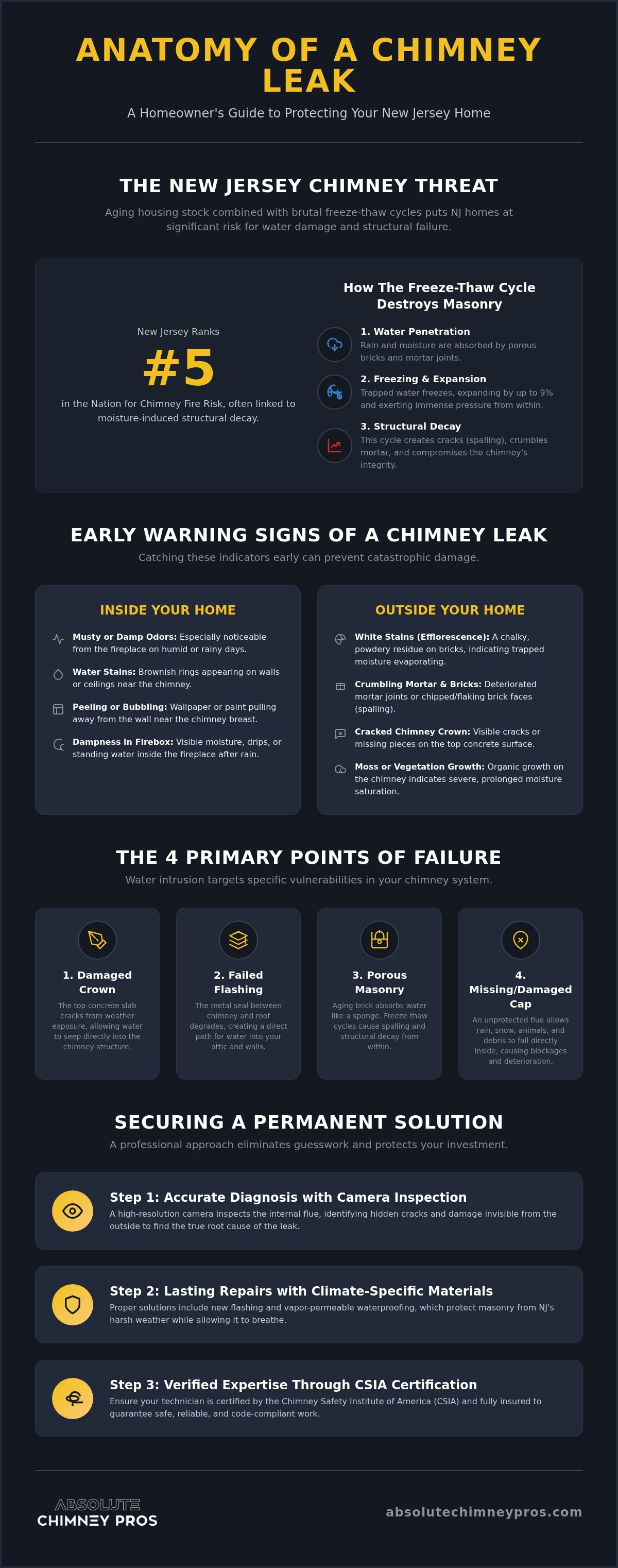
New Jersey ranks #5 in the nation for chimney fire risk. This isn't just a statistic. It's a direct reflection of the state's aging housing stock and brutal freeze-thaw cycles. When water penetrates your masonry, it doesn't just sit there. It expands and destroys. You've seen the damp spots on your interior walls. You've felt the anxiety of potential structural failure. Finding a reliable expert for chimney leak repair NJ shouldn't be a guessing game. We agree that your home deserves better than a temporary patch that fails during the next storm.
This guide provides the clarity you need to diagnose the root cause and secure a permanent solution. You'll learn exactly where water enters the system and how to stop it for good. We'll walk through the essential diagnostic steps, explain the unique risks of the local climate, and help you identify a certified expert to protect your investment. Your home's safety is the priority. It's time to eliminate the guesswork and restore your peace of mind.
Key Takeaways
- Recognize the early warning signs of moisture intrusion before water compromises your home's structural integrity.
- Identify the four primary failure points that make professional chimney leak repair NJ essential for older masonry homes.
- Eliminate guesswork by using high-resolution camera inspections to locate internal flue damage that surface checks miss.
- Discover why climate-specific waterproofing and high-quality flashing are the only permanent solutions for New Jersey's freeze-thaw cycles.
- Learn how to verify CSIA certifications and insurance to ensure your technician provides reliable, transparent results.
Identifying the Signs of a Leaking Chimney in New Jersey
New Jersey weather is a relentless enemy of masonry. The state's unique climate, characterized by high-humidity summers and frequent winter freeze-thaw cycles, accelerates structural decay. Water trapped in porous bricks expands when it freezes, creating micro-fissures that grow into major leaks. This is why immediate chimney leak repair NJ is not just a cosmetic fix; it is a structural necessity. Waiting for a visible flood in your living room is a mistake. You must recognize the subtle indicators of moisture before the damage becomes irreversible and requires a total rebuild.
Many homeowners ignore musty odors emanating from the fireplace during damp weather. This smell usually signals that moisture is trapped within the soot and creosote of the flue. It is an early warning of active water intrusion. Differentiating between active leaks and residual moisture is critical. Active leaks show up as fresh dampness after rain. Residual damage looks like old, dry stains. Both require professional intervention to prevent mold growth and wood rot in your home’s framing. NJ homes built in the 1950s and 60s are particularly vulnerable as their original clay liners begin to degrade and lose their ability to repel moisture.
In addition to structural masonry work, you can visit Tri State Handyman to manage the interior repairs, such as fixing wood rot or patching drywall, that often follow a chimney leak.
Interior Red Flags: What to Look for Inside
Inside your home, the signs are often unmistakable but frequently misdiagnosed. Look for water stains on the ceiling or walls surrounding the chimney breast. These usually appear as brownish rings that expand after heavy storms. You might also notice dampness or standing water inside the firebox. If you see peeling wallpaper or bubbling paint near the chimney stack, the masonry is likely saturated. Water is traveling through the brick and pushing against your interior finishes. This indicates a failure in the Chimney components, such as the flashing or the liner. If you touch the wall and it feels soft or cool, the intrusion is active and requires immediate attention.
Exterior Symptoms: Visual Cues from the Ground
You can often diagnose a problem without even climbing a ladder. Walk around your home and inspect the brickwork for efflorescence. This white, powdery residue is salt left behind when water evaporates from the brick. It is a clear sign of high moisture retention. Look for visible cracks in the chimney crown or crumbling mortar joints. If you see moss or vegetation growing out of the masonry, the saturation level is critical. These plants hold water against the brick, speeding up the decay process. Do not wait for a brick to fall. These symptoms prove the structure is already compromised and requires a professional assessment for chimney leak repair NJ to prevent a total collapse.
The 4 Most Common Causes of Chimney Leaks in NJ Homes
Water intrusion doesn't happen by accident. It targets specific vulnerabilities in your home's structure. In New Jersey, these failures are often compounded by the age of the housing stock. Most leaks stem from four critical points: the flashing, the crown, the masonry itself, or the lack of a cap. Identifying which one has failed is the first step toward effective chimney leak repair NJ. Ignoring these signs leads to more than just water damage. It compromises the safety of your entire heating system.
New Jersey's ranking as #5 in the nation for chimney fire risk is a sobering reality. This risk is often tied to structural decay caused by moisture. Brick is a porous material. Without professional waterproofing, it acts like a sponge during heavy rain. When the temperature drops, that trapped water expands. This process shatters the brick from the inside out, a phenomenon known as spalling. Older NJ homes with original masonry are particularly susceptible to this cycle of destruction. You aren't just fighting a leak; you're fighting the physical breakdown of your chimney's foundation.
Chimney Flashing and Roof-Line Failures
Flashing is the metal seal installed between your roof and the chimney. It is designed to be a watertight barrier. However, many general contractors rely on "caulk-only" repairs. This is a temporary band-aid that fails during NJ's intense temperature swings. Metal and masonry expand at different rates. Rigid caulk eventually cracks, allowing water to flow directly into your attic and down your interior walls. Look for rusted metal or sections that have pulled away from the brick. If you see daylight or water trails in your attic, you need a professional chimney repair to replace the flashing and restore the seal.
Damaged Chimney Crowns and Caps
The chimney crown is the concrete slab at the very top of the structure. It is your first line of defense against the elements. Even hairline cracks in the crown are dangerous entry points. During freeze-thaw cycles, these tiny fissures expand into gaping holes. Below the crown sits the flue. If your chimney lacks a cap, you essentially have a hole in your roof. Rain falls straight down the pipe, saturating the interior. This moisture mixes with soot to create a potential fire hazard by corroding the internal liner and weakening the masonry. A missing cap is the most direct, yet most avoidable, source of water intrusion. These components must be intact to keep your home dry and safe.
Professional Diagnosis: Why Camera Inspections are Essential
Visual inspections from the ground or roof are often insufficient. They only show the symptoms, not the source. For effective chimney leak repair NJ, we must look deeper. Internal cracks in the flue liner can channel water directly into your home's framing. This water bypasses the exterior masonry entirely. You won't see the damage until the wood starts to rot or mold takes hold in your attic. This is why having your system professionally inspected with specialized equipment is non-negotiable. Surface-level checks are simply guesswork.
Absolute Chimney Pros utilizes high-resolution internal cameras for every diagnostic call. We don't guess. We verify. Our technicians feed a flexible, high-definition camera system through the entire length of the flue. This reveals shifted tiles, cracked liners, and hidden gaps in the masonry that the naked eye cannot detect. If a leak is actively present, industry standards require a Level 2 inspection. This is a comprehensive evaluation that goes beyond basic maintenance. It is designed to identify specific structural failures that lead to water intrusion.
The Level 2 Chimney Inspection Process
A Level 2 chimney inspection New Jersey provides a full 360-degree view of your system's interior. We scan every inch of the liner to find hidden entry points. Water often enters through a failed crown and travels behind the masonry walls, soaking into the insulation and drywall. Without a camera, these "ghost leaks" are impossible to track. Our process documents every finding with photographic evidence. This ensures you see exactly what we see. There is no ambiguity in our reports. You receive a definitive diagnosis based on hard data.
Pressure Testing and Saturation Checks
Sometimes the leak isn't a hole; it's the material itself. We perform saturation checks to determine if your brick has become too porous. In some cases, we use simulated rain tests to observe how mortar joints react under pressure. This methodical approach identifies whether you need a localized repair or a full-scale waterproofing treatment. We provide a transparent report with every assessment. You get a clear roadmap for chimney leak repair NJ with no hidden diagnostic fees. We show up, find the problem, and provide the solution. This discipline ensures your home stays dry and your family stays safe.
Chimney Leak Repair Solutions: From Flashing to Waterproofing
Generic patches fail. Precision matters. Effective chimney leak repair NJ requires matching the technical solution to the specific failure point identified during diagnosis. A smear of caulk or a bucket of hardware-store sealant will not withstand the New Jersey climate. These temporary fixes often lead to more expensive structural failures within 12 months. Professional repairs restore the safety of your venting system and protect the long-term value of your property. We use industrial-grade materials designed for durability, not convenience.
Masonry Repointing and Waterproofing
Masonry is resilient but not invincible. When mortar joints crumble, they allow water to bypass the brick and enter the interior structure. Our technicians perform precise repointing. This involves removing damaged mortar and injecting fresh, high-strength joints that match the original composition. Once the structure is stable, we apply vapor-permeable waterproofing. Standard sealants are a mistake. They trap moisture inside the brick, leading to internal rot. Breathable barriers allow water vapor to escape while preventing liquid rain from entering. This is a critical step for chimney repair New Jersey projects aimed at long-term structural longevity.
Flashing Replacement and Crown Resurfacing
The roof-line is a frequent failure point. We don't just patch old metal. We install custom-fitted counter-flashing to create a permanent, watertight seal between your roof and the chimney. This requires technical mastery and an understanding of how different materials expand. Above the flashing, the crown must be impenetrable. We use industrial-grade crown sealants that remain flexible across extreme temperature ranges. This prevents the hairline cracks that lead to major water intrusion. Every structural repair is executed by CSIA-certified technicians. There is no guesswork. We follow a disciplined process to ensure every component of your chimney is sealed and secure. Protect your home from the next storm and schedule a professional chimney repair to secure your masonry today.
Choosing a Certified Chimney Repair Expert in New Jersey
Hiring a general handyman for specialized masonry work is a high-stakes gamble. Your home's structural integrity depends on technical precision. Chimney systems are complex. They require a deep understanding of ventilation physics, thermal expansion, and local building codes. Before any contractor steps onto your roof, you must verify their credentials. Ensure they carry specific liability insurance and worker's compensation for New Jersey. General roofing knowledge is not enough for complex internal flue issues. A professional must offer on-site estimates and transparent pricing models. Vague quotes often lead to ballooning costs and unfinished work. For reliable chimney leak repair NJ, technical certification is the only safeguard against recurring water damage and safety hazards.
Vigilance in the hiring process saves you thousands in future repairs. Look for a team that prioritizes safety over speed. A disciplined expert will provide a written report of their findings. They should be able to explain the cause behind every recommendation. Avoid companies that push for immediate, expensive rebuilds without providing photographic evidence of the failure. Transparency is the hallmark of a professional. If a contractor cannot explain how they will stop the water intrusion permanently, they are the wrong choice for your home. Your environment deserves a protective partner who values mastery and ethical transparency. Choosing the right expert for chimney leak repair NJ ensures the job is done right the first time.
Whether you are in New Jersey or across the Atlantic in Ireland, where you can check out Acute Roofing, identifying a contractor with a demonstrated track record is essential for any structural repair.
The Absolute Chimney Pros Advantage
Absolute Chimney Pros serves New Jersey and Philadelphia with disciplined expertise. We understand the urgency of water intrusion. That's why we prioritize same-week appointments for active leaks. Our team consists of CSIA-certified technicians with deep knowledge of NJ masonry. We remove the guesswork from the diagnostic process. Our flat-fee inspection options provide a clear, predictable baseline for every project. We operate with a strict "no hidden fees" policy. You receive a detailed report and a firm price before any structural work begins. This commitment to honesty ensures you never face unexpected costs. We show up on time, assess the hazard, and execute the solution with precision.
Next Steps for Homeowners with a Leak
Stop the water damage from spreading. Schedule an immediate inspection at the first sign of a damp spot or musty odor. Preparation is key for an efficient diagnostic visit. Clear the area around your fireplace to allow full access for our equipment. Move furniture, rugs, and fragile decorations away from the hearth. If you haven't had your flue maintained recently, contact us for a professional chimney sweep NJ and leak check. A clean flue allows for more accurate camera imaging. Taking action now prevents a minor drip from becoming a major structural failure. Secure your home today. Professional oversight is the only way to ensure lasting peace of mind and structural safety.
Secure Your Masonry and Protect Your NJ Home
A leaking chimney is a ticking clock for your home's structural health. Water intrusion doesn't stop on its own. It deepens. You now understand that surface patches are temporary and often dangerous. Precision diagnosis via high-resolution cameras is the only way to identify the true source of failure. Whether the issue is a porous crown or failed flashing, professional chimney leak repair NJ ensures the solution lasts through every freeze-thaw cycle. Don't wait for the next heavy storm to test your masonry's limits. Taking action now prevents costly structural failure and protects your family's safety.
Our CSIA-certified technicians provide the technical mastery your property requires. We offer same-week appointments and are fully licensed and insured in NJ and PA. We provide transparent reports and definitive solutions with no hidden fees. Take the guesswork out of your home maintenance and restore your peace of mind today.
Stop Your Chimney Leak Today—Schedule a Professional NJ Inspection
Your home is your most valuable asset. Keeping it dry is the first step toward keeping it safe. We are ready to act as your protective partner.
Frequently Asked Questions
How much does chimney leak repair cost in NJ?
Repair costs vary significantly based on the specific failure point. A simple flashing fix is different from a full masonry repointing project. Factors like chimney height, roof pitch, and the extent of water saturation influence the final estimate. We recommend a professional diagnostic inspection to identify the root cause. This ensures you receive an accurate, transparent quote without hidden fees or guesswork.
Can I fix a chimney leak myself with roofing caulk?
Roofing caulk is a temporary band-aid, not a solution. Masonry and metal expand at different rates during New Jersey's temperature swings. Rigid caulk eventually cracks and pulls away, allowing water to bypass the seal. Professional repairs utilize custom-fitted flashing and industrial-grade sealants. These materials are designed to remain flexible and watertight for years, not just a single season.
How do I know if my chimney leak is coming from the roof or the brick?
Location provides the first clue. Water stains on the ceiling near the chimney often indicate failed flashing at the roof line. Dampness inside the firebox or peeling paint on the chimney breast usually suggests saturated masonry or a cracked crown. However, water can travel long distances behind walls. A high-resolution camera inspection is the only way to confirm the entry point with certainty.
Is a leaking chimney a fire hazard?
Yes. Water intrusion is a serious safety risk. Moisture corrodes metal liners and causes clay tiles to shatter. This damage allows heat and sparks to reach combustible wooden framing inside your walls. The U.S. Consumer Product Safety Commission identifies structural chimney decay as a primary factor in residential fires. Stopping a leak is essential for maintaining a safe heating environment.
How long does it take to repair a chimney leak?
Most localized repairs are completed in a single day. Tasks like crown resurfacing, flashing replacement, or waterproofing are efficient when handled by experts. Larger projects involving extensive masonry repointing or liner installation may require additional time. We prioritize same-week appointments for urgent leaks to stop water damage as quickly as possible. Efficiency and precision are our operational standards.
Will my homeowners insurance cover chimney leak repairs?
Coverage depends on the cause of the damage. Insurance typically covers "sudden and accidental" events, such as a fallen tree or a severe storm. Most policies exclude damage caused by gradual wear, lack of maintenance, or standard freeze-thaw cycles. You should review your policy's water intrusion clauses. We provide detailed diagnostic reports that you can submit to your insurance adjuster for review.
Does a chimney cap really prevent leaks?
A chimney cap is your most effective defense against direct rain intrusion. Without one, the flue is an open hole in your roof. Rain falls straight down, saturating the interior masonry and mixing with soot to create corrosive acids. This process destroys the liner and weakens the entire structure. Installing a high-quality cap is a simple, cost-effective way to keep your system dry.
How often should I have my chimney inspected for leaks in New Jersey?
You should schedule an inspection at least once every year. New Jersey's climate is particularly harsh on masonry. Frequent freeze-thaw cycles can turn a hairline crack into a major gap in just one winter. Annual checks catch these issues before they require expensive chimney leak repair NJ services. Regular maintenance is the only way to ensure long-term structural safety and peace of mind.


