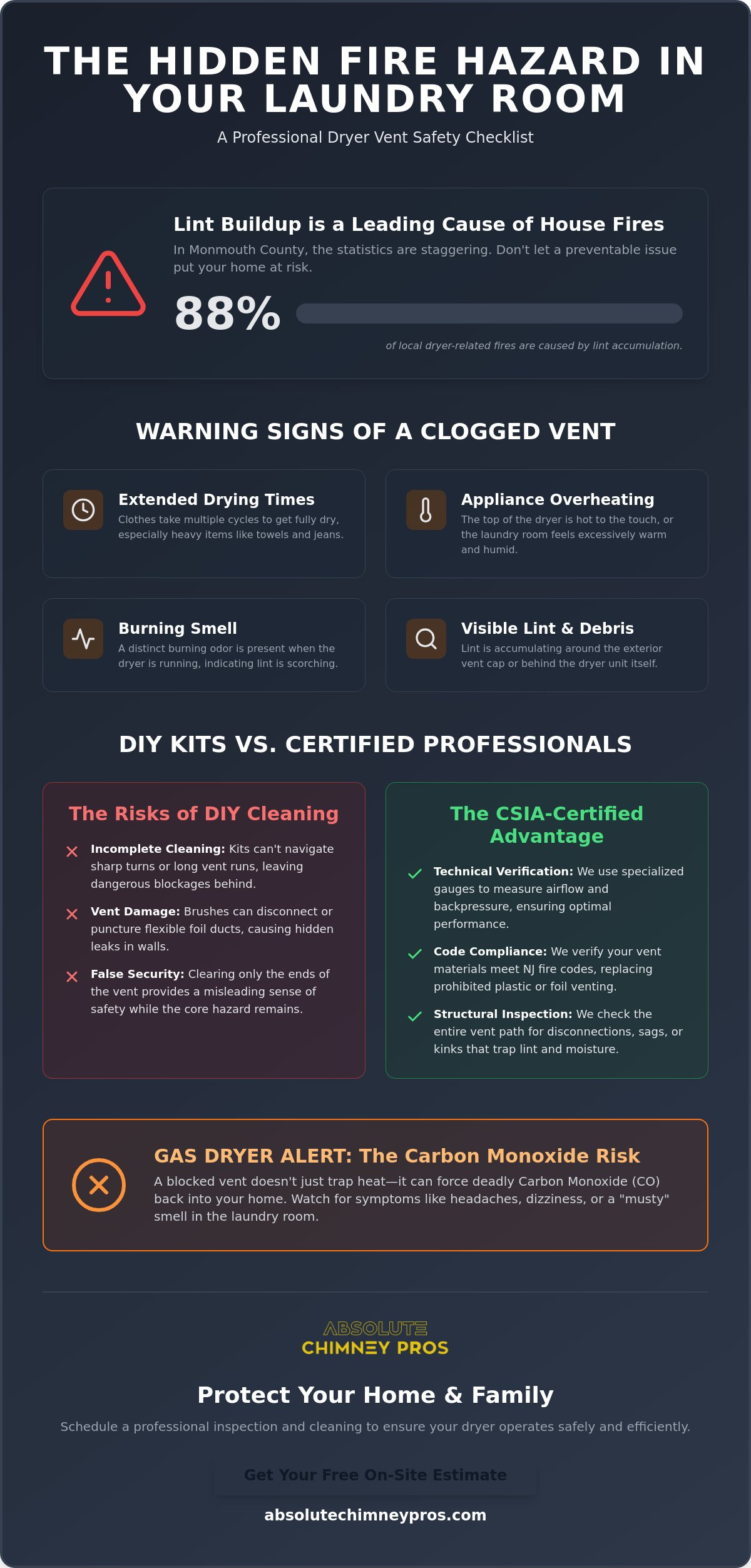
Did you know that clothes dryers cause approximately 4% of all residential fires in the United States? In Monmouth County, a staggering 88% of these incidents are linked directly to lint accumulation. If you've noticed your clothes taking multiple cycles to dry or excessive heat building up in your laundry room, your home is at risk. Investing in professional dryer vent cleaning NJ services isn't just about convenience. It's a critical safety measure for your household.
We know the frustration of high energy bills and appliances that don't perform. You deserve a home that's safe and efficient. This guide provides a professional safety checklist to protect your property and your peace of mind. You'll learn how to identify hidden hazards, understand the latest New Jersey fire safety codes, and discover how precision maintenance leads to faster drying times. Stop guessing about your home's safety. Let's review the warning signs you can't afford to ignore.
Key Takeaways
- Recognize the specific fire hazards caused by lint buildup in areas homeowners cannot reach or see.
- Learn how specialized gauges measure airflow velocity and backpressure to verify your system's structural integrity.
- Understand the risks of DIY kits, including common mistakes that lead to disconnected ducts or permanent vent damage.
- Identify early warning signs of a clogged exhaust system, such as extended drying times and overheating appliances.
- See how professional dryer vent cleaning NJ restores peak performance to lower your energy bills and protect your property.
Why Professional Dryer Vent Cleaning in NJ is a Safety Mandate
New Jersey experiences more than 5,000 residential fires every year. Statistics confirm that clothes dryers and washing machines account for 4% of these incidents. This makes routine maintenance a critical safety mandate for every NJ homeowner. Lint is highly combustible. It accumulates in hidden elbows and long duct runs that standard household tools simply cannot reach. Professional dryer vent cleaning NJ ensures the entire exhaust path is clear from the drum to the exterior wall cap. A surface-level cleaning is not enough. You need a technician who understands the technical requirements of the 2021 International Mechanical Code, which is strictly enforced across the state.
The Link Between Clogged Vents and Fire Hazards
Restricted airflow causes thermal overload. When hot air cannot escape the system, the dryer's internal temperature spikes. This creates a dangerous environment where lint buildup dryer vent issues become a literal tinderbox. Many homes in New Jersey utilize vertical vent runs that exit through the roof. These configurations are particularly hazardous because they create a "chimney effect." This phenomenon allows a small spark to accelerate rapidly through the vertical column, spreading fire to upper floors in seconds. Professional cleaning removes the fuel source before a spark occurs. It's a proactive defense against the leading cause of dryer-related property damage.
Gas Dryer Safety: Carbon Monoxide Risks
Gas dryers introduce a secondary, silent threat. A blocked vent does more than trap heat; it traps toxic combustion byproducts. To maintain a safe environment, homeowners should understand the basics of how clothes dryers work and why they require unobstructed airflow. Gas units must exhaust carbon monoxide (CO) safely outside. If the vent is obstructed by lint or debris, these fumes backdraft into your laundry room and living spaces.
Look for these warning signs of a CO leak caused by a blocked gas vent:
- A faint smell of gas or "musty" odors in the laundry area.
- Excessive moisture on windows or walls near the dryer.
- Physical symptoms like persistent headaches, dizziness, or nausea while doing laundry.
Annual inspections are vital for NJ homes with gas laundry setups. Our team verifies that your exhaust system is structurally sound, airtight, and capable of venting all hazardous gases away from your family. Don't wait for an alarm to go off. Clear vents are the first line of defense against carbon monoxide poisoning.
The Absolute Chimney Pros Inspection Checklist
Professional dryer vent cleaning NJ requires more than a simple vacuum. It demands a technical evaluation of the entire exhaust system. We don't guess. We verify. Our inspection checklist ensures every inch of your vent path meets modern safety standards. This process identifies potential fire hazards and mechanical failures before they escalate. It's about protecting your home and extending your appliance's lifespan. We look for specific vulnerabilities that standard DIY attempts often miss.
- Exterior termination cap: We check for bird nests, rodent debris, and lint blockages that prevent the flap from opening.
- Duct material verification: NJ fire codes prohibit plastic or thin foil venting. We ensure your system uses approved rigid or semi-rigid metal.
- Joint and connection check: We inspect for gaps or disconnections in crawlspaces, attics, and behind the dryer unit.
- Internal line assessment: We look for sags or kinks that trap lint and moisture.
- On-site estimates: If we find structural issues, we provide a transparent quote for resolution immediately.
Airflow and Backpressure Testing
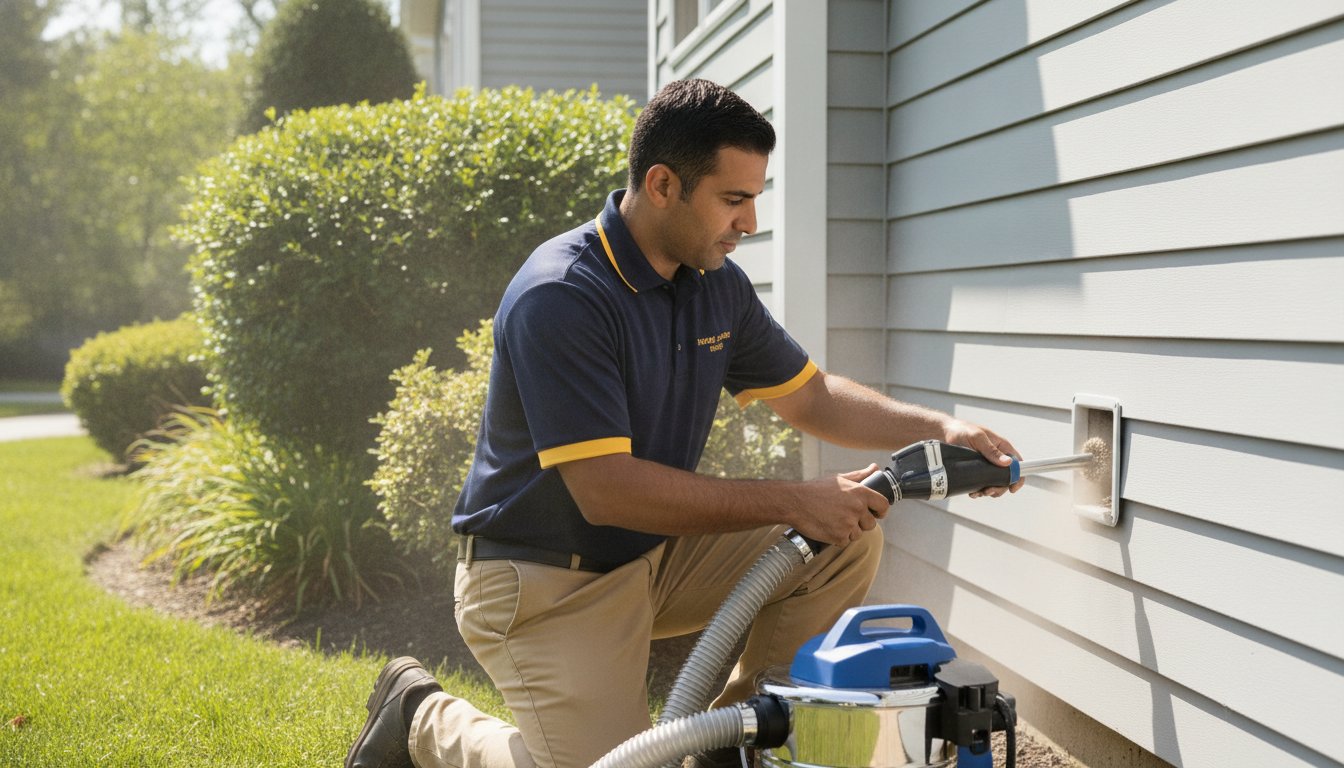
Measuring air speed is the only way to confirm a clear exhaust path. We use specialized digital gauges to measure airflow velocity at the exit point. High backpressure is a silent danger. It forces the dryer motor to work against heavy resistance. This leads to premature motor failure and excessive heat buildup inside the drum. Our technicians use precision tools to ensure your system operates within the manufacturer’s specified range. If the airflow is weak, we find the source of the restriction. We restore the efficiency your appliance was designed to deliver.
Structural Integrity of the Vent Path
A clean vent is useless if it's disconnected behind a wall. We examine the structural integrity of the entire run. Kinks, sags, and loose joints are common in older NJ homes. These gaps allow moist air and lint to leak into your wall cavities. This creates a hidden mold risk and a significant fire hazard. If your system uses outdated "solar-tube" or plastic venting, it violates current safety codes. These materials are highly flammable and trap lint more easily than metal. When we identify these structural failures, we recommend immediate dryer vent repair NJ to bring your home back to a safe state. You can schedule a professional inspection to ensure your venting system is both safe and compliant.
Comparing DIY vs. CSIA-Certified Cleaning: The Risks of the Quick Fix
Many homeowners attempt to save money with retail brush kits. This is a gamble. Professional dryer vent cleaning NJ provides a level of precision that off-the-shelf plastic rods cannot match. Retail kits are designed for sales, not safety. They often lack the durability required for complex duct runs. When a DIY attempt goes wrong, the result is often a more significant blockage or structural damage that requires expensive repairs. True safety comes from technical mastery, not a weekend project.
Amateurs frequently make the mistake of assuming the vent is clear because the first few feet look clean. A standard household vacuum only reaches the entrance. It leaves the middle twenty feet of the duct packed with highly combustible lint. Our technicians use high-powered equipment designed to navigate the entire length of the system. We provide a written safety report for your records after every service. This documentation is essential for insurance compliance and provides proof that your home is protected.
The Problem with Retail Dryer Vent Kits
Retail kits rely on thin, flexible rods. These rods are notorious for snapping inside the wall when they encounter a tight elbow or a heavy lint deposit. Once a brush head is stuck, it becomes a permanent obstruction that traps even more lint. Improper brush sizing is another common issue. If the brush is too large, it composes the lint into a solid plug instead of removing it. DIY methods also lack camera verification. You are cleaning blind. Without a specialized borescope, there is no way to confirm the duct is actually clear or to spot hidden disconnections in your attic or crawlspace.
The Value of CSIA Certification
Certification matters. A CSIA-certified dryer exhaust technician (C-DET) has undergone rigorous training and testing. This is the only nationally recognized credential for this industry. It requires a deep understanding of fire dynamics, venting physics, and the 2021 International Mechanical Code. Handyman services often treat vent cleaning as a side task. They lack the specialized ventilation training required to identify subtle mechanical failures.
Choosing a certified professional ensures:
- Adherence to ethics: Certified technicians follow a strict code of conduct and transparency.
- Technical accuracy: We understand the specific airflow requirements for every major appliance brand.
- Verified results: We use calibrated tools to prove your system is safe before we leave the job site.
Don't trust your family's safety to a "quick fix." A certified expert brings the discipline and equipment needed to eliminate fire risks completely.
Warning Signs Your NJ Home is Overdue for a Vent Clear-out
Your dryer is a precision machine. It communicates its condition through performance. When that performance drops, it isn't just an inconvenience. It is a warning. Ignoring these signals increases your risk of a house fire. Pay attention to how your appliance behaves during a standard load. If you notice any of the following symptoms, your exhaust system is likely compromised. Immediate action is the only way to ensure safety.
- Damp clothing: Items remain wet or heavy after a full 45-minute cycle.
- Excessive heat: The top of the dryer unit or the laundry room walls feel unusually hot to the touch.
- Unusual odors: A faint burning smell or a heavy, musty odor permeates the air during use.
- Flap failure: The exterior vent hood flap remains closed or only opens slightly while the dryer is running.
The "Two-Cycle" Rule
Needing two cycles to dry one load is the most common indicator of a significant blockage. It is also a massive energy drain. Dryers are among the most energy-intensive appliances in your home. Doubling the run time doubles your monthly utility costs. It also puts extreme mechanical strain on the motor and heating element. If this symptom appears, your vent path is likely 75% or more obstructed. This is a recipe for a thermal fuse blowout or a lint fire. Professional dryer vent cleaning NJ is required immediately to restore airflow and protect your appliance from internal damage. Do not wait for the unit to fail completely before calling for help.
Visible Lint and Debris
Look outside your home. Do you see lint "snow" on the ground or stuck to your siding? This is a clear sign of a leak or a major backup in the line. You should also check the lint trap housing inside the unit. If thick layers of lint build up below the screen, the system is backed up and cannot exhaust properly. In New Jersey, exterior vents are prime real estate for local wildlife. Birds, squirrels, and insects frequently build nests in the warm exhaust path during the spring and fall. These biological blockages are highly combustible and can completely stop airflow in a matter of days.
Don't ignore these clear signals of a pending hazard. Book your dryer vent inspection today to secure your home and lower your energy bills. A clear vent is the first step toward a safer, more efficient household.
Scheduling Your Service: What to Expect from Absolute Chimney Pros
Professional maintenance shouldn't be a hassle. We prioritize your schedule and your safety. Absolute Chimney Pros offers same-week appointments for dryer vent cleaning NJ across the entire state and into Philadelphia. You shouldn't have to wait weeks for a critical safety service. Our technicians provide a transparent, on-site estimate before any work begins. There are no hidden fees. There is no guesswork. We believe in ethical transparency from the moment we step onto your property. Reliability is our core value. We show up on time, every time.
Our process is designed for maximum impact with zero disruption. We utilize high-powered vacuum collection systems that capture lint and debris at the source. This prevents fine dust and allergens from entering your living space. We don't just clear the line; we protect your environment. Every service concludes with a final airflow test using calibrated digital gauges. This measurement proves your system is performing at peak efficiency before we finalize the job. You'll see the data yourself. We verify that the backpressure is within safe manufacturer limits.
Our Seamless Service Process
Efficiency is our standard. When our technician arrives, the first step is thorough preparation. We use industrial-grade drop cloths and protective coverings to safeguard your laundry room floors and walls. We treat your property with the respect it deserves. Our tools are modern. Our methods are rooted in technical mastery. We focus on precision. After the cleaning is complete, we conduct a final walkthrough with you. We provide comprehensive safety documentation for your records. This report confirms the structural integrity, code compliance, and cleanliness of your vent path. It's the proof you need for insurance and total peace of mind.
This commitment to high-quality results is shared by other industry experts; for instance, salon professionals seeking top-tier hair care products can read more about the professional smoothing systems from Hair Bar NYC Professional.
Book Your NJ Dryer Vent Cleaning
Peace of mind is a professional choice. We offer flat-fee inspection options for homeowners who want to verify their safety without a full service commitment. It's a no-nonsense way to check for bird nests, rodent debris, or structural gaps in your ductwork. Our online booking portal is available 24/7 for your convenience. Don't let a clogged vent become a household emergency. Take control of your home's safety and efficiency today. Protect your family. Lower your utility bills. Ensure your dryer lasts for years to come. We are your protective partner in home maintenance.
Schedule your certified dryer vent cleaning in NJ today!
Secure Your Home and Restore Peak Efficiency
Safety is a choice. Efficiency is a result. You now understand the critical risks associated with clogged exhaust systems and the technical requirements for a safe vent path. Ignoring warning signs like damp clothes or excessive heat isn't just an inconvenience; it is a hazard. Professional dryer vent cleaning NJ provides the technical verification your household needs to remain fire-safe and energy-efficient. Precision matters. Your home deserves a thorough inspection that goes beyond the surface level.
Absolute Chimney Pros is your protective partner in home maintenance. Our team consists of CSIA-Certified Technicians who are fully licensed and insured in NJ and PA. We value your time and offer same-week appointments to address your safety concerns immediately. Don't wait for a mechanical failure or a fire hazard to disrupt your life. Take a proactive step toward a safer environment today. We provide the technical mastery and ethical transparency required to protect your property.
Request a Free Estimate for Dryer Vent Cleaning in NJ. We look forward to helping you achieve total peace of mind and lower monthly utility costs.
Frequently Asked Questions
How much does dryer vent cleaning cost in NJ?
Service costs vary based on the complexity of your ventilation system and the length of the duct run. Vents that exit through the roof or require specialized equipment for high-access points typically fall at the higher end of the market range. We provide transparent, on-site estimates after assessing your specific setup to ensure there is no guesswork in your safety investment.
How often should I have my dryer vent professionally cleaned?
Annual cleaning is the standard safety recommendation for most New Jersey households. If you have a large family or pets, you may need service every six months to manage the increased lint volume. Regular maintenance prevents the structural strain and fire risks associated with heavy accumulation in hidden ductwork.
Can a clogged dryer vent cause a house fire?
Yes. Failure to clean the dryer is the leading cause of residential dryer fires in the United States. Lint is a highly combustible material that ignites easily when restricted airflow causes the dryer's internal temperature to spike. A clean vent path is your primary defense against this preventable household disaster.
What are the signs that my dryer vent is blocked?
The most common sign is clothing that remains damp after a full 45-minute cycle. You should also check if the dryer unit or the laundry room feels unusually hot. A burning smell during operation or an exterior vent flap that stays closed while the dryer runs are urgent indicators that your system is compromised.
Is it worth it to hire a professional for dryer vent cleaning?
Professional dryer vent cleaning NJ is a critical investment in home safety and appliance longevity. Certified technicians use high-powered vacuums and borescope cameras to verify the entire duct is clear. DIY kits often snap inside walls or compact lint into solid plugs, which can lead to expensive repairs and hidden fire hazards.
How long does a professional dryer vent cleaning take?
A standard professional cleaning typically takes between 45 and 90 minutes. The exact timeframe depends on the length of your vent line and the severity of the blockage. Our technicians work efficiently to assess the system, execute the cleaning, and provide a final airflow verification report before leaving your property.
Can birds or animals nest in my dryer vent?
Birds and small rodents frequently use warm dryer vents for nesting, especially during the spring and fall. These nests create total blockages that trap moisture and combustible lint. If you see debris sticking out of your exterior vent or hear scratching sounds, you need an immediate inspection to clear the hazard and restore airflow.
Does cleaning the lint trap every time prevent vent clogs?
Cleaning the lint trap is essential, but it doesn't stop all debris. A significant amount of fine lint bypasses the internal screen and settles in the main ductwork over time. This accumulation happens regardless of how often you clean the trap. Professional intervention is the only way to remove these deep-seated deposits from the entire vent path.