

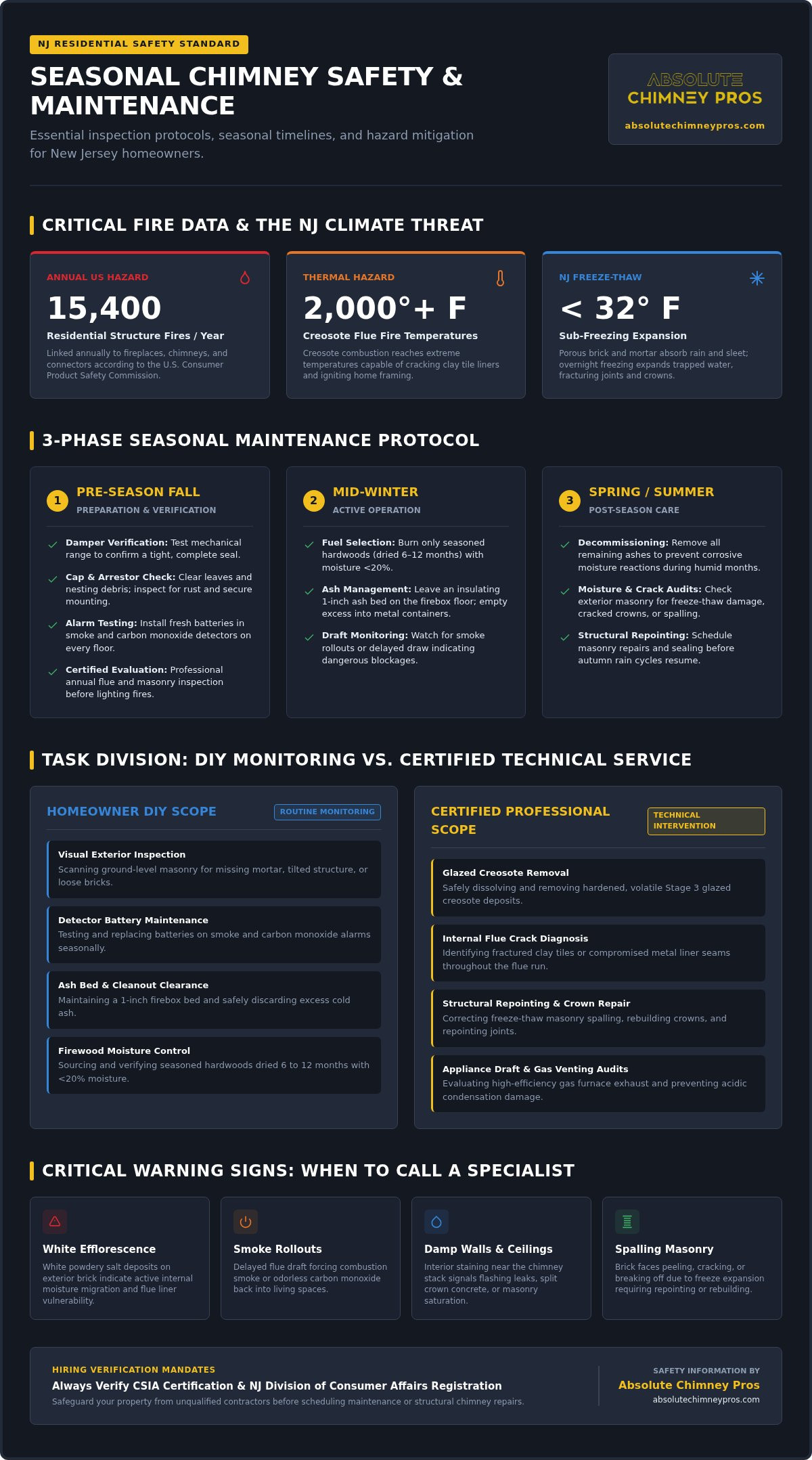
The U.S. Consumer Product Safety Commission links an average of 15,400 residential structure fires each year to fireplaces, chimneys, and connectors. Most ignite silently behind masonry walls long before anyone notices smoke indoors. Following a dedicated chimney maintenance checklist for homeowners NJ properties require stops hidden creosote build-up and flue deterioration before they trigger an emergency.
You already know that heating your home shouldn't involve guessing about poor drafting, toxic carbon monoxide leaks, or aggressive sales tactics from unqualified contractors. Between harsh local freeze-thaw cycles and coastal humidity, small hairline cracks quickly escalate into extensive masonry damage. This seasonal maintenance guide delivers the exact steps you need to prevent water intrusion, eliminate fire hazards, and protect your structural investment. Ahead, you will discover how to handle routine visual monitoring yourself and exactly when to bring in certified professionals for technical work.
Key Takeaways
- New Jersey freeze-thaw cycles force moisture into exterior masonry, turning hairline fractures into severe structural spalling if left unaddressed.
- Following a seasonal chimney maintenance checklist for homeowners NJ properties require ensures you catch drafting hazards, flue blockages, and system wear before winter heating begins.
- Homeowners should manage routine visual monitoring, but removing volatile glazed creosote and diagnosing flue cracks require certified technical intervention.
- Telltale signs of moisture intrusion like white powdery efflorescence or damp interior walls signal immediate risks to your flue liner and masonry joints.
- Safeguard your property from unqualified contractors by verifying CSIA certification and New Jersey Division of Consumer Affairs registration before hiring.
Why New Jersey Weather Demands Rigorous Chimney Upkeep
Mid-Atlantic weather punishes residential venting systems. Heavy Nor'easters dump driving rain, coastal air brings persistent humidity, and severe winter temperature shifts create violent thermal shock. Reviewing the basic mechanical engineering of What is a Chimney? shows why masonry integrity matters; drafting relies entirely on uninterrupted airflow and dry internal flues. Industry standards, backed by New Jersey safety mandates, require an annual inspection for all venting systems regardless of how often you ignite a fire. Following a structured chimney maintenance checklist for homeowners NJ properties require is the only reliable way to catch structural weathering before heating season begins.
The Destructive Freeze-Thaw Cycle in NJ Masonry
Brick and mortar are naturally porous sponges. Throughout late autumn and winter, exterior masonry absorbs ambient moisture from sleet, rain, and melting snow. When temperatures drop below 32 degrees Fahrenheit overnight, that trapped moisture expands. This expansion creates internal pressure that fractures mortar joints and splits concrete chimney crowns. Water then migrates directly into the underlying chimney structure, causing bricks to spall and detach. Identifying hairline cracks during a seasonal inspection prevents the need for extensive structural repointing or a total chimney rebuild later on.
Combustion Byproducts and Indoor Air Hazards
Weather damage isn't the only concern behind masonry walls. Burning wood generates volatile organic gases that condense into creosote along cooler flue liners. This substance is combustible fuel waiting for an ignition source. Structural blockages or severe soot build-up also disrupt positive drafting, which forces dangerous combustion gases back into living spaces. Consider these primary hazards:
- Creosote ignition: Flue fires reach temperatures exceeding 2,000 degrees Fahrenheit, cracking tile liners and spreading to nearby framing.
- Carbon monoxide backdrafting: Cracked flues or seasonal debris force toxic fumes into your bedrooms and living areas.
- Acidic gas furnace exhaust: High-efficiency gas appliances venting into unlined or aging masonry chimneys produce acidic condensation that eats away mortar from the inside out.
A rigorous chimney maintenance checklist for homeowners NJ relies on gives you clear visibility into these hidden hazards, keeping dangerous combustion byproducts where they belong.
The Comprehensive Seasonal Chimney Maintenance Checklist
Tracking your chimney across distinct seasons prevents sudden structural failures and dangerous venting blockages. A complete chimney maintenance checklist for homeowners NJ residents can follow breaks system care into three operational phases: autumn preparation, winter burning, and spring decommissioning. Maintaining this schedule protects your home against fire and poisonous drafting failures.
Pre-Season Autumn Preparation Tasks
Eliminate hidden obstructions before striking your first match of the year. Strong autumn winds carry nesting materials and dry leaves directly into unprotected flues, creating severe potential fire hazards. Complete these essential fall tasks:
- Damper verification: Open and close the damper assembly to confirm a tight seal and smooth mechanical range.
- Cap and arrestor check: Inspect the exterior termination cap for rust, detached mounting brackets, and animal nesting material.
- Alarm testing: Install fresh batteries in all smoke detectors and carbon monoxide monitors on every living floor.
- Certified flue evaluation: Schedule a professional chimney inspection New Jersey technicians conduct to verify internal flue integrity, masonry soundness, and draft clearance.
Mid-Winter Active Burning Precautions
Routine vigilance during the cold months keeps creosote accumulation low and combustion clean. Implement these ongoing practices while operating your system:
- Fuel selection: Burn only seasoned hardwoods dried for at least six to twelve months, maintaining moisture levels below twenty percent. Wet wood accelerates creosote build-up.
- Ash management: Clear excess ash safely into a covered metal container, leaving an insulating one-inch ash bed on the firebox floor to protect bottom firebricks.
- Draft observation: Watch for smoke rollouts into the living room. Delayed flue draw points to cold air plugs, drafting imbalances, or internal blockages.
Spring and Summer Decommissioning Steps
Chimney care doesn't stop when winter heating ends. New Jersey's muggy summers turn leftover ash and soot into caustic, corrosive acids when exposed to ambient humidity.
- Thorough cleanup: Sweep out all remaining firebox debris to stop acidic degradation and foul odors from entering your air conditioning stream.
- Flue sealing: Lock your throat or top-sealing damper securely to prevent conditioned indoor air from leaking out through the flue stack.
- Roofline attic scan: Inspect attic rafters and sheathing surrounding the chimney masonry for late-winter moisture leaks or flashing deterioration.
Coordinating with Absolute Chimney Pros ensures each step on your seasonal schedule is handled with technical precision.
Homeowner DIY Visual Checks vs. Professional Services
Maintaining a safe fireplace requires knowing where practical observation ends and certified technical service begins. Retail stores sell sweeping rods and rotary brush attachments to consumers, but these consumer tools cannot replace specialized diagnostic equipment. A robust chimney maintenance checklist for homeowners NJ properties need focuses on non-invasive visual screening while leaving flue cleaning and structural evaluations to qualified technicians.
What Homeowners Can Safely Inspect Themselves
Routine visual assessments don't require walking on steep roofs or handling toxic soot. Homeowners should perform simple, ground-level evaluations before every burning season:
- Firebox condition: Shine a flashlight inside the firebox. Check refractory panels or firebricks for crumbling edges, missing mortar joints, or deep fissures.
- Hearth components: Examine glass doors, screens, and the surrounding hearth floor for thermal stress cracks, warping, or mechanical alignment issues.
- Exterior masonry review: Step out into the yard and evaluate the chimney stack with binoculars. Look for visible leaning, spalling brick faces, missing mortar lines, or white mineral deposits.
Why Technical Sweeping Demands Certified Pros
Consumer brush kits clear away light, powdery soot, but they cannot remove Stage 3 glazed creosote. This hardened, tar-like byproduct bakes directly onto flue walls and requires industrial rotary scrapers or chemical treatments. Pushing a consumer brush through an uninspected flue also risks dislodging compromised flue tile segments, turning small cracks into hazardous blockages.
Professional sweeps follow strict protocols based on the National Fire Protection Association (NFPA) 211 standard. A baseline Level 1 assessment examines accessible interior and exterior components. A Level 2 evaluation uses continuous, 360-degree closed-circuit video cameras to scan the interior flue lining for hidden thermal fractures, offset joints, and combustible clearances behind walls. Certified technicians also deploy heavy-duty commercial vacuums with HEPA filtration systems to trap fine, carcinogenic soot particles, keeping your living room clean and safe. Booking a thorough appointment with a certified chimney sweep NJ provider guarantees your system operates cleanly without gambling on DIY guessing games.
Integrating these technical safety audits into your chimney maintenance checklist for homeowners NJ residences guarantees both personal safety and code compliance.
Diagnosing Moisture Intrusion, Flue Damage, and Masonry Leaks
Water causes more structural damage to residential chimneys than fire and wind combined. While soot buildup presents an immediate flash fire risk, chronic moisture quietly rots the underlying framing and dissolves masonry binding agents. New Jersey's coastal rains and winter storms find every microscopic breach in your masonry. Identifying these infiltration points is the primary objective of any seasonal chimney maintenance checklist for homeowners NJ properties depend on.
Identifying Roofline Flashing and Masonry Leaks
Flashing forms the critical waterproof barrier where vertical brick meets a sloping roofline. Over time, seasonal expansion separates base and counter flashing, while low-grade caulk dries out and splits. When this seal fails, water tracks behind interior walls, causing ceiling stains, bubbling drywall, and rotting rafter plates. Our comprehensive guide on chimney leak repair NJ explores these moisture pathways in technical detail. Another visible indicator is efflorescence, a powdery white salt deposit that coats exterior brickwork when internal water evaporates through porous masonry surfaces.
Assessing Chimney Crown and Flue Liner Integrity
The chimney crown forms the roof of your chimney stack. Built from mortar or poured concrete, it sheds precipitation away from the flue openings. Unfortunately, many crowns are constructed with flat profiles rather than proper sloped angles with drip edges. The resulting stress causes spiderweb cracking and chunk spalling that lets water drop straight into the flue passage. Look for these internal failure warnings:
- Terracotta tile debris: Red or orange ceramic shards accumulating in your firebox indicate shattered flue liner segments.
- Rusted internal components: Premature rust pitting on your steel damper or firebox fire grate proves water is bypassing the exterior cap.
- Liner compromise: When clay tiles split, corrosive gases attack exterior brick joints; replacing degraded clay with a certified stainless steel chimney liner installation restores safe drafting integrity.
- Missing caps or chase covers: Uncapped flues leave wide conduits for rain and wildlife entry. Stainless steel caps and custom chase covers remain the first line of defense against downpours.
Stop hidden water damage before it forces a complete masonry tear-down. Contact Absolute Chimney Pros to book your seasonal inspection and seal your system against moisture intrusion.
Selecting Qualified Chimney Professionals in New Jersey
New Jersey does not issue an isolated state trade license specifically for chimney sweeps. Instead, the state relies on general contractor registration. This regulatory gap creates an opening for untrained handymen and predatory operators to market dangerous, cut-rate services. Completing your chimney maintenance checklist for homeowners NJ properties need means vetting contractors with extreme care before letting anyone onto your roof.
Essential Credentials and Red Flags to Avoid
Never hire a contractor who cannot present verifiable credentials on the spot. Protect your home by screening for these non-negotiable standards:
- CSIA certification: Ensure the technician holds active certification through the Chimney Safety Institute of America. This confirms rigorous testing on building codes, draft physics, and safety standards.
- State registration: Demand proof of registration with the New Jersey Division of Consumer Affairs. By law, registered home improvement contractors must carry at least $500,000 in commercial general liability insurance.
- Bait-and-switch phone quotes: Beware unsolicited calls or suspiciously cheap rates advertised online. Rogue operators use these to get a foot in the door, then claim your chimney is on the verge of collapse to pressure you into unneeded emergency repairs.
- Deposit rules: New Jersey law mandates written contracts for home improvement work exceeding $500, with initial project deposits strictly capped at one-third of the total cost.
The Value of Transparent, Multi-Point Safety Audits
Qualified technicians eliminate the guesswork. When evaluating a venting system, legitimate professionals never expect you to take their word for it. They use closed-circuit cameras to capture clear video footage and still photos of internal flue tile conditions, mortar joints, and firebox walls. Their findings arrive in an itemized, written report that details clearances to nearby combustible framing, moisture vulnerabilities, and prioritized maintenance recommendations.
Look for providers offering flat-fee inspection structures rather than open-ended hourly fees. Clear pricing ensures you receive an unbiased assessment of your system without hidden add-ons. Partnering with the certified team at Absolute Chimney Pros gives you transparent on-site evaluations, honest reporting, and technical mastery across every phase of your seasonal maintenance.
Following this chimney maintenance checklist for homeowners NJ residences require guarantees your venting system stays safe, efficient, and ready for whatever winter brings.
Secure Your Hearth Before the First Cold Snap
Proactive care prevents sudden heating failures and protects your family from hidden hazards. Putting a structured chimney maintenance checklist for homeowners NJ properties need into action stops freeze-thaw cracking, halts water leaks at the flashing, and clears dangerous creosote before you strike a match. Regular visual monitoring paired with certified technical assessments keeps your heating system drafting cleanly all winter long.
Don't wait for smoke rollout or interior water damage to alert you to an issue. As a locally owned team serving New Jersey, Absolute Chimney Pros provides fully licensed and insured chimney sweep, repair, and duct services with same-week appointments available. Our CSIA-certified technicians deliver transparent on-site estimates with zero high-pressure tactics. Schedule your flat-fee safety inspection today and enjoy the warmth of your fireplace with absolute peace of mind.
Frequently Asked Questions
How often should a chimney be inspected and cleaned in New Jersey?
New Jersey law and NFPA standards mandate an annual chimney inspection for every household venting system, regardless of fuel type or usage frequency. Sweeping is necessary whenever creosote accumulation reaches one-eighth of an inch. Incorporating this review into your chimney maintenance checklist for homeowners NJ properties follow ensures you catch flue blockages early and maintain required inspection records for insurance compliance.
What are the early signs that my chimney has hazardous creosote buildup?
Visible black, flaky crust or shiny, hardened glazing along the lower flue walls indicates hazardous creosote. You might also notice an acrid, asphalt-like odor wafting from the hearth or hear crackling noises inside the flue stack during active burns. Sluggish drafts and smoke spilling into your living room signal restricted flue dimensions that demand immediate mechanical cleaning by a certified professional.
Can I clean and inspect my own chimney flue with a DIY kit?
Homeowners can safely execute ground-level visual checks and clean loose firebox ashes, but DIY sweeping kits cannot safely clean or evaluate internal flues. Retail brushes fail to eliminate Stage 3 glazed creosote and cannot detect hidden hairline fractures behind the liner. Without specialized high-definition cameras and industrial HEPA containment vacuums, DIY sweeping attempts risk flue fires and severe indoor soot contamination.
Why is water leaking into my fireplace during heavy New Jersey rainstorms?
Water entry typically stems from deteriorated roofline flashing, cracked concrete chimney crowns, or damaged exterior rain caps. New Jersey's coastal, wind-driven rain forces moisture directly through failed masonry joints and unsealed chase covers. Once moisture penetrates the outer envelope, it flows downward into the firebox and surrounding drywall. Identifying these structural vulnerabilities early prevents expensive wood rot and toxic mold growth.
What is the difference between a Level 1 and Level 2 chimney inspection?
A Level 1 inspection evaluates readily accessible interior and exterior components during routine annual servicing. A Level 2 inspection adds a comprehensive video camera scan of internal flue tiles, joints, and clearances within attics and crawlspaces. Level 2 evaluations are required during property sales, following chimney fires, or when altering fuel types, making them vital for complete seasonal peace of mind.
Does a gas fireplace require regular chimney maintenance and inspections?
Yes, gas fireplaces require annual inspections and regular servicing. While gas appliances don't produce heavy wood soot, they produce moisture-laden, acidic exhaust gases that corrode clay liners and metal venting over time. Additionally, burners, thermopiles, and safety valves accumulate dust and pet dander, which causes pilot outages, improper ignition, and dangerous carbon monoxide backdrafting into the living space.
How do freeze-thaw winter cycles damage brick chimneys in New Jersey?
Porous clay bricks and mortar joints soak up moisture from winter sleet and snow. When temperatures drop below freezing, that trapped water expands by roughly nine percent, breaking the masonry from within. Repeated winter cycles pop brick faces off in a process called spalling and dissolve mortar bonds. Following a seasonal chimney maintenance checklist for homeowners NJ homes rely on stops minor gaps from becoming structural failures.


