
Heating equipment causes 13% of all home fires in New Jersey. That is a sobering reality for any homeowner dealing with a malfunctioning hearth. You rely on your fireplace for warmth during freezing winters, but a flickering pilot light or a faint scent of gas quickly turns that comfort into anxiety. It is natural to feel frustrated when you cannot tell if the issue is a simple thermocouple fix or a lethal venting failure. You deserve a home that is warm, not a source of constant worry.
Identifying these critical faults requires technical precision and urgent vigilance. This guide will help you spot the red flags and explain why professional gas fireplace repair NJ is the only way to ensure your unit remains safe and efficient. We will walk through a 2026 safety checklist, common mechanical failures, and the New Jersey fuel gas subcodes that govern your home. You will gain a clear understanding of what is wrong with your unit and how a transparent, expert diagnostic report can restore your peace of mind. Let’s ensure your fireplace is a functional asset rather than a hidden hazard.
Key Takeaways
- Spot critical warning signs like soot buildup or "rotten egg" odors that indicate immediate safety risks.
- Understand why failing components like thermopiles require precision gas fireplace repair NJ to function correctly.
- Avoid the hazards of DIY attempts by prioritizing professional gas line pressure testing and expert sensor calibration.
- Prepare your home for a successful repair by clearing a five-foot perimeter and ensuring the unit is completely cool.
- Gain peace of mind with CSIA-certified technicians who provide transparent, flat-fee inspections and definitive solutions.
Recognizing the Warning Signs: When to Call for Gas Fireplace Repair in NJ
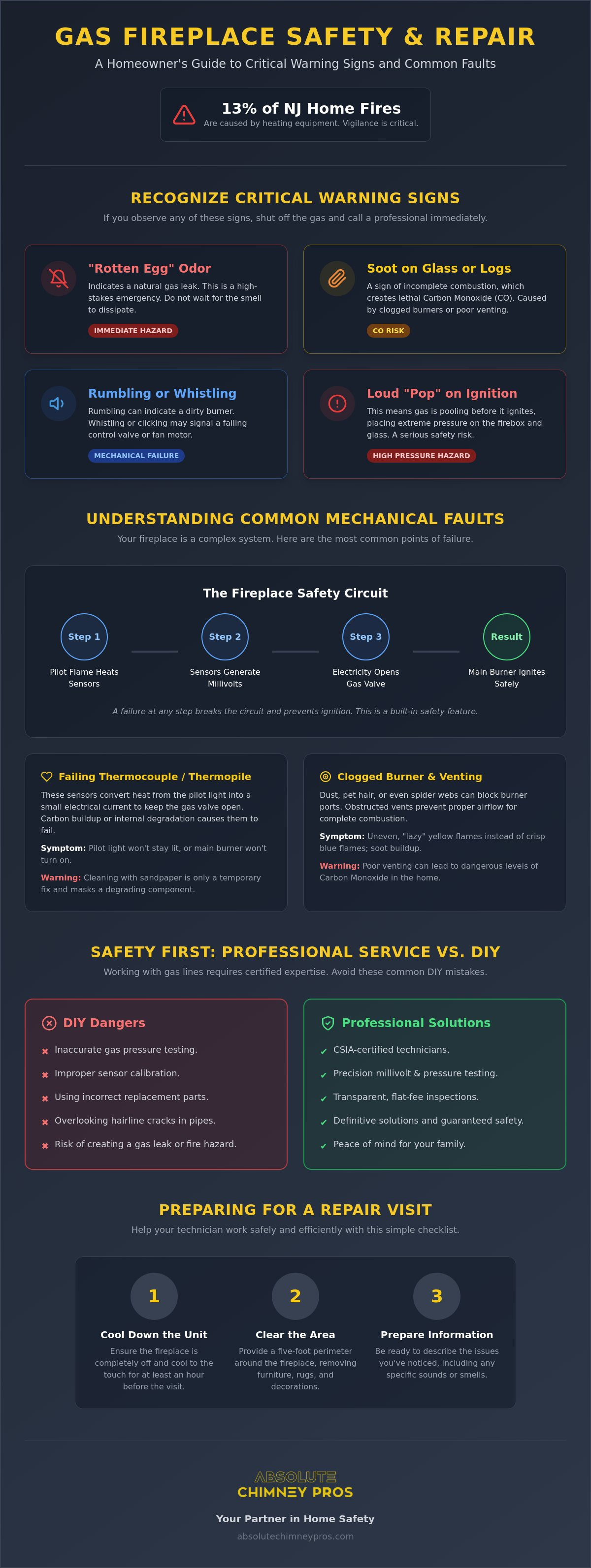
A gas fireplace is a complex mechanical system. It relies on a precise balance of fuel, oxygen, and ventilation. When this balance shifts, the unit stops being a comfort and becomes a hazard. Recognizing early warning signs is critical for home safety. If you notice a persistent smell of rotten eggs, act immediately. This odor is mercaptan, an additive used to detect natural gas leaks. A leaking valve or cracked pipe is a high-stakes emergency. Don't wait for the smell to dissipate. Shut off the gas and seek professional gas fireplace repair NJ services to secure your home.
Visual cues are equally telling. Soot buildup on logs or the glass door is never normal for a gas unit. While modern fireplace design and safety standards have improved efficiency, soot remains a byproduct of incomplete combustion. This usually indicates a clogged burner or a lack of proper oxygen. Ignoring this leads to permanent damage to the burner assembly. Strange noises also demand attention. Rumbling sounds often point to a dirty burner. Whistling or clicking might signal a failing control valve or a fan motor reaching the end of its life. If your fireplace sounds like a jet engine or a rattling cage, the hardware is struggling.
The Danger of Ignoring Soot and Odors
Soot is more than a cosmetic nuisance. It is a physical sign that your fireplace is starving for air or that the venting is obstructed. When gas doesn't burn completely, it creates carbon monoxide. This colorless, odorless gas is lethal. Strange odors near the hearth could signal a significant carbon monoxide chimney risk that requires an expert inspection. Delayed repairs don't just compromise safety; they lead to expensive component failures. Carbon buildup can corrode the igniter and clog the pilot assembly, turning a simple cleaning into a full system overhaul. Vigilance today prevents a total system failure tomorrow.
Performance Issues vs. Safety Hazards
Distinguish between minor performance lags and genuine safety threats. A white film on the glass is often just a byproduct of the gas combustion process. It usually requires a specialized cleaner. However, delayed ignition is a red flag. If you hear a loud "pop" or "mini-explosion" when turning the unit on, gas is pooling before it ignites. This puts immense pressure on the glass and the firebox. If this occurs, or if your pilot light frequently goes out, the system is failing. Shut the gas valve immediately. Reliable gas fireplace repair NJ ensures these mechanical failures are resolved before they cause a structural fire or a glass rupture. Trust the experts to handle the pressure.
Troubleshooting Common Gas Fireplace Faults: Pilot Lights to Thermopiles
Technical mastery is the foundation of effective gas fireplace repair NJ. Your fireplace is a sophisticated appliance that uses electricity and gas in tandem. When the unit fails to ignite, the problem usually lies within the safety circuit. This circuit is designed to shut down the gas flow if it detects a malfunction. Precision is required to diagnose these electrical signals. Guesswork in this area is dangerous. It often leads to unnecessary part replacements and lingering safety risks.
Understanding the Thermocouple vs. Thermopile
The thermocouple and thermopile are the heart of your safety system. These sensors generate a small electrical current when heated by the pilot flame. The thermocouple manages the pilot flame. The thermopile generates the millivolts required to open the main gas valve. If these sensors are caked in carbon or suffer from corrosion, the signal drops. Your fireplace won't respond to the remote or the wall switch. While some try to clean these parts with sandpaper, this is a temporary fix. A failing sensor indicates that the component's internal wiring is degrading. Reliable gas fireplace repair NJ involves testing the exact millivolt output to determine if replacement is necessary for long-term safety.
Gas valve failures are another common hurdle. If the sensors are working but the burner remains cold, the valve's internal solenoid may be stuck. This often happens after a long summer of inactivity. Burner ports can also become blocked by dust, pet hair, or spider webs. These tiny obstructions cause uneven flame patterns and soot buildup. We recommend a professional diagnostic assessment to clear these ports safely without damaging the delicate burner assembly.
Venting and Airflow Obstructions
Venting is the most overlooked aspect of fireplace health. Whether you have a direct-vent or a B-vent system, the flue must remain clear. Animal nests, leaves, and debris frequently clog these passages during the off-season. Blocked venting forces exhaust back into your living space. This creates significant health risks of combustion gases like nitrogen dioxide and carbon monoxide. A professional gas fireplace service NJ technician will inspect the entire vent run to ensure your indoor air quality remains pristine. Do not ignore a unit that shuts off after only a few minutes of operation. This is often a classic sign of a venting safety switch being triggered.
Safety First: Why Professional Gas Fireplace Service Outperforms DIY
Professional intervention is a safety mandate. Many homeowners mistake a superficial cleaning for a technical repair. They are not the same. Wiping soot off a log is cosmetic. Calibrating a gas valve is life-saving. Attempting gas fireplace repair NJ without the proper tools risks more than just a broken unit. It risks your home. National safety organizations emphasize annual professional fireplace inspections for a reason. Precision matters. Pressure testing requires a calibrated manometer to ensure gas flow is within safe tolerances. Hand-tightening a fitting is never enough to guarantee a seal.
The Risk of Gas Leaks and Improper Sealing
Micro-leaks are silent threats. You won't always smell the rotten egg odor if a leak is small and localized behind the control panel. Over time, these leaks create a dangerous gas build-up in wall cavities. We use specialized electronic leak detectors to find hazards that human senses miss. Sealing is another critical factor. Direct-vent units rely on an airtight glass assembly to function safely. If the gasket is pinched or the clips are loose, combustion gases escape into your living room. Our technicians ensure every seal meets the manufacturer’s exact specifications. We leave no room for error.
Certification Matters: CSIA and NFI
Certification is your shield against liability. Our CSIA-certified technicians follow the International Fuel Gas Code/2021 adopted as the New Jersey fuel gas subcode. This isn't optional. It's the standard for professional gas fireplace repair NJ. Uncertified repairs can void your homeowner’s insurance policy. If a fire occurs and the cause is traced to an unpermitted or uncertified repair, you are left unprotected. Demand proof of licensing and insurance before any work begins. We take a no-nonsense approach to technical mastery. There is no guesswork involved in our process.
A fireplace service should never exist in a vacuum. When a gas appliance connects to an existing chimney, the flue passageway must be verified. This follows the state’s chimney verification program under N.J.A.C. 5:23-2.20(d). Integrating a comprehensive chimney inspection New Jersey during your service ensures the entire exhaust path is clear and structurally sound. It’s the only way to guarantee the unit is up to code. Your family’s safety depends on professional oversight and documented compliance.
NJ Homeowner Preparation Guide: What to Know Before a Repair Visit
Preparation is the first step toward a safe resolution. Our technicians require a clear workspace to perform a thorough assessment. Clear a five-foot perimeter around the hearth. Move furniture, rugs, and decorations away from the unit. This prevents accidental damage and ensures our tools are easily accessible. Most importantly, turn the unit off at least three hours before your appointment. The firebox must be cool to the touch. A hot fireplace is a safety hazard for the technician and prevents an accurate diagnostic of sensitive electrical components. We value your home's environment. A cool unit allows us to work with the precision your system requires.
Help us help you. Document exactly when the problem occurs. Does the pilot light flicker during heavy winds? Does the unit shut off after exactly twenty minutes of operation? This data is invaluable for a precise gas fireplace repair NJ. If you notice soot or heavy debris buildup, you may actually need a chimney sweep NJ to clear the venting path before the mechanical repair can proceed. Identifying these details early saves time. It ensures we bring the correct diagnostic tools for your specific model. No detail is too small when it comes to household safety.
The Diagnostic Process
We don't guess. We verify. Every visit begins with a comprehensive flat-fee inspection. This is a non-negotiable safety step. We test the millivolt output, check the gas pressure, and inspect the venting system for obstructions. Once the root cause is identified, we provide a transparent, on-site estimate. There are no hidden fees or surprise surcharges. You will receive a definitive report on the health of your unit before any structural work begins. Transparency builds trust. Trust ensures safety. We believe in providing a clear roadmap to a functional fireplace.
Maintenance Scheduling
Timing matters in New Jersey. Don't wait for the first blizzard to schedule your service. Late summer and early fall are the optimal times for repairs. This ensures your fireplace is ready before the peak heating season begins. We offer same-week appointment availability for NJ residents. This allows for a fast, disciplined response to your home's needs. Prepare a list of questions for your CSIA-certified technician. We are here to act as your knowledgeable guide through complex maintenance tasks. Our goal is your peace of mind.
If you are ready for a safe, high-impact solution, schedule your flat-fee gas fireplace inspection today. We are your protective partners in home maintenance. Let's get your hearth back to code.
Reliable NJ Gas Fireplace Repairs: The Absolute Chimney Pros Difference
Technical mastery and urgent vigilance are the pillars of our service. Absolute Chimney Pros delivers a disciplined, safety-first approach to every call. We don't just swap parts. We restore the technical integrity of your home's heating system. Our CSIA-certified experts specialize in gas fireplace repair NJ, bringing years of local experience to every hearth. We understand the specific demands of Garden State winters. A malfunctioning unit is more than a cold room; it's a potential risk to your family. Our resolution process is direct. We show up. We assess. We solve. There's no room for guesswork when your home's safety is on the line.
New Jersey homes often feature unique venting configurations. We've seen them all. Our comprehensive safety checks go beyond the burner assembly. We verify gas pressure. We inspect the entire flue. We ensure every connection is airtight and up to the 2021 International Fuel Gas Code. You receive a professional resolution based on exact technical data. We prioritize transparency, providing a clear report of our findings before any work begins. It's the honest, assertive service NJ homeowners expect.
A Protective Partner for Your Home
We act as a vigilant protector for your living environment. Our commitment to honesty means we only recommend repairs that are essential for safety and efficiency. We treat every gas fireplace as if it were in our own home. This level of professional oversight provides an emotional connection built on peace of mind. You don't have to wonder if the job was done right. Our technicians are licensed, insured, and dedicated to technical precision. We take responsibility for your unit's performance so you don't have to.
Get Your Fireplace Back in Action
Don't let a faulty igniter or a clogged burner ruin your winter comfort. Our flat-fee inspection model removes the stress from the diagnostic process. You get a clear, upfront price for the initial assessment with no hidden fees. We value your time and offer same-week appointment availability for residents across the state. Our flow is designed for efficiency. We move methodically from concern to resolution without any fluff or filler. Ready to restore your hearth? Schedule your professional gas fireplace repair today and experience the difference that certified expertise makes.
Restore Safety and Comfort to Your Home
Your fireplace should be a source of warmth, not a source of worry. We have established that flickering pilot lights and soot buildup are critical indicators of mechanical failure. Ignoring these red flags risks your home's air quality and safety. Professional gas fireplace repair NJ is the only definitive way to address these hazards while ensuring your unit meets current state fuel gas subcodes. Our CSIA-certified technicians eliminate the guesswork with flat-fee inspections and disciplined technical mastery. We are licensed and insured in NJ, providing the professional oversight your hearth requires.
Take the first step toward a functional, safe fireplace today. We offer same-week appointments to ensure your unit is ready before the next cold front arrives. Don't settle for temporary DIY fixes that compromise your home's integrity. Trust the experts who prioritize transparency and ethical service. Book Your Same-Week Gas Fireplace Repair Appointment and regain the peace of mind that comes from a job done right. We look forward to being your protective partner in home maintenance.
Frequently Asked Questions
Who fixes gas fireplaces in New Jersey?
CSIA-certified technicians are the authorized experts for these repairs in the Garden State. You must hire a professional who is licensed and insured in NJ to ensure compliance with the International Fuel Gas Code/2021. Avoid general handymen for these tasks. Gas lines and venting systems require specialized technical mastery and precision tools that general contractors don't typically carry.
Why won’t my gas fireplace pilot light stay lit?
A failing thermocouple or thermopile is the most common cause of this failure. These sensors detect the heat of the flame and signal the gas valve to stay open. If they are corroded or the electrical signal is weak, the safety circuit breaks. Professional gas fireplace repair NJ involves testing the exact millivolt output to determine if the part requires replacement or a specialized cleaning.
How often should a gas fireplace be serviced for safety?
Schedule a professional service once every year. Annual inspections are critical for checking gas connections and ensuring the venting system is clear of debris or animal nests. Since nearly half of all home heating fires occur between December and February, we recommend scheduling your maintenance in the late summer or early fall. This ensures your unit is safe before the peak winter season begins.
Is a gas fireplace repair covered by home insurance?
Standard homeowner policies typically don't cover repairs caused by routine wear and tear or lack of maintenance. Coverage may apply if the damage resulted from a sudden, accidental event like a lightning strike or a falling limb. Verify your specific policy details with your agent. Using uncertified technicians for repairs can actually void your liability coverage if a fire occurs later.
Why is there a weird smell coming from my gas fireplace?
A "rotten egg" odor is mercaptan, a signal of a dangerous gas leak. Shut off your gas valve immediately and exit the home. If the scent is more like burning dust, it's often just debris on the burner after a period of inactivity. However, any persistent or chemical odor requires a professional diagnostic to rule out carbon monoxide risks or failing electrical components.
What is included in a professional gas fireplace inspection?
A comprehensive inspection includes a flat-fee assessment of the thermocouple, thermopile, and gas valve. Technicians perform pressure testing to check for micro-leaks and verify the venting path is clear of obstructions. We also ensure the glass assembly is airtight and the burner ports are free of carbon buildup. This methodical process provides a definitive report on your system's health and safety.
Can I use my gas fireplace if the glass is cracked?
Never operate a fireplace with cracked glass. The glass assembly on a direct-vent unit creates a critical seal that prevents lethal combustion gases from entering your living space. Even a hairline fracture can lead to carbon monoxide poisoning. Immediate gas fireplace repair NJ is necessary to replace the assembly with a manufacturer-approved part before the unit is turned on again.
How much does a typical gas fireplace repair cost in NJ?
The total investment depends on the specific component failure and the technical labor required for the resolution. We utilize a flat-fee inspection model as the first step to identify the root cause of the problem. This approach provides you with a transparent, on-site estimate before any work begins. It eliminates the guesswork and ensures you only pay for the specific repairs your unit needs.